Alliance for a Green Revolution (AGRA)

About AGRA


AGRA: The Alliance for a Green Revolution in Africa

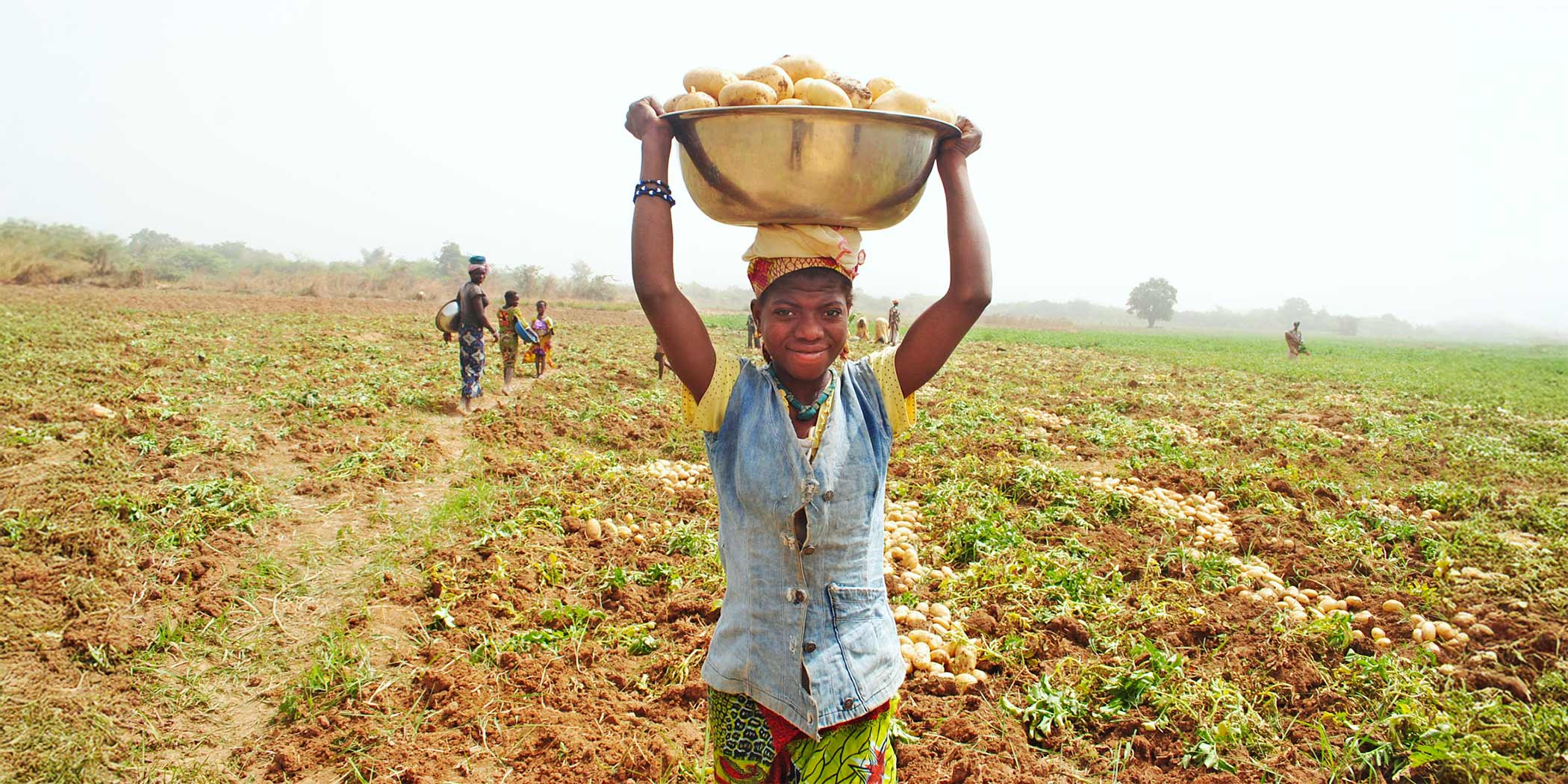
AGRA works to achieve a food secure and prosperous Africa through the promotion of rapid, sustainable agricultural growth based on smallholder farmers. Smallholders—the majority women—produce most of Africa’s food, and do so with minimal resources and little government support. AGRA aims to ensure that smallholders have what they need to succeed: good seeds and healthy soils; access to markets, information, financing, storage and transport; and policies that provide them with comprehensive support.
Through developing Africa’s high-potential breadbasket areas, while also boosting farm productivity across more challenging environments, AGRA works to transform smallholder agriculture into a highly productive, efficient, sustainable and competitive system, and do so while protecting the environment.

Mr. Kofi A. Annan, former Secretary-General of the United Nations, chairs AGRA’s Board, and a team of distinguished African scientists, economists and business leaders guide its day-to-day work. With a budget of close to US $400 million, as of June 2009 AGRA had approved 116 grants valued at US $83 million in 14 countries. Grantees operate across the agricultural value chain, laying the basis for the kind of comprehensive, integrated change needed by Africa’s smallholder farmers.

AGRA works to fill Africa’s breadbaskets, areas of relatively good soil, rainfall, infrastructure, and large numbers of smallholder farmers. AGRA coordinates with African governments and other partners to assemble the critical mass of resources needed to realize the agricultural potential of these areas. Within breadbaskets, AGRA works to increase the overall productivity and resilience of smallholder farming, embracing its diversity of crops and livestock.

Three Goals Guide Our Work. Smallholder farms that today produce one-quarter the global average yield could sustainably double or quadruple their output. Our three main goals by 2020 are to:

  • Reduce food insecurity by 50 percent in at least 20 countries.
  • Double the incomes of 20 million smallholder families.
  • Put at least 30 countries on track for attaining and sustaining a uniquely African Green Revolution: one which supports smallholder farmers, protects the environment, and helps farmers adapt to climate change.

Our Integrated Approach Achieves Real Change, In Real Time. AGRA’s integrated programs in seeds, soils, market access, policy and partnerships and innovative finance work to trigger comprehensive changes across the agricultural system. Many of our programs also strengthen agricultural education and extension, and strive to involve and train youth. Other planned work and partnerships will address the issue of efficient water management, agricultural extension and climate change adaptation to strengthen the resilience of agricultural systems. To unleash the potential of smallholder farmers, AGRA’s integrated programs work to:

  • Develop and disseminate high-quality, locally adapted varieties of Africa’s staple food crops through support to National Agricultural Research Organizations; African crop breeding networks; emerging seed companies and farmers’ cooperatives; and through close collaboration and partnerships with the Consultative Group on International Agricultural Research (CGIAR).
  • Enhance soil health through improving soil testing and mapping; increasing the availability of fertilizers, both organic and inorganic; and training farmers’ associations and extension services in new technologies, including sustainable agricultural land use practices and water management;
  • Accelerate smallholders’ access to good seeds and appropriate fertilizers through expanding national networks of rural agro-dealers who reach remote smallholder farmers;
  • Provide smallholder farmers, agro-dealers and agricultural value chains that support them with access to finance through market-based and affordable loans from local commercial banks;
  • Improve smallholders’ market access through linking them to market information systems and training in market function; building storage capacity; and supporting agro-processing operations that enable farmers to earn more for their goods;
  • Promote policies that provide comprehensive support to farmers, including policies on: seeds and soil health; land and property rights to enhance land security, especially for women farmers; markets and trade to expand local and regional markets; and policy advocacy platforms that strengthen the efforts of farmers’ associations and civil society to benefit smallholder farmers;
  • Build African scientific capacity through supporting African PhD and MSc programs in crop breeding; soil science and agricultural economic policy;
  • Use a combination of internal and external audit and monitoring and evaluation systems to capture the progress, strengths and weaknesses of AGRA’s work; learn from the work of others; inform AGRA’s planning and risk management; and provide oversight and public accountability.

Partnerships are central to all of our work. AGRA partners with African governments, farmers’ groups, the private sector, the science community, civil society and international organizations, and supports NEPAD’s Comprehensive Africa Agriculture Development Program.

AGRA was founded in 2006 through a partnership between The Rockefeller Foundation and the Bill & Melinda Gates Foundation. Today AGRA also receives core funding from the UK’s Department for International Development (DFID). Other partners have collaborated with AGRA to launch special partnership initiatives. These include the Africa Enterprise Challenge Fund (AECF), funded by the Consultative Group to Assist the Poor, DFID, the International Fund for Agricultural Development and The Netherlands Ministry of Foreign Affairs; and the Coalition for African Rice Development (CARD), funded by the Japan International Cooperation Agency. In the G8’s 2008 and 2009 communiqués, AGRA was singularly recognized as an effective public-private partnership for improving smallholder farming.

Working together, we can unleash the potential of Africa’s smallholder farmers and achieve a food secure and prosperous Africa.


Information provided by AGRA

Agra Information

AGRA Articles

IFDC Partners with USAID, the Netherlands and AGRA to Improve Food Security in New Nation of South Sudan