Togo

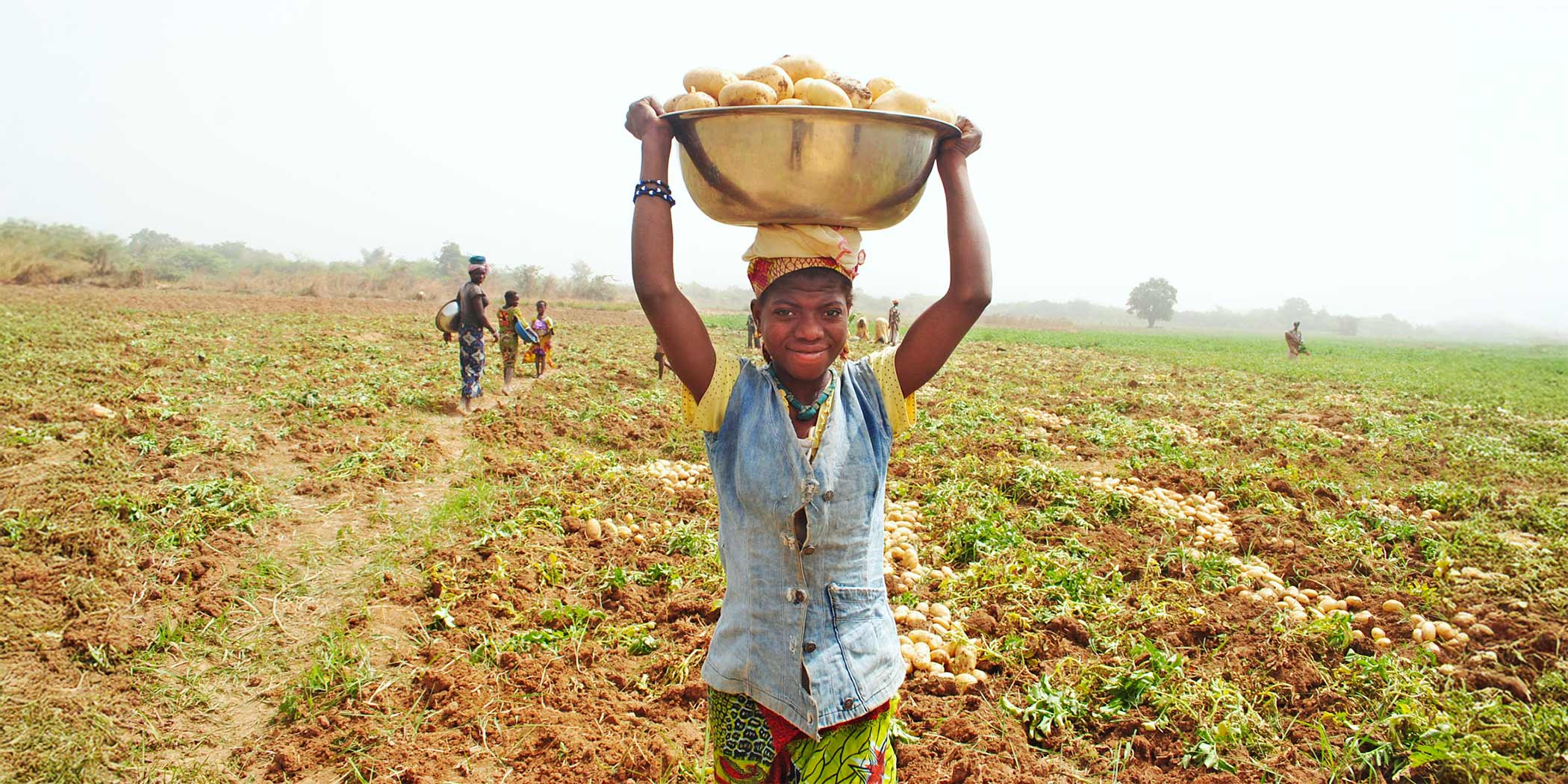
Togo is located in West Africa, bordering the Bight of Benin, between Benin and Ghana. Its total land area is 56,785 sq km, comparatively slightly larger than Croatia and similar in size to the U.S. state of West Virginia. Togo’s climate is tropical in the southern region and semiarid in the north. Of the total land area, 44 percent is utilized for cultivated crops, while another two percent supports permanent crops such as fruit- and nut-bearing trees. Environmental issues facing Togo include deforestation due to slash-and-burn agriculture, the use of wood for fuel and water pollution. Togo's population is approximately 6 million, with 65 percent of its labor force dedicated to agriculture and 32 percent living in poverty. However, Togo is working with donors to write a Poverty Reduction and Growth Facility (PRGF) plan that could eventually lead to debt reduction. Its small, Sub-Saharan economy is heavily dependent on both commercial and subsistence agriculture. Cocoa, coffee and cotton generate about 40 percent of export earnings, with cotton being the most important cash crop. Togo is also the world's fourth-largest producer of phosphate. Other agricultural products from Togo include yams, cassava, maize, beans, rice, millet, sorghum, livestock and fish. The North and West Africa Division is responsible for IFDC activities in Togo.

Current IFDC Projects in Togo

  • Fertilizer and Sustainable Agricultural Development (F&SAD), Ongoing
    The F&SAD project improves access to, and the efficient use of agro-inputs in the West African nations of Mali, Niger and Togo. Using the Integrated Soil Fertility Management (ISFM) approach, F&SAD provides agricultural intensification support. In addition to the ISFM strategy, the project includes participatory development of technology packages and facilitation of improved linkages between farmers and input and output markets.

DONOR: International Fertilizer Industry Association (IFA)

  • Marketing Inputs Regionally (MIR Plus), 2009-2013
    MIR Plus is improving policy and regulatory environments in the 15 nations of the Economic Community of West Africa (ECOWAS). The project is increasing the use and efficiency of agro-inputs, improving the availability of technical and market information and using technology to link producers’ organizations with agro-dealers. The project links 2.23 million farmers to agro-dealers who will help train and supply the farmers. The project should increase maize and rain-fed rice yields by 20 percent for targeted farmers in Ghana and Nigeria, and increase irrigated rice yields in Burkina Faso, Ghana, Nigeria, Senegal and Sierra Leone by 20 percent.

DONORS: Economic Community of West African States (ECOWAS), West African Economic and Monetary Union (UEMOA), the Netherlands’ Directorate-General for International Cooperation (DGIS)

  • Projet d’Appui au Développement de l’Agriculture au Togo (PADAT), 2012-2015
    PADAT is one of three projects designed to complement Togo’s National Agricultural and Food Security Investment Program (PNIASA), which was launched in 2012. IFDC is implementing the integrated soil fertility management (ISFM) component of PADAT (2012-2015) in Togo’s five economic regions (Centrale, Kara, Maritime, Plateaux and Savanes). The project focuses on three crops – cassava, maize and rice. Its goal is to disseminate information about ISFM and other beneficial agricultural practices to increase production of these crops and increase incomes in Togo.

DONORS: International Fund for Agricultural Development (IFAD), Economic Community of West African States (ECOWAS) Bank for Investment and Development, West African Development Bank and the Global Agricultural and Food Security Program

Recent IFDC Projects in Togo

  • From Thousands to Millions (1000s+), 2006-2010
    The 1000s+ project is improving the livelihoods of one million farm households, involving 10 million people, through the up-scaling of IFDC’s Competitive Agricultural Systems and Enterprises (CASE) approach. The farmer-led initiative, based on agribusiness cluster formation, targets Benin, Burkina Faso, Ghana, Mali, Niger, Nigeria and Togo. The project also focuses on Integrated Soil Fertility Management (ISFM), improving soil fertility through the combined use of mineral and organic fertilizers.

DONOR: The Netherlands’ Directorate-General for International Cooperation (DGIS)

  • Accelerating Agribusiness in Africa – Bridge (AAA-Bridge), 2011-2012
    The AAA-Bridge project was an extension of Strategic Alliance for Agricultural Development in Africa (SAADA-B) activities. The objective of AAA-Bridge was to expand IFDC activities and best practices developed in West Africa, such as the Competitive Agricultural Systems and Enterprises (CASE) solution, Integrated Soil Fertility Management (ISFM), fertilizer deep placement (FDP), fertilizer resource assessments and market information systems (MIS), into other regions of Africa. Specifically, this project expansion was designed to replicate the CASE approach and other aspects of the IFDC agribusiness model in select countries of eastern and southern Africa.
DONOR: The Netherlands’ Directorate-General for International Cooperation (DGIS)
 
  • Combating Soil Fertility Decline to Implement Smallholder Agricultural Intensification in Sub-Saharan Africa (CSD-ISFM), 1996-2004, 2006-2009
    The CSD-ISFM project promoted a holistic natural resources management (NRM) approach to agricultural intensification and provided technical backstopping to IFAD projects in Sub-Saharan Africa. The Integrated Soil Fertility Management (ISFM) program was central to improved NRM, and offered such advancements as combined soil and water conservation, soil amendments, agro-forestry and mineral fertilization to create a variety of highly effective production systems across many agro-ecological zones.

DONOR: Tropical Soil Biology and Fertility Institute of the International Center for Tropical Agriculture (TSBF-CIAT)

  • Mainstreaming Pro-Poor Fertilizer Access and Innovative Practices in West Africa, 2010-2013
    The project improved livelihoods in West Africa with a focus on resource-poor farmers, farmer organizations and community associations through improved land husbandry and better access to, and more efficient use of fertilizer. The project utilized a holistic Integrated Soil Fertility Management (ISFM) approach to improve depleted soils. The project also focused in the areas of natural resources, improved technologies, competitive markets, private enterprise development and national policy advocacy.
DONOR: International Fund for Agricultural Development (IFAD)
 
  • Marketing Inputs Regionally (MIR), 2002-2008
    The MIR project increased the affordability and accessibility of quality inputs for targeted smallholders in West Africa, and provided technical support and training for farmers and dealers. MIR developed regional and national regulatory frameworks, supported the advancement of farmer and agro-dealer associations, facilitated dialogue along the value chain and implemented sustainable development of the cotton agro-input sub-sector.
DONOR: The Netherlands’ Directorate-General for International Cooperation (DGIS)
 
  • Strategic Alliance of Agricultural Development in Africa (SAADA), 2006-2010
    For the SAADA project, IFDC has organized a strategic alliance of international non-governmental organizations to facilitate regional, national and multi-national agricultural intensification/agribusiness programs with an initial focus in West Africa – with project expansion into select countries of East and southern Africa. The project utilizes the Competitive Agricultural Systems and Enterprises (CASE) approach for agribusiness cluster formation and Integrated Soil Fertility Management (ISFM) to increase agricultural productivity.

DONOR: The Netherlands’ Directorate-General for International Cooperation (DGIS)


Togo Articles


Deux Manuels d'Inspection et d'Analyse en Cours de Validation a Lomé (Published by Agence Togolaise de Presse)


MIR Plus (Taken from IFDC Report Volume 36, No. 2)