Rwanda

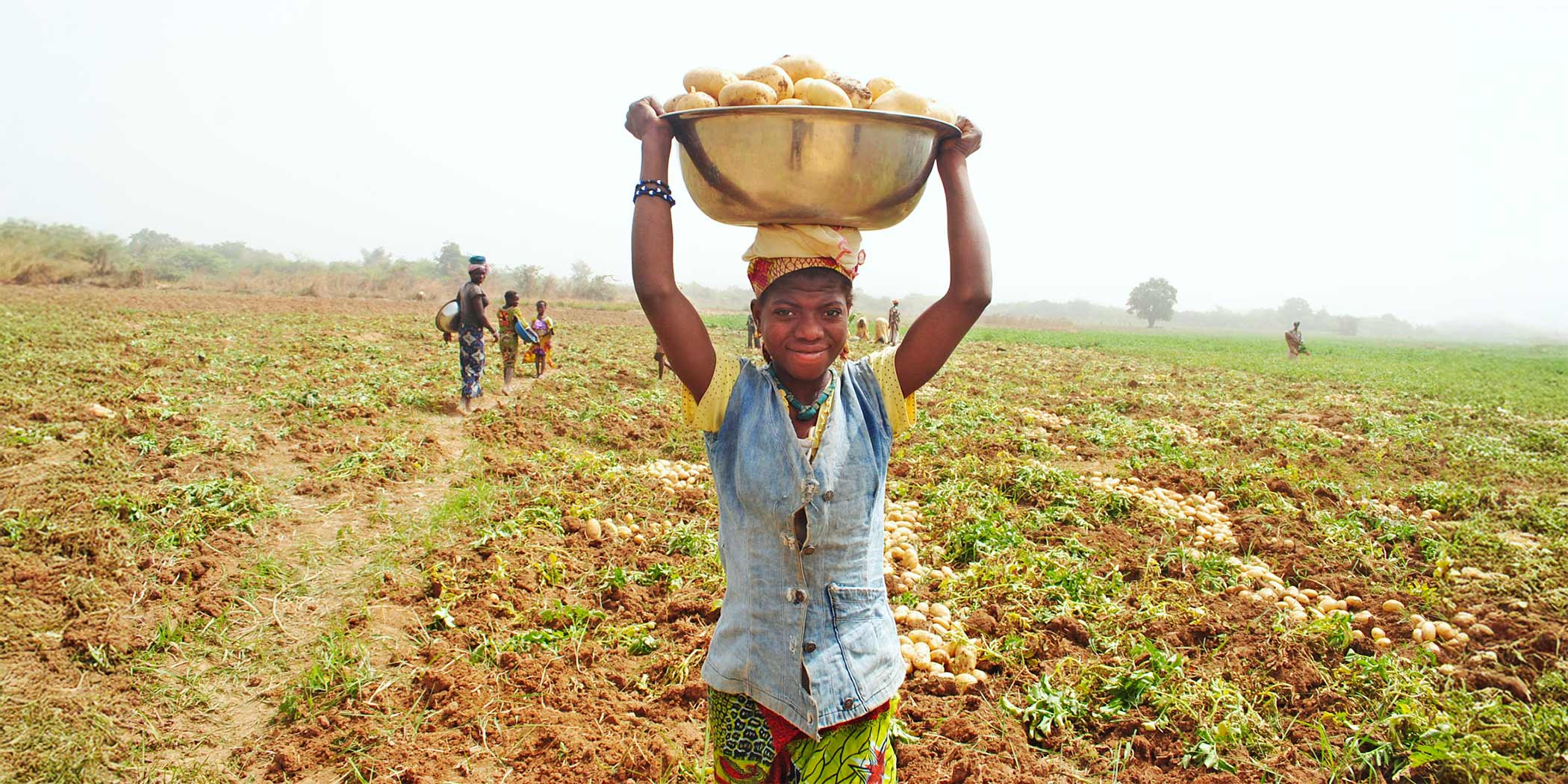
Rwanda is located in East Africa, with the Democratic Republic of Congo (DRC) to its west and Tanzania to its east. The country’s total land area is 26,338 sq km. In comparison, it is slightly smaller than the U.S. state of Maryland and is the most densely populated country in Africa. The country’s climate is temperate, with two rainy seasons, February through April and November through January. Of the total land area, 46 percent is utilized for cultivated crops, while another 10 percent supports permanent crops such as fruit- and nut-bearing trees. Among the environmental issues facing Rwanda are overgrazing, deforestation, soil nutrient depletion and soil erosion. The country is home to nearly 10.8 million people, with 90 percent of its workforce engaged in agriculture. Rwanda has seen substantial progress in rehabilitating its economy to pre-1994 levels. GDP has rebounded and inflation has been curbed, yet the majority of the population continues to live in poverty. Rwanda’s agriculture sector represents more than 42 percent of GDP, with primary exports of coffee and tea. Other agricultural products include bananas, beans, sorghum and potatoes. The East and Southern Africa Division is responsible for IFDC activities in Rwanda.

Current IFDC Projects in Rwanda

  • CATALIST-2, 2012-2016
    This project follows the CATALIST project (2007-2012), which focused on increasing agricultural productivity per land unit. CATALIST-2 builds on CATALIST activities in Burundi, Rwanda and the North and South Kivu provinces of the Democratic Republic of Congo. It also continues to promote agribusiness clusters and market integration, assisting 700,000 smallholder farmers to increase their incomes by 50 percent by project end. Support is provided by the Centre for Development Innovation of Wageningen University and Research Centre, which is developing improved germplasm (seed genetics) to enhance crop yields and product quality.

DONOR: The Netherlands’ Ministry of Foreign Affairs through the Embassies of the Kingdom of the Netherlands in Burundi, DRC and Rwanda

  • Privatization of Rwanda’s Fertilizer Import and Distribution System (PReFER), 2010-2015
    Funded by the U.S. Agency for International Development, the PReFER project is developing an efficient, effective and competitive private sector fertilizer procurement and distribution system in Rwanda. The project’s primary objective is to effect the orderly transition of the Rwandan government out of nationalized procurement and distribution. To that end, IFDC identifies policies that support the private sector’s involvement in the fertilizer market and contributes to the development of a sustainable supply system. This effort is expected to stimulate fertilizer demand and will support the project’s objectives through agricultural intensification and market development of farm output.

DONOR: U.S. Agency for International Development (USAID) 

  • Sustainable Energy Production Through Woodlots and Agroforestry (SEW), 2009-2013
    More than 90 percent of household energy in Central Africa’s Great Lakes Region is derived from biomass, contributing to rapid deforestation. SEW promotes sustainable energy production through reforestation and the development of wood fuel and charcoal value chains. The project also aims to decrease competition for land use between the energy and agricultural sectors by increasing wood production, agricultural productivity and incomes. The project is focused in Burundi, the North and South Kivu provinces of the Democratic Republic of Congo and Rwanda.

DONOR: Embassies of the Kingdom of the Netherlands

Recent IFDC Projects in Rwanda

  • Africa Fertilizer Efficiency Program, 2009-2011
    This program was an agricultural intensification effort targeting peri-urban farmers who have the potential to supply increased crop yields to nearby urban markets. These smallholder farmers, who have fields immediately adjoining urban areas, were trained by IFDC in new farming technologies and supplied with high-quality agro-inputs including fertilizer and high-yielding seed varieties.
  • Catalyze Accelerated Agricultural Intensification for Social and Environmental Stability (CATALIST), 2006-2012
    CATALIST worked to increase food security, reduce poverty, improve regional collaboration and foster peace and security in the Great Lakes Region of Central Africa. The project enabled farmers to increase their crop production and incomes through an integrated approach combining sustainable agricultural intensification technologies with farm-to-market linkages, agroforestry and infrastructure construction.
DONOR: Embassies of the Kingdom of the Netherlands
 
  • COMESA Regional Agricultural Inputs Program (COMRAP), 2010-2011
    COMRAP responded to rising food prices by increasing agricultural productivity through improved access to finance, training, fertilizer and seeds. Over the course of its implementation, the project targeted three million smallholder farmers in Burundi, Ethiopia, Malawi, Rwanda, Swaziland, Uganda, Zambia and Zimbabwe. COMRAP was implemented by the Alliance for Commodity Trade in Eastern and Southern Africa (ACTESA).

          DONOR: The European Union Food Facility Program

  • NEPAD-FAO Fertilizer Subsidy Study, 2011-2012
    The New Partnership for Africa’s Development (NEPAD) Planning and Coordinating Agency (NPCA) commissioned this study on fertilizer subsidy programs in eight African countries, with technical guidance and financial support provided by the Food and Agriculture Organization (FAO) of the United Nations, Alliance for a Green Revolution in Africa (AGRA) and IFDC. The study is an overview of different subsidy models, thus providing a menu of best practices for countries considering ‘smart’ subsidies or wishing to alter ongoing subsidy programs. The study focuses on fertilizer subsidy programs in Burkina Faso, Ghana, Malawi, Nigeria, Rwanda, Senegal, Tanzania and Zambia.

DONORS: Food and Agriculture Organization (FAO) of the United Nations, Alliance for a Green Revolution in Africa (AGRA)

  • Rwanda Agro-Dealer Development (RADD), 2010-2013
    The Rwanda Agro-Dealer Development (RADD) project built, strengthened and professionalized networks of agricultural input importers and agro-dealers. In turn, these organized and well-trained agro-dealers are providing increased, timely and more cost-effective supplies of agro-inputs to Rwanda’s farmers. RADD improved farmers’ access to inputs, decreased transaction costs and increased the demand for inputs. This has led to enhanced agricultural productivity and increases in income for both farmers and agro-dealers.

DONOR: Alliance for Green Revolution in Africa

  • Strengthening Trade at the Regional Level in Agricultural Inputs in Africa (STAR), 2007-2010
    The STAR project promoted food security and agricultural growth through improved regional trade along eastern and southern Africa’s entire agricultural vale chain. The project improved market access for agro-dealers and smallholder farmers. This included better access to quality inputs and advanced technologies along with improved market linkages, local and regional agricultural policy reforms and greater involvement of agricultural enterprises.

DONOR: The William and Flora Hewlett Foundation


Rwanda Information

Rwanda Articles

IFDC Core Competency: Gender Equity is Key to Feeding the Hungry (Taken from IFDC Report Volume 36, No. 4)


PReFER Helps Rwanda to Privatize It's Fertilizer Sector and Improving Charcoal Production (Taken from IFDC Report Volume 35, No. 4)


New Agro-Dealer Development Project:COMESA Regional Agricultural Inputs Program (COMRAP)(Taken from IFDC Report Volume 35, No. 3)


CATALIST Project Marks Accomplishment in 2009(Taken from IFDC Report Volume 35, No. 1)


CATALIST Road Rehabilitation: An IFDC/Helpage Partnership (Taken from IFDC Report Volume 35, No. 1)


Rwanda Videos

CATALIST - Nourishing Soil and Stability: A Farming Revolution in the Great Lakes Region of Africa

Television News Coverage - Signing of MoU (English)

Television News Coverage - Signing of MoU (French)

News Coverage - Signing of MoU (Kinyarwanda)

Inventory Credit System - English Captions

Inventory Credit System - French Captions