
Seed Entrepreneur in Burundi Transforms Local Agriculture
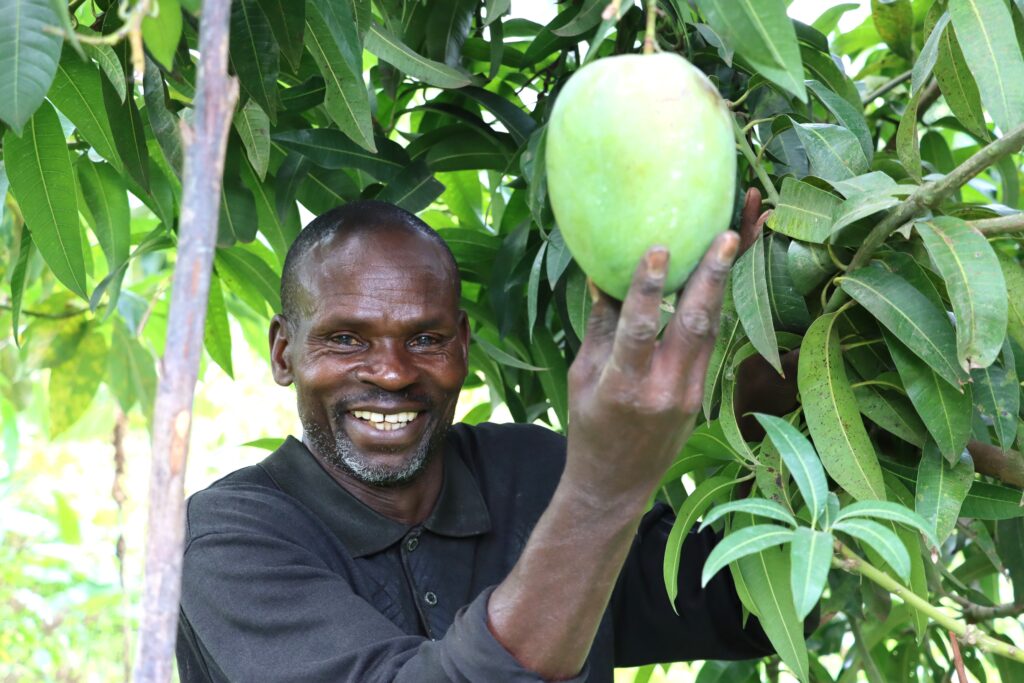
Déogratias Nshimirimana, a 32-year-old seed entrepreneur from Burundi’s Ruyigi Commune, began his career in agriculture in 2016 shortly after completing secondary school, initially focusing on marketing produce.
Inspired by an established seed entrepreneur in Ruyigi from whom he sourced inputs, he earned certification from the National Office of Seed Control and Certification (ONCCS) in 2021 – a demanding process requiring field inspections and seed analyses – and became a seed entrepreneur for maize and beans. He subsequently started maize seed multiplication on 3 hectares of family land, obtaining 5 metric tons of seed.
“The seeds from local multipliers are just as productive as the imported hybrids distributed by technical services, and far more efficient than the seeds saved from previous harvests that we used to plant.”
Jean Paul Nyandwi, a farmer from Ngarama Hill
Over time, Déogratias grew his operations. As a participant in IFDC’s Private Seed Sector Development (PSSD) project, he received co-financing support for bean seed production in 2024.
“The year 2024 was a real blessing for me. IFDC’s co-financing crowned my efforts as a seed multiplier. Thanks to the sale of 12 metric tons of seed produced on 8 hectares, I was able to acquire additional land, build up a cattle herd, and diversify my sources of income,” Déogratias reflected.
Supporting Farmers Through Community-Based Seed Systems
Déogratias plans to expand his seed multiplication to 10 hectares in 2026, aiming to produce 15 metric tons of maize seed. Such a goal is more within his reach than ever: since he now owns nine improved-breed cows, he has constant access to organic fertilizer and other benefits.
“[With the income from] combining livestock farming with seed multiplication, I have been able to construct a seed storage facility and finance my own university studies,” he added.
Looking ahead, Déogratias aims to strengthen customer loyalty by expanding his sales outlets to several hills and establishing a network of small retailers, offering seeds in 25 kilogram packages across different localities in the Commune of Ruyigi.
One customer especially praised the quality of the ZM621 maize seed he obtained from Déogratias. Jean Paul Nyandwi, a farmer from Ngarama Hill, noted, “The seeds from local multipliers are just as productive as the imported hybrids distributed by technical services, and far more efficient than the seeds saved from previous harvests that we used to plant.”
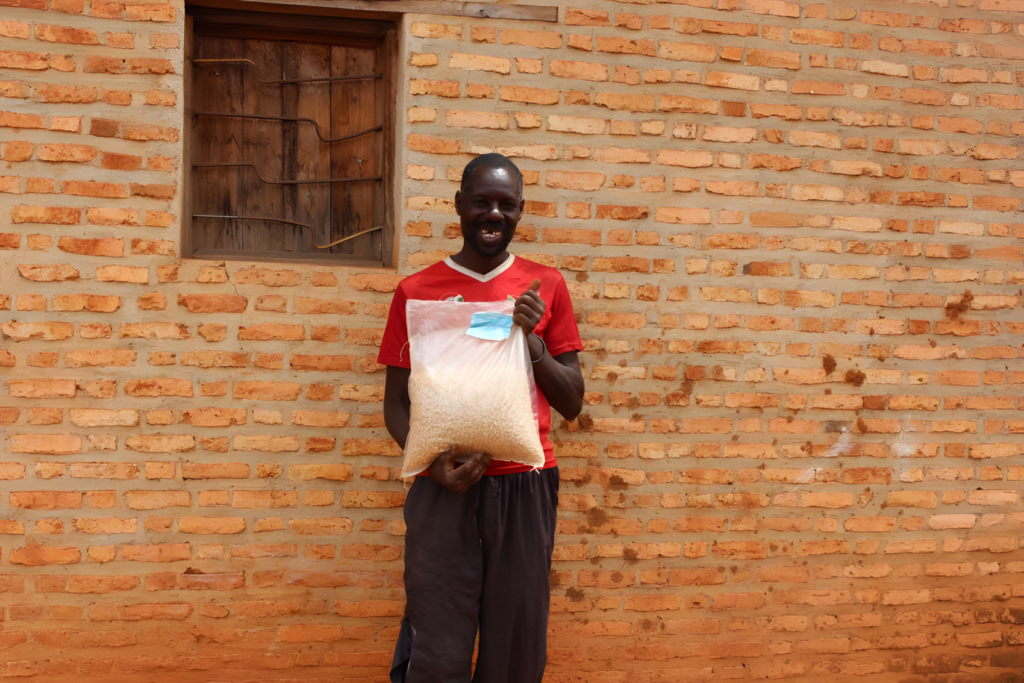
Jean Paul explained that this was his second time buying seeds from this same seed entrepreneur, having obtained very good yields during the previous growing season. He recalled that during the first season of 2025, while visiting Déogratias’s point of sale, his attention was drawn to neatly displayed seeds packaged in bags that were clearly different from those used for imported hybrids.
Curious about this local product, he decided to give it a try.
Affordable, High-Quality Seeds Boost Farmer Income and Resilience
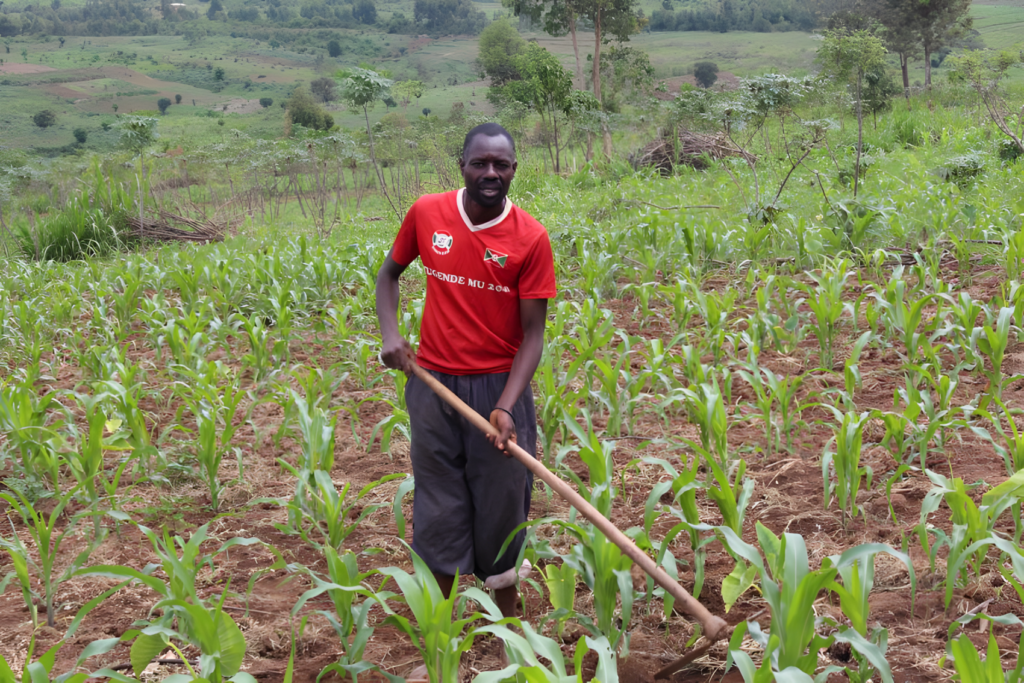
Jean Paul bought 2 kilograms of the ZM621 variety to test. His relatively small 25 meter × 30 meter plot normally produced about 100 kilograms using recycled seeds, but with the AM621 seeds, he harvested more than 250 kilograms.
“With technical support from the agronomist working with the seed entrepreneur, the results exceeded my expectations… Most of the plants produced two ears, which is truly remarkable,” Jean Paul observed.
Jean Paul then purchased 5 kilograms of ZM621 seeds from Déogratias and planted them on a 15 meter × 120 meter plot, from which he expects to harvest at least 800 kilograms.
In Jean Paul’s experience, when combined with good organic and mineral fertilization, the ZM621 variety delivers highly satisfactory yields. He therefore strongly encourages other farmers in the region to purchase seeds from Déogratias, especially given the affordable prices.
The locally produced ZM 621 maize seed sold by Déogratias is priced between 4,000 and 5,000 BIF (Approximately $1.35-$1.69 U.S.) per kilogram. By comparison, government-subsidized hybrid maize sells for about 4,500 BIF (Approx. $1.52 U.S.) per kilogram, while unsubsidized hybrid maize can cost as much as 25,000 BIF (Approx. $8.45 U.S.) per kilogram.
The Future of Local Seed Production in Burundi
Together, the experiences of Déogratias and Jean Paul point to a transformative shift in local seed systems, thanks in large part to PSSD and the commitment of its participants.
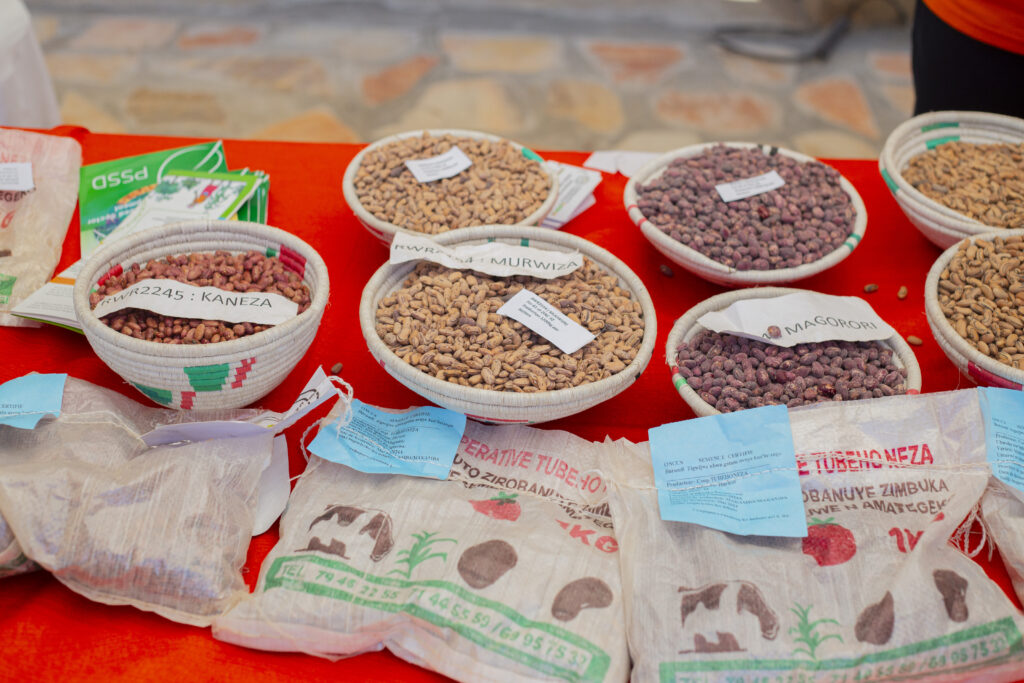
Now in its second phase, the PSSD2 project is continuing to support seed entrepreneurs in setting up large-scale seed production fields so that the volume of seeds available for sale to smallholder households can significantly increase. The project also supports seed sales by helping seed entrepreneurs organize mini-fairs to facilitate access to seeds for smallholder farmers.
When quality seed production is rooted in the community, supported by sound agronomic practices, and linked to responsive entrepreneurship, it does more than raise yields; it builds confidence, resilience, and shared prosperity.
The Private Seed Sector Development, Phase II (PSSD2) (2018-2026), funded by the Dutch Ministry of Foreign Affairs and implemented by the International Fertilizer Development Center (IFDC), aims to increase the production and incomes of 178,000 farmer households in Burundi. The project works with private and public sector partners to promote the development of a private sector-led seed industry that is able to provide farmers with sustainable access to high-quality seed and agricultural advisory services.