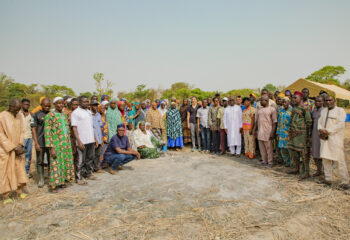
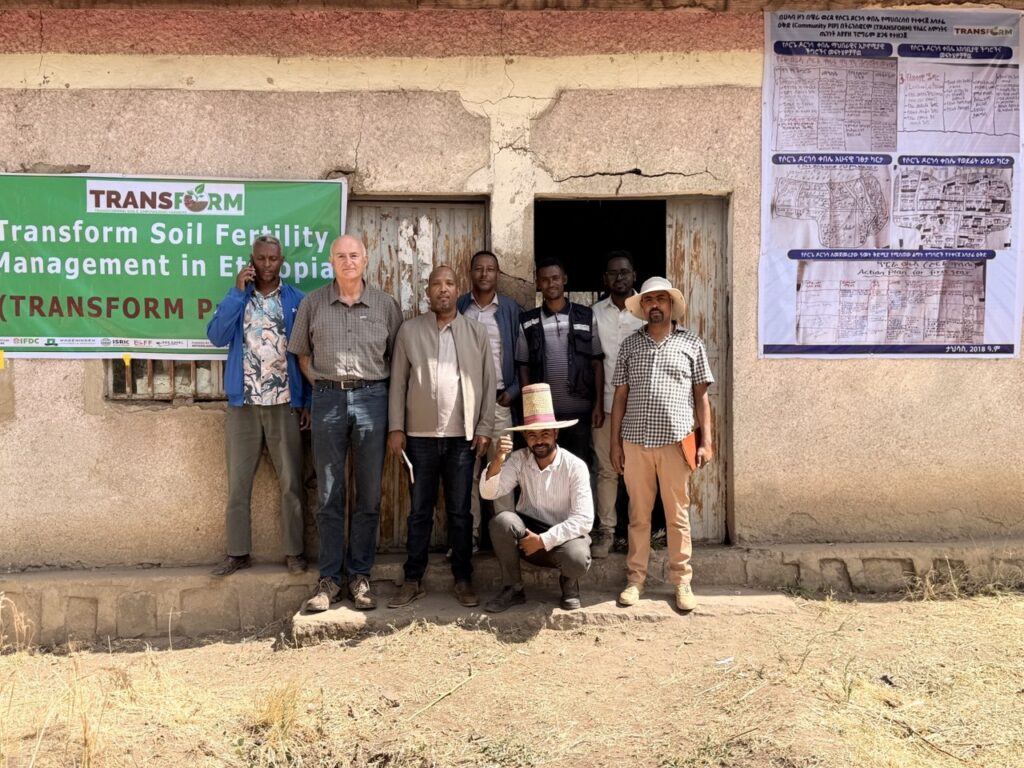
On February 12, a Transform Soil Fertility Management in Ethiopia (TRANSFORM) project team, led by Program Director Eric Smaling, Deputy Program Director Fayisa Bulo, Component 1 Lead Girma Jibat, and SOS Sahel Program Manager Takele Nemomsa Geleta, visited Sorge Dorgossa Kebele in northern Ethiopia to provide onsite technical support and strengthen ongoing land restoration efforts.
The visitors experienced TRANSFORM’s Participatory Integrated Planning (PIP) approach in action, seeing farming households’ and communities’ restoration plans and visions becoming a reality.
TRANSFORM is laying the foundation for sustainable soil fertility management in Ethiopia, one community at a time.
PIP Innovators, farmers trained on improved practices, pass their knowledge on to at least 10 additional neighboring farmers, creating a ripple effect of learning and adoption across communities.
Providing Onsite Technical Support
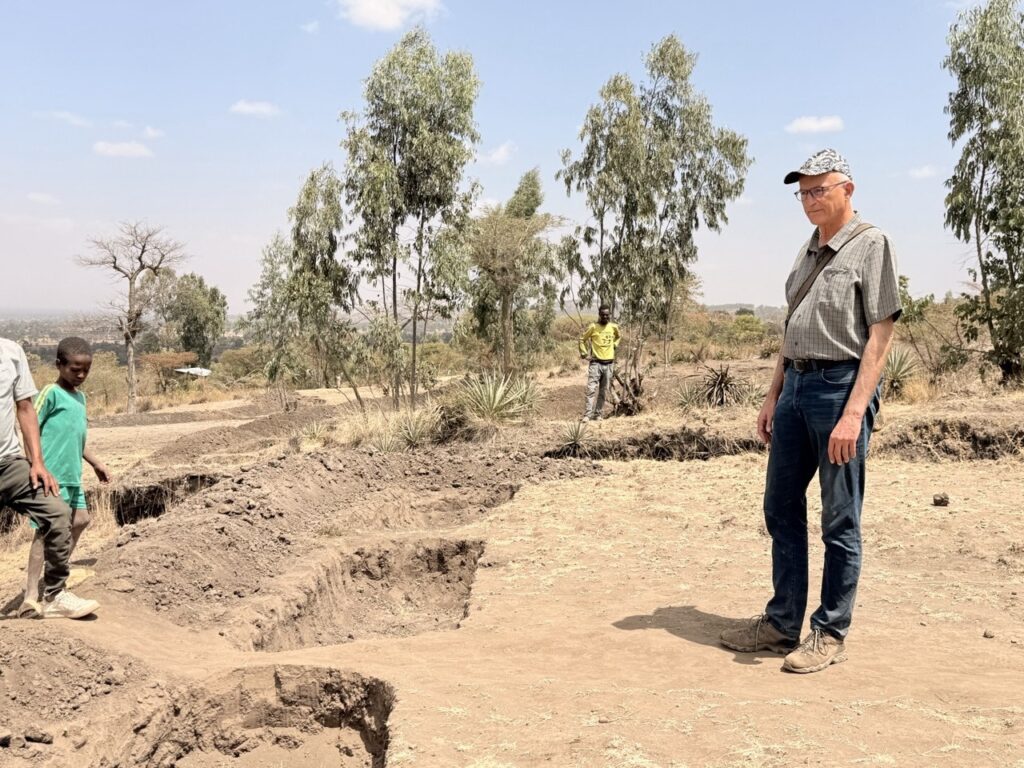
During the visit, the team assessed one of the most affected “hotspot” sites – degraded areas of land in need of rehabilitation –where the farming community was already taking action to restore their land.
When the TRANSFORM team arrived at the site, PIP Innovators were working alongside community members to construct soil and water conservation structures, including trenches. These endeavors are part of a broader vision developed by farmers to restore productivity and improve soil health.
The TRANSFORM team provided practical guidance to strengthen these efforts. They emphasized the importance of setting clear restoration objectives and designing interventions based on ecological knowledge. Farmers were encouraged to measure progress using observations from before and after the restoration process to better understand what works.
For water management, the team advised harvesting water at the foot of slopes to improve moisture retention. They also encouraged farmers to continuously monitor results and adjust their approaches through learning and experimentation.
Empowering Farmers Through the PIP Approach
With regard to vegetation restoration, the team highlighted the importance of selecting planting materials from diverse and locally adapted sources to help maintain resilience and avoid long-term challenges such as poor adaptation or reduced genetic diversity.
The team also stressed the critical role of PIP Innovators in mobilizing communities. By working together, farmers are now restoring lands and gullies that had been left unmanaged for years.
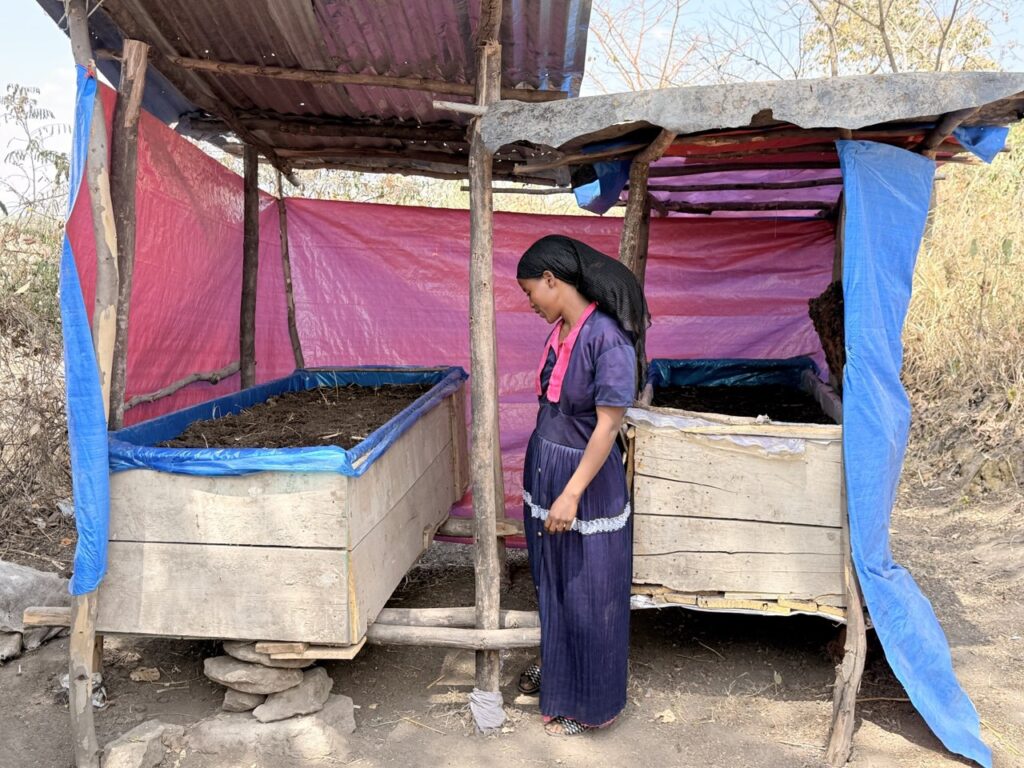
The TRANSFORM team then visited vermicompost preparation sites. Farmers benefited from technical advice on maintaining proper moisture levels, ensuring good aeration, and harvesting compost effectively to improve soil fertility.
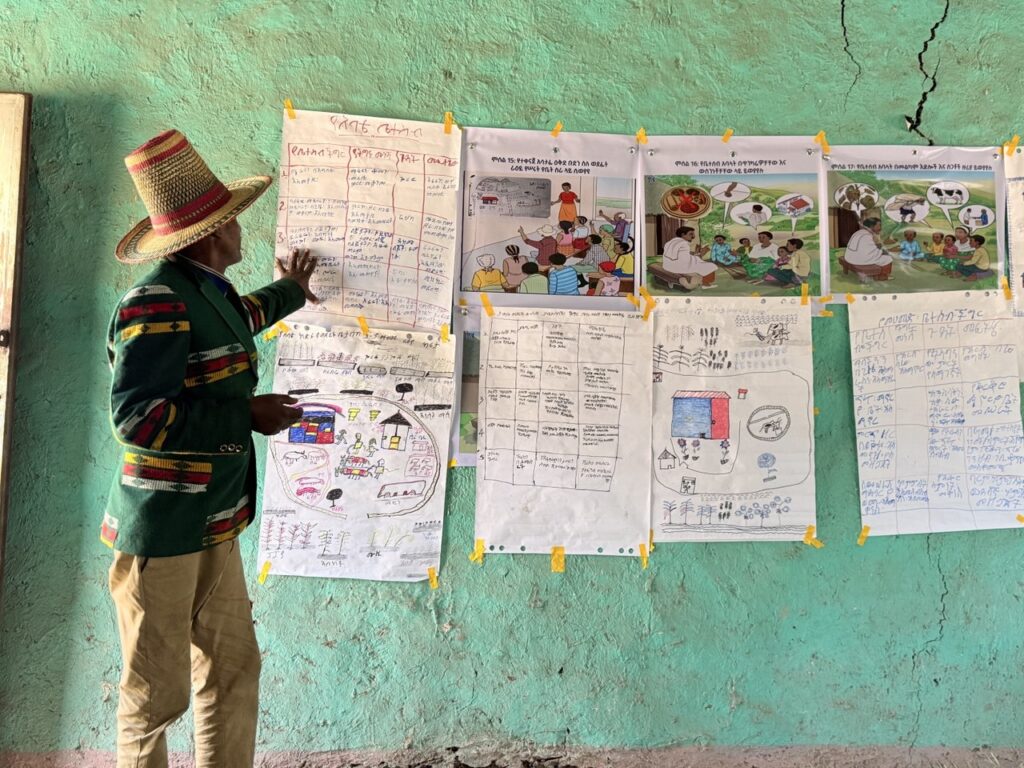
The highlight of the visit was the strong commitment shown by farmers. Using the PIP approach, farmers are mapping their current farm conditions, developing a shared vision for the future, and creating action plans to achieve it. This process empowers them to take ownership of their land and its restoration.
The visit demonstrated how the PIP approach is driving change. With its bottom-up, participatory method, TRANSFORM is helping communities take the lead in improving soil fertility and rebuilding degraded landscapes.
Through a combination of community leadership, technical support, and shared learning, TRANSFORM is laying the foundation for sustainable soil fertility management in Ethiopia, one community at a time.
The TRANSFORM project (2025-2028) is funded by the Embassy of the Kingdom of the Netherlands and the European Union and is implemented by a consortium comprising the International Fertilizer Development Center (IFDC), Wageningen University & Research/Wageningen Environmental Research, ISRIC – World Soil Information, Environment and Coffee Forest Forum (ECFF), and SOS Sahel Ethiopia.