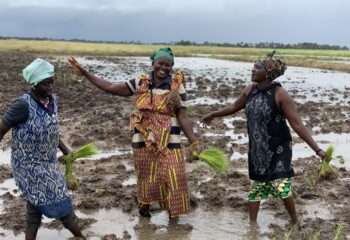
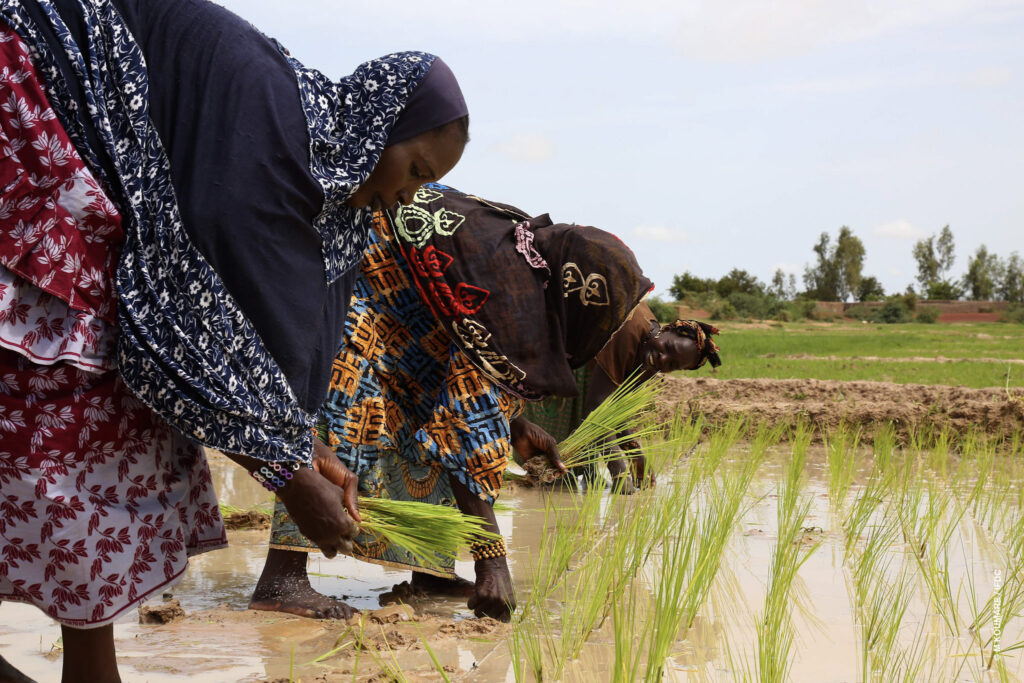
The Rice Value Chain Development Project (PDCVR-G) project (2019-2025) aimed to reduce the high rate of rice imports in Guinea – approximately 700,000 metric tons (mt) per year – and promote economic growth by improving production, processing, and marketing and increasing private sector participation in the rice sector.
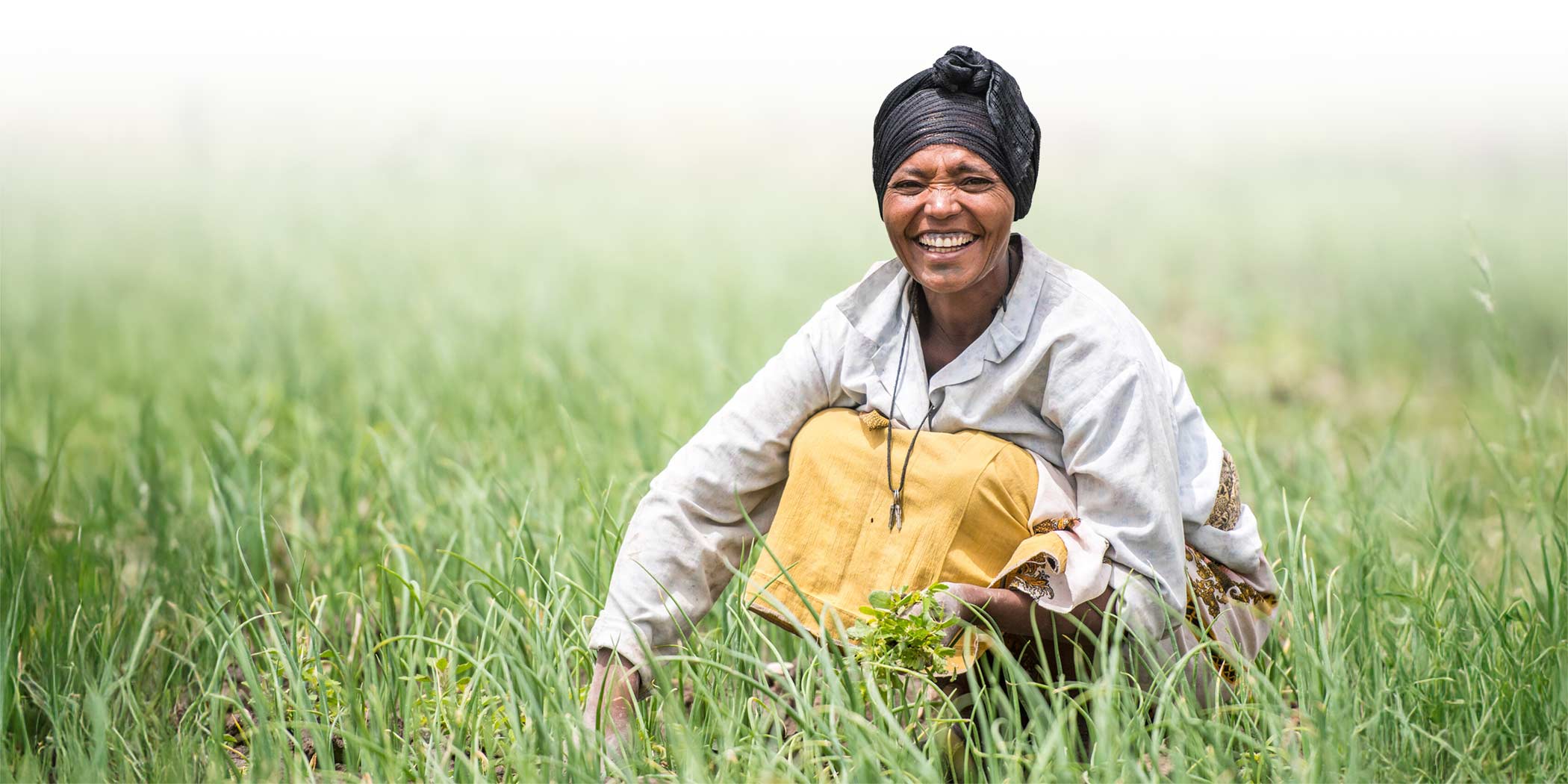
The project specifically targeted enhancing the productivity and capacity of smallholder farmers, with a focus on ensuring that 45% are women and young farmers.
These small-scale producers gained access to new technologies, modernized irrigation systems, improved seeds, financial resources, technical support, and advisory services. Additionally, the project aimed to create fair and decent employment opportunities in agriculture, strengthening the economic position of rural communities.
Expected Outcomes
- Annual household income will increase from U.S. $300 (2017 baseline) to U.S. $1,000.
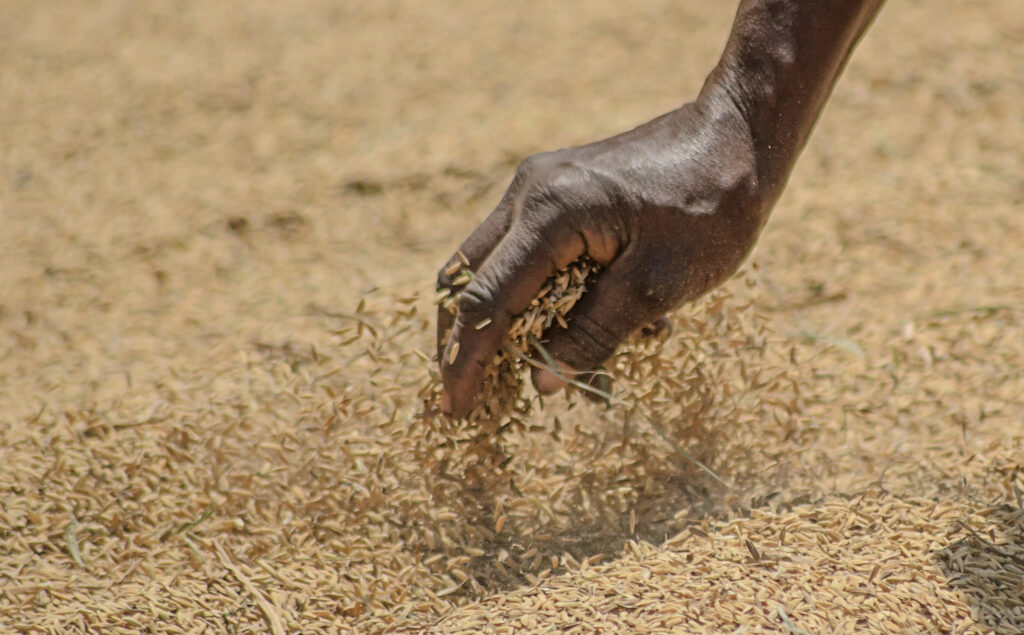
- Lowland rice field yields will improve from 4 mt/ha to 6 mt/ha.
- Yield for tomatoes and onions will rise from 20 mt/ha to 30 mt/ha and the total volume marketed will increase by 100%.
- A total of 25,000 new jobs in agriculture will be created, contributing to local employment and economic development.
Farmer field schools were established to promote urea deep placement (UDP) technology, and trained farmers on good rice-growing practices, and soil fertility maps developed to guide fertilizer recommendations for rice fields in Lower and Upper Guinea. These efforts were designed to improve productivity, optimize fertilizer use, and ensure sustainable soil management, ultimately strengthening Guinea’s rice sector.
PDCVR-G was funded by the Islamic Development Bank (IsDB) and the Arab Bank for Economic Development in Africa (BADEA) and implemented through a collaboration with key national partners, including the Ministry of Agriculture and Livestock (MAG/EL), the Guinea Agronomic Research Institute (IRAG), the Rural Promotion and Agricultural Extension Service (SERPROCA), the National Soil Service (SENASOL), and various farmer organizations.
This project was made possible by the support from the Islamic Development Bank and the Arab Bank for Economic Development in Africa (BADEA).
Project Impact
- Trained 1,350 farmers (20% of whom were women) had been trained on UDP technology.
- Established 48 demonstration plots using the farmer field school approach.
- Collaborated with the PDRI/GKM project to conduct three research trials in Gaoual, Koundara, and Mali on UDP technology and its adoption.
- Trained 15 researchers and agricultural advisors on UDP, along with farmer groups, all made up of 80% women, in the areas where the trials were conducted.
- Carried out sampling in Upper Guinea for soil analysis to produce a fertility map and propose fertilization formulas adapted to local contexts.