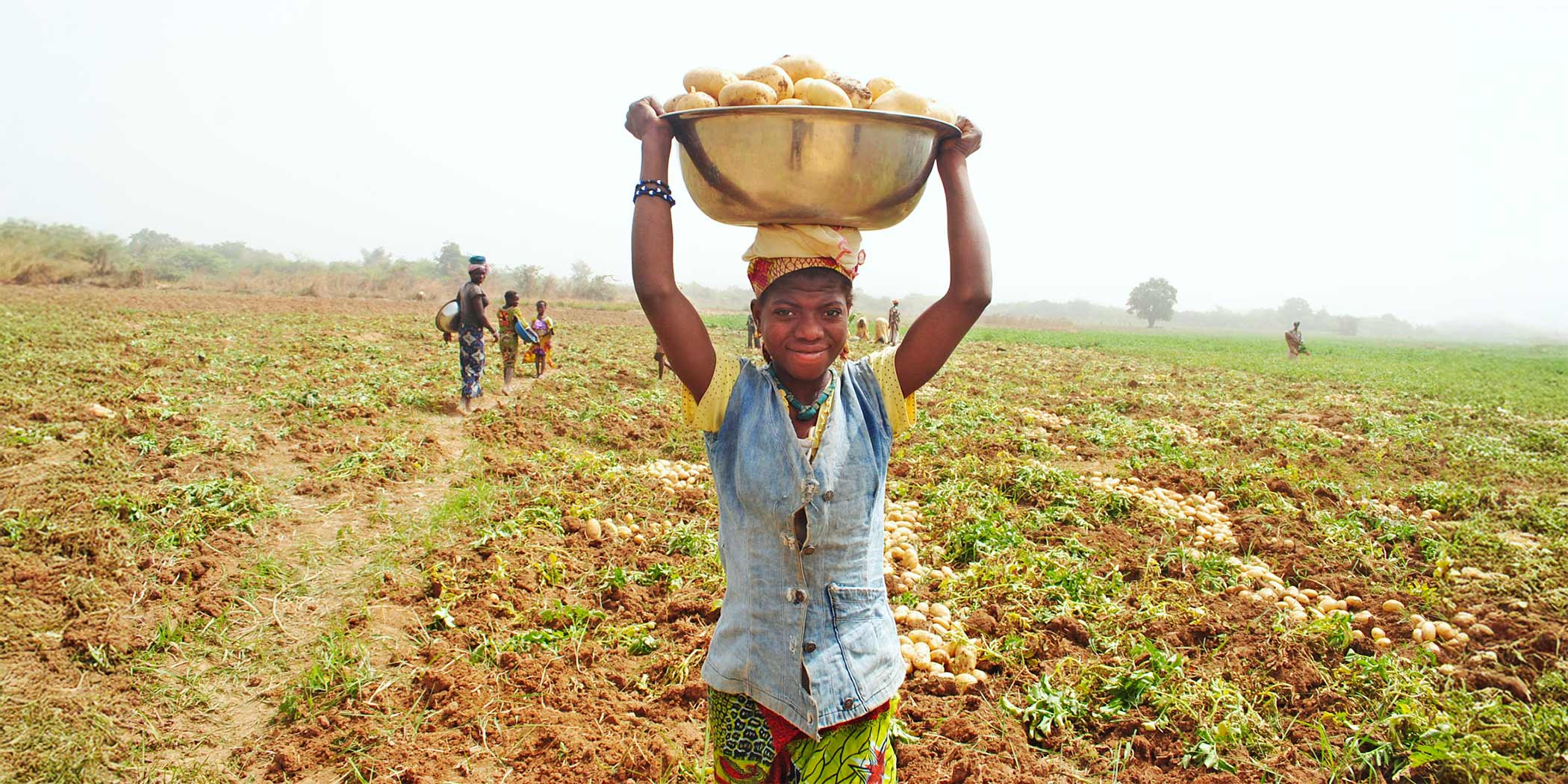
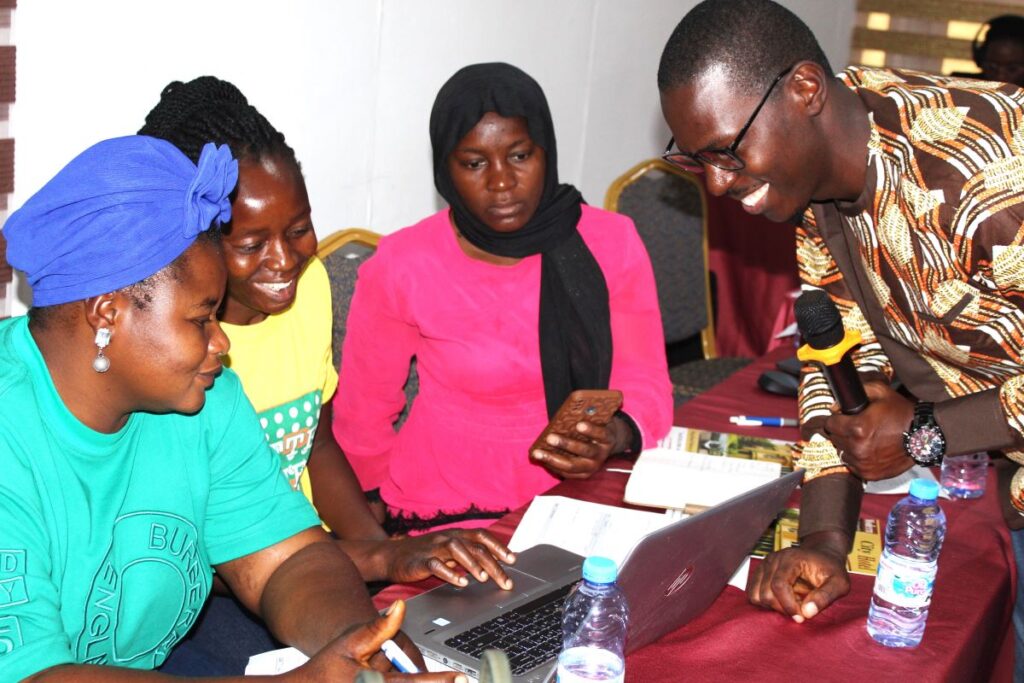
Thousands of smallholder farmers across northern Ghana will soon receive better field advisory support to increase their yields and improve their livelihoods as the Feed the Future Enhancing Growth through Regional Agricultural Input Systems (EnGRAIS) Project for West Africa collaborates with the Directorate of Agricultural Extension Services (DAES) of the Ministry of Food and Agriculture to train district and regional agricultural extension agents (AEAs) on the use of innovative techniques and tools to help farmers increase their production.
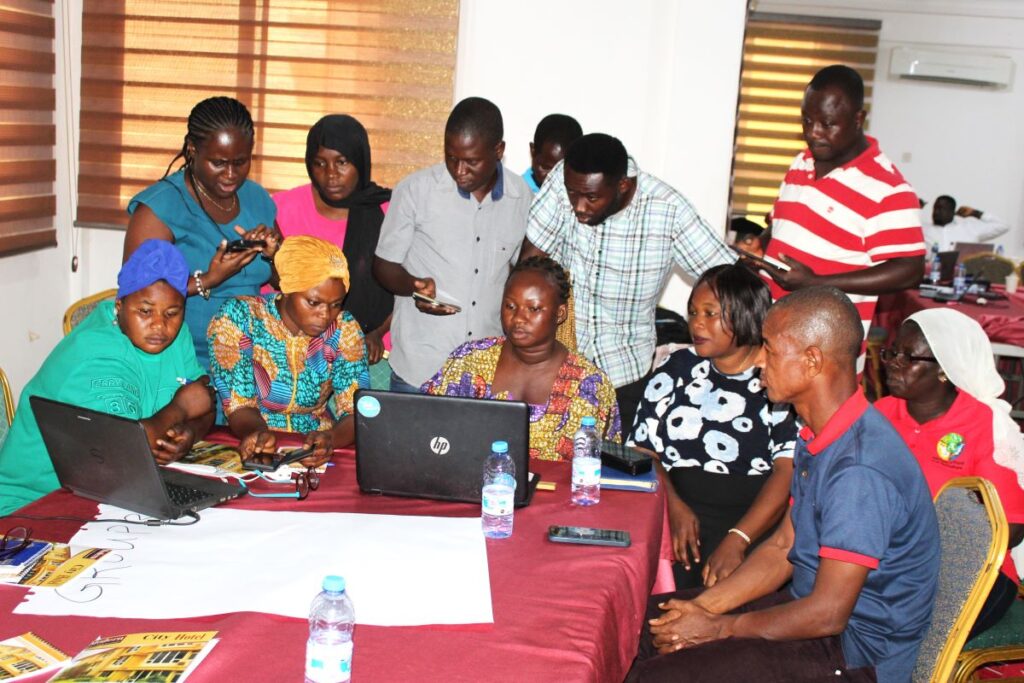
Over 30 AEAs, including 13 women, from the Northern, North East, and Savannah regions of Ghana attended the first training of trainers (ToT) on January 10-11 in Tamale, marking the beginning of a series of upcoming programs. This first ToT equipped the AEAs with valuable skills, such as collecting data on farmer trainees and advocating to include women and youth in training programs to ensure equitable participation and benefit to all agriculture value chain actors, especially at the grassroots level.
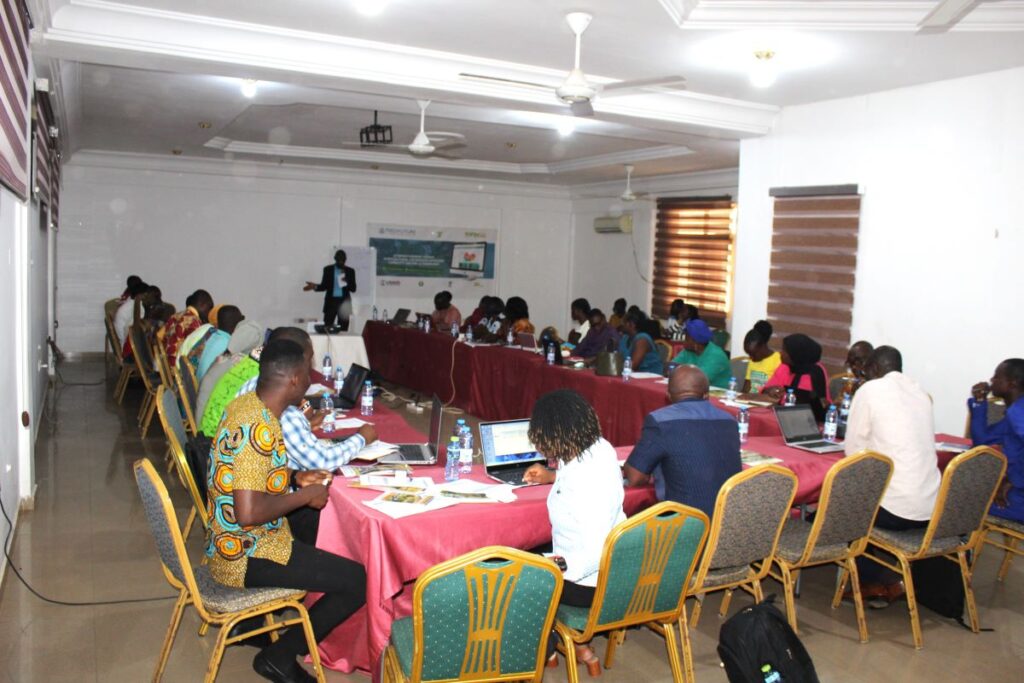
Beyond these skills, the event focused on instructing participants in the utilization of the Fertilizer and Seed Recommendations Map for West Africa (FeSeRWAM) platform and the adoption of agricultural input packages (AIPs) to enhance agricultural productivity.
FeSeRWAM is a georeferenced web-based platform that provides recommendations to farmers on seeds, fertilizer, and good agricultural practices to increase the demand for and use of appropriate fertilizers and improved seeds for better production. The recommendations are specific to each agro-ecological zone and the platform contains over 600 AIPs on 21 crops, 62 fertilizer types, and 578 crop varieties across West Africa.
“The FeSeRWAM platform is like an agricultural compendium where anybody who needs any information on any crop can get that information. It is a digital solution to many agricultural challenges.”
Dr. Francis Tetteh, Project regional trainer and Head of Soil Testing and Analytical Services at CSIR-Soil Research Institute
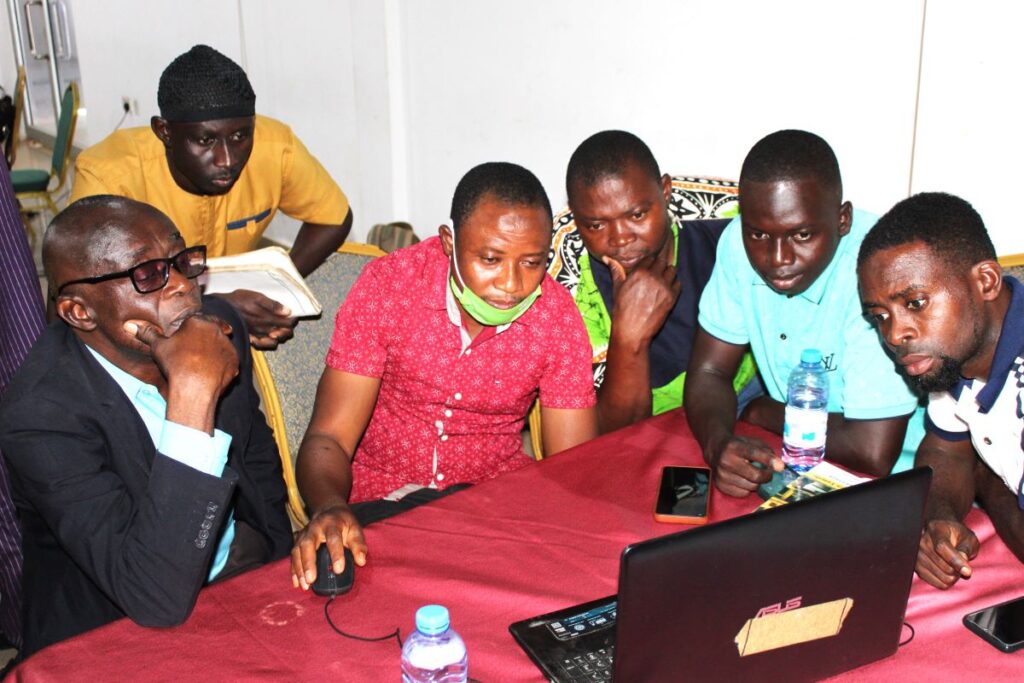
“I was excited when I received the invitation to participate in this training because I had a lot of questions and clarifications to enhance my knowledge regarding agricultural productivity when it comes to yields, especially on agricultural practices that hinder our productivity levels in Ghana,” said Flavia Akanweenba, District Agricultural Extension Officer.
According to Prospera Anku, Head of Field Services at DAES, most challenges that farmers face have to do with soil fertility issues and limited availability of improved seed varieties, and they need innovations that will increase their yields. “The FeSeRWAM platform provides the content that extension agents need to advise farmers; that is why we are interested in ensuring that we engage more to use the platform to increase the knowledge base of AEAs so they can address issues of farmers as they see them,” Anku said.
In Anku’s view, the DAES saw and took advantage of the opportunity to work with EnGRAIS on the FeSeRWAM platform because now is the time for extension service delivery to go further by using digital tools to transfer innovations to farmers.
“As a district AEA in charge of nine sub-AEAs who operate within 27 operational areas in the Mion District, I am going to build their capacity with the new skills and knowledge I have acquired to meet crop yield potential and increase incomes of farmers in the Mion District,” Akanweenba said.
In his closing remarks, Dr. Tetteh advised national institutions to buy into and take ownership of the platform and emphasized the importance of disseminating it in a cascading manner, reaching farmers through researchers, extension staff, non-governmental organizations, and input dealers.
With strategic partnerships, the EnGRAIS project will continue to provide training and the necessary tools, techniques, and critical information on appropriate measures to increase agricultural production and productivity across West Africa.
The Feed the Future Enhancing Growth through Regional Agricultural Input Systems (EnGRAIS) Project for West Africa is one of the many assistance programs supported by the American people through the United States Agency for International Development (USAID).