The Government of Sierra Leone has launched a new technical assistance program to support digital soil mapping and site-specific fertilizer recommendations, marking a shift toward precision soil management in the country’s agriculture sector.
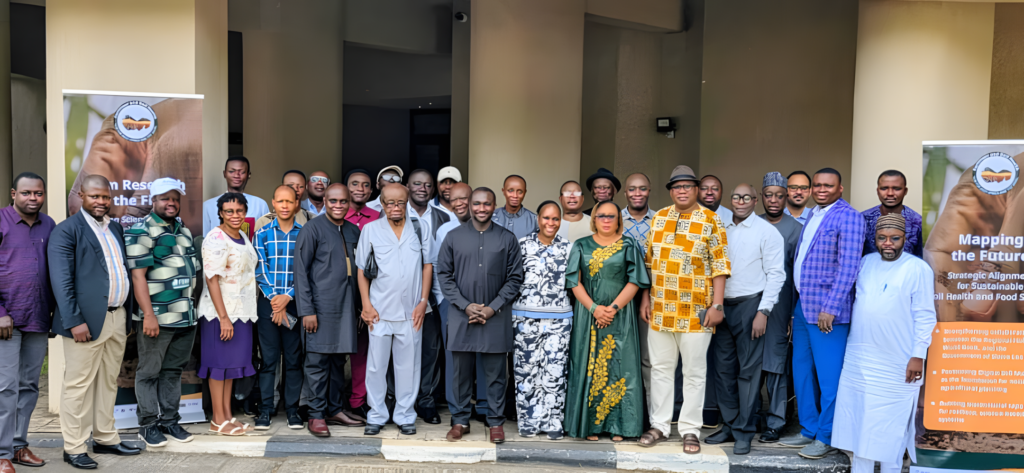
Formally launched during a three-day inception workshop held in Freetown, Sierra Leone, the initiative is funded through the World Bank-supported Food Systems Resilience Program (FSRP) and will be implemented by the Regional Hub for Fertilizer and Soil Health for West Africa and the Sahel.
“When completed, this work will provide modern digital tools that support smarter, more sustainable farming and help increase productivity.”
Dr. Kepifri Lakoh, Program Manager for the FSRP in Sierra Leone
The program supports the transition from generalized fertilizer application to data-driven, site-specific nutrient management through a national digital Soil Information System. The work aligns with the Sierra Leone Government’s “Feed Salone” agenda, which prioritizes increased domestic food production and reduced reliance on imports.
Government Focus on Precision Agriculture
Opening the workshop, Dr. Henry Musa Kpaka, Minister of Agriculture and Food Security, said the program addresses long-standing soil productivity challenges.
“Sierra Leone depends heavily on agriculture for food security and economic growth, but our soils have not delivered the results we need,” Dr. Kpaka remarked. “Strengthening the Soil Information System will provide the data required to make better fertilizer and soil management decisions.”
Dr. Kpaka added that the tools developed under the project will support farmers, researchers, and investors with accurate soil profiles and site-specific fertilizer recommendations, saying:
“When completed, this work will provide modern digital tools that support smarter, more sustainable farming and help increase productivity.”
Building National Technical Capacity
In addition to field activities, the technical assistance program includes a strong focus on national capacity building. Dr. Kepifri Lakoh, Program Manager for the FSRP in Sierra Leone, said the project prioritizes long-term technical sustainability.
“We are building national capacity, not just installing equipment,” Dr. Lakoh observed. “Training for PhD students, support for adaptive research, and certification of laboratory technicians are designed to ensure these systems are managed locally over the long term.”
From Planning to Implementation
The project is being implemented by a consortium that includes the International Institute of Tropical Agriculture (IITA), IFDC, the African Plant Nutrition Institute (APNI), Mohammed VI Polytechnic University (UM6P), OCP Africa, Accelerating Impacts of CGIAR Climate Research for Africa (AICCRA), and ISRIC – World Soil Information, working with two national institutions: Sierra Leone Agricultural Research Institute (SLARI) and Njala University.
Lionel Axel Kadja, Director of the Regional Hub for Fertilizer and Soil Health for West Africa and the Sahel, said the workshop validated the technical roadmap for program implementation: “The roadmap provides a clear path for digital soil mapping and site-specific recommendations.”
Field teams will collect and analyze soil samples from farms across Sierra Leone to update national soil maps and generate farm-level data for rice, maize, and cassava. The new information will feed into the national Soil Information System, enabling more precise fertilizer recommendations, improving fertilizer efficiency, and supporting the government’s “Feed Salone” drive to boost domestic food production, while strengthening long-term technical capacity at SLARI and Njala University.
“Updating national soil maps and conducting nutrient omission trials will provide the data needed to support extension services and improve fertilizer recommendations,” noted Dr. Abdul R. Conteh, Acting Director General of SLARI.
About the Regional Hub for Fertilizer and Soil Health for West Africa and the Sahel
The Regional Hub for Fertilizer and Soil Health for West Africa and the Sahel is a collaborative initiative that brings together leading research, development, and private sector partners to deliver science-driven solutions for sustainable agriculture.
Hosted by the International Institute of Tropical Agriculture (IITA) and supported by organizations including the International Fertilizer Development Center (IFDC), OCP Africa, the African Plant Nutrition Institute (APNI), Mohammed VI Polytechnic University (UM6P), Accelerating Impacts of CGIAR Climate Research for Africa (AICCRA) and ISRIC – World Soil Information, the Hub leverages data, soil testing, and fertilizer technologies to enhance productivity, efficiency, and resilience across regional food systems.
With financial backing from the World Bank through CGIAR’s AICCRA project and OCP Africa, the Hub is committed to translating research into actionable solutions for farmers and policymakers, promoting long-term soil health, food security, and sustainable development for West Africa and the Sahel.