Across Burundi, women farmers are reshaping their communities through resilience, leadership, and innovation. From restoring degraded soils to leading farmer groups and advocating for more equitable household decision-making, these women are driving transformation from the ground up. This International Women’s Day, celebrated under the United Nations (UN) theme “Rights. Justice. Action. For ALL Women and Girls,” we are highlighting their vital contributions and the ongoing journey toward true gender equity through the positive impact of the Soil Fertility Stewardship Project (PAGRIS) and Private Seed Sector Development, Phase II (PSSD2) projects.
Today, I am seen as a true agent of change and local development.
Clémence Nibaruta
A Reality Still Marked by Inequalities
Despite progress made in recent years, women continue to face structural injustices.
In many communities of Burundi, women cultivate land they do not own, without secure land tenure. Widows are sometimes dispossessed of their fields after the death of their husbands. Pregnant women are often forced to abandon their education, and accountability remains rare. Other women and girls experience violence without meaningful access to justice. Due to fear, economic dependence, or social pressure, some remain silent in the face of injustice.
These realities underscore the urgent need to move from words to action.
Concrete Actions for Sustainable Change Through IFDC
In response to these challenges, IFDC’s PAGRIS and PSSD2 projects have implemented targeted capacity-building initiatives for women and youth, who are key actors in Burundi’s agricultural development. The objective is clear: to promote inclusive, equitable, and income-generating agriculture.
Key interventions of the projects include the Participatory Integrated Planning (PIP) approach, implemented at household, site, and community (hill) levels, which encourages inclusive participation of all family members in an agriculture plan. The projects also promote the production of and access to quality seeds, as well as Integrated Soil Fertility Management (ISFM) to increase yields in local conditions.
The projects offer transformational leadership training, including self-esteem development, leadership, and conflict management within households and communities. The Household Photo Tree, also known as the Equality Tree, is a tool derived from the Gender Action Learning System (GALS) approach that facilitates analysis of household resources, division of labor, income allocation between men and women, decision-making processes, and access to and control over household assets, promoting greater equity among all household members.
These approaches aim not only to improve agricultural productivity but also to transform social and economic dynamics within households and communities.
Significant and Measurable Results
These efforts have already yielded encouraging outcomes:
- 318,975 farmers trained in good agricultural practices through Farmer Field Schools, including 146,009 women (46%).
- 72,204 temporary jobs created by seed entrepreneurs supported by PSSD, including 41,104 women (57%).
- 1,482 permanent jobs generated, of which 247 are held by women (17%).
- 502,947 producers purchased certified seeds, including 187,818 women (37%).
- 136,523 households adopted ISFM practices, including 69,869 women (51%), resulting in significant increases in production and income.
- 265 seed entrepreneurs co-financed, including 45 women (17%).
These figures demonstrate strong participation among women where entry barriers are relatively low. The challenge moving forward is to remove structural barriers, such as access to credit and land ownership, to enable more women to access permanent employment opportunities and entrepreneurship.
Women Leading Change on the Ground
Behind these figures are real women whose lives – and communities – have been transformed in Burundi.
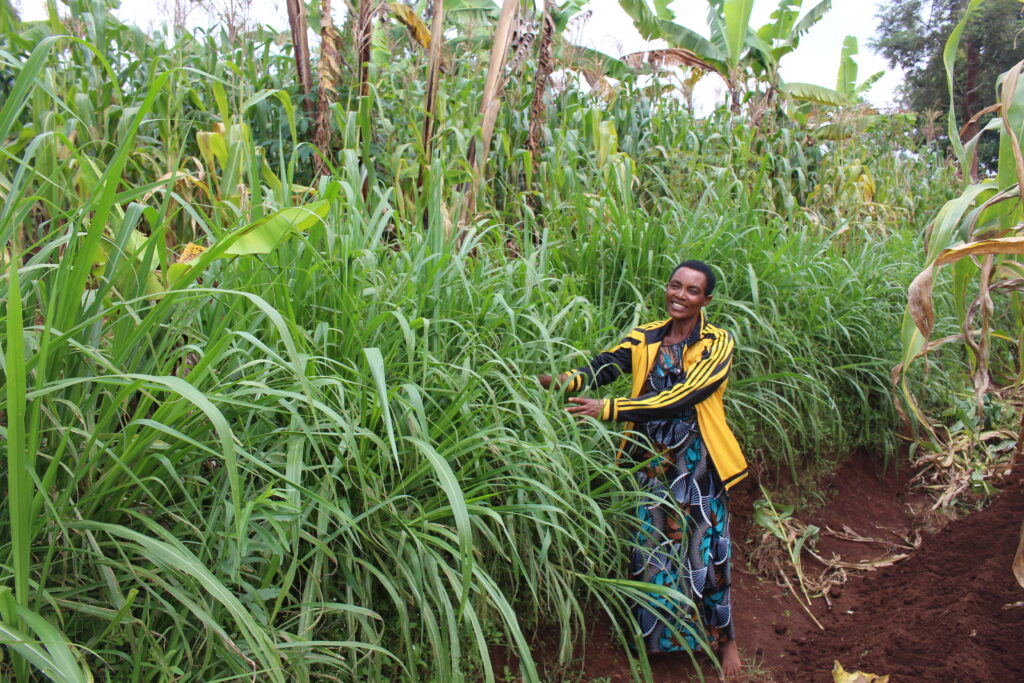
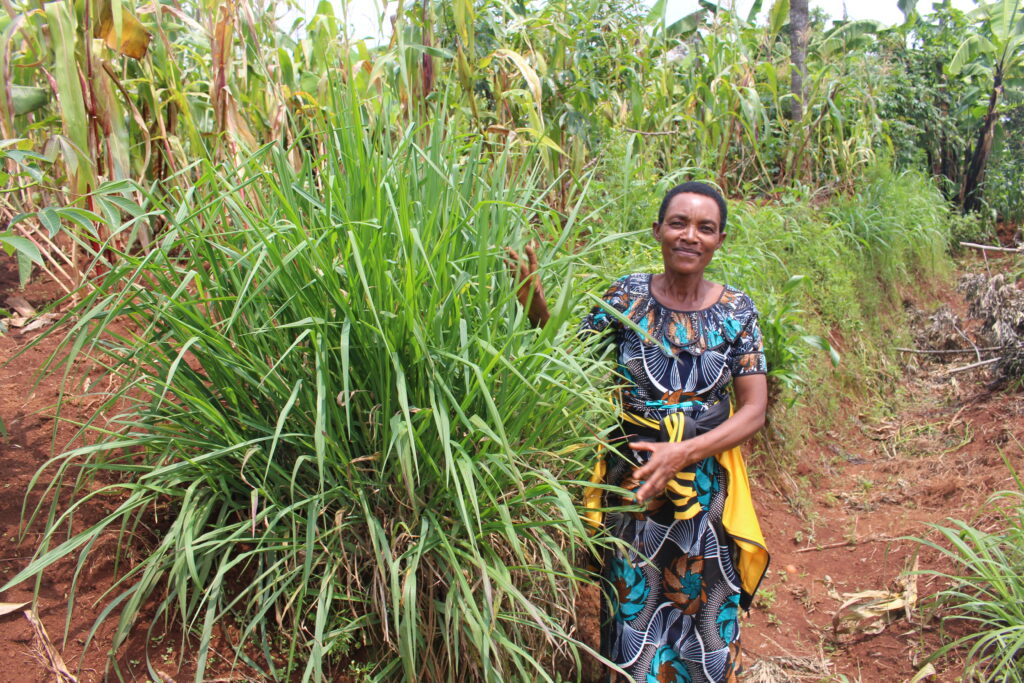
One example is Clémence Nibaruta, a widowed mother of eight from the Gishubi Commune, who worked solely to provide for her family’s basic needs for many years. Her farm faced significant challenges, such as high soil acidity and a shortage of organic manure.
Clémence then became an agri-researcher in 2021 with PAGRIS, where she received training in soil fertility restoration, composting, and erosion control. She then transformed her own farm with these practices, implementing a composting system that produces sufficient organic fertilizer for her farm. Her harvests increased, and her household income stabilized. She now trains fellow farmers, women and men alike, on the knowledge she gained from PAGRIS. Once confined to subsistence farming, she is today recognized as a local leader in agriculture.
Clémence commented, “In my community, I am now respected and recognized for the training I have delivered and continue to provide to those interested. Today, I am seen as a true agent of change and local development.”
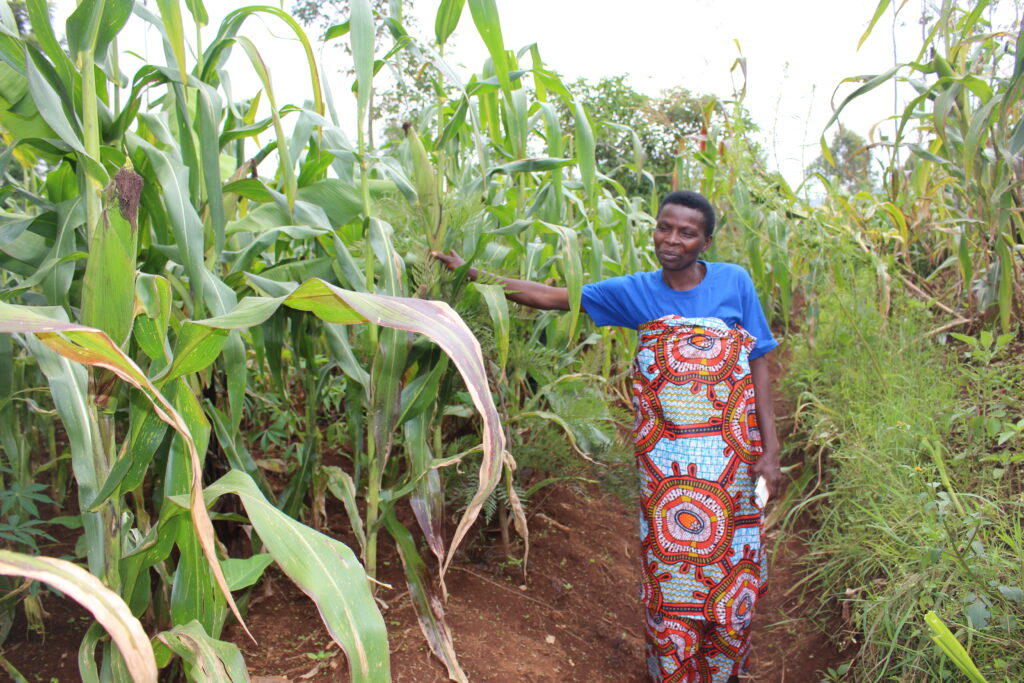
A second example is Rosette Ntirampeba, whose journey tells a similar story of resilience. Abandoned by her husband and struggling to feed her three children, she relied on farming to survive, but she had no knowledge of modern agricultural practices. She practiced mixed cropping without appropriate techniques, and she saved her own seeds rather than using quality seed for planting.
In 2021, Rosette had the opportunity to attend PAGRIS information and awareness sessions. She became so committed to learning and improving through PAGRIS, she was later selected as Vice President of the Musama project site. Through the project, she gained knowledge on vital topics, such as the use of improved seeds from recognized seed multipliers, application of mineral and organic fertilizers, timely planting, and soil restoration techniques. Applying these practices to her land led to dramatic yield increases. Today, her children have enough to eat, and she was even able to invest in new farmland, pay for critical medical care, and secure her children’s education.
“I no longer live in anxiety about feeding my family. I can care for my children, send them to school, and plan other development activities. My life has changed,” Rosette shared.
A Strategic Commitment to Equality
Gender integration within IFDC represents a strategic, long-term commitment at the heart of a vision for inclusive and equitable agricultural development.
IFDC contributes to reducing structural inequalities, strengthening household resilience, improving food security, and stimulating local economic growth. This International Women’s Day, IFDC celebrates the socioeconomic empowerment of women like Clémence and Rosette as a matter of social justice and a powerful driver of community transformation.