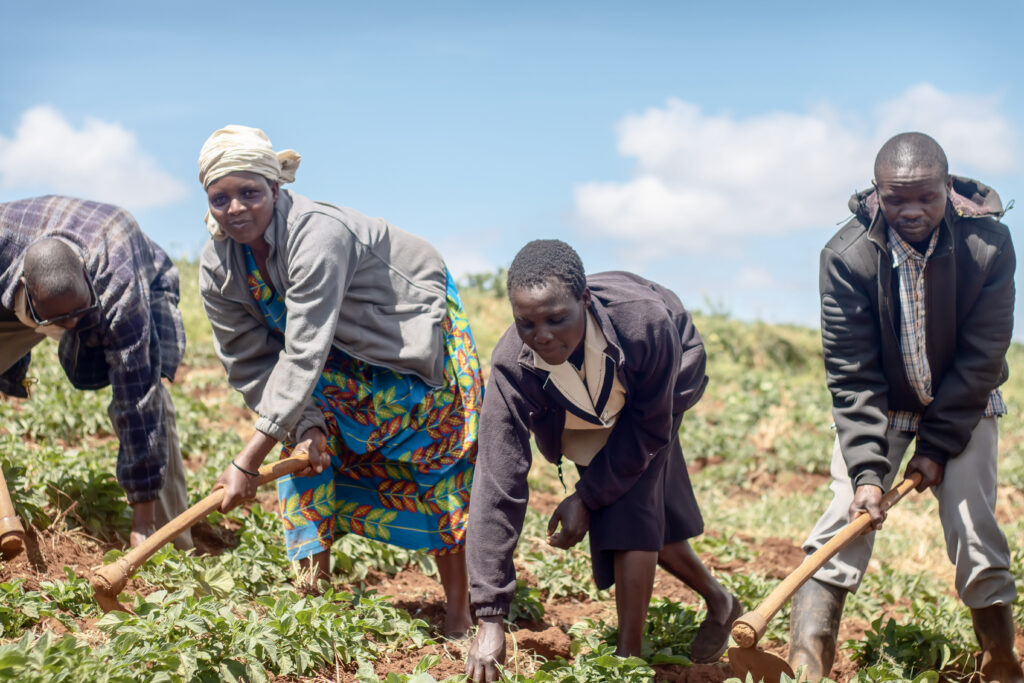
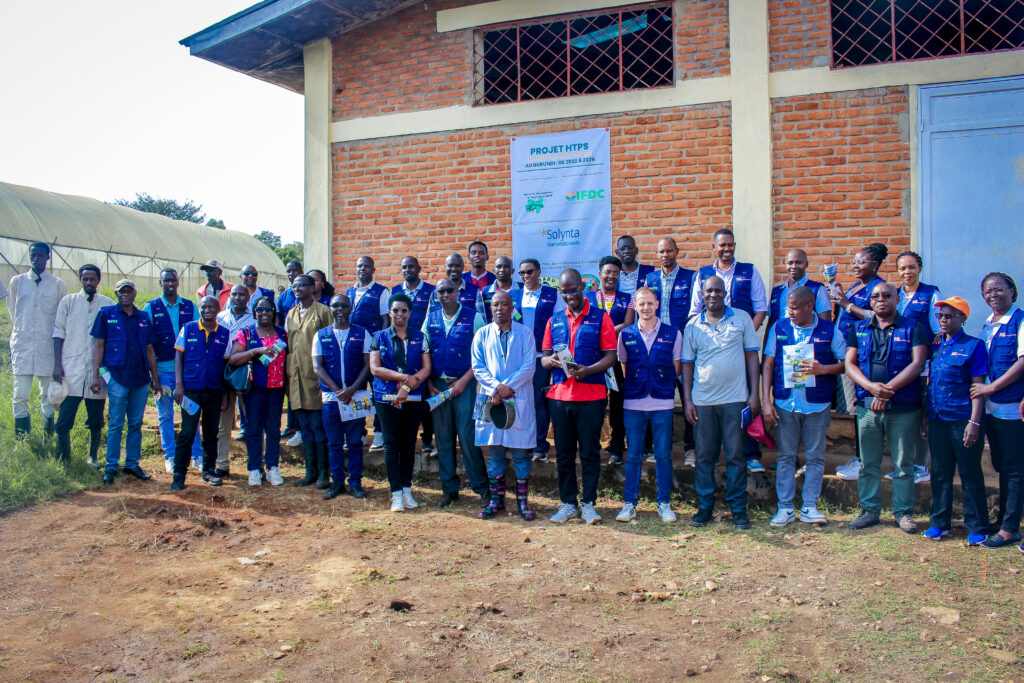
On January 28-30, all staff members from IFDC in Burundi undertook a field mission to witness the accomplishments of the Private Seed Sector Development – Phase II (PSSD2) project and the Soil Fertility Stewardship Project (PAGRIS), both funded by the Embassy of the Kingdom of the Netherlands in Burundi, and learn about the synergy between the two.
The team learned firsthand how both initiatives improve food security, agricultural development, and farmers’ livelihoods while supporting Burundi’s national vision…
The Growth of the Kiryama Dairy Development Cooperative
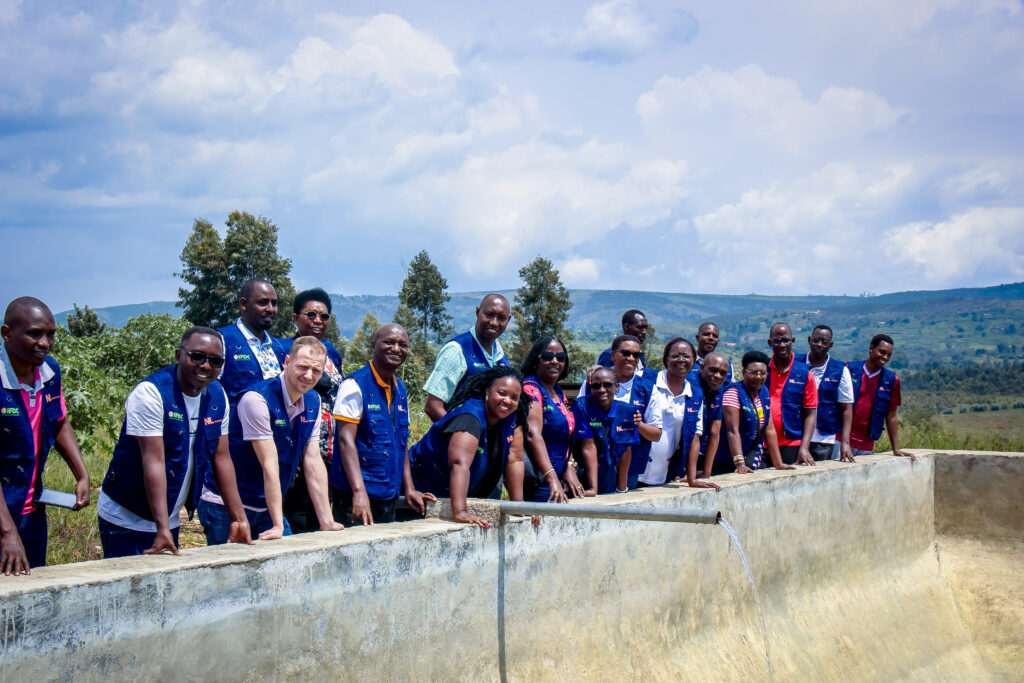
The team’s first stop was in Songa, at the Kiryama Dairy Development Cooperative (CDLK). Upon arrival, participants were warmly welcomed by the center’s director, Prosper Nzisabira, who presented CDLK’s achievements, from the International Seed Sector Development (ISSD) in Burundi project – a precursor to PSSD – up to current PSSD2 initiatives. With IFDC co-financing, the cooperative, which had initially cultivated 3 hectares of potatoes, constructed a 130 cubic meter irrigation reservoir.
Due to increasing demand for seeds, the center expanded its cultivable area, requiring more irrigation water. With support from PSSD1, a second reservoir of 200 cubic meters was built. Now, CDLK cultivates 30 hectares of maize, potatoes, and beans, and it aims to reach 60 hectares in the coming years. Additionally, increasing labor shortages in the region are prompting the cooperative to consider agricultural mechanization, such as a tractor.
Through IFDC training and support, CDLK has also developed a network of seed sales points across the region. The cooperative conducts training around demonstration fields it manages and supports 29 youth producer associations in provinces including Bururi, Rutana, and Makamba. This system helps reduce migration of youth abroad in search of employment.
After indoor presentations, participants visited CDLK’s facilities, including the irrigation reservoir and storage pond, as well as its maize fields. The visit concluded with a tasting of butter produced at CDLK.
Advancing Potato Innovation Through Hybrid Seed Research
The team then traveled to Kiremba, to the Agency for the Development of Rural People (ADPR), an organization engaged in hybrid potato seed research in collaboration with Solynta. They were welcomed by research site manager Dr. Léonard Bizimana, alongside representatives from two government institutions: the Burundi Institute of Agronomic Sciences (ISABU) and the National Office of Seed Control and Certification (ONCCS).
Officials explained ongoing research activities and their expected benefits. These studies aim to shorten the lengthy multiplication chain for first-generation seeds. Hybrid varieties also offer higher productivity than traditional varieties; for example, one hybrid seed can produce 30 to 40 mini-tubers, compared to just six to eight from conventional varieties.
This improvement allows for expanded cultivation while reducing seed costs. With co-financing from PSSD1 and PSSD2, research greenhouses are being set up to support these activities. One hybrid variety, Solhy017, has already proven well adapted and productive in Burundi, while two others are undergoing comparative testing.
Demonstrating Sustainable Land Management in Murambi
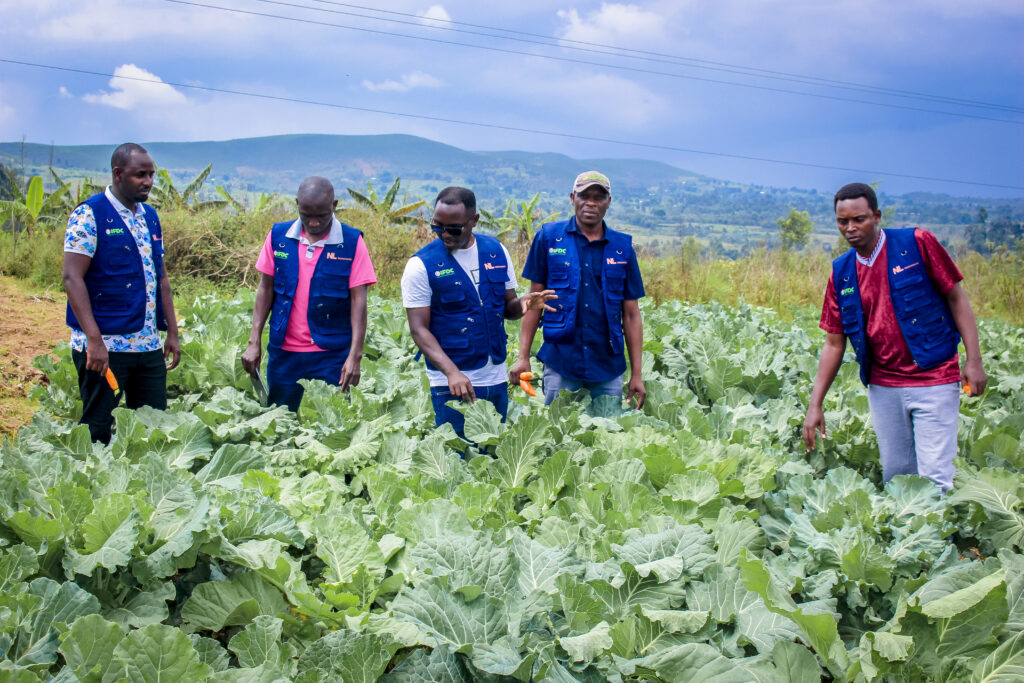
The team next visited Murambi to observe PAGRIS achievements at two demonstration plots. Visitors were welcomed by lead farmer Gervais Nsengiyumva, who oversees the plots, along with PSSD2 Coordinator Gilbert Buhanza and members of the local management committee.
During the presentation, Gervais described key activities, including the surveying of over 13 kilometers of contour lines and cassava trials established by cooperation between PSSD2 and PAGRIS. He also noted challenges, such as some farmers’ initial reluctance to adopt soil conservation practices, given that neighboring projects offer cash incentives for certain activities.
Nevertheless, the combination of PAGRIS activities and the government’s ambition for sustainable land management is gradually leading local communities to adopt these practices.
Driving Burundi’s Agricultural Future
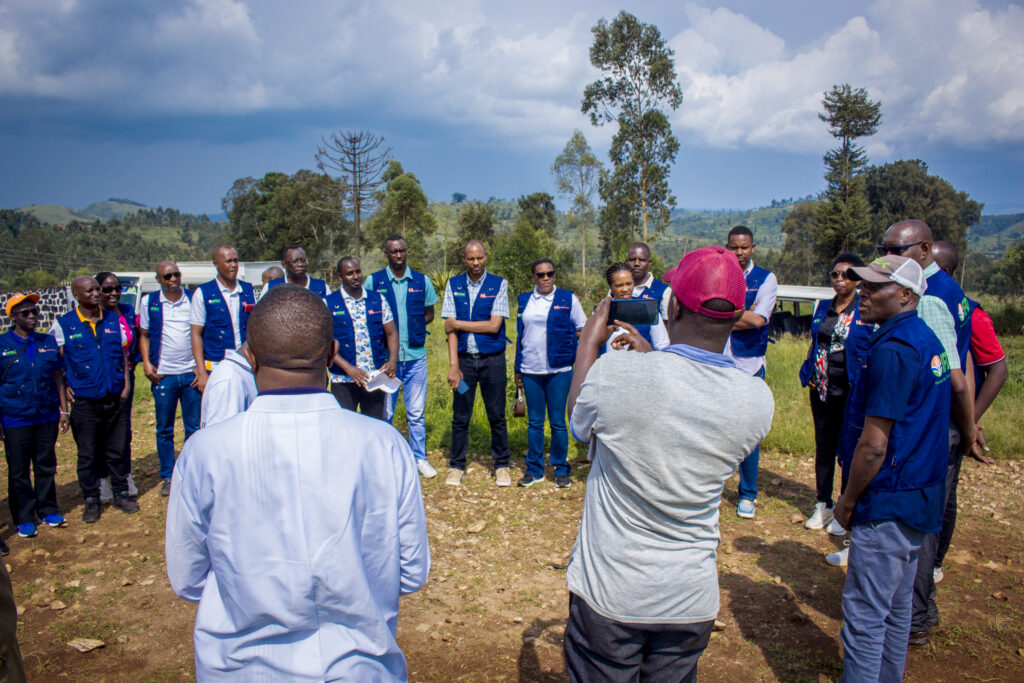
The visit continued with participants observing cassava trials and the site’s development plan, illustrating landscape transformation from past to present and its future potential. The team also noted attempts at water channeling for irrigation and its expected results. Gilbert promised closer collaboration with the PAGRIS team to explore ways to improve the irrigation system through their synergistic approaches.
Gervais concluded by highlighting that before PAGRIS interventions, vegetation was sparse in the area. Today, thanks to land restoration and sustainable management activities, greenery – both trees and grass – is gradually returning.
The team learned firsthand how both initiatives improve food security, agricultural development, and farmers’ livelihoods while supporting Burundi’s national vision: to become an emerging country by 2040 and a developed country by 2060. The team’s experience is helping them plan how to carry this success forward in 2026.
About PSSD2:
The Private Seed Sector Development, Phase II (PSSD2) (2018-2026), funded by the Dutch Ministry of Foreign Affairs and implemented by the International Fertilizer Development Center (IFDC), aims to increase the production and incomes of 178,000 farmer households in Burundi. The project works with private and public sector partners to promote the development of a private sector-led seed industry that is able to provide farmers with sustainable access to high-quality seed and agricultural advisory services.
About PAGRIS:
The Soil Fertility Stewardship Project (PAGRIS) is funded by the Embassy of the Kingdom of the Netherlands in Burundi and implemented by IFDC, together with Wageningen Environmental Research and national partner Twitezimbere. PAGRIS aims to reach 100,000 family farms and establish ecologically sustainable management on 14,000 ha of land by scaling the Integrated Farming Plan (PIP) approach. The project is set to continue its activities in improving Burundian soil through December 2026.