Declining crop yields linked to declining soil fertility remain a concern for farmers, policymakers, and organizations working in Africa’s agriculture sector. In Benin, where it has been active for over two decades, IFDC is addressing this issue.
As the lead agency of the consortium implementing the Communal Approach to the Agricultural Market in Benin (ACMA) program, now in its third phase, IFDC has initiated significant actions to help reverse deteriorating soil fertility and falling yields.
Mapping Soils to Address Declining Yields
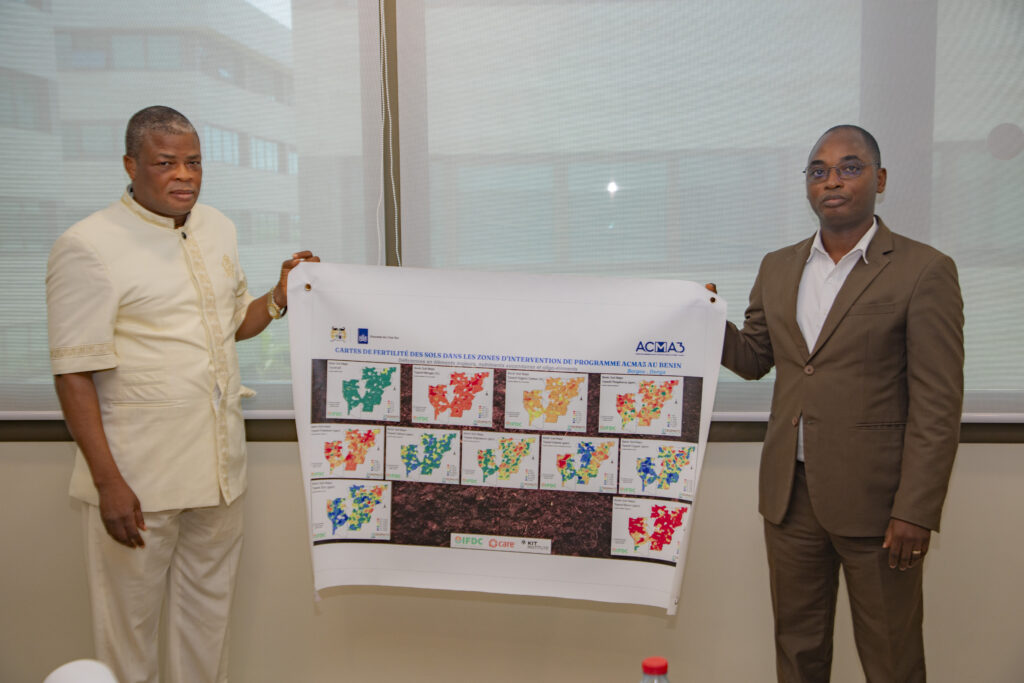
Throughout the successive phases of the ACMA program, IFDC has undertaken a comprehensive soil fertility mapping initiative covering Benin’s departments of Borgou, Collines, Donga, Ouémé, Plateau, and Zou to identify soil deficiencies that hinder productivity.
“When our soils regain their balance, our harvests bring hope, and our communities grow stronger.”
Adodo Abalo, IFDC Benin-Togo Country Director
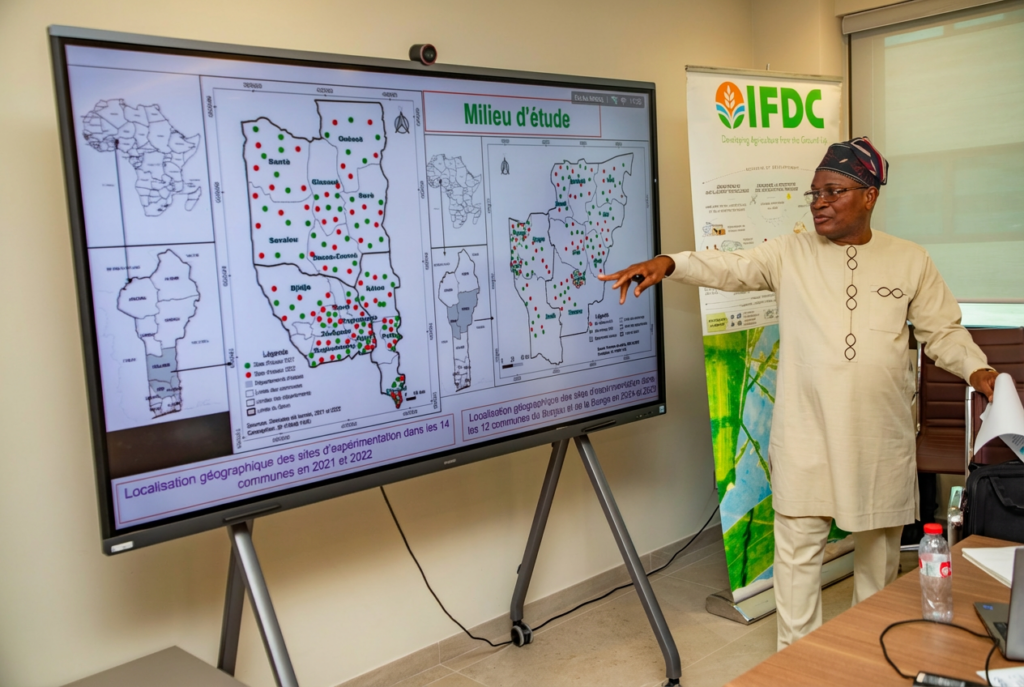
Seeking ways to ensure food and nutrition security for the population, IFDC supplemented soil mapping activities with field trials to validate deficiencies in real-world conditions during Phases 2 and 3 of the program.
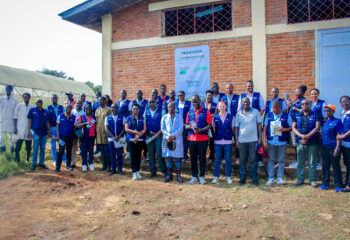
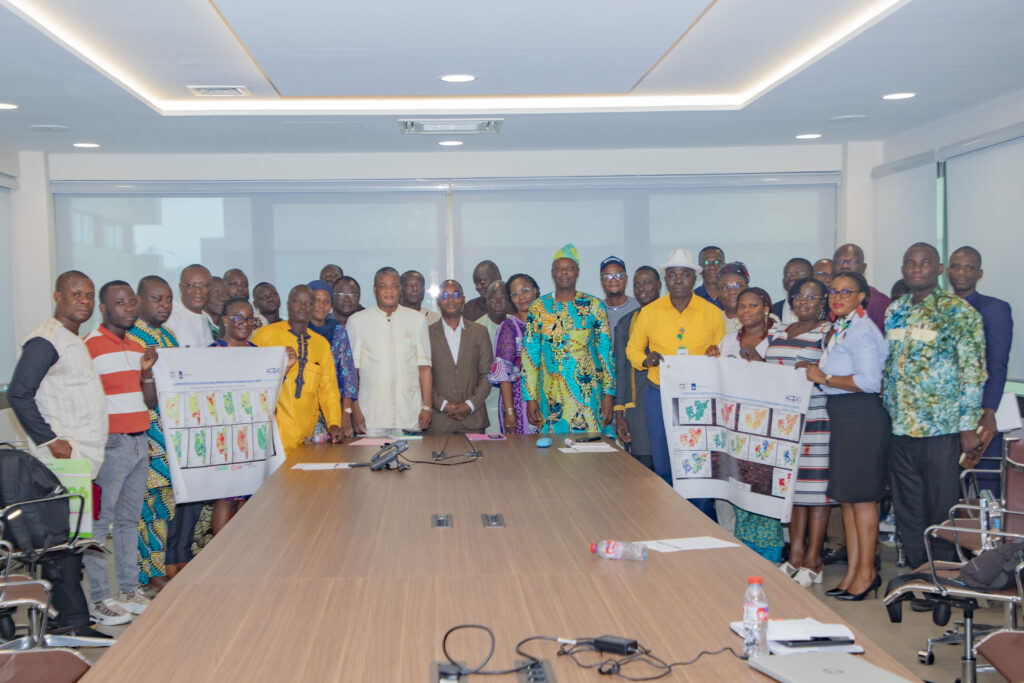
The soil fertility maps, now available, provide a solid foundation for developing new recommendations for balanced fertilizers. IFDC, in partnership with the Ministry of Agriculture, Livestock, and Fisheries (MAEP), the National Institute of Agricultural Research of Benin (INRAB), and the University of Abomey-Calavi (UAC), organized a feedback workshop on March 18 in Cotonou, bringing together faculty members and researchers, MAEP officials, farmers, professional agricultural organizations, and experts from INRAB and UAC.
Workshop discussions provided an opportunity to share mapping results and discuss the next steps toward disseminating more effective and accessible solutions to farmers.
Stakeholders Align on Next Steps for Sustainable Soil Management
Setting an optimistic tone in his opening remarks at the workshop, IFDC Benin-Togo Country Director Adodo Abalo declared, “When our soils regain their balance, our harvests bring hope, and our communities grow stronger. Together, let’s make soil fertility the key to a sustainable future.”
Abalo also highlighted regional and global challenges, noting that disruptions in global trade, particularly those linked to crises in the Middle East, have already led to a significant rise in fertilizer prices. “In 2026, the regional cost of fertilizers could rise by more than $1 billion, jeopardizing access to inputs for smallholder farmers,” he observed.
Abalo emphasized collective responsibility in the face of these challenges. He recommended securing fertilizer supplies through strategic agreements with regional producers and targeted financial support measures, and optimizing the use of available fertilizers by promoting innovative practices such as microdosing, the integration of organic inputs, and intentional application based on actual soil needs.
Thanks to ACMA’s soil mapping and field trials, along with other IFDC activities, these sound recommendations are within reach.
Strengthening Collaboration for Sustainable Agricultural Growth
Proceeding with the workshop, Deputy Secretary General of MAEP Innocent Togla reflected on the memorandum of understanding (MOU) the Beninese Government signed with IFDC in 2023 and its recent renewal in December 2025, which he said “demonstrate the invaluable and highly professional standing of IFDC” among Benin’s partners.
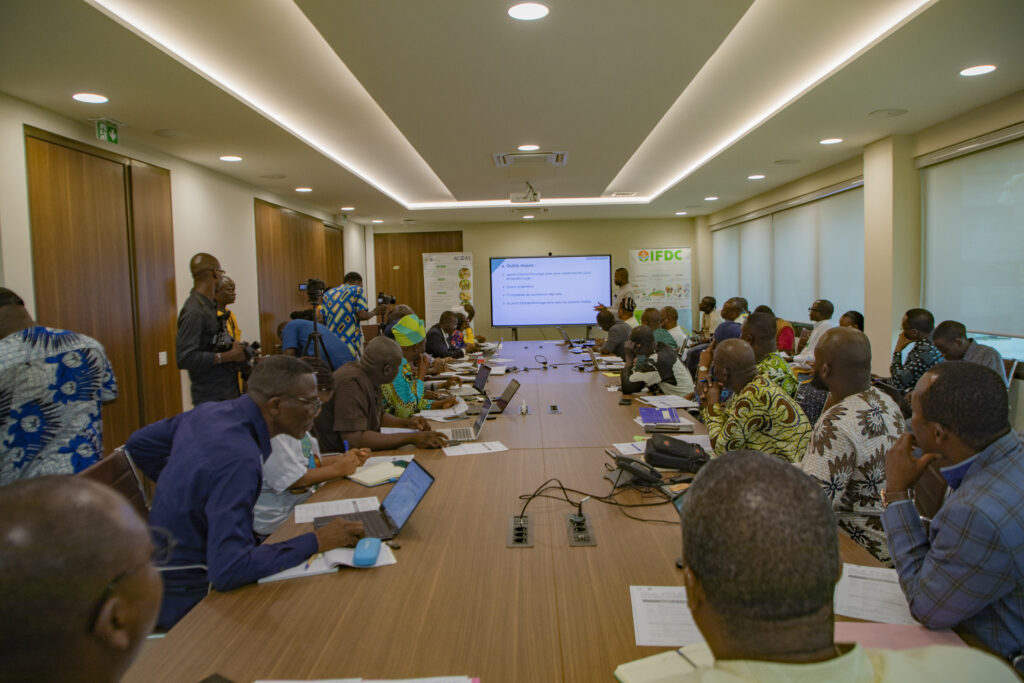
Togla also remarked on “just how immensely valuable this workshop is to us at the Ministry of Agriculture, Livestock, and Fisheries, [since it presents] the results of soil fertility mapping and updating fertilizer recommendations for crops, focusing on…maize in Benin.”
Other workshop topics included fertilizer formulas that had been proposed based on ACMA’s soil mapping and tested in demonstration fields, with significant yields. MAEP will use these results as a decision-making tool for scaling beyond the intervention area of the ACMA program.
The workshop, rich in informative discussions, concluded on a positive note for the participants, who gained a deeper understanding of soil health and the challenges associated with the dissemination of new balanced fertilizer formulations. Exchanges from the workshop are paving the way for more productive and sustainable agriculture in Benin.
The Communal Approach to the Agricultural Market in Benin (ACMA) program, financed by the Embassy of the Netherlands in Benin since 2013, is implemented by the International Fertilizer Development Center (IFDC) in a consortium with CARE International Benin and KIT.