With a commitment to promoting sustainable and resilient agricultural systems, the Soil Values program supports farmers in testing innovative solutions to improve soil fertility and health, enhance water management, and increase agricultural productivity.
One of these innovations is Barbary Plante, a water-retaining fertilizer designed to improve soil fertility, strengthen crop resilience to water stress, and optimize water use. Currently, Barbary Plante is being tested in the provinces of Balé and Houet in Burkina Faso. Although these trials are being implemented in different agroecological and production contexts, they share a common goal: strengthening the resilience and performance of agricultural systems in the Sahel.
“This experience…has allowed producers…to discover firsthand what the Barbary Plante technology is and to appreciate its performance.”
Serge Kambiré, Local promoter of Barbary Plante
Field Trials in Bagassi: Measuring Impact on Tomato Production
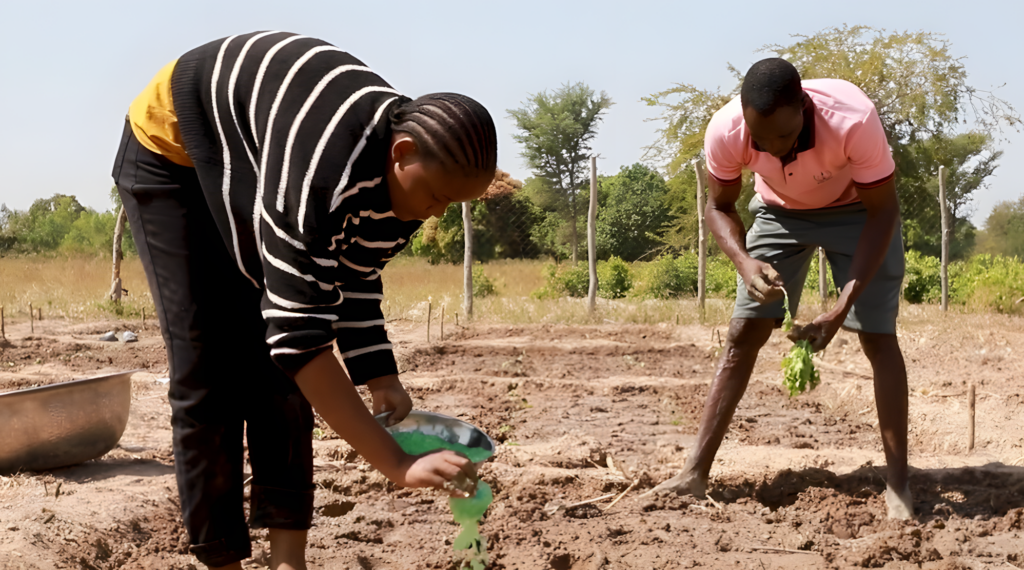
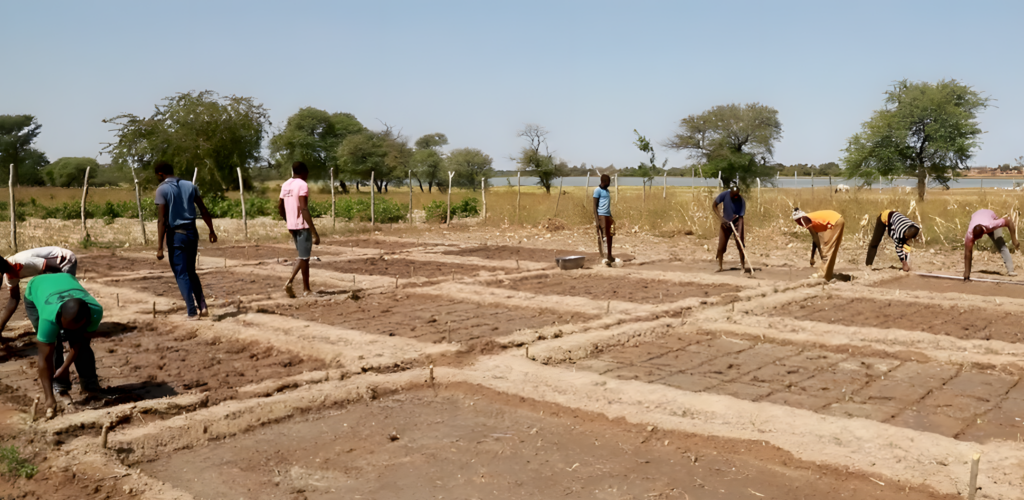
In Balé, field trials are underway to measure the impact of Barbary Plante on tomato production in the city of Bagassi, located about 221 kilometers west of Ougadougou. The experiment comprises 16 individual plots, organized into four replicates and four treatments groups.
These groups include a control plot with no treatment, a plot receiving the recommended dose of Barbary Plante, a plot receiving 75% of the recommended dose of Barbary Plante, and a plot fertilized with the NPK mineral fertilizer normally used during the dry season.
Each plot contains 32 tomato plants, with 50 cm between plants in each row and 80 cm between rows. The trials aim to compare the performance of the various practices in terms of plant growth, soil fertility, and water management.
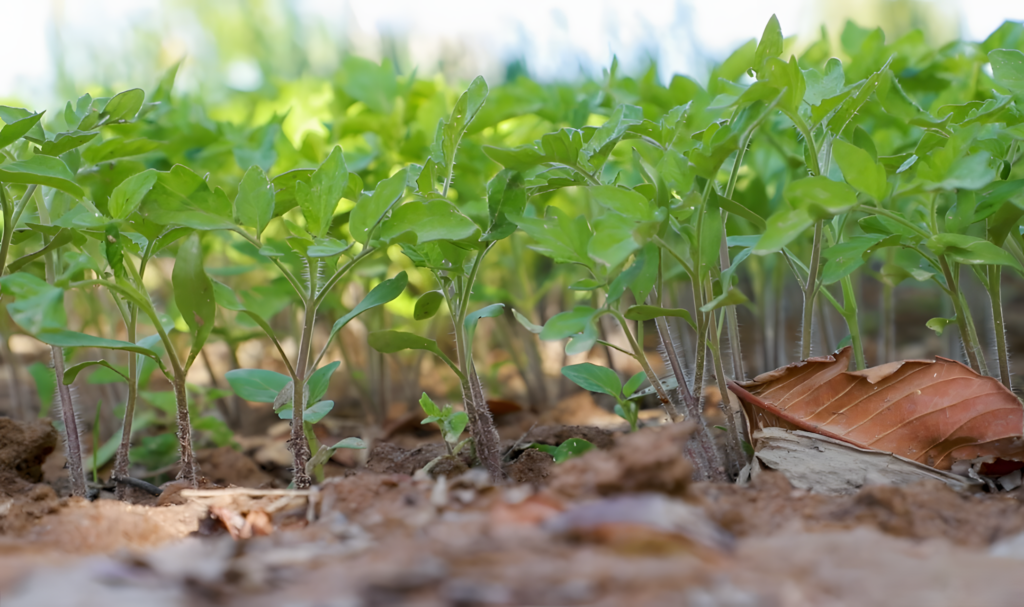
To better observe early stage differences, nurseries were established both with and without Barbary Plante application.
According to Vanessa Bouima, a young professional and field agent for the Soil Values program, the plants grown in nurseries treated with Barbary Plante show advanced development compared to the untreated plants.
This observation was echoed by Ziminansan Sieza, president of the Vanoussan Association. “The nursery using Barbary Plante is clearly more developed than the one without Barbary Plante,” he said.
Monitoring of the trials will continue through the production phase to assess yields and overall agronomic performance.
Bobo-Dioulasso Trials Conducted Directly by Farmers
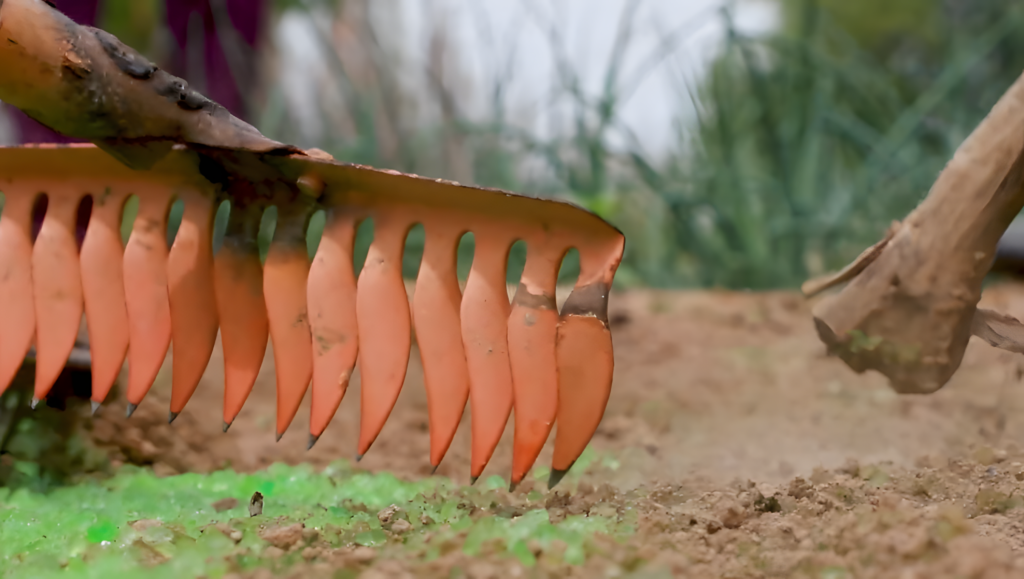
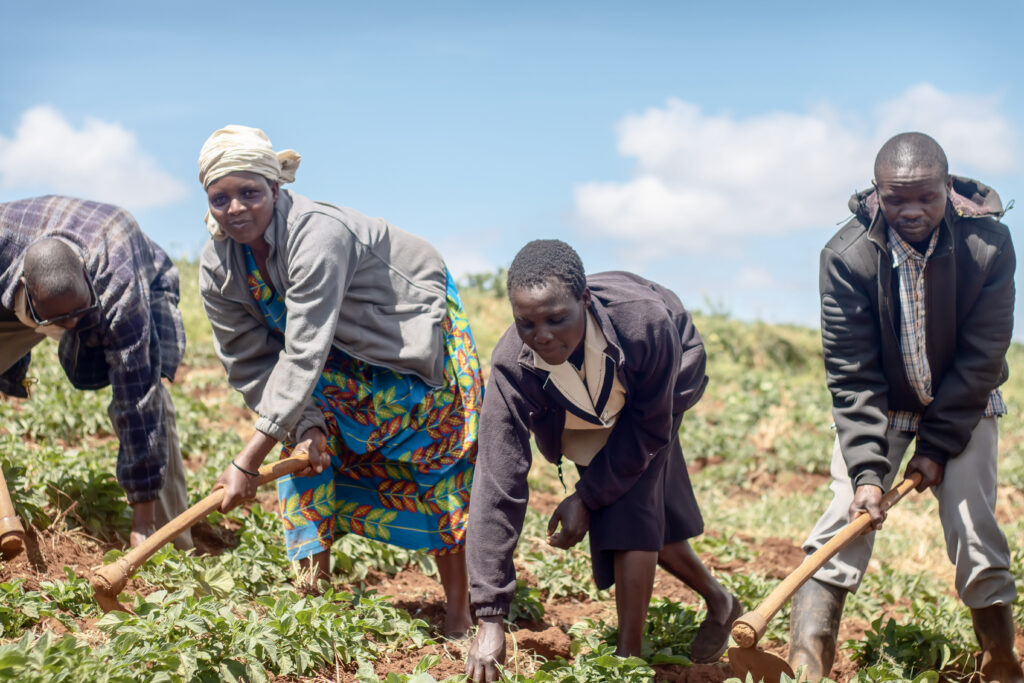
In Houet, Barbary Plante is being tested directly on farmers’ fields in the city of Bobo-Dioulasso under the supervision of agricultural agents. This approach allows the technology to be evaluated under actual production conditions. The crops in these trials include tomatoes, peppers, and maize.
Local farmer Fernand Sanou established two adjacent plots: one treated with Barbary Plante and the other using conventional farming practices.
He reported noticeable differences during a period of irrigation disruption: “We had a pump break down, and before the repair, the plants in the control plot started to wilt. Those treated with Barbary Plante fared better, thanks to improved water retention in the soil.”
Similarly, Yacine Sanou Ouattara, a tomato producer who participated in Soil Values training, noted rapid growth in the treated plants. The first fruits appeared 35 days after transplanting, while the control plot remained at the flowering stage.
Positive Feedback
For Serge Kambiré, promoter of the Barbary Plante technology, these trials offered a valuable opportunity to demonstrate the product’s potential to producers and other actors in the agriculture sector.
“This experience has been very beneficial. It has allowed producers, agricultural agents, and other stakeholders in the sector to discover firsthand what the Barbary Plante technology is and to appreciate its performance,” he pointed out.
Agricultural agents like Wekpouri Dabiré share this opinion. After observing the plots, he said he believes that the treated plants appear more robust, having already developed flower buds and first fruits.
Toward Wider Dissemination of the Innovation
For many of the farmers, these trials represent their first experience using Barbary Plante. Producer Moussa Sanou expressed satisfaction with the initial results and encouraged the continuation of the experiments.
As the trials progress to the final harvest stage, the Soil Values program and its partners hope that the findings will provide a solid basis for broader dissemination of the Barbary Plante technology, with the objective of contributing to the sustainable improvement of soil fertility and health in Burkina Faso and the greater Sahelian region.
Funded by the Dutch Directorate-General for International Cooperation (DGIS), the Soil Values program is being implemented over 10 years (2024-2033), led by the International Fertilizer Development Center (IFDC), in consortium with SNV and Wageningen University and Research (WUR), as well as knowledge partners such as AGRA, the Center for International Forestry Research and World Agroforestry (CIFOR-ICRAF), the International Institute of Tropical Agriculture (IITA), ISRIC – World Soil Information, and the International Water Management Institute (IWMI).