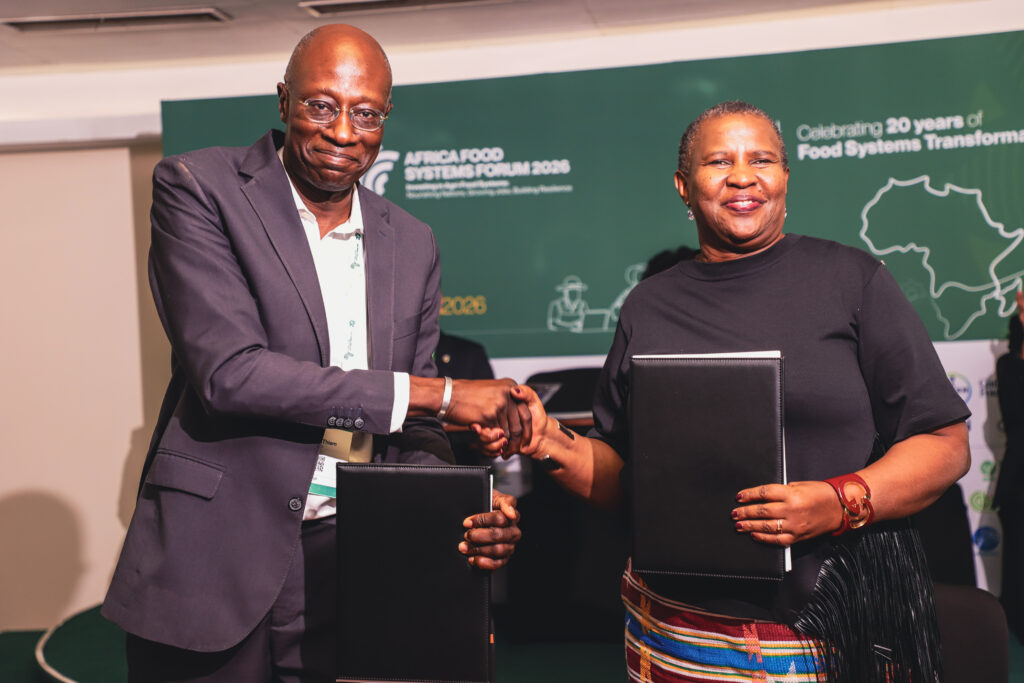
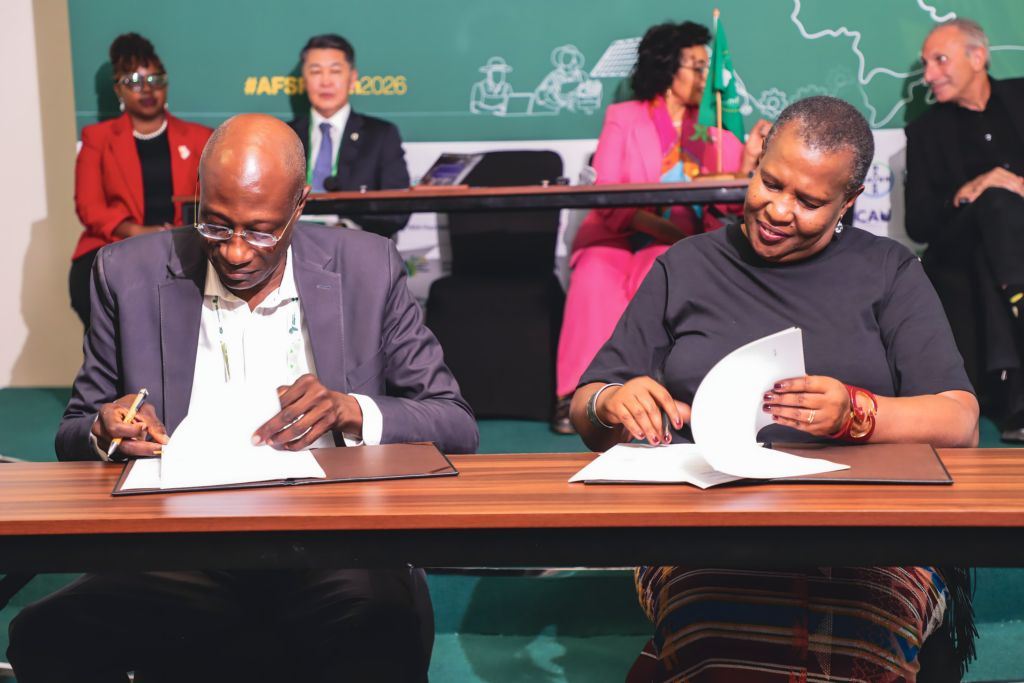
Today IFDC and AGRA signed a Memorandum of Understanding (MOU) formalizing a partnership to strengthen agricultural productivity and food security in Africa, particularly in the areas of fertilizers, soil health, and policy reforms in support of producer organizations and smallholder farmers. The agreement was signed on the sidelines of the Africa Food Systems (AFS) Forum held in Kigali with the theme “Investing in Africa’s Agri-Food Systems: Nourishing Nations, Growing Jobs, Building Resilience.”
The MOU establishes a framework for collaboration between the two organizations, building on their shared history of working alongside governments, the private sector, and farmer networks to strengthen food security on the continent.
“We want these partnerships to mean something; we need our partners to work with us to promote the prosperity of African farmers. And we want to ensure that these commitments are turned into real action and measurable results.”
Alice Ruhweza, President of AGRA
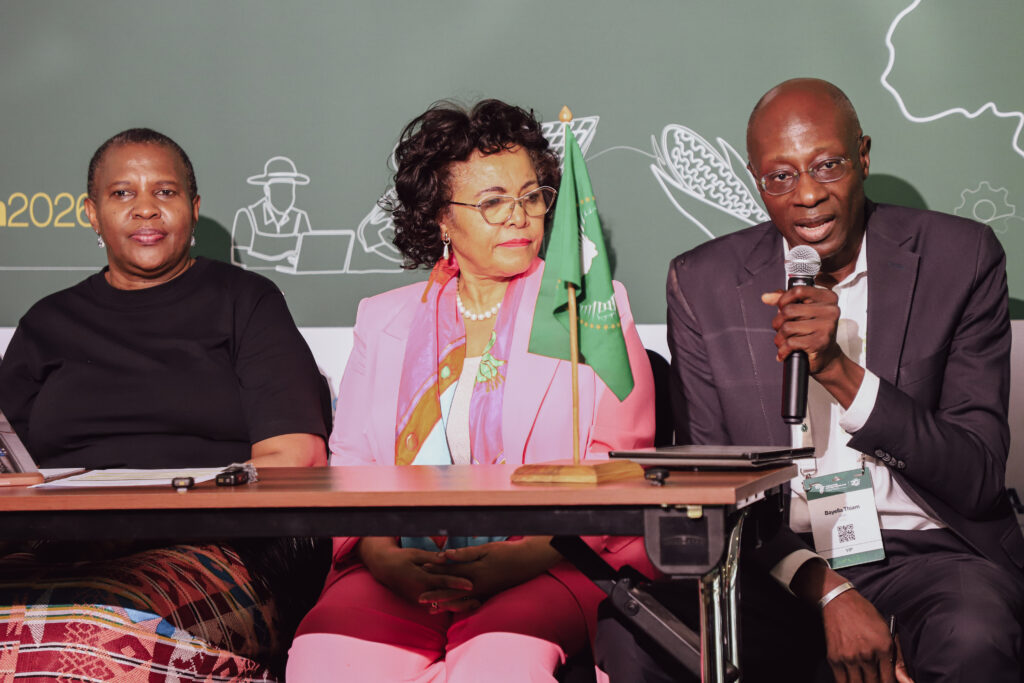
Under the agreement, IFDC and AGRA will work together in:
- Seed systems development projects, including policy and sector assessments, coordination of seed sector actors, seed production and distribution planning, seed marketing, digitalization for seed tracking and tracing, seed certification, and quality assurance. The projects should build on and capitalize on previous seed sector development work undertaken by AGRA and IFDC in relevant countries.
- Building resilient agri-food systems through the integration of climate-smart practices, seed systems, sustainable agriculture techniques, and innovations.
- Strengthening collaboration in the domestication and implementation of continental strategies such as the Comprehensive Africa Agriculture Development Programme (CAADP) Action Plan, the Africa Fertilizer and Soil Health (AFSH) Action Plan, and national technical working groups for data validation, policy dialogue, and public-private coordination.
- Establishing country, regional, and continental policy platforms and convenings to agri-food sector transformation.
- Strengthening capacity building and knowledge exchange around seed systems, soil health management, and policy dialogue.
- Strengthening access to finance for agro-dealers by jointly working with financial institutions to create credit guarantees and/or developing financial products for micro, small, and medium enterprises, specifically for input stock to bridge the gap between supply and smallholder farmers.
- Strengthening private sector participation across fertilizer, seed, and agri-food value chains by supporting inclusive public-private partnerships (PPPs), agribusiness incubation, acceleration, and investment readiness. The collaboration also aims to strengthen engagement with fertilizer and seed producers, blenders, distributors, agro-dealers, and financial institutions to improve market efficiency and resilience.
- Establishing modalities for collaboration during fertilizer and input supply disruptions, including modalities for joint analytics, policy advice, and private sector coordination to mitigate food security risks.
- Supporting the parties’ countries of operations where possible by sharing office space for their additional and/or common countries.
Reflecting on the significance of the partnership and what it means for farmers, IFDC Chief Operating Officer Bayella Thiam said, “This week marked an important milestone for IFDC as we launched our 2026–2035 strategy. Today is another significant milestone as we sign this memorandum of understanding with AGRA. IFDC remains committed to scaling impact across agricultural systems to improve and restore soils. We do this for the farmers, for the soil, for the market, and for the future.”
Speaking on the need to address the challenges faced in Africa, Alice Ruhweza, President of AGRA, stated, “Today we want to bring in more trade, more investment, and nutrition. This means the alliance itself has to be renewed. That is why we are here today, to renew that alliance… We want these partnerships to mean something; we need our partners to work with us to promote the prosperity of African farmers. And we want to ensure that these commitments are turned into real action and measurable results.”
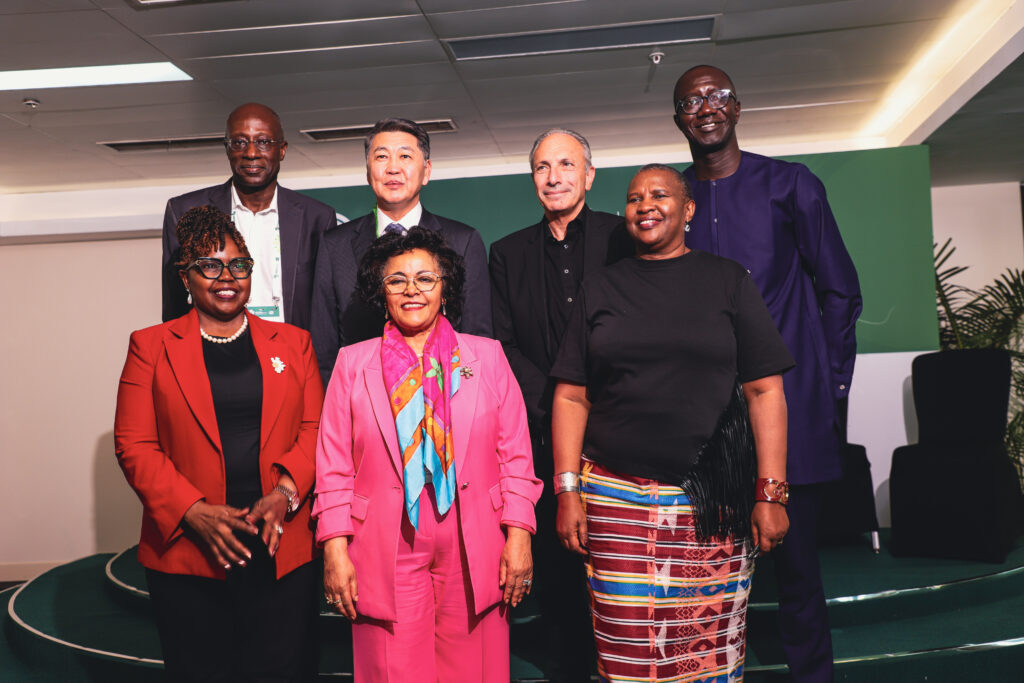
This partnership is designed to extend beyond project-based collaboration toward longer-term systemic transformation, such as strengthening policy and regulatory frameworks, improving market intelligence, engaging the private sector, and building institutional capacity that can sustain progress over time.
IFDC will contribute technical and implementation expertise in fertilizer systems, soil health, seed sector development, markets, and agribusiness, while supporting research, technology development, policy implementation, and capacity building for farmers, cooperatives, and local institutions. Its farmer-centered approaches, such as Participatory Integrated Planning and the Caravan approach, will help deliver locally relevant, inclusive, climate-resilient solutions, with a focus on women, youth, and marginalized communities.
Complementing this expertise, AGRA will leverage its institutional partnerships, policy leadership, work in transforming food systems, and resource-mobilization networks to advance agricultural policies; attract investment; strengthen smallholder access to quality inputs, markets, and financing; and support more productive and sustainable food systems.
The partnership comes at a pivotal moment, as African governments and development partners work to translate the commitments of the Kampala CAADP Declaration into measurable outcomes for smallholder farmers. Both organizations expressed confidence that the collaboration will help accelerate progress toward more resilient, inclusive, and productive food systems on the continent.
The MOU will remain in effect for an initial period of three years, with implementation details to be developed jointly by IFDC and AGRA technical teams in the coming months. Together the organizations aim to support the conditions that enable farmers, businesses, and policymakers to make more informed decisions and build more productive, resilient, and sustainable food systems across Africa.