
The next fertilizer crisis is inevitable.
Whether it becomes a food crisis depends on what we invest in now.
Contact Us Today
Global fertilizer markets are showing some signs of relief, but they remain fragile. Lower prices for some products and stronger grain markets have enhanced fertilizer affordability, yet supply constraints, geopolitical tensions, and uncertainty over export availability continue to shape market conditions. For farmers, particularly those preparing for upcoming planting seasons, the balance between fertilizer prices, availability, and crop returns remains critical.
Urea prices have softened following new Chinese export announcements, while ammonium sulfate prices have continued to rise amid limited availability. Phosphate markets are under pressure as buyers resist high prices, yet production constraints remain. Potash prices appear to be approaching a floor, but logistical disruptions in the Black Sea and Baltic regions could affect supply if they persist.
Nitrogen: Supply and Geopolitics Put Opposing Pressure on Urea Prices
Urea prices strengthened in the first half of September as rising energy costs and escalating hostilities in the Middle East heightened concerns about global supply. However, prices turned bearish toward the end of the month following news of additional Chinese export availability.
China announced a third and fourth round of urea export allocations in late September and early October. Each round is estimated to cover 1.5–2 million metric tons (mt), although authorities have not confirmed these volumes. Details of shipment windows and timelines also remain unclear. The fourth allocation took many market participants by surprise.
India’s latest import tender, which sought 1.7 million mt of urea, highlighted the gap between buyers’ price expectations and suppliers’ willingness to sell. The lowest offers were $352.10/mt cost and freight (CFR) on the east coast and $356.25/mt CFR on the west coast, with the lowest offer equivalent to a netback of approximately $320/mt free on board (FOB) China. Under standard tender rules, the lowest offers secured 60,000 mt for the east coast and 350,000 mt for the west coast. No additional volumes were accepted following counters to the six lowest suppliers, highlighting resistance to selling at these low price levels.
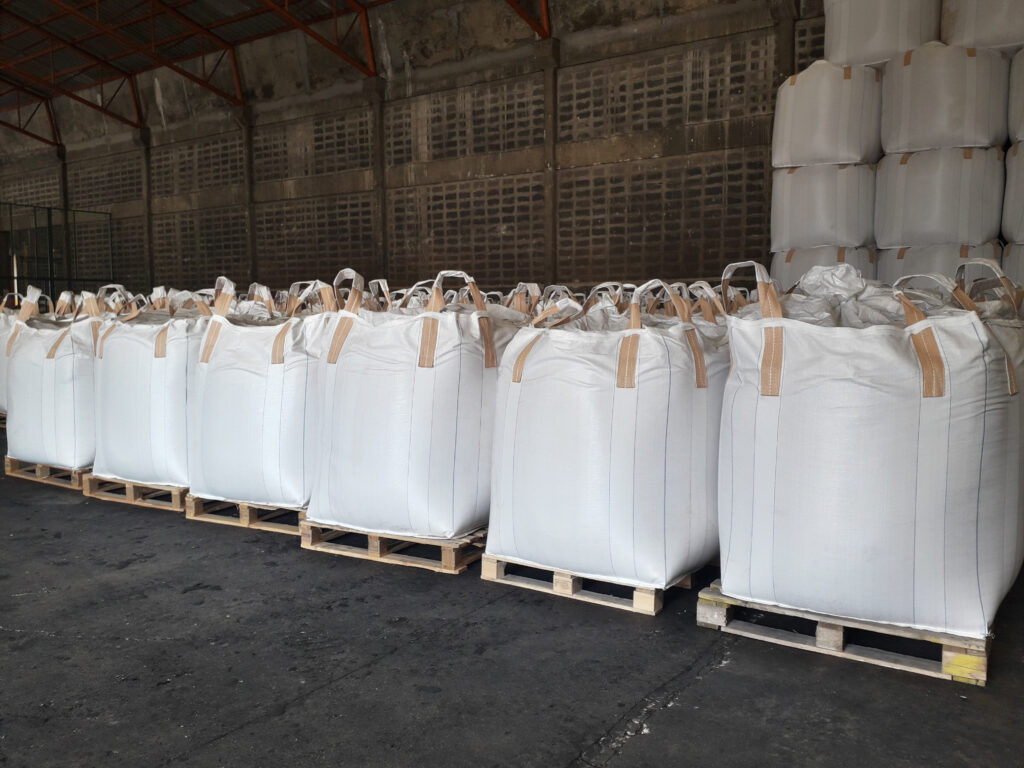
Ammonium sulfate prices, meanwhile, firmed steadily throughout September as suppliers maintained higher offers amid tightening availability. All export quota under China’s first allocation round has been sold, leaving limited spot availability. A second allocation is widely expected, but an announcement has yet to be made. Although it was initially anticipated in late September, recent market feedback suggests it could come by the end of October. This timing remains unconfirmed by authorities.
The contrasting trends highlight the different supply conditions within the nitrogen market. Additional Chinese urea allocations have put downward pressure on prices, but uncertainty about the volumes that will actually reach the market remains. Ammonium sulfate prices continue to be supported by limited export availability, with buyers watching closely for news of a second allocation.
Although urea prices softened in early October, the supply-demand balance is expected to remain tight in the fourth quarter. Any relief could therefore be short-lived if additional supplies prove insufficient to meet demand.
Phosphate Markets Lose Momentum
Phosphate fertilizer prices have come under pressure over the past month as buyers resist high prices, delay purchases, or switch to alternative products. This weaker demand has contributed to short-term reductions in buying activity across several markets.
In Brazil, for example, farmers have switched from monoammonium phosphate (MAP) to triple superphosphate (TSP). The country imported nearly 1.7 million mt of TSP between January and September 2026, an increase of 8.5% year on year and the highest volume on record. This shift illustrates how high fertilizer prices are influencing purchasing decisions and product choices.
India, a major phosphate importer, has also seen weaker buying interest, particularly in diammonium phosphate (DAP). Stocks have been higher than usual, but a weaker monsoon has slowed domestic movement ahead of the upcoming rabi planting season. As India’s import season draws to a close, buying interest is expected to remain limited. Meanwhile, slightly lower sulfur and ammonia costs have eased some producers’ input costs, adding to the downward pressure on phosphate offers.
However, weaker demand does not mean that supply constraints have disappeared. Phosphate producers across the globe continue to struggle to secure sufficient sulfur at economically viable prices, and production cuts remain in place. Sulfur availability and prices will be critical in determining how phosphate markets develop in the coming months. Continued supply constraints could limit price cuts even as buyers remain reluctant to purchase at current levels.
Potash Market Approaches a Turning Point
The global muriate of potash (MOP) market appears to be nearing a floor as major markets enter their off-season in the fourth quarter.
In Brazil, prices at the lower end of the market have held at around $360/mt CFR for nearly a month. Expectations that China could sign its annual potash contract earlier than usual, potentially in November, are also raising hopes of renewed buying interest.
However, developments in the Black Sea region are creating additional uncertainty. Military action has affected grain and fertilizer exports, diverting commodities toward Baltic Sea ports and contributing to severe rail congestion. These logistical difficulties have affected fertilizer shipments and prompted production cuts among some suppliers. Argus reports that Russian potash producer Uralkali has cut its output by 20%, equivalent to approximately 200,000 mt of MOP per month. Belarusian Potash Company has also been forced to reduce export volumes.
So far, congestion at Russian Baltic ports is expected to mainly cause delays rather than a major immediate supply shortfall. With potash demand seasonally lower in the fourth quarter, the disruptions have not yet become a major concern for the market. However, prolonged congestion could further constrain export flows, affect production and push prices higher.
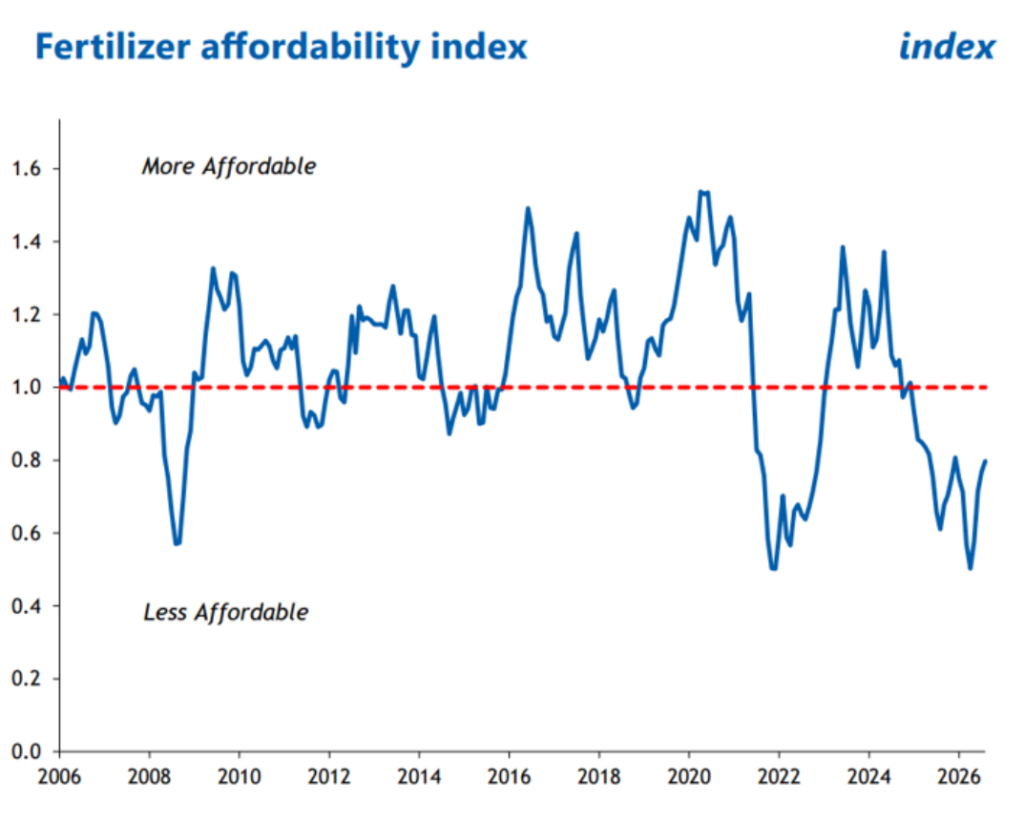
Fertilizer Affordability Improves, but Challenges Persist
Fertilizer affordability improved in September, reaching its highest level since May. According to Argus calculations, the affordability index rose to 0.82, with a higher value indicating that fertilizers are more affordable for farmers.
The improvement reflects lower prices for some fertilizer products during the third quarter, alongside stronger grain prices. Grain prices have risen by approximately 20% since June, according to Argus, supported by weather-related pressures, including droughts and heatwaves in Europe, concerns linked to a potential super El Niño, higher fuel and fertilizer costs, and more recently, military action disrupting grain exports in the Black Sea region.
Despite this improvement, fertilizer affordability remains poor. Firmer urea prices in September offset some of the gains from lower phosphate and potash prices. Although urea prices subsequently softened in early October following China’s additional export announcements and the low netbacks indicated by India’s import tender, the expected tight supply-demand balance in the fourth quarter could push prices higher again.
For farmers, improved affordability does not necessarily mean that fertilizer is accessible in sufficient quantities or at prices they can comfortably manage. Purchasing decisions will continue to depend on local prices, product availability, crop prices and the timing of seasonal demand. In markets where fertilizer costs remain high relative to expected crop returns, the recent improvement may offer only limited relief.
The coming months will be shaped by whether additional Chinese urea supplies reach international markets, whether sulfur constraints ease for phosphate producers, and whether potash exports recover from logistical disruptions. These developments will influence not only international prices but also the availability and affordability of fertilizers for buyers preparing for the next planting season.
Disclaimer
This article was contributed by Argus Media and reflects market information available as of October 13, 2026. Argus Media applies established methodologies and analytical processes to assess market conditions and ensure the accuracy of the information at the time of preparation. However, market conditions may change, and subsequent developments may affect the information presented. The author and publishers accept no liability for any loss, damage, or disruption arising from errors or omissions or from reliance on the information presented.