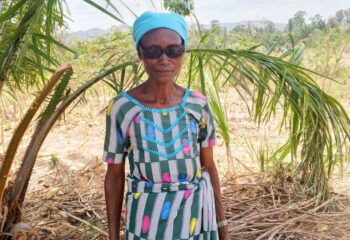
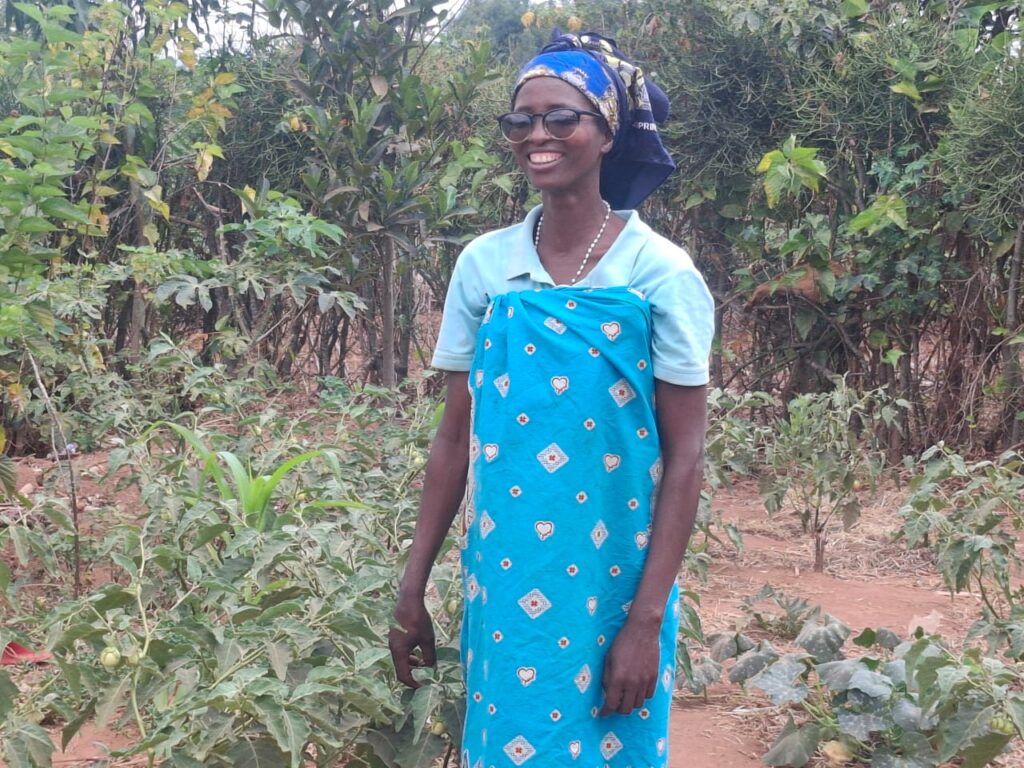
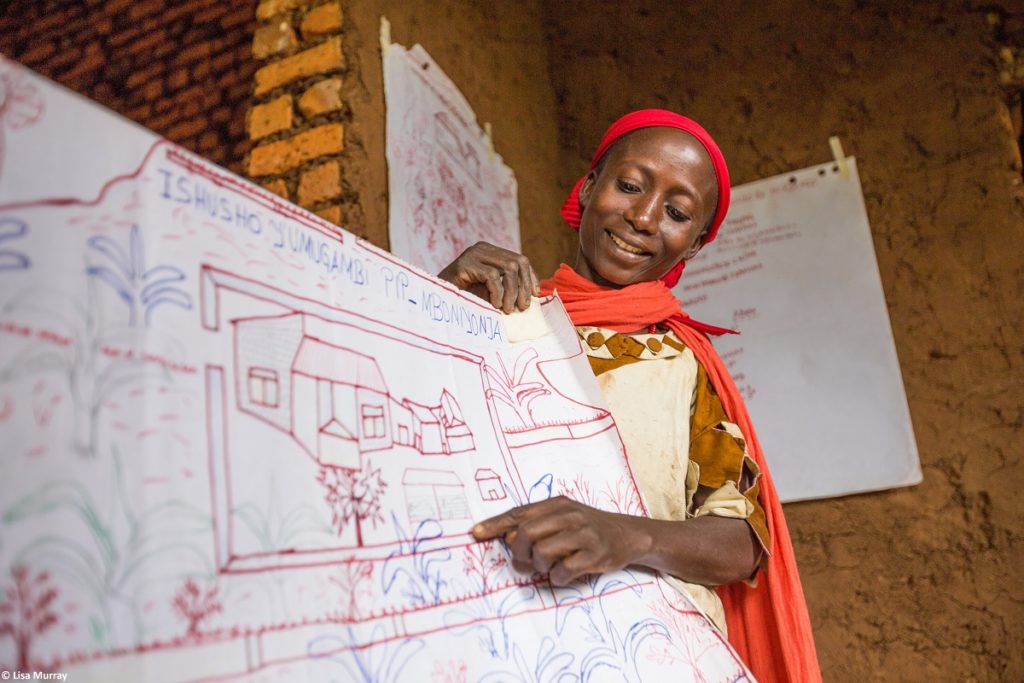
Calixte Diane Niyibitanga is a wife, mother, and farmer from Burundi’s Mugoboka Hill. In 2025, she undertook training on the Participatory Integrated Planning (PIP) approach under the Soil Fertility Stewardship Project (PAGRIS). This approach has enabled her to gradually rethink household organization, farmland management, and collaboration with other farmers in her community.
“Today, thanks to the practices I learned through the PIP approach, production has improved.”
Calixte Diane Niyibitanga
A New Vision for Household Planning
Before adopting the PIP approach, household activities had not necessarily been planned collectively. Through the training, Calixte Diane came to understand that planning household activities should involve all family members.
However, putting these lessons into practice has not been easy in Burundian households, where men are traditionally regarded as heads of households and generally make the decisions.
“Thanks to the training sessions we attended as a couple, particularly on the household vision tree and transformational leadership, my husband gradually changed his mindset and agreed to plan household activities with me and our children,” said Calixte Diane.
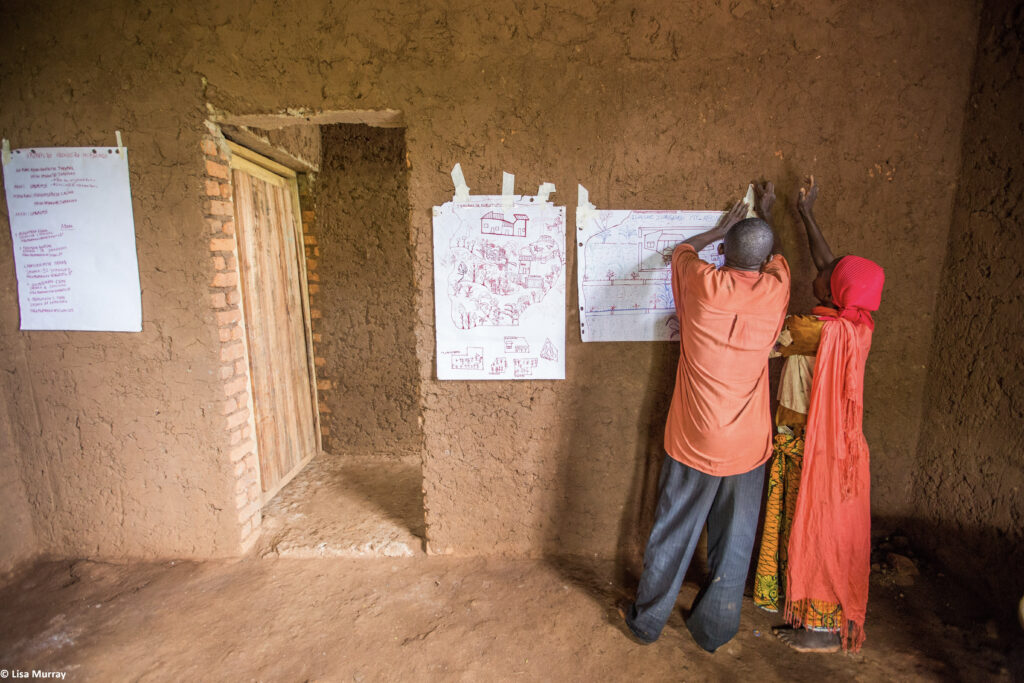
This new approach to planning activities promotes better family relationships, a more equitable distribution of responsibilities, increased recognition of women’s contributions, and greater participation by everyone in household decision-making.
From Soil Degradation to Improved Agricultural Production
Before Calixte Diane became aware of the PIP approach, her soils were highly vulnerable to erosion and had low fertility, resulting in insufficient agricultural production.
However, the training on the PIP approach encouraged her to implement soil protection and restoration measures. She now participates in erosion control activities and increasingly applies sustainable soil fertility management practices.
“Previously, my soil was eroded and infertile. Production was very low,” Calixte Diane remarked. “Today, thanks to the practices I learned through the PIP approach, production has improved.”
Integrating Multiple Components of PIP
Calixte Diane has also learned that the PIP approach can involve implementing several different components simultaneously to sustainably improve household living conditions.
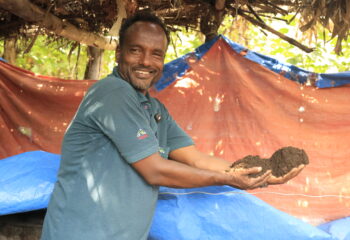
For example, livestock farming is one additional change on Calixte Diane’s farm. Previously, she had not kept livestock, but today, she owns a pig and a cow, whose manure is used to improve soil fertility.
The connection between livestock and crop production is now clear: “Without organic matter, we cannot achieve good agricultural production,” Calixte Diane said.
By gradually integrating the different components of PIP such as livestock into her farming enterprise, she is now able to make better use of the resources available within her household.
Collective Action at Community Level
The changes extend beyond Calixte Diane’s own farm. The PIP approach is also helping to strengthen social cohesion and unity among farmers throughout her community.
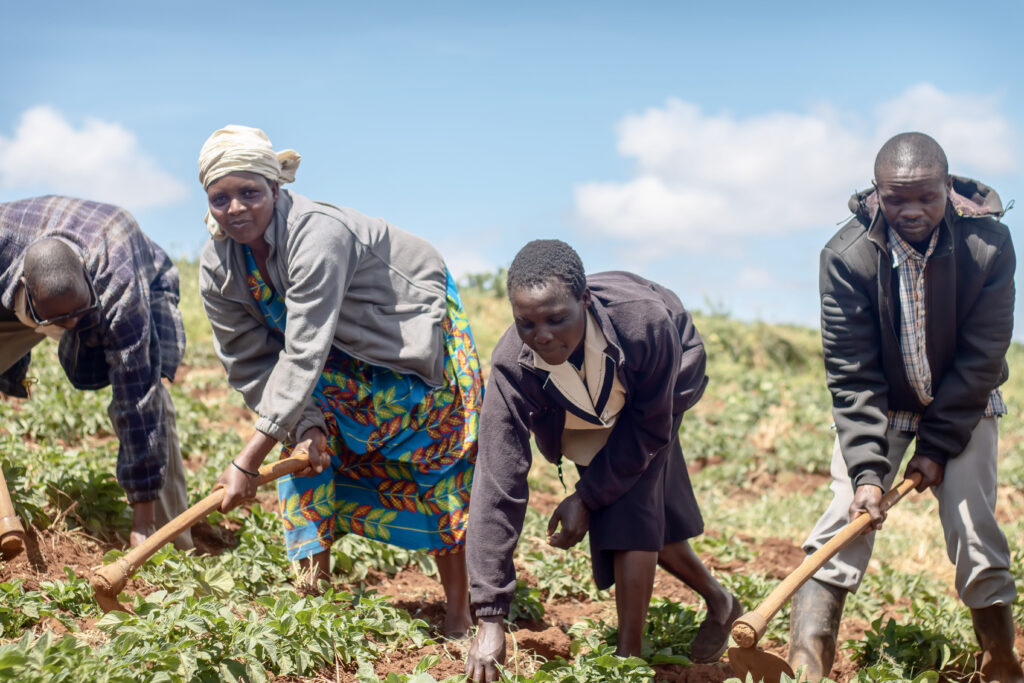
Farmers work together on community-based soil protection and restoration activities, including digging contour lines, planting erosion-control grasses, and establishing nurseries.
For Calixte Diane, these collective efforts demonstrate that improving agricultural productivity and protecting natural resources are shared responsibilities that require the participation of the entire community.
An Approach That Gradually Transforms Practices
Calixte Diane’s experience shows that the PIP approach can contribute to change at several levels: within the household, on the farm, and across the community.
By adopting the PIP approach – protecting her soils, integrating livestock into crop production, and taking part in community activities – Calixte Diane has become a model farmer, putting into practice the principles she learned through PAGRIS.
Her journey illustrates how the PIP approach can strengthen household resilience, improve natural resource management, and foster collective action toward more productive and sustainable agriculture.
The Soil Fertility Stewardship Project (PAGRIS) is funded by the Embassy of the Kingdom of the Netherlands in Burundi and implemented by IFDC, together with Wageningen Environmental Research and national partner Twitezimbere. PAGRIS aims to reach 100,000 family farms and establish ecologically sustainable management on 14,000 ha of land by scaling the Integrated Farming Plan (PIP) approach. The project is set to continue its activities in improving Burundian soil through December 2026.