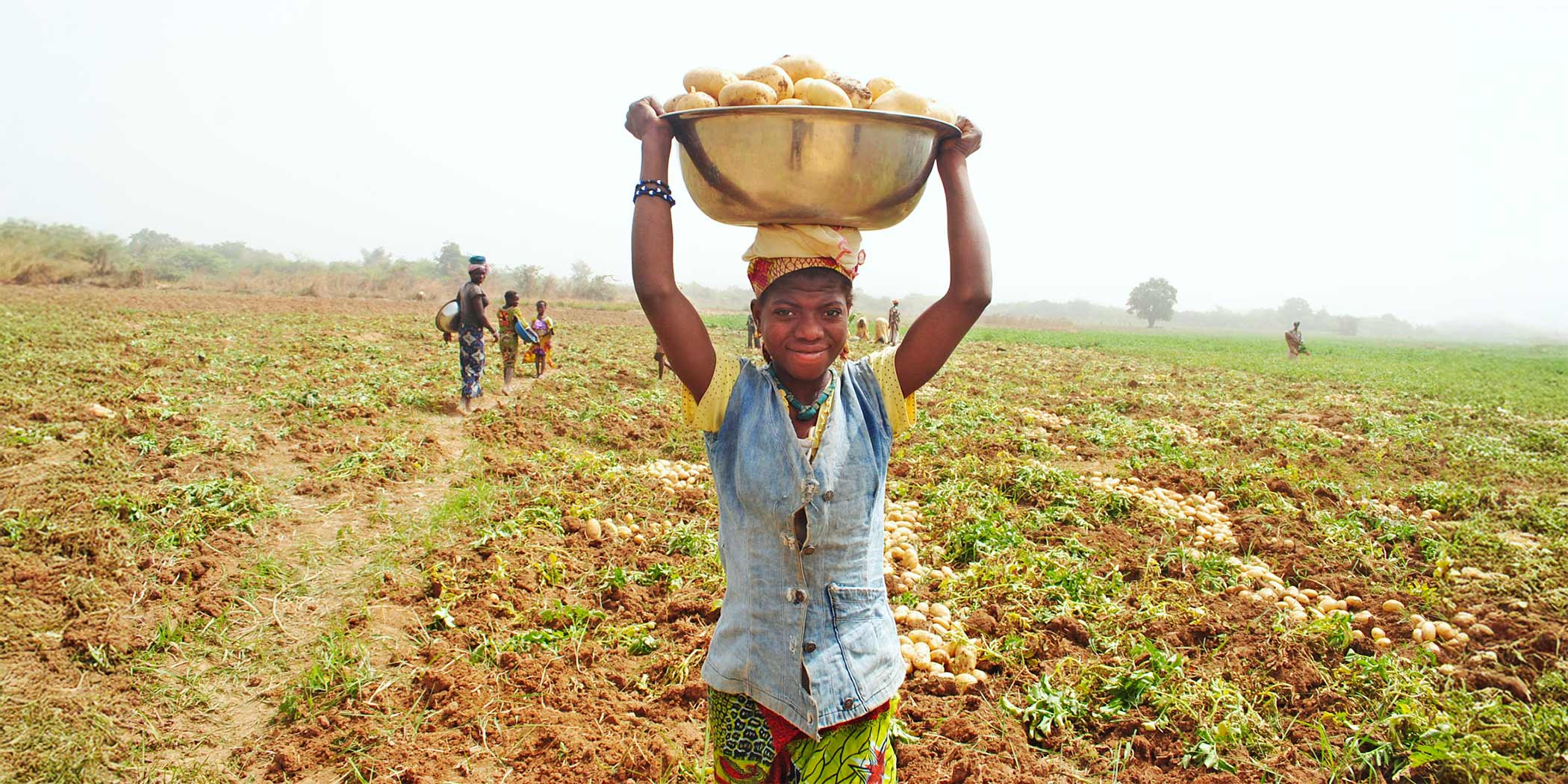
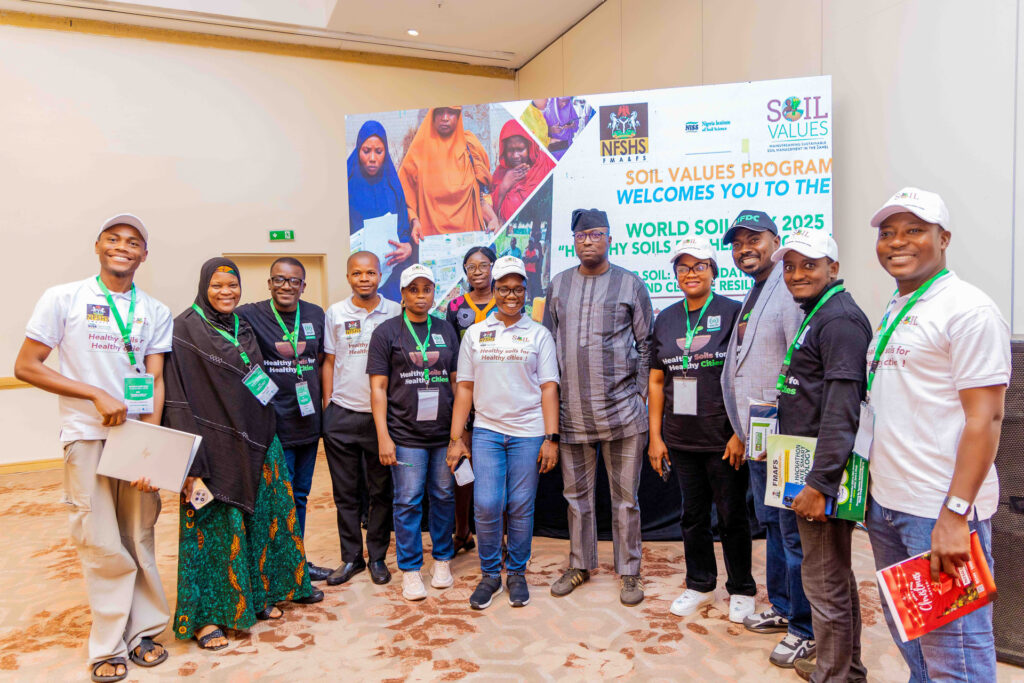
From bustling avenues to research halls and farmers’ fields, participants across West Africa rallied under the banner of World Soil Day (December 5) in events spanning late November to early December. The international theme, “Healthy Soils for Healthy Cities,” became a shared commitment to resilience in the face of erosion, nutrient depletion, acidity, and urban pollution.
Across Burkina Faso, Nigeria, Niger, and Mali, and even online through a webinar focused on the Sahel, IFDC and its Soil Values program partners translated science into policy and practice, building an arc of momentum that now stretches across the region.
“Sustainably improving soil health and fertility is possible, but it requires collective effort. True synergy among all stakeholders is essential in view of the challenges at stake.”
Henk van Duijn, IFDC President and CEO
Addressing Soil Acidity at the Source
For the first celebration, Burkina Faso brought science into the public sphere. In Bobo-Dioulasso (November 28-29) and Dédougou (December 12), the National Bureau of Soils (BUNASOLS) worked with the West Africa Food Systems Resilience Program (FSRP) in Burkina Faso and the Soil Values program to organize conferences on the theme “Soil Acidity: Impact on Crop Productivity and Producer Income.”
IFDC’s technical module unpacked a core bottleneck: in acidic soils, plants, especially cereals, cannot access nitrogen in the preferred nitrate form, and phosphorus becomes unavailable as it binds with aluminum, manganese, or iron. The result is stunted growth and lower yields, even when producers invest in and apply inputs.
Participants discussed holistic solutions, such as lime amendments, judicious fertilization, organic matter management, crop rotations, and soil conservation. Dr. Louis Yaméogo, BUNASOLS Director General, warned that acidity is expanding in several sub-watersheds and threatens production, but he also pointed to clear pathways for remediation if recommended technology packages are fully adopted.
Mobilizing Public Awareness and Conversation on Healthy Soils
Nigeria set a steady pace December 4-5 in Abuja. The Soil Values program, working with the Federal Ministry of Agriculture and Food Security (FMAFS), the Soil Science Society of Nigeria (SSSN), and the Nigeria Institute of Soil Science (NISS), placed urban soil health at the heart of public conversation.
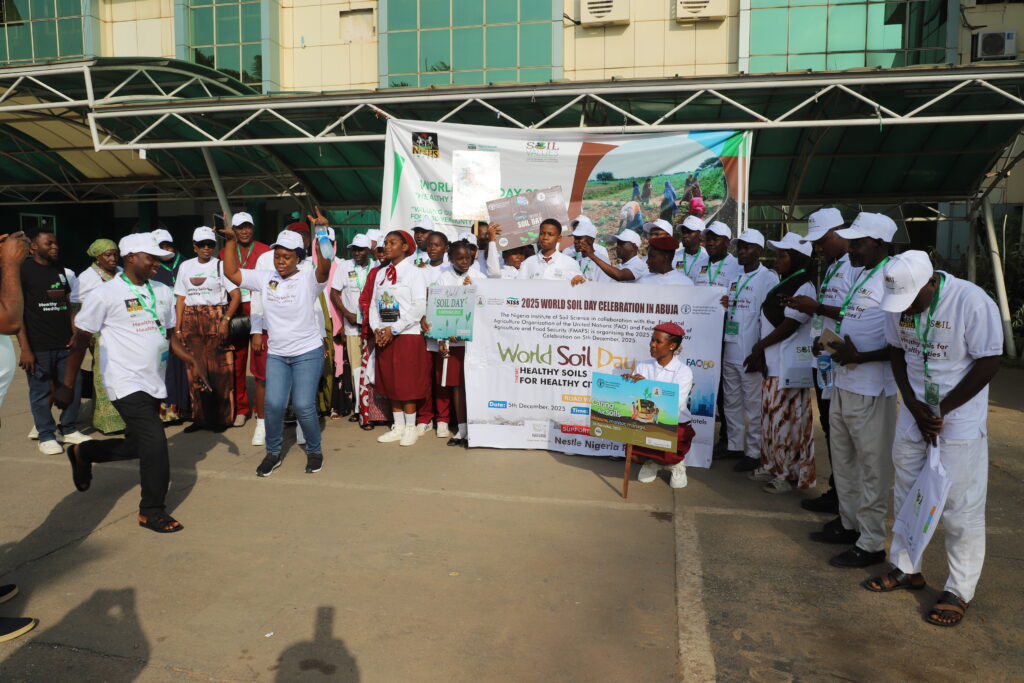
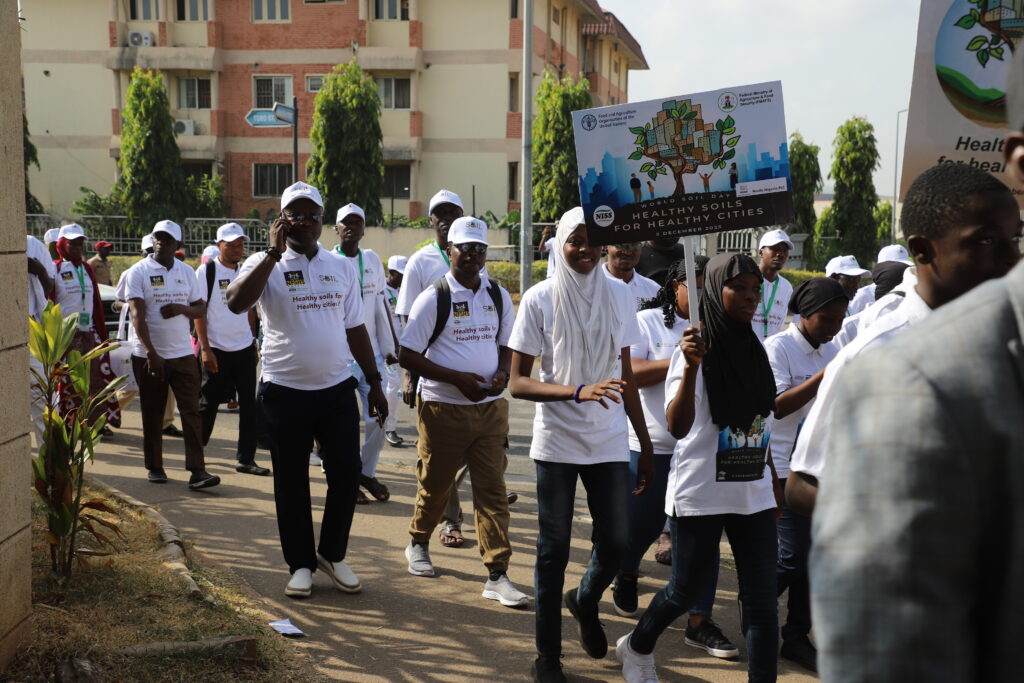
A high-level forum examined digital soil data and fertility innovation, while an Innovation Marketplace showcased local soil health solutions. An awareness march carried the message into the city, while school competitions, soil testing demonstrations, and tree planting helped anchor the theme in everyday action.
In his keynote address, Senator Aliyu Sabi Abdullahi, Minister of State at FMAFS, warned that one-third of Nigeria’s soils are degraded and reminded participants that it can take up to a thousand years to regenerate only a few centimeters of topsoil—a stark reminder of why action cannot wait. As the #HealthySoilsHealthyCities tag was launched nationwide, Soil Values Program Director Alain Sy Traoré emphasized how valuing soils underpins food sovereignty and climate resilience.
Data, Partnerships, and Inclusion as Catalysts for Change
While events in Burkina Faso and Nigeria provided a public spark, the World Soil Day webinar on December 5 supplied a strategic compass. Convened by Soil Values and led by IFDC in consortium with SNV Netherlands Development Organisation (SNV) and Wageningen University & Research (WUR), the high-level discussion gathered policymakers, researchers, producers, private sector actors, journalists, and coalition members committed to building sustainable food systems.
The webinar opened with Henk van Duijn, IFDC President and CEO, calling for coordinated, collective action to reverse advanced soil degradation and ensure farm investments pay off: “Soil degradation is already well advanced, and agricultural producers are struggling to make their investments profitable. Sustainably improving soil health and fertility is possible, but it requires collective effort. True synergy among all stakeholders is essential in view of the challenges at stake.”
Soil scientist Dr. Eric Smaling then outlined directions for 2026, which include tailoring fertilizer recommendations to specific soil types, expanding youth training, and deepening private sector engagement to turn proven practices into widespread adoption.
Partners including AGRA, ISRIC – World Soil Information (ISRIC), and the West and Central African Council for Agricultural Research and Development (CORAF) highlighted the power of harmonized soil data, integrated soil fertility management (ISFM), and improved market access to accelerate uptake among smallholders.
A panel moderated by IFDC Vice President of Programs Dr. Oumou Camara underscored inclusion as nonnegotiable.
Hwyere Mary, SNV Multi-Country Gender Equality and Social Inclusion (GESI) Expert, detailed the program’s GESI approach; Dr. Asseta Diallo, AGRA Senior Specialist in Soil Health and Integrated Management, showed how convening partnerships translates commitments into action; WUR Professor and Chair of the Plant Production Systems Group Katrien Descheemaeker spoke on durable researcher-practitioner relationships; and Dr. Francis Silatsa, ISRIC Soil Scientist and Project Leader, emphasized that pooling and harmonizing soil data multiplies impact.
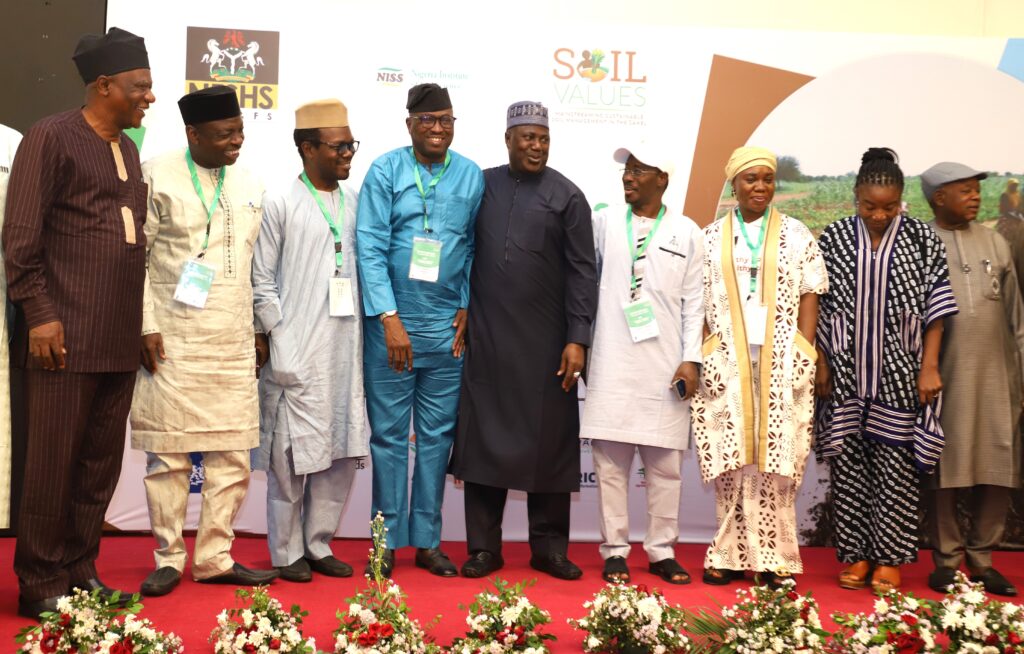
Closing the virtual discussions, Traoré reminded participants that soil health goes far beyond agricultural production: “It encompasses the resilience of agricultural stakeholders and food security. Restoring soils is now an imperative for everyone. Evidence-based data enables us to build strong partnerships and attract investment. We must mobilize more resources and work together to ensure a sustainable future for future generations.”
Urban Soil Health Meets Policy and Practice
As the week unfolded, Niger also carried the urban conversation forward. In Niamey on December 5-6, the National Institute of Agronomic Research of Niger (INRAN) and Soil Values celebrated World Soil Day with panels exploring urban landscapes and land tenure, drivers of soil degradation, waste management, local policy initiatives, and communication strategies for healthier cities.
The second day took participants into the field, where theory met reality and the challenges of urban soil management became tangible through site visits and demonstrations. That immersion reinforced a central message of the week: healthy soils are not just the backbone of rural livelihoods; they are fundamental to city life, public health, and sustainable urban planning.
A few days later, Mali brought the conversation to the classroom, laboratory, and marketplace. On December 10, Soil Values celebrated World Soil Day in Mali at Polytechnic Institute for Rural Training and Applied Research (IPR/IFRA) in Katibougou, under the high patronage of the Minister of Agriculture Daniel Siméon Kelema, joined by the Minister of Higher Education and Scientific Research Professor Bouréma Kansaye, and in collaboration with AGRA and national institutions.
The sobering truth is that more than 65% of land in the Sahel is degraded, which is why Mali’s World Soil Day event explicitly reinforced the Africa Fertilizer and Soil Health (AFSH) Action Plan (2024-2034) adopted in Nairobi.
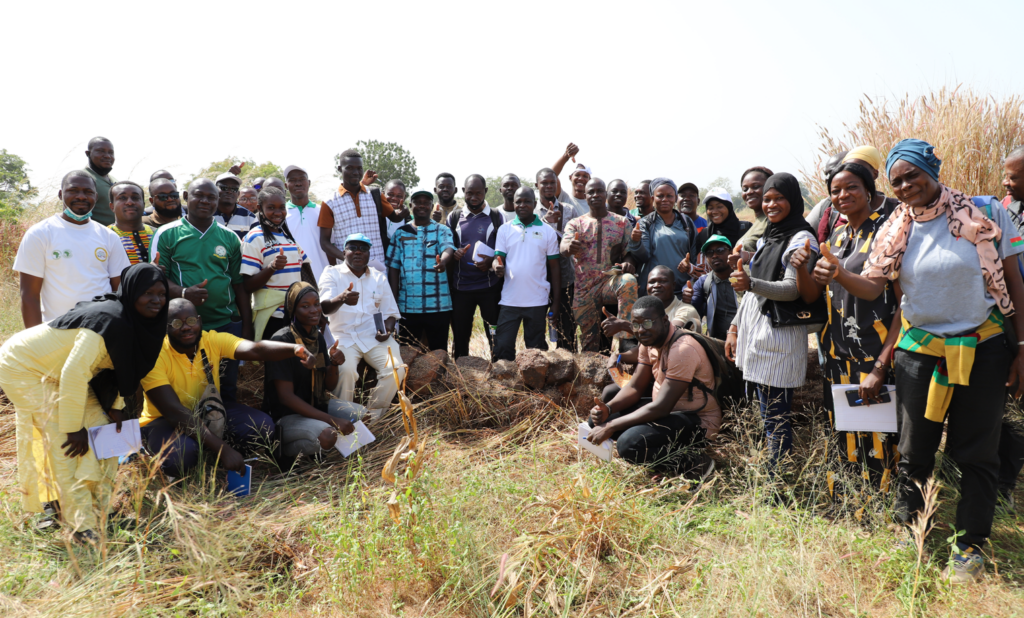
Nearly 150 participants from public, private, academic, and community sectors took part in multiple sessions, including a youth session that mobilized student ambassadors and technical demonstrations of infrared soil analysis, digital decision support tools, and ISFM practices. The event also featured a technology fair showcasing mobile diagnostic kits, improved fertilizer blends, and digital farm management platforms.
Sanogo Niamoye Traoré, Soil Values Country Coordinator in Mali, noted that reversing soil degradation is central to the program’s mission.
Kelema underscored that soil health is the foundation of sustainable development in both rural and urban spaces, and Sanogo Namaro Coulibaly, regional president of the Professional Association of Rural Women (ASPROSFER) in Sikasso, shared how Bokashi compost and natural biopesticides made from garlic, chili, and ginger have boosted yields and strengthened autonomy: “These practices have improved our yields significantly.”
Finally, the event showcased a mixed panel on soil health and climate change by mapping common pathways that link decisionmakers, researchers, technical programs, the private sector, and producers, reinforcing commitments to bring the AFSH Action Plan to life.
A Shared Regional Agenda for Healthy Soils
These connected events reveal a clear regional agenda that turns soil science into action, elevates soil health in national and urban frameworks, and shows what healthy soils mean in practice across West Africa.
The Soil Values program, implemented by IFDC with SNV and WUR, is advancing dialogue, partnerships, and practical innovation—and the way forward is clear. Donors and partners can accelerate impact by financing national soil fertility roadmaps, strengthening lime and amendment supply chains, and scaling ISFM extension that delivers complete solutions to farmers.
Investments in soil data harmonization, digital agronomy tools, youth and women-led enterprises, and locally adapted fertilizer innovations will move science from policy and research into fields and markets.
Soil Values has shown what coordinated action looks like. The next chapter depends on resourcing it. Now is the moment to turn momentum into measurable, countrywide gains so healthy soils become the bedrock of food sovereignty, climate resilience, and shared prosperity across West Africa.
Funded by the Dutch Directorate-General for International Cooperation (DGIS), the Soil Values program is being implemented over 10 years (2024-2033), led by the International Fertilizer Development Center (IFDC), in consortium with SNV and Wageningen University and Research (WUR), as well as knowledge partners such as AGRA, the Center for International Forestry Research and World Agroforestry (CIFOR-ICRAF), the International Institute of Tropical Agriculture (IITA), ISRIC – World Soil Information, and the International Water Management Institute (IWMI).