A new partnership designed to advance soil health, fertilizer innovation, and food security across the region, and reduce dependence on imported fertilizers.
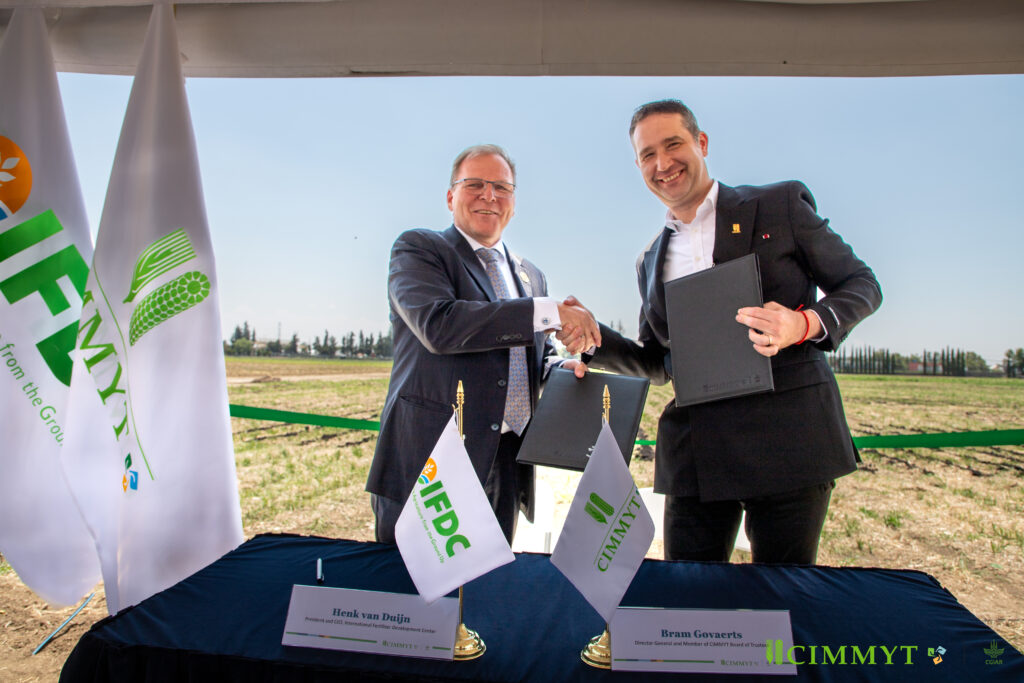
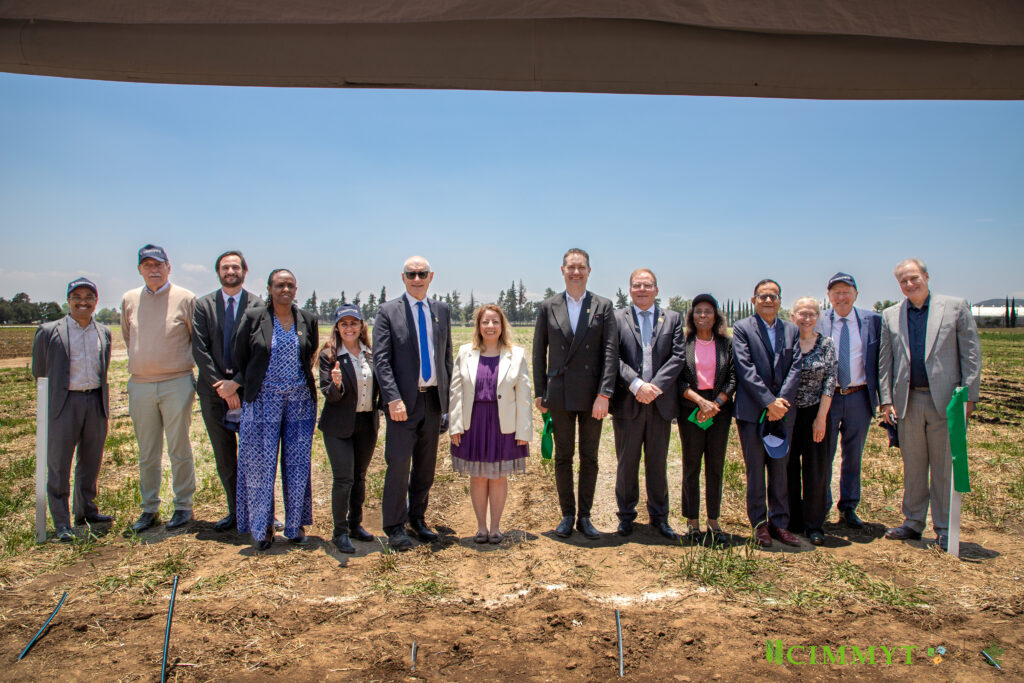
Texcoco, Mexico | May 20, 2026 — The International Maize and Wheat Improvement Center (CIMMYT) and the International Fertilizer Development Center (IFDC) today opened IFDC’s new office at CIMMYT headquarters in Texcoco, Mexico. The office is the next step in a joint effort to establish a Fertilizer Innovation Center (FIC) for Mexico and Central America, a regional hub that will pioneer affordable, science-based fertilizer solutions to restore soil health, boost crop yields, and empower smallholder farmers across the region.
The new office and FIC will strengthen U.S.-Mexico trade interests and reflect the shared commitment between CIMMYT and IFDC to solve common problems, and both organizations extend their sincerest appreciation to the U.S. Department of State for the funds that have enabled this shared effort.
“By combining IFDC’s five decades of integrated soil health and fertilizer innovation with CIMMYT’s deep regional networks, cropping systems, and seed science expertise, we can deliver the science-based, farmer-centered solutions this region needs to break the cycle of soil degradation and import dependency.”
bram Govaerts, Director General of CIMMYT
The IFDC Office opening marks a new phase in a long-standing collaboration between the two organizations. As part of CIMMYT’s 2030 Strategy and its broader effort to strengthen its presence in the Western Hemisphere, it will help reduce fertilizer import dependency across the Americas. It also marks IFDC’s formal entry into Mexico and Central America, bringing five decades of global expertise in fertilizer technology, nutrient management, and soil health to the region.
Agriculture in Mexico and Central America faces converging pressures. About 40% of arable land in Mexico and 35% in Central America is degraded, while nutrient use efficiency remains between 30% and 50%.
Mexico imports between 60% and 80% of its fertilizers, exposing farmers to global price shocks and supply disruptions; imports recently exceeded 5 million tons annually at a cost of approximately U.S. $2.5 billion. Together, these pressures threaten the productivity and resilience of the smallholder farmers who form the backbone of the region’s food systems.
Over the course of 2026, the new IFDC office at CIMMYT headquarters will lead a rigorous scoping of the regional innovation ecosystem, mapping research capacity, the policy and regulatory environment, private sector interests, and the funding landscape across Mexico and Central America.
In parallel, it will begin baseline research on fertilizer use efficiency, soil health, and One Health indicators. This work will inform the design of the future FIC, which is being conceived as a regional hub anchored in the “Soil Health for One Health” principle and structured around four complementary components: Centers of Excellence for laboratory, greenhouse, and field research; a Pilot Plant for product development and scale-up; a Multi-Stakeholder Science and Policy Platform; and a Fertilizer Academy to train the next generation of scientists, entrepreneurs, and farm advisors.
“Proximity matters when exploring the opportunities for a Fertilizer Innovation Center when you are close to the soils, the farmers, the private sector, and the institutions that know the landscape, and that is why IFDC is opening this office at CIMMYT headquarters,” said Henk van Duijn, President and CEO of IFDC.
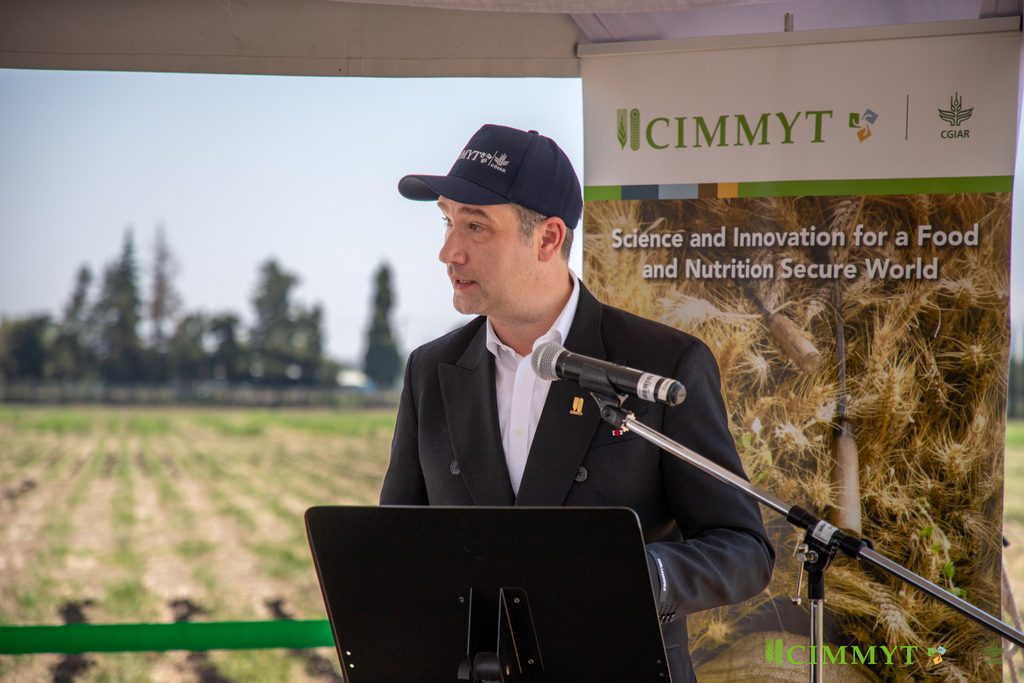
“By combining IFDC’s five decades of integrated soil health and fertilizer innovation with CIMMYT’s deep regional networks, cropping systems, and seed science expertise, we can deliver the science-based, farmer-centered solutions this region needs to break the cycle of soil degradation and import dependency,” said Bram Govaerts, Director General of CIMMYT.
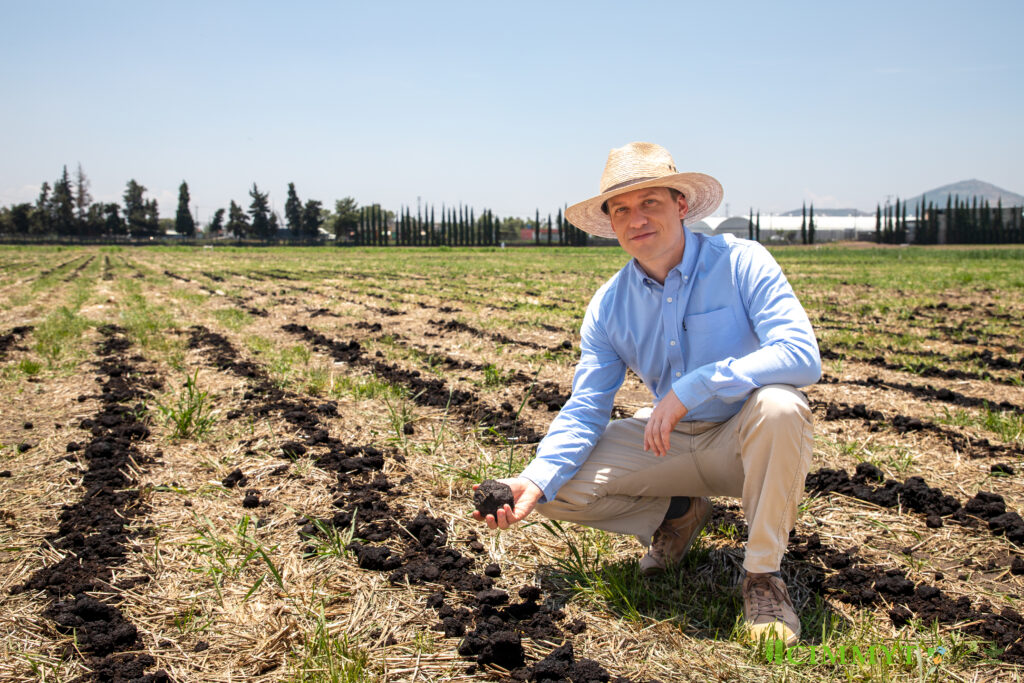
The collaboration draws on IFDC’s global leadership in fertilizer technology and its pilot-plant capacity in Muscle Shoals, Alabama, and on CIMMYT’s research stations and farmer networks across Mexico and Central America, its expertise in maize, wheat, and conservation agriculture, and its partnerships with national agricultural research systems. Adjacent to the new office, a CIMMYT trial plot led by soil scientist Simon Fonteyne is already testing biochar applications, an early example of the kind of soil health research the partnership will accelerate, converting agricultural residues into amendments that improve nutrient retention, reduce input costs, and rebuild organic matter on degraded lands.
Once established, the Fertilizer Innovation Center will join a growing global network of FICs built by IFDC in strategic agricultural regions. Sister centers are already operating in India, Kenya, and a corridor linking the United States and Brazil, each tailoring fertilizer research to local soils, crops, and farming systems.
Membership will give regional partners direct access to research and expertise developed elsewhere – for example, Brazil’s experience in restoring degraded soils or India’s leadership in nano-fertilizers – while contributing innovations developed in Mexico and Central America back to the network.
About IFDC
The International Fertilizer Development Center (IFDC) is a public international organization based in Muscle Shoals, Alabama, with more than 50 years of experience working in over 100 countries. IFDC advances sustainable agri-food systems by leading research and innovation in soil fertility and fertilizer use, strengthening agricultural markets, and supporting policies that enable sustainable nutrient management. Through partnerships across the public, private, and civil society sectors, IFDC empowers smallholder farmers to improve productivity, regenerate soils, reduce greenhouse gas emissions, and contribute to global food and nutrition security.
For more information:
Anna Goodwin, Strategic Communications Specialist (IFDC) | agoodwin@ifdc.org
About CIMMYT
CIMMYT is a cutting-edge, non-profit, international organization dedicated to solving tomorrow’s problems today. It is entrusted with fostering improved quantity, quality, and dependability of production systems and basic cereals such as maize, wheat, triticale, sorghum, millets, and associated crops through applied agricultural science, particularly in the Global South, through building strong partnerships. This combination enhances the livelihood trajectories and resilience of millions of resource-poor farmers, while working towards a more productive, inclusive, and resilient agri-food system within planetary boundaries.
For more information:
Nahyane Bakkali, External Communications Manager (CIMMYT) | n.bakkali@cgiar.org