The next fertilizer crisis is inevitable.
Whether it becomes a food crisis depends on what we invest in now.
By Ben Valk
Global Director, Sustain Sudan Project
Sustain Africa
“Fertilizer moves in flows – it’s not stockpiled – and when those flows are disrupted in places like the Strait of Hormuz, the shock is felt quickly in the fields of African farmers and the price of food on family tables.”
Ben Valk
Actors in African food supply chains are being impacted by the current conflict in the Middle East – farmers, agro-dealers, food processors and traders, agribusiness financiers, and consumers. The following is an overview of the effects of this crisis.
A Market Sketch
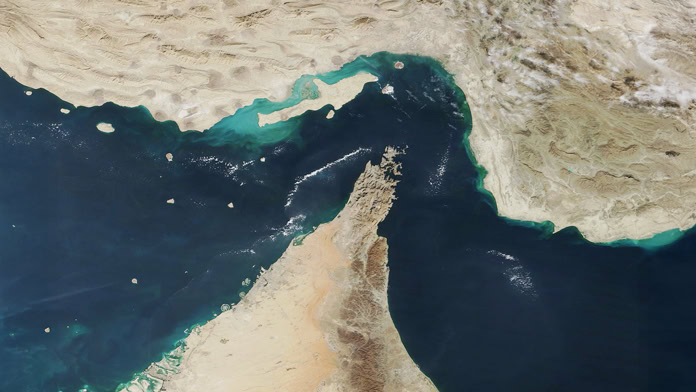
The de facto closure of the Strait of Hormuz since February 28 has resulted in significantly higher oil and fuel prices, cancellation of fertilizer supply contracts citing force majeure, lower traded volumes, and countries scrambling to secure supplies. Moreover, trading prices of nitrogen fertilizers have doubled and those of other fertilizer blends have risen by 30-80%. The supply of base products for fertilizer production and blending, such as natural gas and sulfur, has also been significantly disrupted.
What most people do not realize is that global pricing of fertilizers is actually more volatile than that of oil. Fertilizer is a “flow” product: it is ordered, produced, shipped, and distributed to farmers just in time for the planting season, without much stocking in between. This works when the flow can continue, but when the flow is disrupted – happening now in the Strait and in 2022 in the Black Sea – prices can spike overnight.
The fertilizer crisis due to the Russia-Ukraine war taught us that the global industry eventually fills the gap. In that sense, it is a truly market-based system. But ramping production volumes takes time – it typically takes about a year before prices drop. It also taught us that the effect on food prices is delayed.
One full planting season will typically show the impact of lower supplies and higher pricing on local food production and food prices. Of course, other factors are also involved, including El Niño. In addition, rising fuel prices have an effect as agriculture is a very fuel-intensive industry, both in the field and in food logistics.
An agro-dealer, whose business is to source and sell farm inputs such as seeds, fertilizers, and crop protection products, faces significantly higher working capital demands stemming from higher procurement costs, shipping, and land transport; and in the Gulf, higher insurance premiums are a concern. A risk is that prices fall again – with the possibility that others have sourced more economically and will actually take the market and the margins.
Agro-dealers also face more stringent demands from producers and traders in terms of payment conditions. While a supplier could have offered credit last year, that may no longer be the case. Basically, this puts the industry, especially in the most vulnerable countries with weak macroeconomic parameters, in a situation where it – and local farmers – takes the biggest hit. India can afford to pay cash, but Ghana, Malawi, and Sudan are not able to do that.
Food processors, retailers, and consumers will see the effects down the line. It takes time, but upward pressure on food prices is unavoidable. Again, in the most vulnerable countries, this will disproportionately affect the food security of the poorest part of the population. The indirect cost of war is extremely high.
Governments that subsidize fertilizers face an enormous drag on their fiscal budgets. The situation is not only the concern of the Ministry of Agriculture, but certainly also a major problem for the Ministry of Finance.
Nigeria presents an interesting case. It is a net beneficiary of the crisis due to higher oil prices and fertilizer exports. But at the same time, it is one of the most food-insecure countries in Africa. Global market volatility benefits a few people and companies in the country, but that benefit is not distributed among smallholder farmers and low-income consumers.
In summary, farmers face at least double costs of farm inputs, double costs of fuel, high local currency depreciation, and high cost of financing. Even when access to credit is available, many are reluctant to take on such a heavy financial burden and risk.
What to Do? A Private Sector-Based View
The most vulnerable countries in Africa need assistance to keep supplies flowing. In Sudan, a meal produced by a local farmer is three times cheaper than an imported meal – and almost 10 times cheaper than international food aid. Working through existing agro-dealers and farmer organizations and with international private sector companies is economically the most sustainable way of supporting local food systems.
The most important action to take is to share the financial risk. Covering credit and currency risk for local agro-dealers and farmers and credit risk for international suppliers will go a long way to keep the flow going. Sustain Africa and its Sustain Sudan initiative have shown this can be done.
Farmers also need help to increase their nutrient use efficiency. High-quality seeds, more precise input application, reduced dependence on conventional energy, and good post-harvest crop care all help to reduce input costs and optimize yields, food availability, and farmer income.
Limited grant support is available. However, as government subsidies can be problematic, they should be limited, available across existing private sector input suppliers and products, and availed through an e-voucher system.
IFDC, Sustain Africa, and AfricaFertilizer call on international actors to act urgently. Further developments and the outcome of the Middle East war have proven exceptionally difficult to predict, and other future crises are inevitable. The most vulnerable countries are disproportionally impacted by the current crisis, with very limited ability to respond. Let us help them to keep producing their own food.
Disclaimer
This blog reflects the personal opinion of the author. While based on information compiled from multiple publicly available sources and market intelligence, and with every effort to verify the accuracy of the information, the author and publishers accept no liability for any loss, damage, or disruption caused by errors, omissions, or the use of this information.
About Ben Valk

Ben Valk is Co-Founder of Sustain Africa and Global Director of Sustain Sudan. A seasoned leader in food systems transformation, sustainable agriculture, and agricultural finance, he brings over 20 years of experience in agribusiness development across emerging markets. His expertise spans international banking, strategic partnerships, and innovative financing mechanisms aimed at accelerating sustainable food systems and environmental stewardship.
For Rabobank, Valk managed investor relations for the AGRI3 Fund, successfully securing the first 60% of its funding. Prior to that, he initiated the Farm to Market Alliance with the World Food Programme and the Food Action Alliance with the World Economic Forum. Currently, with IFDC, Valk leads Sustain Sudan, a daring initiative of Sustain Africa to provide farm inputs to war-ridden Sudan on market-based conditions. In addition, through Valk Food Economics B.V., he focuses on research and strategy planning on the macroeconomic context in which sustainable food systems must be shaped.