The next fertilizer crisis is inevitable.
Whether it becomes a food crisis depends on what we invest in now.
Contact Us Today
As geopolitical tensions, energy market volatility, and shifting trade policies continue to reshape global agricultural input markets, fertilizer systems remain under sustained pressure. In this context, the Global Fertilizer Crisis Response Group (GFCRG), co-chaired by the International Fertilizer Development Center (IFDC) and the Food and Agriculture Organization of the United Nations (FAO), is bringing together partners such as the World Bank, United Nations, African Development Bank (AfDB), African Union (AU), World Farmers’ Organisation (WFO), World Trade Organization (WTO), World Food Programme (WFP), International Fertilizer Association (IFA), and the International Food Policy Research Institute (IFPRI), as well as multinational fertilizer producers and other private sector stakeholders. The group serves as a central platform for coordinating analysis and policy responses to emerging global fertilizer risks.
The GFCRG also maintains close coordination with broader international mechanisms, including the United Nations Task Force on the Strait of Hormuz and the G7 Food Systems Working Group, ensuring fertilizer-related risks are integrated into wider food security and macroeconomic discussions.
Heightened Market Disruptions and Rising Landed Costs
GFCRG discussions have highlighted a continued buildup of structural pressures in global fertilizer markets. Soaring energy prices, increasing freight costs, export restrictions, and shifting trade routes are collectively driving higher landed costs and greater market uncertainty.
Freight has emerged as a particularly important transmission channel of inflation. Even where fertilizer supply remains available, elevated shipping and fuel costs are significantly increasing the cost of delivery, particularly in import-dependent regions. These pressures are compounded by disruptions in the Strait of Hormuz and the emergence of alternative overland and maritime routes that, while maintaining supply flows, often involve higher logistical costs.
Export policy shifts are further reshaping global trade patterns. Restrictions in some fertilizer-producing countries such as China, alongside strong procurement activity from large importers like India, are contributing to volatility in global availability and pricing. At the same time, export growth from several producers has helped prevent a full supply crisis, but with uneven distributional impacts.
Affordability Constraints, Yield Risk, and Food Price Transmission
A fundamental concern in GFCRG discussions is the widening gap between global availability and national affordability, particularly in import-dependent countries. Financial constraints, foreign exchange limitations, and high landed costs are increasingly limiting access to fertilizers in vulnerable markets.
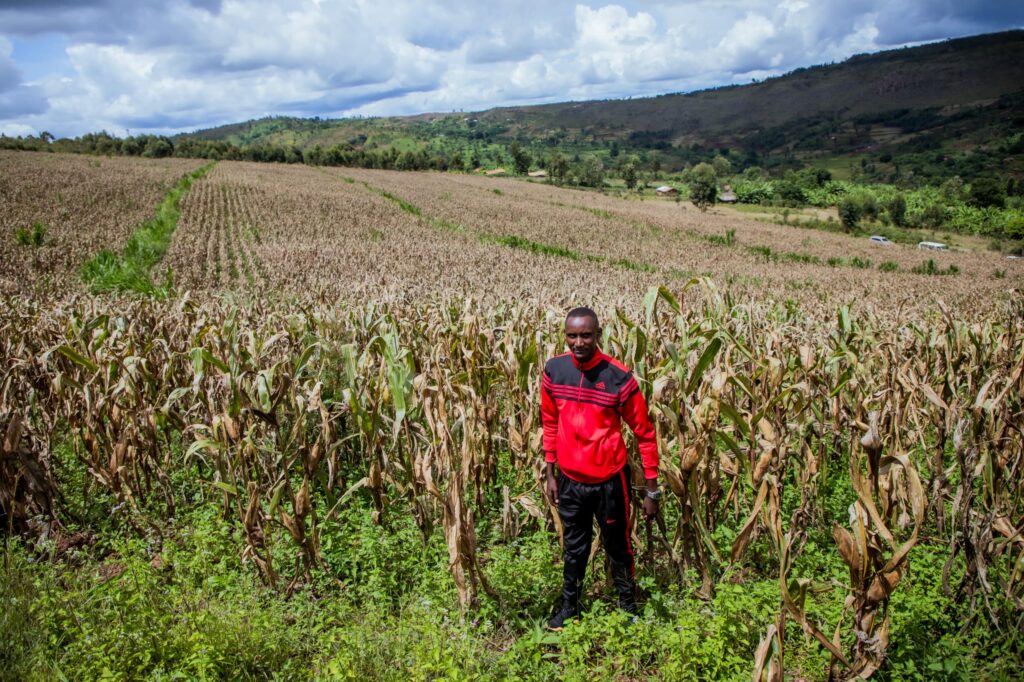
This affordability constraint is now beginning to translate directly into production risk. Reduced fertilizer application rates, delayed procurement, and substitution with lower-nutrient inputs are expected to result in reduced yields in regions that have already entered or are approaching their planting season.
Recent increases in global agricultural commodity prices, including maize, soybean, wheat, and rice, reinforce the transmission of higher input costs and freight expenses into food inflation and farm-level income pressures.
Emerging Market Behavior and the Wait-and-See Dynamic
A notable feature of current market conditions is the heightened adoption of a wait-and-see approach among some governments and private sector actors. Anticipation of potential price declines has led many buyers to delay procurement decisions.
The GFCRG has observed that this behavior is increasingly interacting with large-scale procurement decisions by major importing countries and export restrictions in key producing regions. In some cases, procurement activity is becoming more concentrated among fewer large buyers, while smaller and more financially constrained importers are pushed further down the allocation queue.
This is reinforcing uneven access to supply and increasing uncertainty around availability ahead of the main planting windows.
Coordinated Policy Responses and Financial Preparedness
The GFCRG continues to emphasize that current challenges require coordinated responses rather than fragmented national actions. In the short term, priority is being given to improving market transparency; strengthening real-time data on trade flows, tenders, and stock levels; and reducing information asymmetries that drive competitive purchasing among vulnerable countries.
International financial institutions, including the World Bank and AfDB, continue to underscore the availability of emergency financing instruments. However, uptake remains uneven, largely due to delayed recognition of urgency and limited preparedness at country level. Strengthening awareness and readiness for rapid deployment of existing tools remains a priority.
At the same time, discussions within the GFCRG stress the importance of avoiding premature or poorly targeted interventions that could further distort markets. A measured approach balancing vigilance with restraint continues to guide the group’s strategy.

Structural Risks, Investment Shifts, and Logistics Constraints
Beyond immediate market dynamics, the GFCRG points to emerging medium- and long-term risks in global fertilizer supply. Disruptions to production infrastructure in key exporting regions, combined with uncertainty in planned investments in ammonia- and energy-linked fertilizer capacity, could constrain future supply expansion.
The group also emphasizes that improving nutrient use efficiency remains an important short-term lever for strengthening resilience, particularly through better soil diagnostics and more targeted fertilizer application.
Moreover, logistics and freight efficiency is a significant factor in landed cost management. Reducing transport inefficiencies is increasingly viewed as essential to improving fertilizer access, particularly for landlocked and import-dependent countries, where logistics costs are often more important in determining final affordability than production costs.
Systemic Risk and the Role of the GFCRG
The discussions within the GFCRG reflect a broad shift in perspective. Fertilizer markets are no longer viewed as isolated commodity systems but as part of a wider global risk structure shaped by energy markets, freight dynamics, geopolitical developments, and climate variability. The potential compounding effects of these pressures, including risks linked to climate shocks such as El Niño, reinforce the need for integrated analysis and coordinated policy responses.
While current conditions remain below crisis thresholds, the direction of risk is clearly upward, particularly for vulnerable import-dependent countries. The GFCRG therefore continues to serve as a key platform for aligning analysis, strengthening coordination with global partners, and ensuring that policy responses are informed, timely, and proportionate.
Maintaining vigilance while avoiding panic is vital to the GFCRG approach. Ensuring that vulnerable countries are not left behind in increasingly complex and volatile fertilizer markets remains essential for protecting yields, stabilizing food systems, and safeguarding global food security.