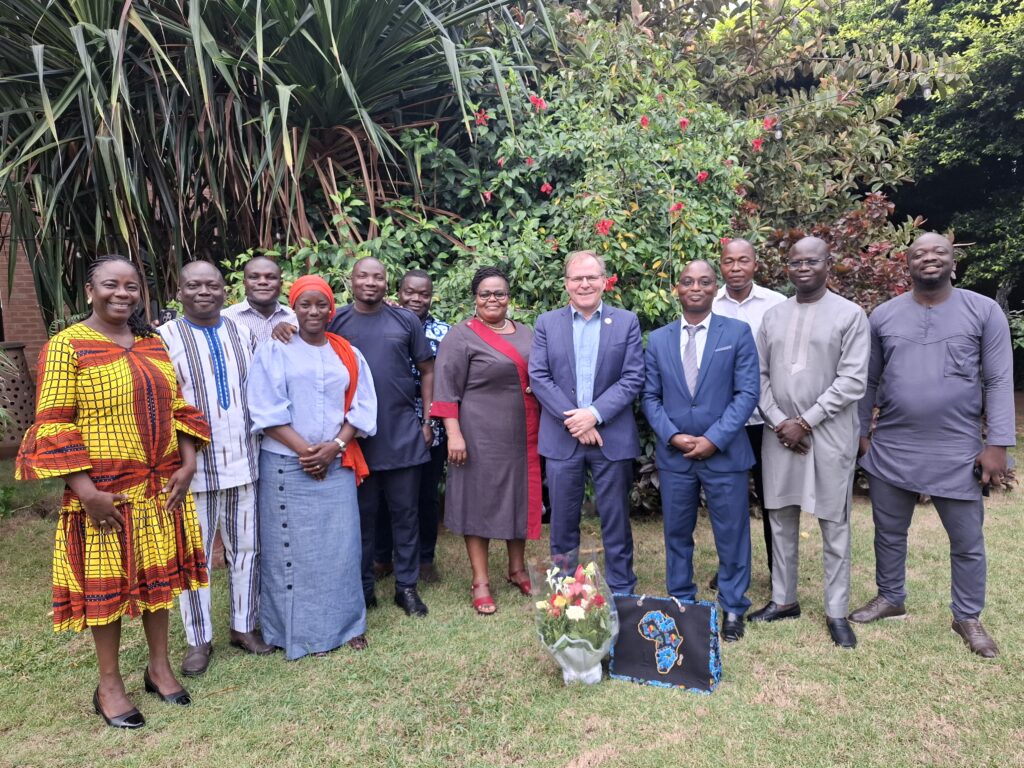
In Lomé, Togo, agricultural transformation is taking place as much in data, public policy, and partnerships as it is in the fields. With this in mind, Henk van Duijn, President and CEO of IFDC, undertook a strategic mission to Togo on September 14 and 15.
The visit combined high-level discussions with national authorities and the official handover of the Hydro-Agro-Meteorological Information System (SIHAM) and Digikiosk equipment – a key milestone in expanding farmers’ access to digital agricultural services and climate information.
“IFDC stands ready to support the country’s priorities and build new pathways for collaboration across West Africa.”
Henk van Duijn, IFDC President and CEO
SIHAM: When Information Becomes a Lever for Farmer Resilience
The visit began with the official handover ceremony for SIHAM and Digikiosk equipment, organized as part of the Hydro-Agro-Meteorological Information System (SIHAM)/West Africa Food System Resilience Program (FSRP) program. The transfer of materials represented a shared ambition to bring climate and agricultural information closer to farmers at the very moments they need it most to make better decisions.
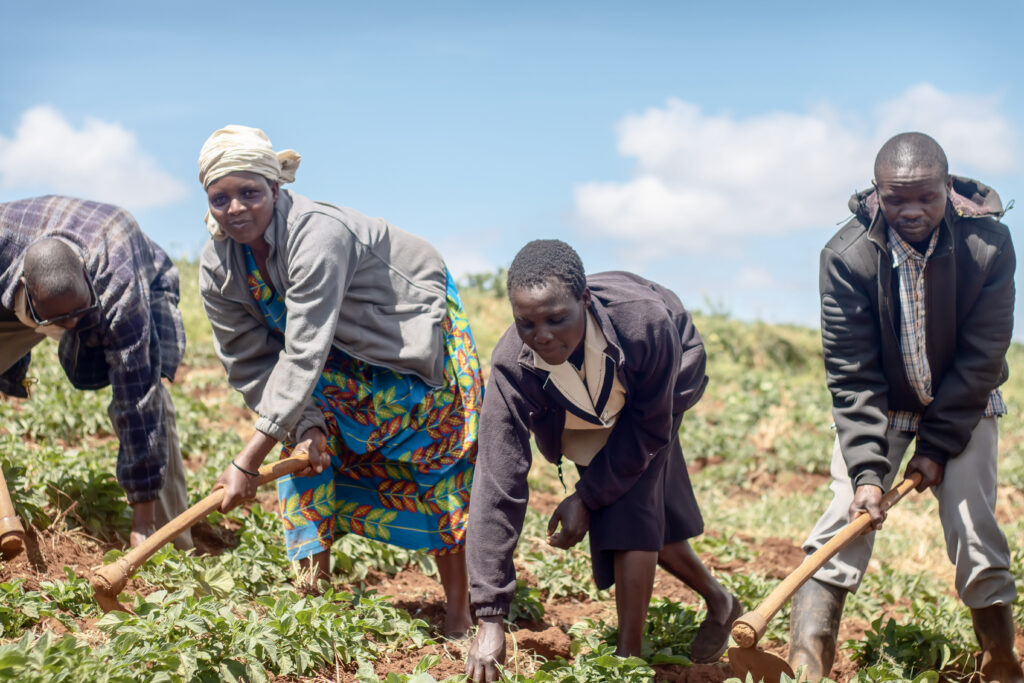
In acknowledging the commitment of the Togolese Government, the World Bank, and the partners involved in this initiative, van Duijn said, “In the face of growing climate uncertainty, access to reliable, relevant, and actionable information is essential to strengthening farmers’ resilience. Through SIHAM and the Digikiosks, we are bringing data, advice, and practical solutions closer to farming communities, helping farmers anticipate risks, adapt their practices, and turn information into concrete action across agricultural value chains.”
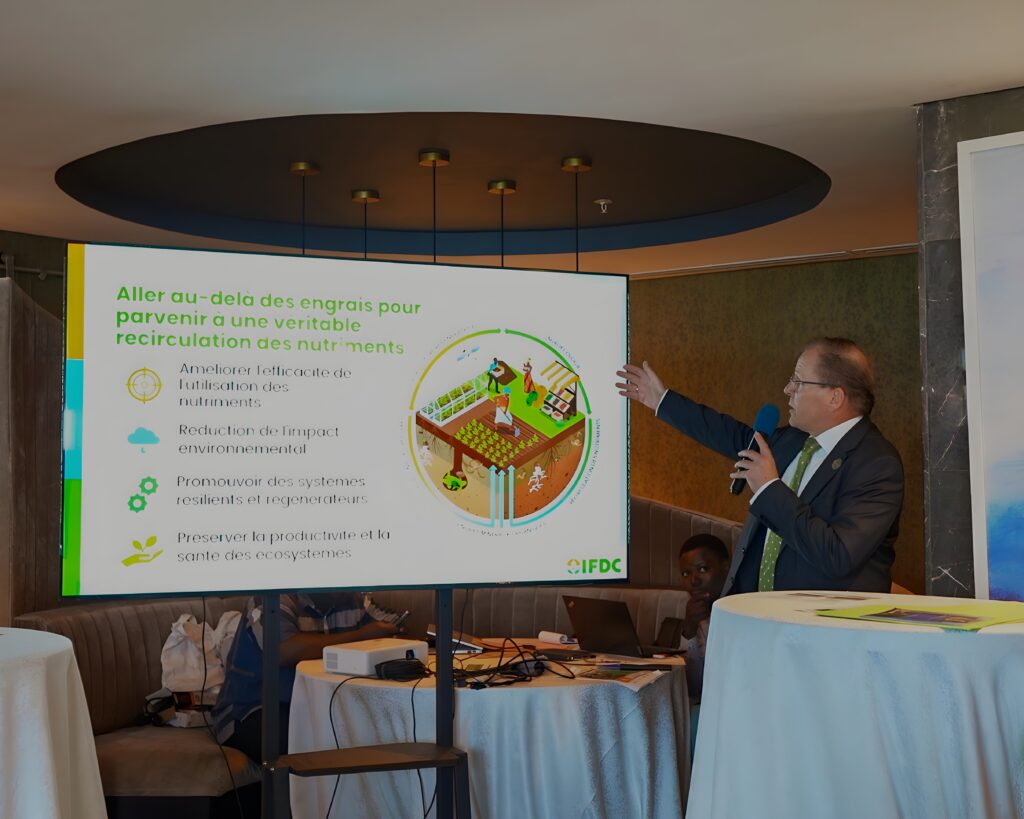
The Digikiosks were thus presented as true community service hubs, capable of connecting farmers to resources they need. “SIHAM is not the responsibility of IFDC or FSRP alone; it belongs to all of us. Its long-term sustainability is therefore a shared responsibility.… IFDC stands ready to support this collective effort,” van Duijn declared.
A Shared Vision for Sustainable Agri-Food Systems
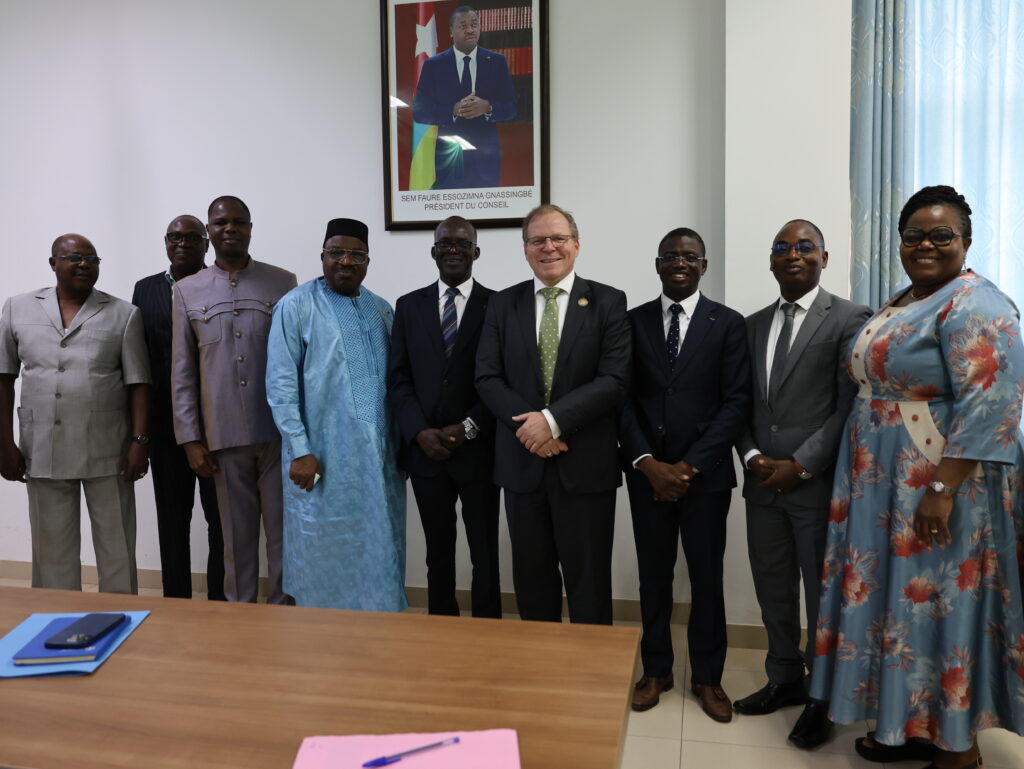
The mission continued with a meeting with the Ministry of Agriculture, Fisheries, Animal Resources, and Food Sovereignty (MAPRASA), which highlighted the strength of the partnership between IFDC and the Togolese Government as well as their shared commitment to supporting more productive, competitive, and sustainable agriculture.
At the heart of the discussions were key priorities for the sector’s future: soil health, soil information systems, climate resilience, the digitization of agricultural services, and national capacity building. These priorities reflect the strong conviction that to sustainably feed populations and improve producers’ incomes, innovation must be rooted in local realities and supported by strong national institutions.
Representing Minister of Agriculture Antoine Lékpa Gbegbeni, Chief of Staff Kolani Djondiègue remarked, “The handover of SIHAM marks an important milestone in our shared commitment to the agricultural sector. We look forward to deepening this partnership to sustainably improve farmers’ livelihoods. Togo looks forward to an even stronger IFDC presence as we shape the future of agriculture together.”
In this context, the country emerges as a strategic partner for the implementation of integrated interventions in West Africa, at the intersection of agricultural productivity, environmental sustainability, and economic inclusion. “IFDC stands ready to support the country’s priorities and build new pathways for collaboration across West Africa,” van Duijn said.
Building Integrated Responses to the Challenges Farmers Face
Next, a meeting with the Ministry of the Environment furthered this discussion by highlighting the close links between agriculture and climate. The discussions underscored that the resilience of agri-food systems also depends on the ability to mobilize appropriate climate-smart approaches, innovative financing, and decision-support tools for on-the-ground stakeholders.
In this context, IFDC’s support for mobilizing climate finance from the African Development Bank was cited as a significant contribution to national ambitions. SIHAM also illustrates this integrated approach, strengthening farmers’ ability to adapt and reducing their vulnerability to climate shocks by putting climate data to work in agricultural decision-making.
A Mission Focused on the Future of Partnerships in Togo
As results of the meetings showed, agricultural transformation cannot be driven by a single actor. It requires strong partnerships, a shared vision, and solutions capable of linking national priorities to the concrete needs of producers. Van Duijn’s mission to Togo thus helped strengthen ties between IFDC and its national partners while opening up new avenues for innovation, soil health, climate information, and digital agricultural services.
In line with its vision, IFDC expressed its dedication to providing long-term support to Togo in building more productive, resilient, and inclusive agri-food systems. IFDC and its partners are working to make innovation, knowledge, and cooperation concrete drivers of progress for farmers and rural communities.
About SIHAM/FSRP
Designed as an innovative digital platform, the Hydro-Agro-Meteorological Information System (SIHAM)/West Africa Food Systems Resilience Program (FSRP) aims to facilitate farmers’ access to reliable climate information to support informed decision-making. SIHAM/FSRP is made possible through the support of the West Africa Food System Resilience Program (FSRP), financed by the World Bank, the Global Agriculture and Food Security Program (GAFSP), and the Government of Togo.