The next fertilizer crisis is inevitable.
Whether it becomes a food crisis depends on what we invest in now.
Contact Us Today
When the International Fertilizer Association (IFA) published its Medium-Term Fertilizer Outlook in May, the fertilizer market was facing huge uncertainty. Severe disruption to vessel flows through the Strait of Hormuz starting in March had already resulted in well-documented impacts on fertilizers, raw materials, and energy markets. IFA’s Market Intelligence Service began updating its five-year forecasts of fertilizer supply and demand in April – a time when the uncertainties facing market participants and analysts alike were simply too large for a single forecast to be meaningful.
In the case of fertilizer demand forecasts in particular, major questions remained unanswered about the scale and duration of the disruption’s impact on fertilizer affordability and how this might translate into changes in farmers’ fertilizer use intentions.
Rather than publishing a single forecast, IFA developed a range of scenarios to capture the uncertainty surrounding the disruption. Four scenarios explored different timelines for the conflict, the restoration of vessel movements, the recovery of supply chains, and the impact on fertilizer demand.
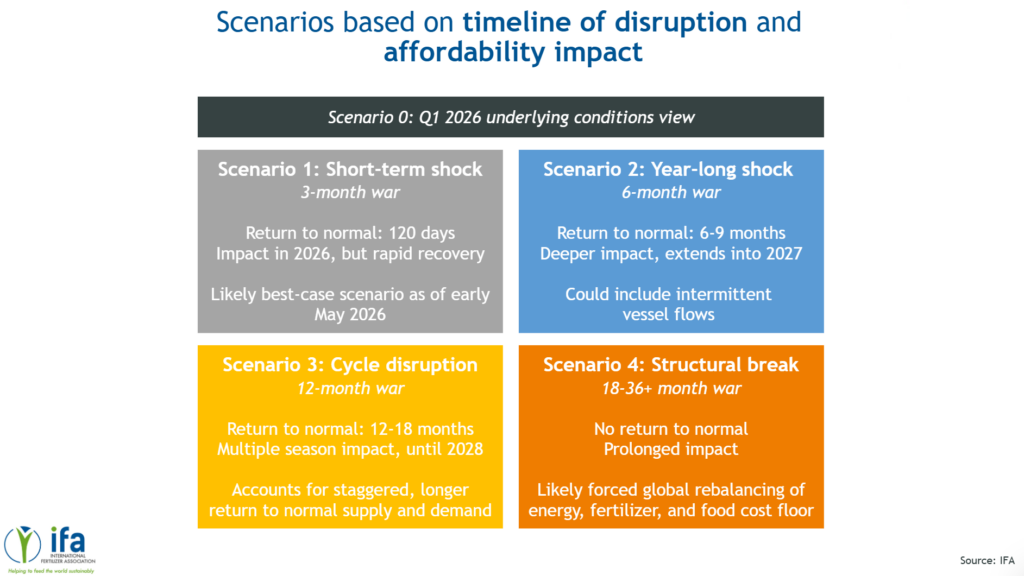
IFA prepared Scenarios 1‑3 by analyzing the key factors that have historically influenced fertilizer use, as well as local assumptions that fall outside these drivers, particularly government policies that support fertilizer availability and affordability. Long-term correlating factors were used to inform the point of convergence in 2030.1 IFA did not prepare specific forecasts for Scenario 4, given the lack of visibility over the global commodity rebalancing that would play out in this scenario.
IFA does not forecast fertilizer prices or take a view on future affordability levels, but the scenarios do consider relative direction in affordability following the 2025-26 base year. The results reflect generally prolonged poor affordability conditions that will recover over different timelines and at different rates.
Note that the scenarios were designed to provide a framework for assessing potential consequences under different timelines and market conditions rather than to predict the exact duration of the crisis.
From Short-Term Shock to Cycle Disruption?
In May, Scenario 1 represented the best-case outcome. It assumed a disruption lasting approximately three months, followed by a swift return to normal market conditions. Under this scenario, fertilizer availability was expected to tighten temporarily with a short-term impact on affordability, and fertilizer use would be modestly impacted in 2026 but had the potential to fully recover by 2027.
Scenario 2 presented a more prolonged disruption. It assumed six months of conflict-related disruption, potentially including intermittent vessel movements, followed by a further six to nine months for fertilizer supply, trade, and affordability conditions to normalize. IFA characterized this as a year-long shock capable of affecting multiple fertilizer purchasing and application windows around the world.
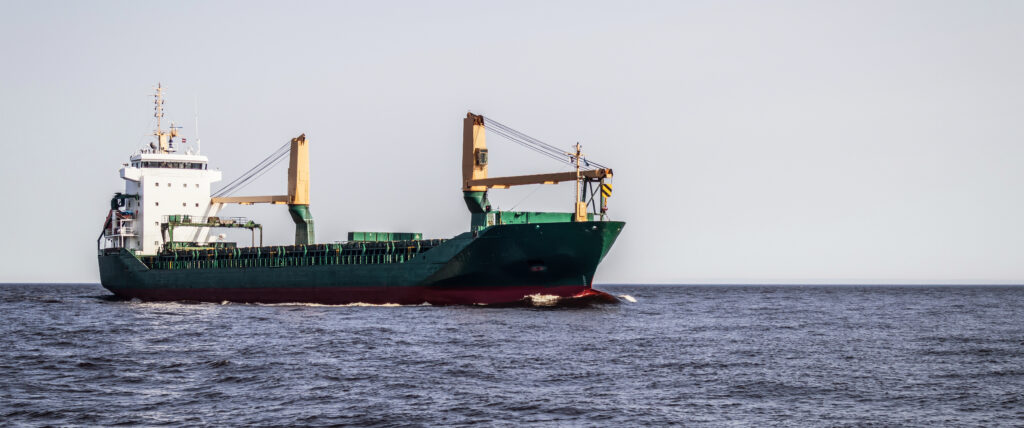
At present, disruption of vessel flows has not materially improved despite a short-term reprieve in late June. This means that the best-case scenario prepared by IFA in May has to be discounted and longer-term disruption has become a reality. At the same time, the fertilizer market has shown resilience, with producers in affected countries finding alternative routes to market and governments stepping in to support raw material supply and farmer affordability.
Seasonal trends in fertilizer demand and the return of suppliers that were previously subject to export restrictions led to improvements in nitrogen affordability, and low exposure to supply disruption continues to support attractive potash affordability. Despite still being at record-low affordability levels for some farmers, phosphate affordability at least did not materially worsen in recent months, driven by an element of demand destruction and relative inertia in raw material supply.
Amid these diverging trends between nutrients, several parts of the global market remain at risk, from non-integrated producers reliant on high-cost raw materials to consumers in import-dependent, price-sensitive regions.
A Multiple-Season Shock Could Be on the Horizon
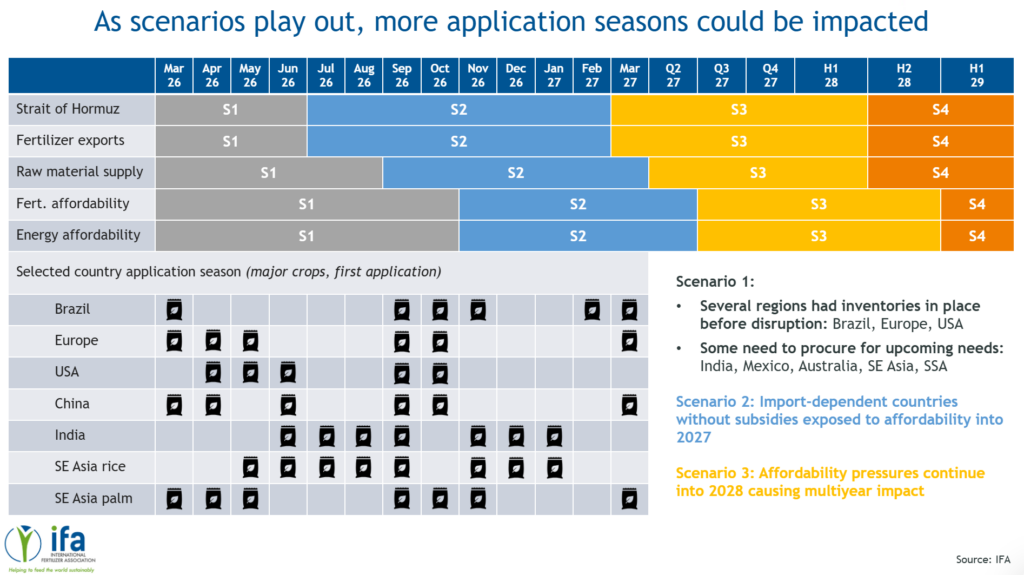
The market has entered the Scenario 2 timeframe, and while not every projection associated with it will necessarily occur as modeled, the industry is now operating under conditions broadly consistent with the scenario: a prolonged disruption extending beyond six months, incomplete normalization of trade flows, and continuing affordability pressures that may influence fertilizer use decisions beyond the current crop season.
Timing is particularly important in fertilizer markets because demand follows agricultural cycles and farmers do not have the option to postpone purchasing decisions indefinitely. Missing a fertilizer application window can have consequences for crop yields that cannot easily be corrected later in the season. The longer a disruption persists, the more fertilizer purchasing cycles and application windows it affects.
Affordability Remains a Real Challenge
Developments since May reinforce the importance of affordability as the principal channel through which the crisis may affect fertilizer demand, even where physical shortages are avoided.
Fertilizer affordability is one of the key determinants of its use, after crop area and yield requirements. When affordability deteriorates, farmers delay or reduce application of the more price‑elastic nutrients (phosphorus and potassium) first, since they can draw on phosphorus and potassium reserves in the soil in the short term, with yield risks accumulating over seasons.
Phosphate and potash use is more sensitive to affordability, and recent periods have shown that farmers adjust their use of these nutrients more rapidly in response to affordability pressures. Nitrogen is the least price-elastic nutrient, given its immediate effect on yields.

The IFDC Fertilizer Crisis Bulletin series has highlighted the distinction between fertilizers being physically available and being available at prices farmers can afford. The market can remain technically supplied while still generating significant risks to agricultural production if input costs move to unaffordable levels.
This issue is especially important in import-dependent markets where government support mechanisms are limited. While some countries have been able to cushion farmers through subsidies or other policy measures, others remain more exposed to global price movements and higher financing costs.
Sustained affordability shocks raise risks to application rates in import-dependent regions, with potential implications for yields and food price volatility. Countries with market-driven agriculture sectors are more exposed to affordability shocks and are usually at greater risk of a decline in the forecast scenarios. Countries with high levels of government support through subsidies and market intervention are typically more insulated from global shocks, although the current macroeconomic backdrop may impact their ability to sustain subsidies.
Looking Ahead
The ultimate impacts on fertilizer demand and crop yields are likely to emerge gradually and will be hard to measure in the short term. Reduced application rates, changes in nutrient balances, and delayed purchases often become visible first at farm level before eventually appearing in production statistics and food markets.
The market has shown adaptability in building supply-side resilience, although new risks continue to emerge, such as the recent escalation of disruption in the Red Sea, which could affect fertilizer shipments through the Bab al-Mandab Strait.
Broader agricultural risks are also on the horizon, including potential disruption to growing conditions associated with the onset of a record El Niño event in 2026‑27. This presents a further challenge for forecasting fertilizer demand because historical patterns do not provide a blueprint for the scale or direction of impacts in the coming year.
IFA continues to track market developments and their impact on fertilizer use. The Market Intelligence Service will publish its next Short-Term Fertilizer Outlook in November, and the full scenario analysis outlined above is publicly available on IFASTAT.
Disclaimer
This article was contributed by the International Fertilizer Association (IFA) and is based on its Medium-Term Fertilizer Outlook, which draws on IFA’s robust analytical methodologies and market assessments. While the outlook reflects IFA’s analysis and projections based on information available at the time of preparation, market conditions may evolve. The author and publishers accept no liability for any loss, damage, or disruption caused by errors, omissions, or reliance on the information presented.
- 2030 is the last year of IFA’s medium-term forecasts, and there are different rates of convergence to the medium term depending on the scenario. See the full report. ↩︎