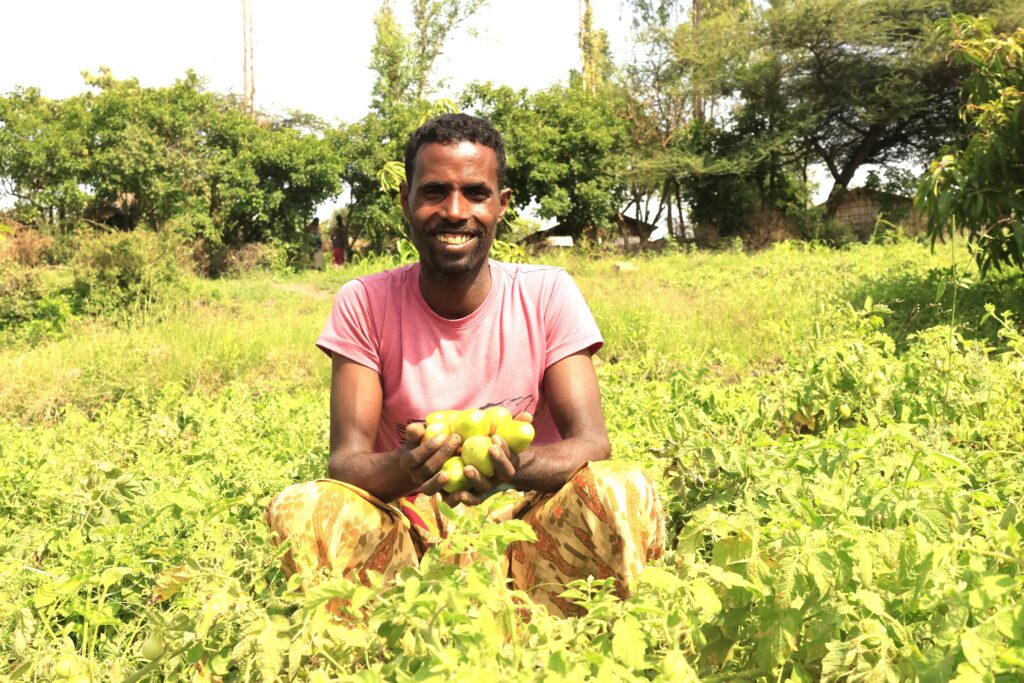
The Transform Soil Fertility Management in Ethiopia (TRANSFORM) project works to improve soil health and fertility management and to increase productivity among small-scale producers. One of these producers, Ahmed Mohamed from South Wollo, is engaged in vermicompost production and was among the first farmers in his community to adopt and put the Participatory Integrated Planning (PIP) approach into practice. After receiving training through TRANSFORM on vermicompost production, vision mapping, and household and community farm-related activities, including restoration, he immediately put his vision into action.
Ahmed remarked, “The training helped me see a clear future for my family and my business. My vision is to expand as an entrepreneur, and I have already completed the process of formally registering my enterprise.”
“I am motivated to expand my business further and help meet the increasing demand for organically produced vegetables and fruits in my community.”
Ahmed Mohamed
TRANSFORM supported Ahmed in obtaining his business license for this registration. Now, he has legal recognition for his business, enabling him to market and sell his vermicompost to the wider market.
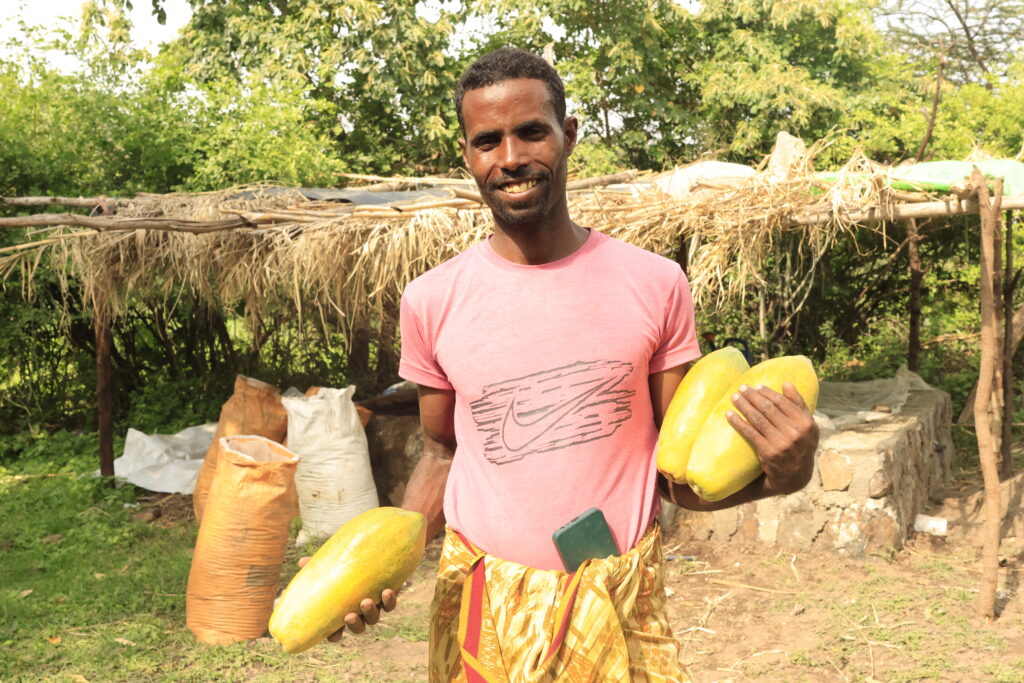
This year, Ahmed produced 2,500 kilograms of vermicompost, applying 2,200 kilograms on his mango, papaya, and tomato crops and selling the remaining amount locally. The results were remarkable. For example, on his 400-square-meter tomato plot, Ahmed had earned about 50,000 Ethiopian birr (ETB) (approximately U.S. $302.36) last year without vermicompost; this year, with vermicompost, his harvests increased so much that his earnings rose to about ETB 250,000 (approximately U.S. $1,511.80).
His 200-square-meter mango plot showed similar improvement, with earnings rising from about ETB 22,000 (approximately U.S. $133.04) last year to about ETB 74,000 (approximately U.S. $447.49) this year with vermicompost.
Ahmed explained, “The difference in my harvest is significant. The quality of my fruits and vegetables has improved, and customers can easily recognize the produce grown with natural fertilizer. Demand is very high. Many buyers specifically prefer fruits and vegetables produced using organic fertilizer because of their quality.”
Encouraged by the growing market demand and the benefits he has witnessed on his own farm, Ahmed is now planning to expand both his vermicompost production and his agricultural enterprise.
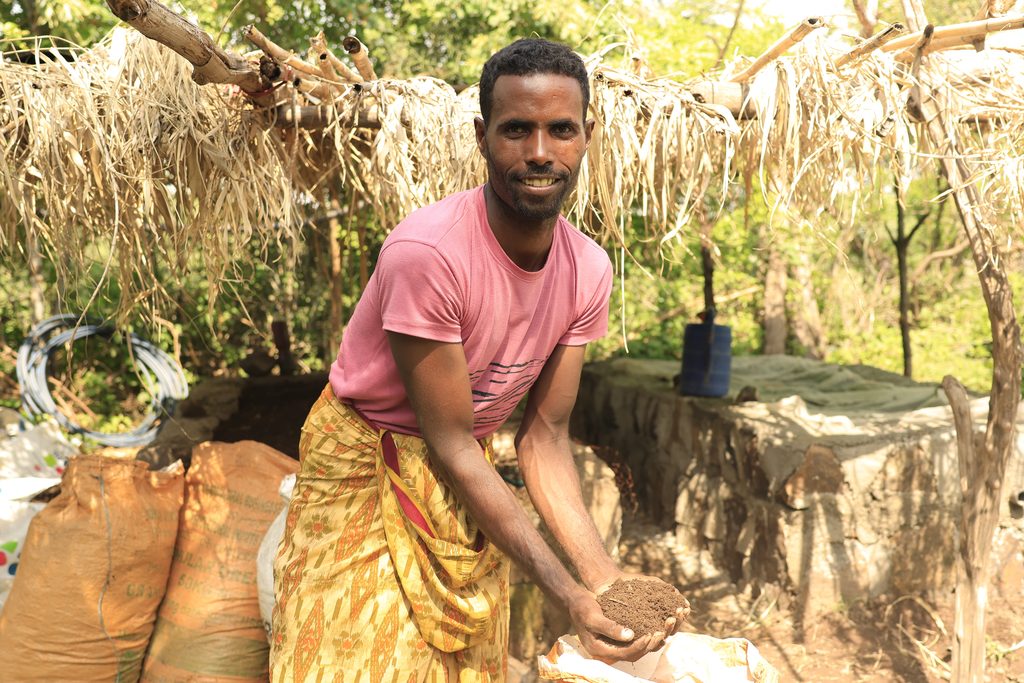
Ahmed said, “I am motivated to expand my business further and help meet the increasing demand for organically produced vegetables and fruits in my community.”
Ahmed illustrates the TRANSFORM program’s inclusive, participatory approach in action, and his success reflects the value of building agricultural entrepreneurship on principles that encourage soil health and sustainable business growth.
The TRANSFORM project (2025-2028) is funded by the Embassy of the Kingdom of the Netherlands and the European Union and is implemented by a consortium comprising the International Fertilizer Development Center (IFDC), Wageningen University & Research/Wageningen Environmental Research, ISRIC – World Soil information, Environment and Coffee Forest Forum (ECFF), and SOS Sahel Ethiopia.

TRANSFORM is made possible by the support from the Dutch Ministry of Foreign Affairs.