Access the Soil Values Digital Platform
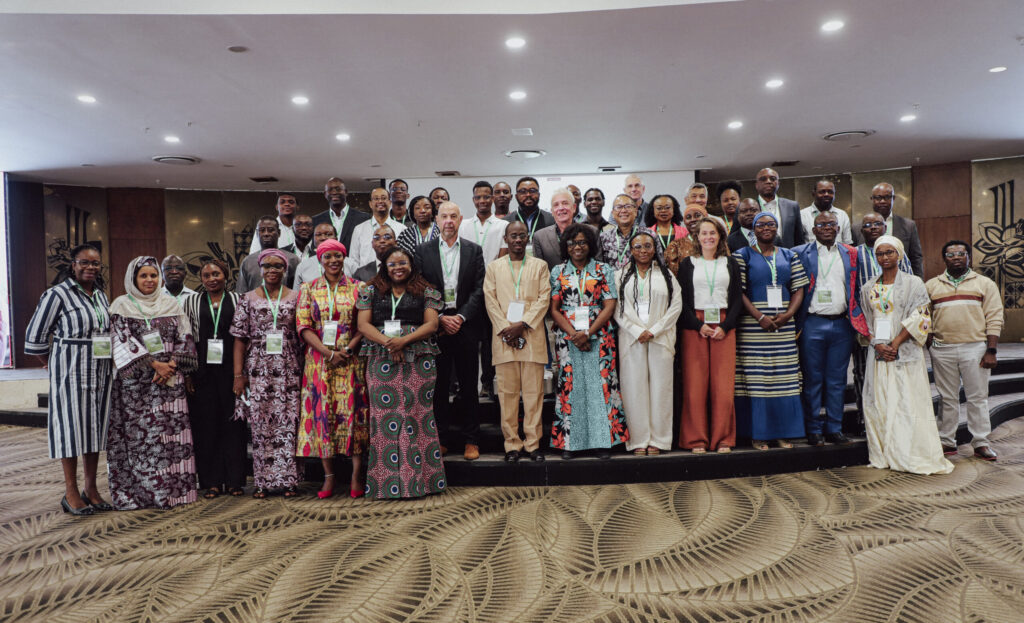
Soil Values officially launched its Digital Platform on October 13 through a hybrid event online and in-person in Lomé, Togo, providing users with a new gateway to soil health knowledge, program evidence, and geospatial data across the Sahel and West Africa. By connecting this intelligence and making it available in one place, the Soil Values Digital Platform aims to help stakeholders access once-scattered information and turn it into actionable insights for sustainable soil management.
The platform brings together two distinct but complementary components – the Soil Values website and its Geoportal – into an integrated digital ecosystem designed to support evidence-based decision-making, knowledge sharing, monitoring, learning, and stakeholder engagement.
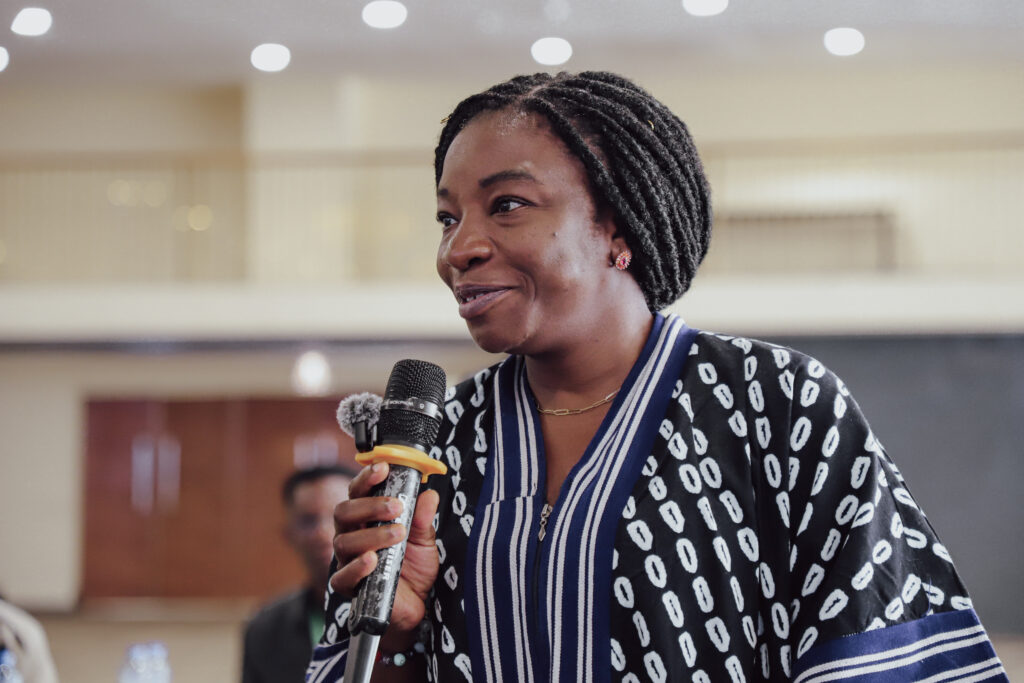
“By bridging the gap between scientific knowledge and local realities, this platform can help improve agricultural planning, strengthen advisory services for producers, and increase the effectiveness of our public policies.”
Issa Zibo, Director of Fertilizer Inspection and Quality Control at Niger’s Ministry of Agriculture and Livestock
The Soil Values website provides access to the program’s knowledge and communications resources, including publications, success stories, learning materials, and other program information, while the Geoportal serves as a spatial decision support platform that integrates geospatial information, program data, and Earth observation products to support planning, implementation, monitoring, reporting, and learning.
Together, they offer government decision-makers, researchers, development partners, program teams, and practitioners a shared entry point to information that can support planning and collaboration.
Dr. Alimata Arzouma Bandaogo, Soil Values Deputy Program Director – Technical, remarked on the value of integrating data to provide a broader picture of the program’s progress. She explained that the platform helps users explore data across countries and intervention areas and track progress in key areas, including crop productivity, climate resilience, and biodiversity. Users can see how landscapes are changing over time.
Bringing Scientific Evidence Closer to Local Priorities
Beyond access to information, the platform aims to strengthen the connection between scientific knowledge and practical decision-making. Its long-term value will depend on how effectively stakeholders use the information it provides.
Issa Zibo, Director of Fertilizer Inspection and Quality Control at Niger’s Ministry of Agriculture and Livestock, explained, “By bridging the gap between scientific knowledge and local realities, this platform can help improve agricultural planning, strengthen advisory services for producers, and increase the effectiveness of our public policies.”
By connecting evidence with local priorities, the platform can help stakeholders make more informed decisions and better align interventions with the needs of producers and the landscapes in which they work.
Building a Resource for Long-Term Impact
The launch unveiling the Soil Values website and Geoportal opened a broader conversation about the future sustainability, governance, and institutional ownership of the platform beyond the lifetime of the program. These discussions reflect a growing recognition that digital solutions for agriculture and natural resource management must be not only technically robust but also sustainable, scalable, and responsive to the needs of multiple stakeholders.
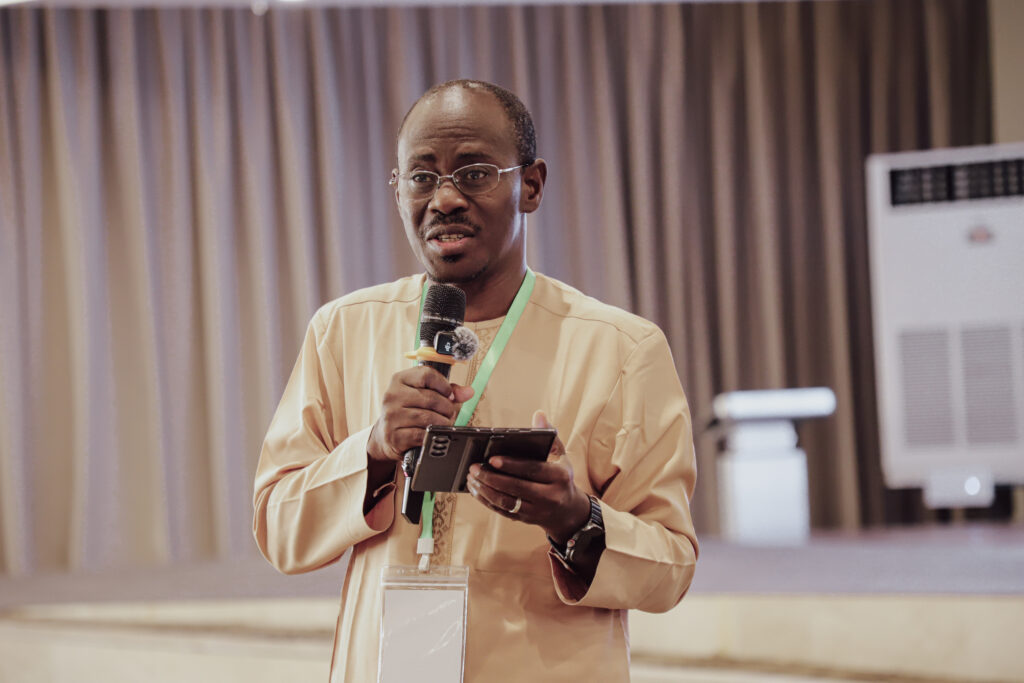
Dominic van Asseldonk, Policy Officer for Food and Nutrition Security at the Netherlands Ministry of Foreign Affairs, described the platform as a milestone and stressed the importance of extending its function beyond Soil Values’ immediate operations. “Our hope for the Digital Platform of Soil Values is that it is as much as possible in line with the national systems that are already in place and as much as possible in line with the practical needs of the end users,” said van Asseldonk.
This long-term perspective is central to Soil Values’ vision for the Digital Platform. While the Geoportal currently supports the program’s work, it is expected to evolve over time through the integration of additional datasets, analytical capabilities, and decision support services that can benefit an array of stakeholders.
Using Data to Impact Decisions
The launch of the Soil Values Digital Platform was followed by a panel discussion titled “From Data to Decisions: Leveraging Digital Tools for Sustainable Soil and Land Management.”
Experts from IFDC, the International Soil Reference and Information Centre (ISRIC), the Regional Hub for Fertilizer and Soil Health for West Africa and the Sahel, and the Netherlands Development Organisation (SNV) discussed how digital tools can help translate scientific research, soil data, and geospatial information into practical decisions.
Guillaume Kodjovi Ezui, Senior Scientist and Systems Agronomist at IFDC, emphasized the importance of designing digital solutions around users’ needs, explaining, “We should start by asking which decision is to be made, for whom, and at what scale, rather than what data we should collect.” This approach can help farmers, extension agents, researchers, and policymakers access relevant information to guide agricultural practices, land restoration, and policy development.
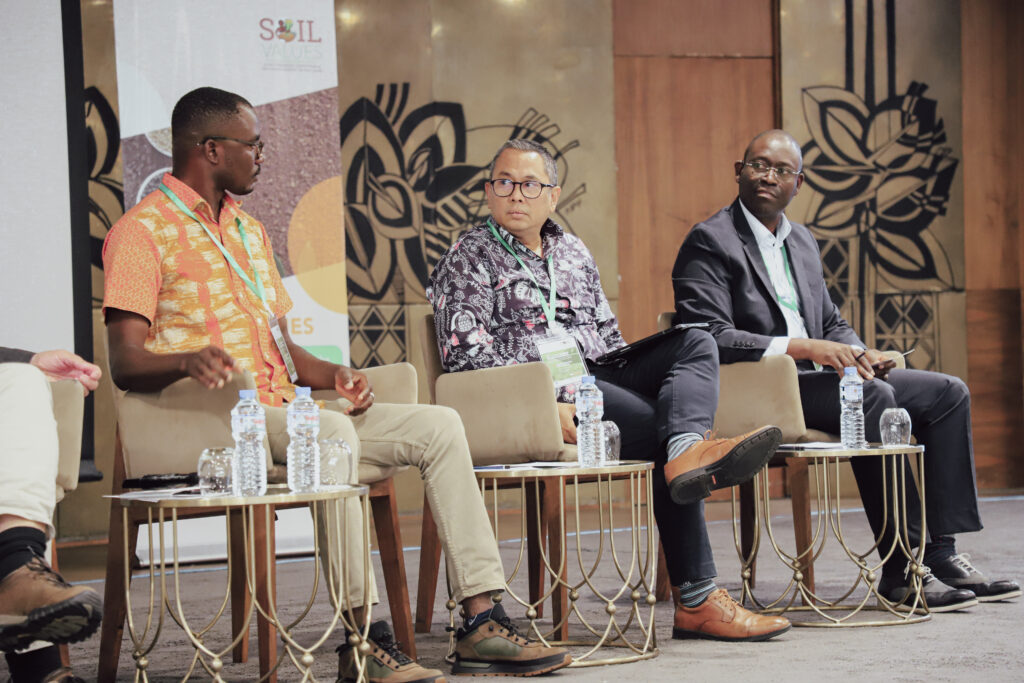
Panelists also highlighted the need to strengthen collaboration between researchers and practitioners, establish shared standards that allow digital platforms to exchange information, and address long-term governance, ownership, and maintenance from the outset.
Sehou Romaric Kouiho, a specialist in agronomic decision-support systems at the Regional Hub for Fertilizer and Soil Health for West Africa and the Sahel, stressed the importance of establishing clear governance arrangements, stating, “Every program or new initiative has to start with governance first.” Planning for interoperability and institutional ownership early can help ensure that digital tools remain accessible, relevant, and useful beyond individual project timelines.
Dialogue for Future Impact
As part of the Soil Values Digital Platform launch activities, the project also hosted a strategic dialogue “From Platform to Regional Digital Public Good,” held on October 14 in Lomé, Togo which brought together regional stakeholders to discuss how to sustain the platform beyond the life of the Soil Values program.
Participants identified three priorities: establishing institutional ownership, securing long-term financing, and strengthening cooperation among organizations that produce, manage, and use soil data.
Stakeholders discussed potential regional institutions that could assume responsibility, while highlighting the need for clear governance arrangements, institutional capacity, and sustainable financing.
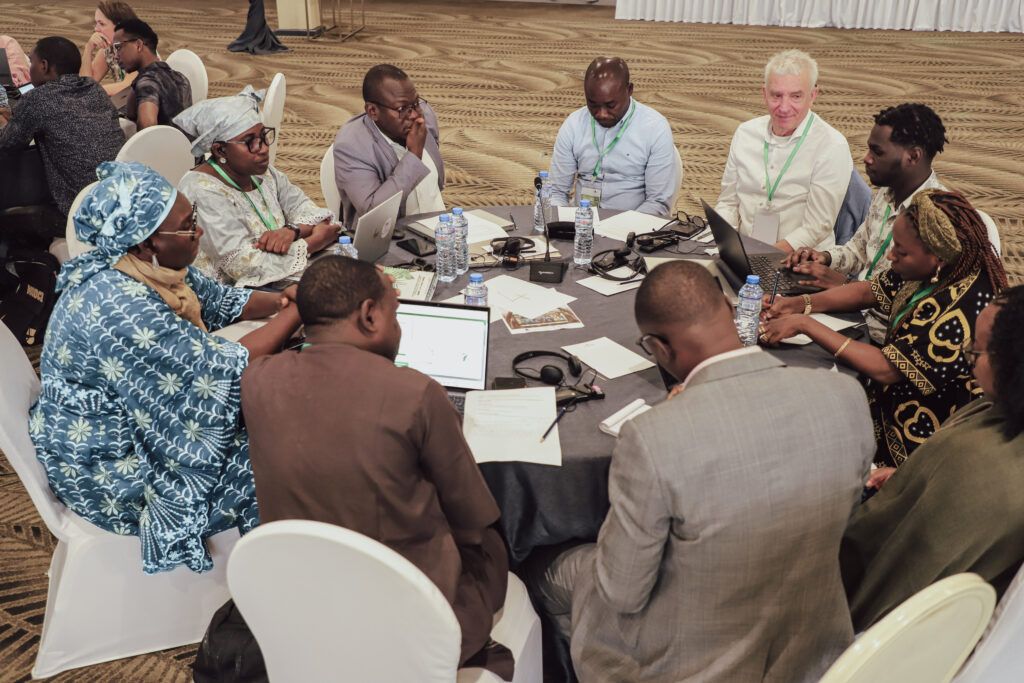
The discussions underscored the opportunity to develop the Soil Values Digital Platform into a shared regional resource that complements existing systems and strengthens collaboration across West Africa. The next steps include consulting potential institutional partners, clarifying ownership and data management responsibilities, and identifying the resources needed to maintain and develop the platform.
Its long-term success will depend on sustained partnerships, effective governance, and continued investment to ensure that soil data and knowledge inform practical decisions on sustainable soil management and land restoration across the region.
A Foundation for Better Decisions
Soil Values works to improve soil health and fertility and strengthen the resilience of agricultural systems. The platform launch represents an important milestone in that effort, establishing the digital foundation for connecting program knowledge, evidence, and spatial intelligence in support of sustainable soil management.
As the program continues to generate knowledge and evidence, the Digital Platform provides a mechanism for translating that information into action. By making data, insights, and learning more accessible, it has the potential to support better decisions, stronger partnerships, and more resilient agricultural systems across the Sahel and West Africa.
Access the Soil Values Digital Platform

Funded by the Dutch Directorate-General for International Cooperation (DGIS), the Soil Values program is being implemented over 10 years (2024-2033), led by the International Fertilizer Development Center (IFDC), in consortium with SNV and Wageningen University and Research (WUR), as well as knowledge partners such as AGRA, the Landscape Alliance (CIFOR-ICRAF), the International Institute of Tropical Agriculture (IITA), ISRIC – World Soil Information, and the International Water Management Institute (IWMI).