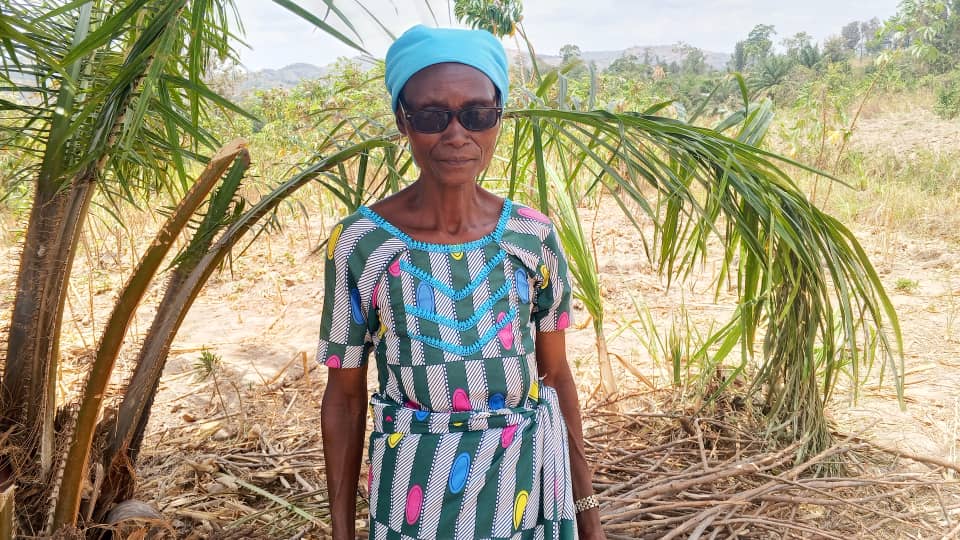
Ndayisaba Jovithe is a wife, mother, and farmer from Burundi’s Canda Hill. She and her family depend mainly on agriculture for their livelihoods, particularly maize and bean farming. They have a small parcel of land, which means they must make the best possible use of it to meet the family’s needs.
Before 2020, the family had participated in several agricultural projects that used different approaches. However, the family did not see any significant changes in their living conditions. “Although these projects raised our awareness of the importance of increasing agricultural production, we lacked the knowledge and skills needed to adopt good agricultural practices and sustainably improve our yields,” Ndayisaba said.
Prior to learning about the Soil Fertility Stewardship Project (PAGRIS), Ndayisaba and her family cultivated their land without knowledge of appropriate farming techniques and used large quantities of seeds only to obtain low yields. For example, on a 0.5‑hectare (ha) plot, she used to sow 40 kilograms (kg) of bean seeds and harvested only 120 kg.
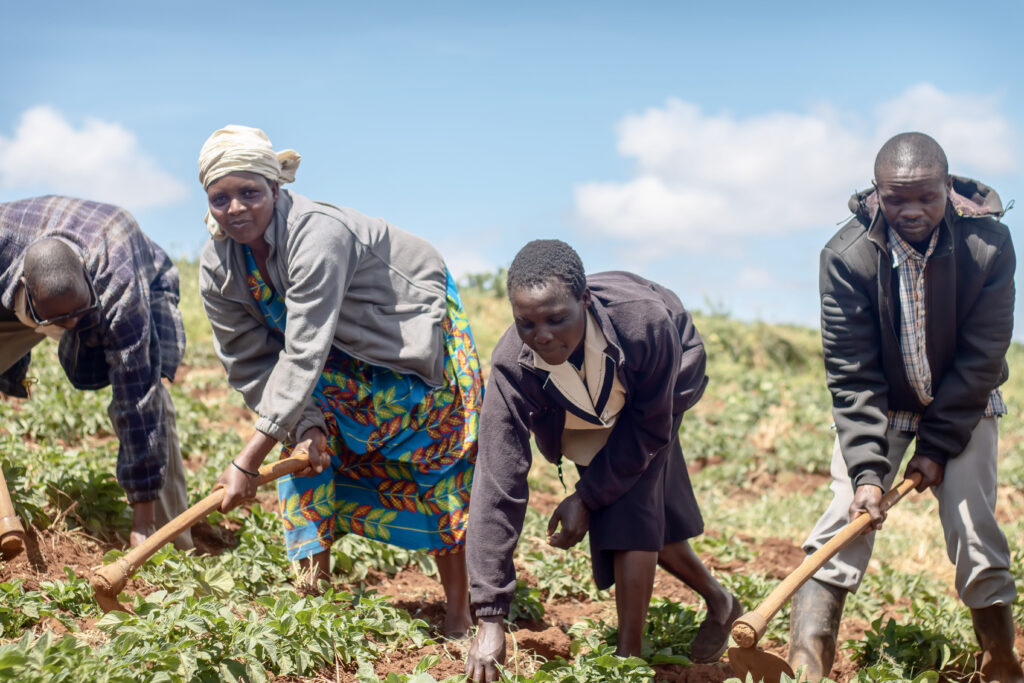
Through PAGRIS, Ndayisaba had the opportunity to interact with members of the Nyarunazi Site Committee, who were receiving training on good agricultural practices. From peer-to-peer exchanges and training, she learned various farming techniques, including integrated plot plans (IPPs), appropriate spacing between plants, good agricultural practices (GAPs), and adequate protection against erosion. She then decided to apply this new knowledge to her land.
“These lessons have profoundly transformed the way I practice agriculture and have had a positive impact on the lives of my family and community.”
Ndayisaba Jovithe
Ndayisaba began with protecting the land against erosion by digging contour lines and establishing hedgerows. Then, in 2024, she cultivated beans using the practices she had learned. On the same 0.5-ha plot, she used half the amount of seed she had previously – only 20 kg – and harvested 800 kg of beans, more than six times her previous harvests.
“The results exceeded my expectations,” Ndayisaba explained. “This represents a considerable increase in my agricultural production.”
Today, Ndayisaba and her family have enough food to eat, and she can pay her children’s school fees without major difficulties with the income generated by their agricultural activities. “We sell part of our harvest to meet our family’s essential needs and keep the rest for our own consumption. This improvement has contributed significantly to our well-being and food security,” she noted.
Thanks to PAGRIS and peer-to-peer training, Ndayisaba’s land is now better protected, and she continues to apply good agricultural practices to maintain and increase yields. She expressed gratitude to PAGRIS for the guidance she received, saying, “These lessons have profoundly transformed the way I practice agriculture and have had a positive impact on the lives of my family and community.”
Ndayisaba’s experience demonstrates that with the right knowledge, the adoption of good agricultural practices, and better land management, even a small plot of land can produce more, strengthen food security, and enable a family to better meet its essential needs.
The Soil Fertility Stewardship Project (PAGRIS) is funded by the Embassy of the Kingdom of the Netherlands in Burundi and implemented by IFDC, together with Wageningen Environmental Research and national partner Twitezimbere. PAGRIS aims to reach 100,000 family farms and establish ecologically sustainable management on 14,000 ha of land by scaling the Integrated Farming Plan (PIP) approach. The project is set to continue its activities in improving Burundian soil through December 2026.