Through its participatory action research approach, the Transform Soil Fertility Management in Ethiopia (TRANSFORM) program worked from January to October with farmers in its intervention zones of Jimma, Arsi, and South Wollo to establish 34 on-farm trials, covering 13 crops and engaging 685 farmers – including 158 women and 137 youth.
The research activities reached 4,892 farmers through field days, supporting shared experiences and promoting farmer-led learning and innovation across program intervention areas. Field day participants showcased how improved soil management boosts yields, resilience, and soil health.
“I witnessed a dramatic difference in both yield and crop performance. Even when rainfall was limited, the improved plot performed far better than the section managed under traditional practices.”
Nadew Getanew
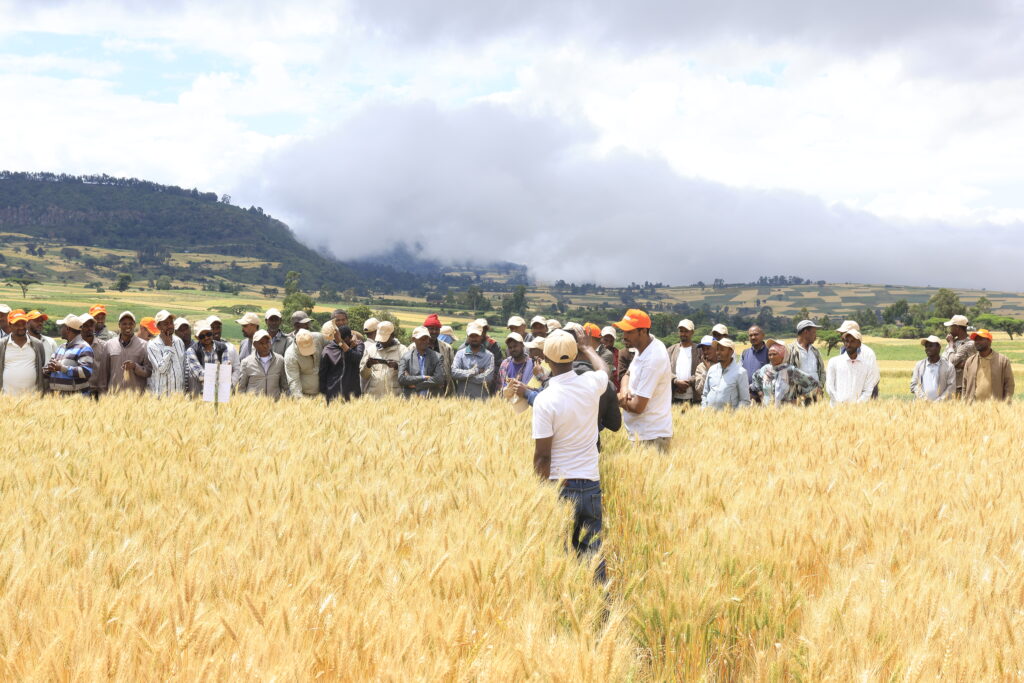
The field day events, held from late September to mid-October, brought together researchers, government officials, university representatives, and development partners to witness results firsthand and see how farmers are taking the lead in identifying challenges, testing solutions, and sharing lessons across their communities.
Farmers Turning Challenges into Opportunities
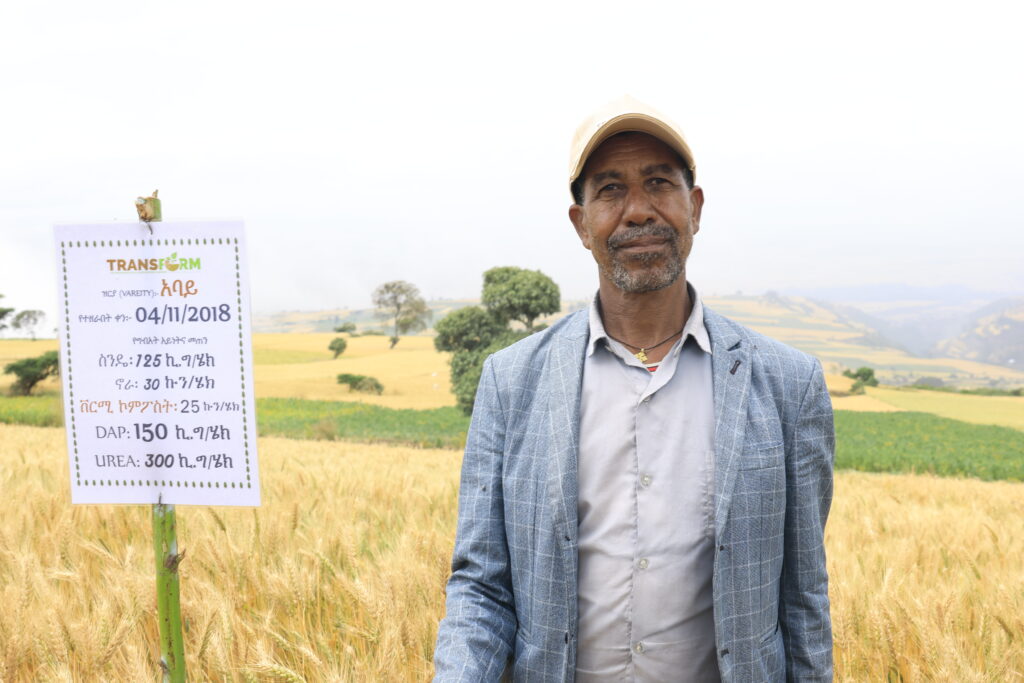
One of these farmers is Nadew Getanew, a 50-year-old farmer from the community of Borara Chirawo in Arsi, Oromia. After training with TRANSFORM, he identified soil acidity as a key constraint limiting his wheat production. He divided his land into two sections, applying improved practices – including agricultural lime, vermicompost, improved wheat seed, and terracing – on one section, while maintaining traditional practices on the other.
During his field day demonstration on October 26, Nadew reported that through the TRANSFORM program, he learned how to identify the root causes of problems affecting his farmland and ways to address them.
“I witnessed a dramatic difference in both yield and crop performance. Even when rainfall was limited, the improved plot performed far better than the section managed under traditional practices,” he said. Seeing such results for himself has given him the confidence to expand these practices across his farm and invest more in improving soil health for the future.
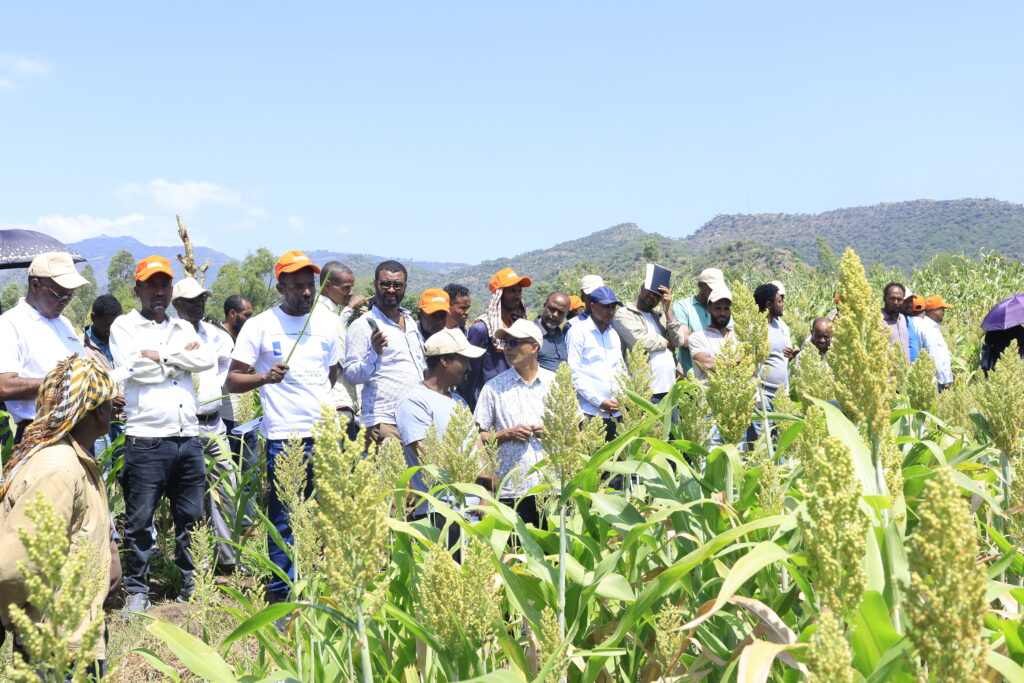
Nadew’s experience reflects that of many other farmers participating in TRANSFORM. Across the intervention areas, farmers reported higher yields, healthier soils, reduced dependence on chemical fertilizers, and improved resilience to rainfall shortages.
Through TRANSFORM’s approaches, such as Participatory Integrated Planning (PIP), participatory action research, and Integrated Soil Fertility Management (ISFM), these farmers are combining improved crop varieties, organic and inorganic fertilizers, and soil and water conservation measures to improve the productivity of their land.
Demonstrating Results across Regions
On October 23‑26, alongside Nadew, other farmers in Arsi showcased innovations ranging from household vermicompost production and kitchen gardening to ISFM. One household presented 19 vermicompost production units, highlighting the potential to reduce reliance on chemical fertilizer while improving productivity and nutrition.
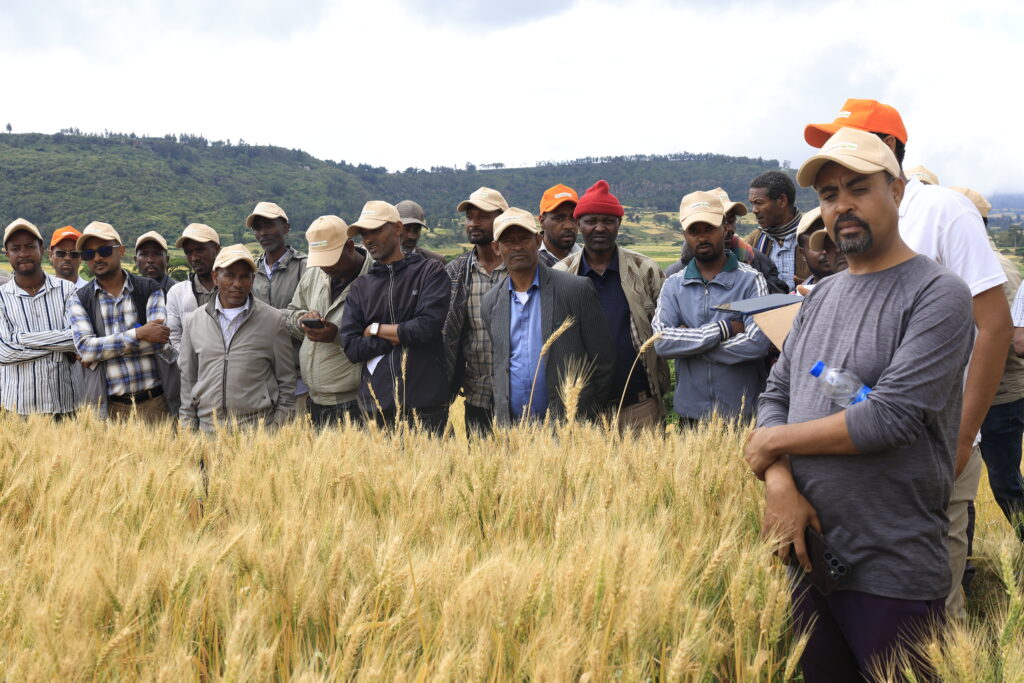
Participants also observed strong performance in wheat demonstration plots where organic fertilizers, mineral fertilizers, and agricultural lime were applied together. Building on these successes, stakeholders proposed expanding proven practices from approximately 30 farmer innovators to 300 additional farmers across the zone.
“Unlike many programs that just give incentives, TRANSFORM focused on empowering farmers with training and knowledge. Now, farmers are using their own resources to build vermicompost sheds and are determined to keep adopting better practices. We need programs like this,” said Ibrahim Kaso, Deputy Head of the Southeast Oromia Bureau of Agriculture.
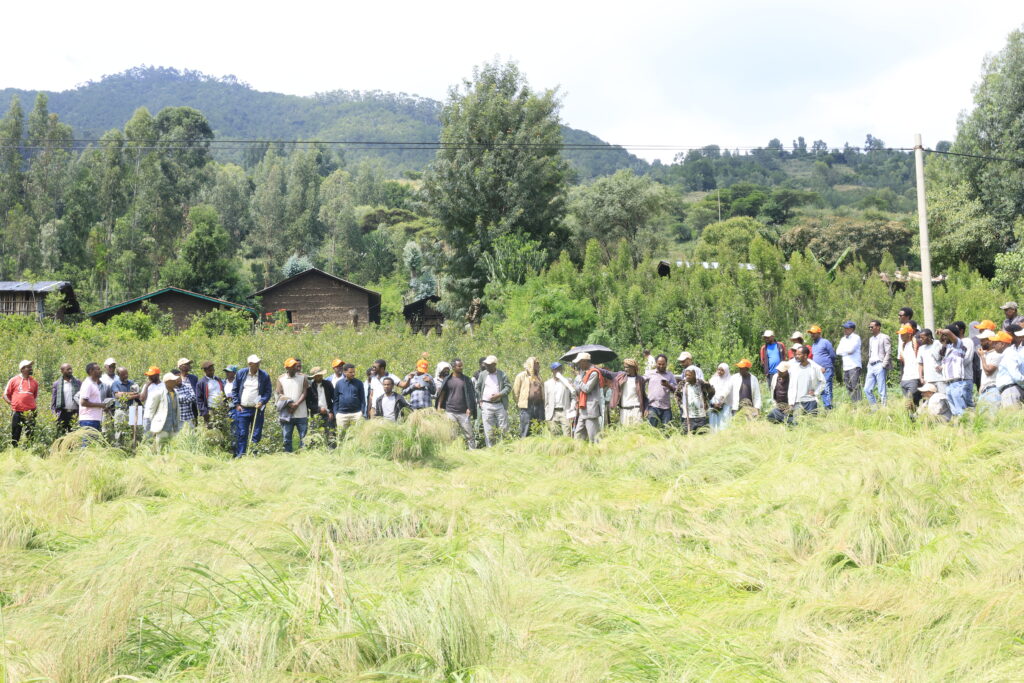
Similar demonstrations took place in the zone of Jimma on September 30 to October 2. Farmers demonstrated how vermicompost integrated with mineral fertilizers improved soil structure, moisture retention, and crop performance.
More demonstrations were held October 16-17 in the zone of South Wollo, where farmers across four woredas shared how they are implementing integrated farm plans that combine improved crop varieties, organic and inorganic fertilizers, soil conservation measures, livestock feed production, and diversified cropping systems.
Beyond Soil Health
The benefits of the TRANSFORM approach extend beyond improved crop yields. Farmers are adopting practices such as terracing, mulching, and watershed management that help conserve soil moisture and protect land from erosion, making farms more resilient to climate variability.
The program is also helping create economic opportunities. Through training in organic fertilizer production, farmers are producing sufficient inputs for their own farms, while women- and youth-led enterprises are emerging to supply organic soil inputs to local markets. Improved planning and productivity are also enabling farmers to move beyond food self-sufficiency and produce surplus crops for sale.
Building a Foundation for Sustainable Change
The achievements showcased during TRANSFORM’s field days reflect strong collaboration among farmers, universities, research institutions, extension services, and development partners. Institutions such as Wollo University and the Sirinka Agricultural Research Center are helping generate evidence, strengthen local capacity, and promote sustainable soil management practices. Lessons emerging from the program are also informing future agricultural extension and training efforts.
As harvest season begins across Ethiopia, the experiences of farmers from TRANSFORM demonstrate that restoring soil health begins with empowering farmers to lead change. Through innovation, experimentation, and collaboration, farming communities are building more productive, resilient, and sustainable agricultural systems for the future.
The TRANSFORM project (2025-2028) is funded by the Embassy of the Kingdom of the Netherlands and the European Union and is implemented by a consortium comprising the International Fertilizer Development Center (IFDC), Wageningen University & Research/Wageningen Environmental Research, ISRIC – World Soil information, Environment and Coffee Forest Forum (ECFF), and SOS Sahel Ethiopia.
TRANSFORM is made possible by the support from the Dutch Ministry of Foreign Affairs.