The next fertilizer crisis is inevitable.
Whether it becomes a food crisis depends on what we invest in now.
Contact Us Today
As Southern Africa enters its latest planting season, fertilizer availability and affordability remain critical to agricultural production. Global fertilizer markets remain volatile, but conditions differ widely across products and regions. In Southern Africa, opportunity lies in regional production, supply routes, and policy to help farmers access the nutrients they need, when they need them.
Global Fertilizer Prices: The Surge and the Pullback
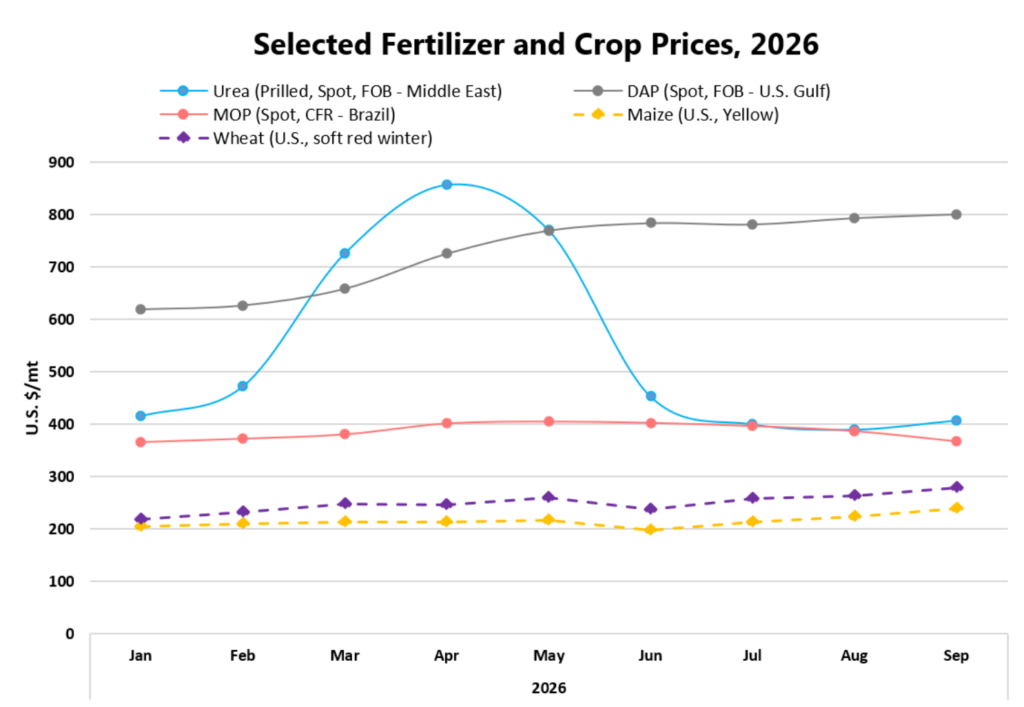
Global fertilizer prices rose sharply between February and September of this year, although trends differed substantially across products. By September, prices had eased from their peaks, but the picture remained mixed. Urea had fallen below its February level, while diammonium phosphate (DAP) remained considerably higher. Muriate of potash (MOP) prices had also dropped slightly below February levels.
Overall, between February and September, DAP increased from U.S. $627 free on board (FOB) to U.S. $801 per metric ton (mt), while urea declined from U.S. $472 FOB to U.S. $408 and MOP from U.S. $373 cost and freight (CFR) to U.S. $368. Over the same period, maize prices rose by around 14% and wheat by 20%.
These trends highlight the continued uncertainty facing farmers and fertilizer suppliers. (Note that global benchmark prices do not reflect the full cost of fertilizer delivered to farmers, which also includes freight, port handling, inland transport, financing, and distribution.)
The Planting Window Is Approaching
Southern Africa, including Madagascar, is entering its main planting season, with each country facing its own crop needs and requirements for different fertilizer products. The timing of procurement is therefore as important as global prices. Delays or higher costs during the purchasing window can lead farmers to reduce application rates, switch products, or delay purchases – all with consequences for yields. The regional climate outlook also points to increased risks from below-normal rainfall and above-average temperatures across much of Southern Africa. These conditions could add to uncertainty in production and affect farmers’ decisions on fertilizer investments.
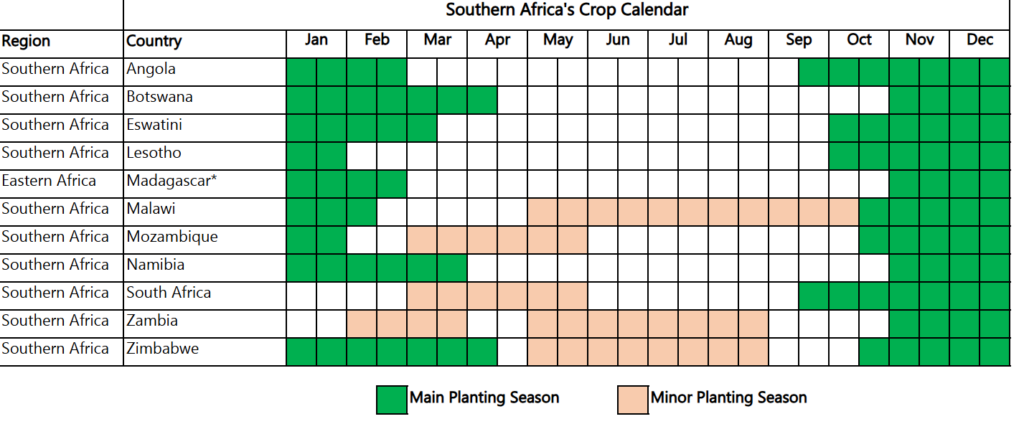
*Madagascar is included here, although the African Union classifies it as Eastern Africa.
Regional Supply: Production and Ports Can Work Together
Southern Africa has fertilizer production and manufacturing assets that could contribute to regional supply, although their contribution depends on operational output, product specifications, feedstock availability, and commercial distribution. South Africa and Zambia produce nitrogen fertilizers, South Africa and Zimbabwe produce phosphate, and Madagascar produces ammonium sulfate. Several countries also commercially produce organic fertilizer, which can complement mineral fertilizer where products are locally available and agronomically appropriate.
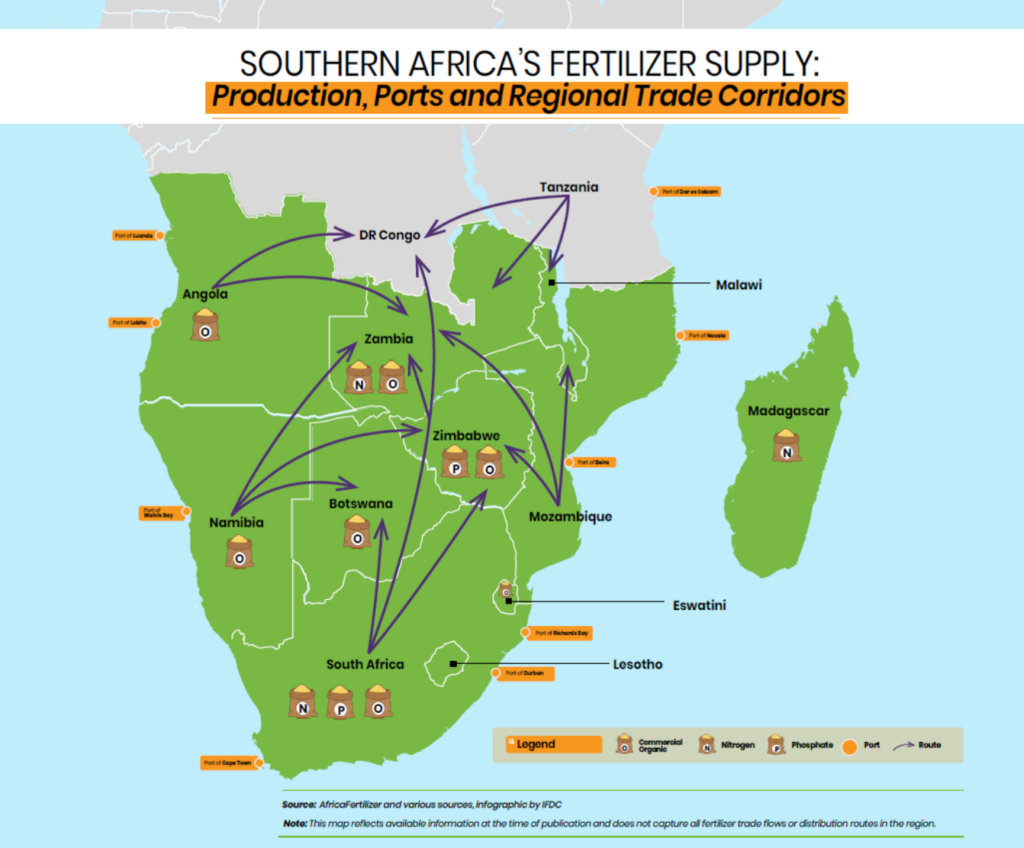
Ports and transport corridors are equally important. Beira and Nacala in Mozambique serve Malawi, Zambia, and Zimbabwe. Durban connects South Africa with regional markets, while Lobito and Walvis Bay provide alternative routes for landlocked countries. Dar es Salaam in Tanzania also serves Malawi, Zambia, and parts of the Democratic Republic of Congo.
These ports and corridors provide valuable options for sourcing fertilizer and reaching inland markets. Yet congestion, limited handling and storage capacity, high freight costs, and border delays can increase the cost and time required to move fertilizer. When shipments are delayed at ports or held at borders, additional costs can be passed along the supply chain, making fertilizer less affordable for farmers. Improving the reliability and efficiency of these routes can help regional production and imports reach markets in time for planting.
Four Priority Actions to Keep Fertilizer Moving
Governments, regional institutions, and financial partners should focus on four immediate priorities:
- Plan fertilizer shipments and port handling around national crop calendars. Coastal countries and port authorities should coordinate with importers and inland markets to anticipate seasonal demand, manage arrivals, and reduce avoidable congestion.
- Expedite customs clearance and fertilizer transit. Simplified procedures, efficient border controls, and predictable cross-border transit should help fertilizer move more quickly between ports, production centers, and inland markets while maintaining quality and safety requirements.
- Mobilize public and private investment in regional fertilizer supply. Governments and financial partners should support private fertilizer production, blending, and distribution alongside public investment in ports, transport corridors, storage, and quality infrastructure. Seasonal trade finance, guarantees, and working capital should be aligned with procurement cycles, strengthening private sector supply rather than displacing commercial suppliers.
- Strengthen regional market intelligence. Governments and regional institutions should share information on demand, stocks, prices, expected imports, and potential shortages. Better information can support earlier decisions and reduce the risk of supply gaps during planting.
Beyond securing supply, improving nutrient use efficiency can make every unit of fertilizer more effective in crop production. Balanced nutrient application, appropriate fertilizer recommendations, and the integration of mineral fertilizers with locally available organic resources where appropriate can help farmers make better use of available inputs. Monitoring fertilizer use and crop yields can also help in assessing whether policies and investments are delivering results.
A Shared Lesson for Planting Seasons Ahead
This week’s bulletin focuses on Southern Africa, but its lessons apply more widely. Countries in other regions approaching their planting season should also consider how global price movements, regional production, transport networks, timely financing, and efficient nutrient use can work together to support farmers. Preparing early and coordinating across the supply chain can help turn fertilizer availability into better agricultural outcomes.
Disclaimer
This article is based on information from publicly available sources and market intelligence. While every effort has been made to verify the accuracy of the information, the authors and publishers accept no liability for any loss, damage, or disruption caused by errors, omissions, or the use of this information.
Sources