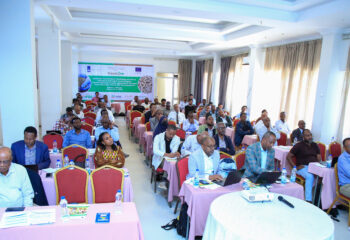
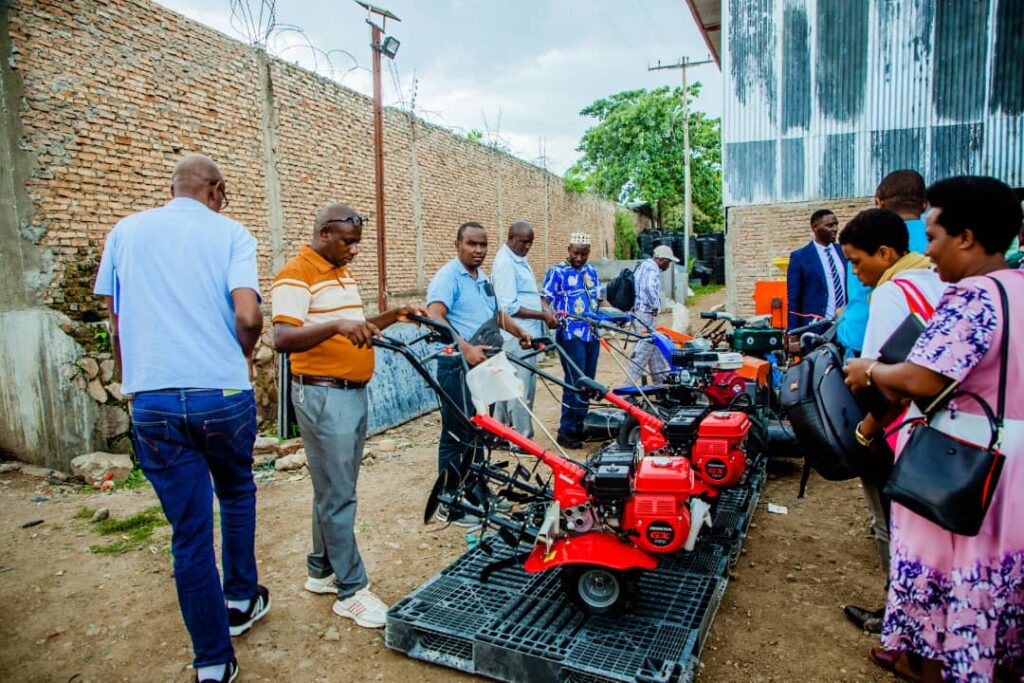
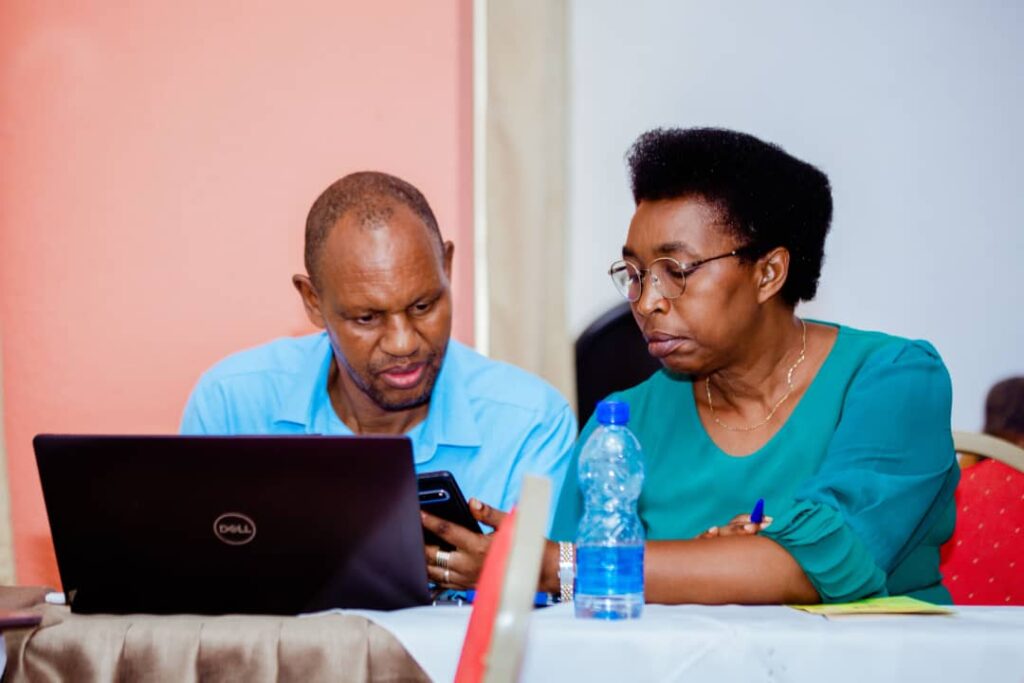
IFDC organized an exchange workshop on November 25 in Bujumbura, Burundi, aimed at improving links between agricultural equipment suppliers and seed entrepreneurs to increase access to beneficial technologies.
This workshop was part of the Private Seed Sector Development, Phase II (PSSD2) project, designed to strengthen Burundi’s seed sector through targeted training, technical support, and modernization of practices.
To help seed entrepreneurs gain a clearer understanding of innovative contributions to the agriculture sector, PSSD2 facilitated a connection that led to a presentation on the agricultural products and equipment offered by the AKSHAR Group, a company that manufactures bio-organic products using the local microclimate and organic substances extracted on site, minimizing the use of chemical inputs.
This initiative shows that effective agricultural transformation is as much about connection as it is about technology.
The company also offers advanced irrigation systems and a wide range of agricultural machinery and implements, such as soil cultivation machines and livestock tools. The AKSHAR Group presented equipment such as a rotary tiller, a seed drill, a rice and wheat cutter, a corn thresher, and a tractor. These technologies offer effective alternatives to a workforce that has become increasingly expensive and difficult to recruit.
Among the AKSHAR Group’s flagship solutions is its drip irrigation system, which saves water by directing it straight to plants’ roots, reducing evaporation and improving nutrient availability. The uniformity of irrigation and the reduction in water loss make this system particularly suitable for rural areas of Burundi, where access to water is a growing challenge.
AKSHAR Group representatives presented other essential tools for irrigation management and resilience to climate variations, such as geomembranes to line water storage basins, as well as its rain cannon, a solution capable of irrigating large areas using high water pressure that replicates the effect of natural rainfall.
The AKSHAR Group promoted the rotary tiller from its lineup of soil cultivation machinery. By enabling plowing, sowing, and weeding on small to medium-sized areas, this machine is an affordable alternative for farmers who cannot purchase a tractor.
The company also offers equipment for manufacturing animal feed, semi-automatic bale cutters, manual seeders, and several other specialized machines that help increase agricultural efficiency. According to AKSHAR Group representatives, the company’s goal is to make Burundian agriculture more competitive while improving farmers’ working conditions and strengthening their autonomy.
Workshop participants expressed great interest in the company’s technologies for their potential to reduce dependence on labor that has become costly and difficult to mobilize. Many participants also remarked that more direct access to suppliers like the AKSHAR Group is an advantage not only for themselves but for the entire sector.
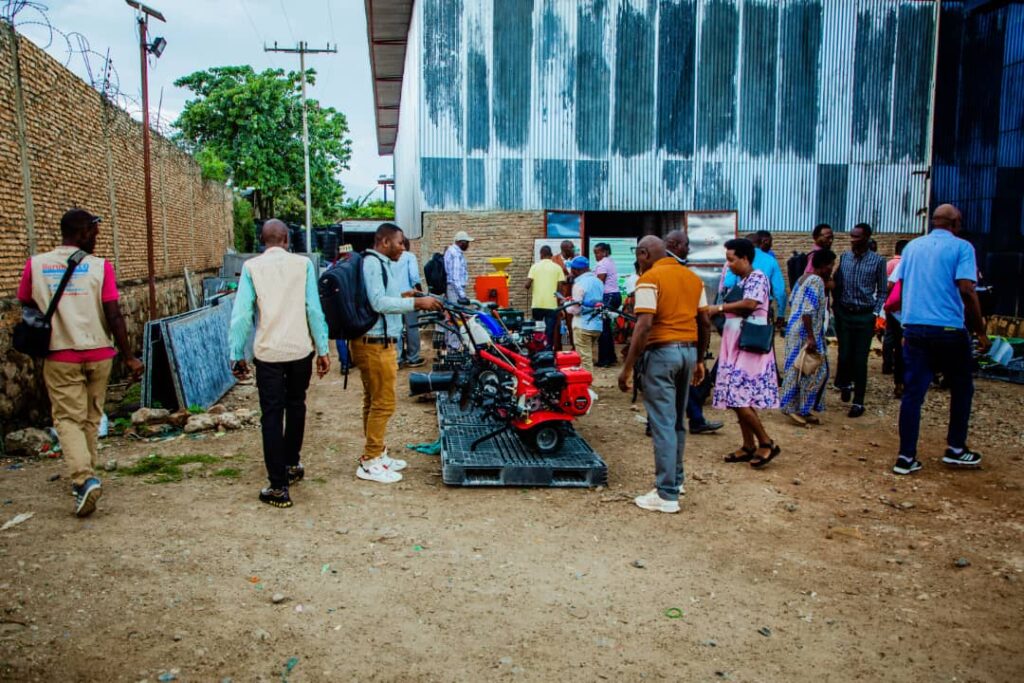
Following the presentations, a guided tour of the AKSHAR Group’s facilities was organized to allow seed entrepreneurs to see the machines in action and assess their suitability for their needs.
Richard Hatungimana, legal representative of the Seed Producers Collective of Burundi (COPROSEBU), welcomed this timely initiative to link seed producers to equipment suppliers because producers often face difficulties in determining where to obtain reliable equipment. By putting them in direct contact with a company that offers a variety of tailored solutions, IFDC is giving them an opportunity to become more efficient.
Hatungimana emphasized that the visit to the AKSHAR Group’s facilities was particularly useful, as it allows workshop participants to make purchases directly. “Now, if we need any equipment, no intermediaries are necessary,” he added.
This initiative shows that effective agricultural transformation is as much about connection as it is about technology. As farmers gain clearer pathways to reliable equipment and direct supplier relationships, they are better positioned to take control of their productivity and shape the future of their businesses on their own terms.
The Private Seed Sector Development, Phase II (PSSD2) (2018-2026), funded by the Dutch Ministry of Foreign Affairs and implemented by the International Fertilizer Development Center (IFDC), aims to increase the production and incomes of 178,000 farmer households in Burundi. The project works with private and public sector partners to promote the development of a private sector-led seed industry that is able to provide farmers with sustainable access to high-quality seed and agricultural advisory services.