This article was originally featured on Argus Media’s Fertilizer Focus January/February 2026 publication.
Argus Media is the leading independent provider of market intelligence to the global energy and commodity markets, offering essential price assessments, news, analytics, consulting services, data science tools, and industry conferences to illuminate complex and opaque commodity markets.
Follow Argus Media on Social Media.
Written by Dr. Zachary Stewart, Chief Scientist and Vice President of Research; James Thigpen, Global Corporate Communications Manager; and Anna Goodwin, Strategic Communications Specialist.
Transforming Fertilizer Innovation
Modern fertilizers underpin global food security, sustaining nearly half of the world’s population. Since the advent of industrial ammonia synthesis more than a century ago, fertilizer technologies have enabled dramatic gains in agricultural productivity. Yet the very systems that once delivered abundance now face mounting challenges. Low nutrient use efficiency, rising energy costs, greenhouse gas emissions, soil degradation, and increasing fiscal pressure from subsidies signal that incremental change is no longer sufficient. What is required is a coordinated, innovation-driven transformation of global fertilizer systems.
The International Fertilizer Development Center’s (IFDC) Global Network of Fertilizer Innovation Centers (GNFIC) was established to respond to this challenge. The GNFIC is a distributed, collaborative platform that integrates public policy, private sector expertise, and global research capacity to accelerate the development, validation, and scaling of fertilizer and soil health innovations. Anchored by IFDC and spanning multiple continents, the network provides a structured pathway for translating science into market-ready, farmer-focused, and environmentally sustainable solutions.
IFDC plays the role of a catalyst, connecting actors across regions and continents
A global imperative for fertilizer innovation
Synthetic fertilizers remain indispensable to feeding a growing population. Global fertilizer demand continues to rise and is projected to increase significantly by 2050 as population growth, dietary shifts, and climate stress intensify pressure on agricultural systems. However, nutrient use efficiency (NUE) remains persistently low in many regions, often below 30%, compared with 50-70% in more optimized systems. This inefficiency results in substantial economic losses for farmers, increased dependence on imports in many countries, and widespread environmental externalities including greenhouse gas emissions, nutrient runoff, and water pollution.
Traditional fertilizer production is also highly energy-intensive and heavily dependent on fossil fuels, particularly for nitrogen fertilizers. Emissions associated with fertilizer manufacture and use represent a significant share of agricultural greenhouse gas emissions globally. At the same time, fertilizer application practices frequently emphasize blanket recommendations rather than soil-, crop-, and climate-specific management, further compounding inefficiencies and environmental risks.
These challenges are not confined to chemistry alone. Fragmented innovation ecosystems, weak links between research and markets, and limited coordination between public and private actors constrain the ability of promising technologies to reach scale. Subsidy-heavy policy environments in many countries often crowd out investment in research and development, while outdated extension systems and limited access to finance prevent farmers from adopting new solutions. Together, these factors create a persistent ‘valley of death’ in which innovation stalls before delivering impact.
The GNFIC model: A networked solution
It is in this context that IFDC began developing the GNFIC as a critical model to connect fertilizers and soil health research to impact.
Unlike traditional research and development platforms, the centers involved in the GNFIC make up a multifunctional consortium of partners that connects science with society, policy, markets, and farmers, aiming to deliver context-specific, sustainable, and replicable solutions for soil health and nutrient management.
Currently, the GNFIC comprises research centers in India, Brazil, and at IFDC’s headquarters in Muscle Shoals, Alabama and there are also plans to add a center on the African continent. These are all supported by regional partners such as universities, national agricultural research systems, industry, start-ups, and NGOs.
Each Innovation Center has an independent management and advisory board with representation from local stakeholders (government, industry, academia and farmers). Autonomous operations ensure context specific innovation, agility, and co-ownership. This model better localizes demand and better integrates with regional R&D capacities and scaling partners.
IFDC plays the role of a catalyst, connecting actors across regions and continents at the science-policy-practice interface to promote cross-regional learning, coordination, and replication of successful innovations. GNFICs accelerate the sharing of research findings, field experiences, and lessons learned, fostering mutual learning and adaptation among stakeholders. This crosslearning and sharing of research solves the problem of fragmented research leading to stagnation of innovations.
By operating under a shared banner, research findings and innovations benefit from capabilities brought from each of the regions, for example, Brazil – with similar soils to sub-Saharan Africa – is bringing soil regeneration experience, while India brings its expertise in development of nano-fertilizers. While research may be divided geographically, standardized trials and methods for unbiased evaluation benefit both farmers and industry.
Modernization of fertilizer production technologies is paramount
To ensure sustainability and scale, the GNFIC fosters an innovation ecosystem supported by blended finance and investment partnerships, enabling both technological advancement and business model innovation. As a network, they promote the development of science- and evidence-based policies that are consistent and complementary across regions.
Additionally, inclusive and equitable innovation plays a key role, with a focus on smallholders, youth, and gender-responsive solutions. They serve as a platform for the Global South to build new skills, knowledge, and institutional capacity through peer learning and collaboration.
Ultimately, innovations supported by GNFICs include not only new technologies and products but also improved management practices, services, and business models that offer substantial solutions to longstanding development challenges in agriculture.
Technical priorities for transformation
Across the network, the GNFIC focuses on a set of core technical priorities that reflect the urgent needs of global fertilizer systems.
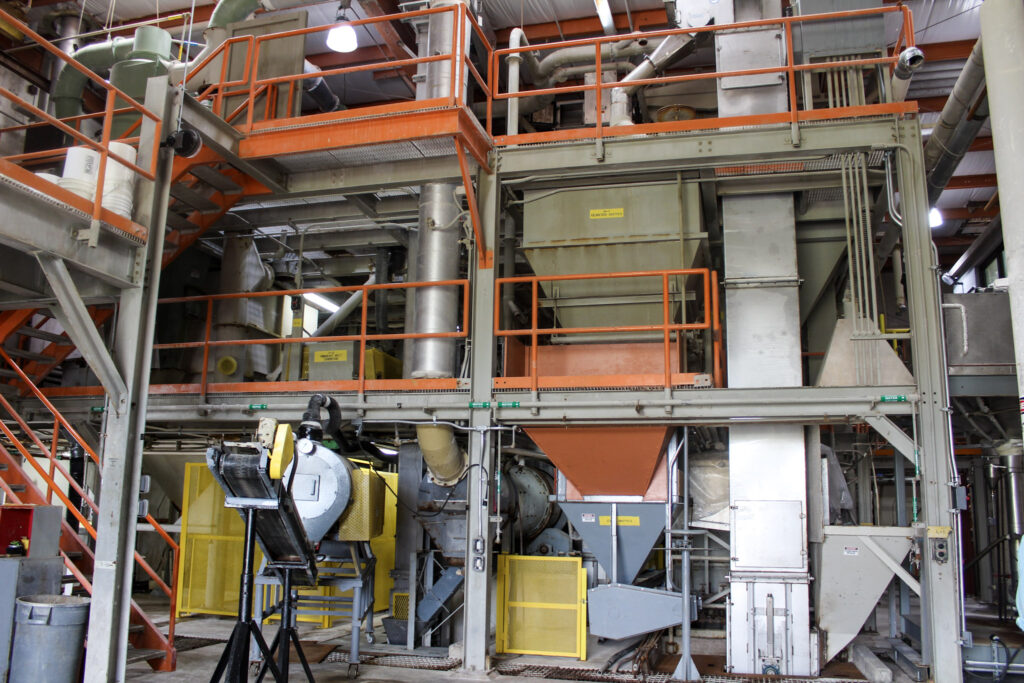
First, modernization of fertilizer production technologies is central to the network’s mission. This includes improving process efficiency, reducing emissions, and advancing alternative pathways such as green, blue, and low-carbon ammonia. Waste-to-wealth approaches that recover nutrients from organic residues, industrial byproducts, and wastewater streams are also prioritized, contributing to circular nutrient economies and reduced environmental footprints.
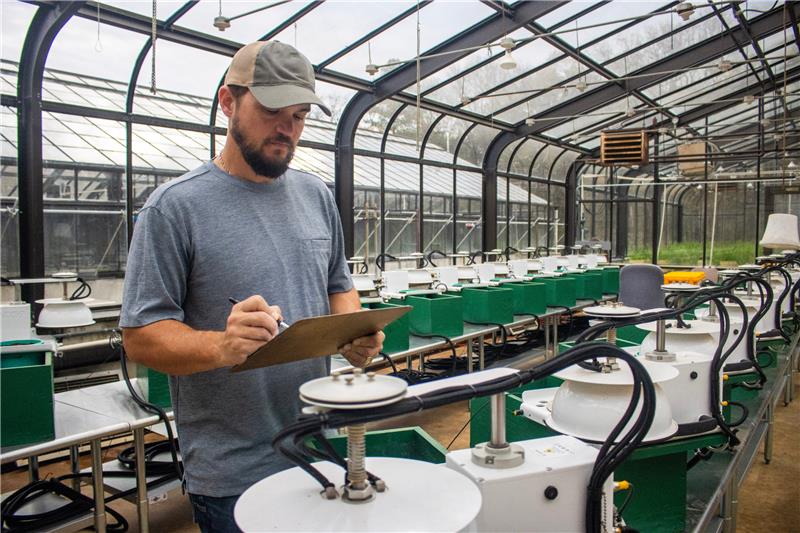
Second, the GNFIC advances innovation in fertilizer products and application technologies. Research spans controlled- and slow-release fertilizers, nutrient inhibitors, organo-mineral blends, nano- and bio-integrated fertilizers, and soil- and climate-responsive formulations. These products are designed to synchronize nutrient release with crop demand, improve NUE, and enhance resilience under variable climatic conditions. Complementary innovations include precision application tools, digital decision-support systems, and diagnostics that enable site-specific nutrient management.
Third, the network emphasizes scaling and market development. Through partnerships with industry, national research systems, and development actors, GNFICs support piloting, validation, and commercialization of climate-smart fertilizer technologies. Neutral, multi-stakeholder platforms facilitate collaboration, reduce risk for investors, and ensure that innovations align with regulatory and market realities.
Fourth, human resource development is a foundational pillar of the GNFIC. The network supports the training of next-generation scientists, engineers, industry professionals, extension agents, and farmers through degree and diploma programs, specialized technical training, and continuous professional development. Building global and regional capacity is essential for sustaining innovation and adoption over the long term.
Finally, the GNFIC provides evidence based input to policy and incentive models. By generating robust data on agronomic performance, environmental outcomes, and economic impacts, the network informs reforms that shift fertilizer policy from consumption-based subsidies toward performance- and incentive-linked mechanisms. Integration with emerging carbon and environmental markets further strengthens the business case for sustainable fertilizer solutions.
From invention to impact: The product life cycle approach
A defining feature of the GNFIC is its structured product life cycle (PLC) approach. Innovation begins with a clearly defined product profile informed by farmer needs, market analysis, and policy context. Technologies then progress through discovery, proof of concept, and independent validation using standardized laboratory, greenhouse, and field protocols.
As products advance toward release and scaling, the GNFIC supports regulatory navigation, pilot production, and market introduction through public–private partnerships. Impact data generated during adoption and growth phases feeds back into the innovation pipeline, ensuring continuous learning and improvement. This closed-loop system minimizes the risk of failure and maximizes the likelihood that innovations deliver measurable benefits at scale.
Partnerships that make innovation work
The GNFIC model recognizes a powerful truth: no single actor or organization can deliver innovation alone. As such, the network leverages the power of working together, uniting IFDC’s core competencies with a consortium of leading partners–universities, national agricultural research systems, the fertilizer industry, start-ups, NGOs, and development partners to ensure innovation goes from blue-sky to scale.
In these partnerships, IFDC strategically defines its role in advancing innovations along the PLC based on its core competencies, while partnering with other organizations to support innovation areas beyond its scope. The strategic, synergistic, and cross-sectoral partnerships mentioned are key to accelerating the development, adoption, and scaling of inclusive, science-based fertilizer innovation.
The innovation centers are reshaping fertilizer systems worldwide
At the same time, the GNFIC takes advantage of linkages between public and private sector funding, blending funding streams for greater reach and sustainability. With the public sector on board, the GNFIC can ensure public-good outcomes, while partnership with the public sector helps enable scalability for new technologies and solutions that enhance nutrient use efficiency, restore soil health, reduce environmental impacts, and support resilient, climate-smart agri-food systems.
The GNFICs serve as a trusted platform for collaboration, anchored in shared values of equity, sustainability, and innovation empowering smallholder farmers, advancing the One Health agenda, and driving global fertilizer system transformation. In areas where IFDC has deep technical expertise (e.g. fertilizer formulations and process engineering), we will serve as an originator of innovations, leveraging our research and development capacity and global field presence to generate novel solutions.
When IFDC is not the inventor of the solution, we will act as an innovation enabler, partnering with start-ups, research groups, and technology providers to accelerate their pathway to market. Together, we are building an inclusive ecosystem that delivers regionally relevant, scalable, and science-driven solutions for people, plants, and planet.
Why the GNFIC matters now: The future of fertilizer innovation
The collaborative approach of the GNFIC uniquely positions it to drive the next generation of fertilizer innovation at a moment when global agriculture urgently needs solutions that deliver both productivity and sustainability. By bringing science, industry, and regional partners together, the GNFIC creates a faster and more reliable pathway for moving promising ideas from the lab to real-world impact. Its integrated model reduces risk and cost for both innovators and farmers, ensuring that only the most effective, evidence based technologies advance.
At the same time, the network’s regionalized, data-driven approach produces fertilizer products and practices that are truly context-specific and climate-smart—tailored to local soils, crops, and market conditions. Ultimately, the GNFIC strengthens the global ecosystem for soil health solutions, accelerating the development, evaluation, and scaling of innovations that improve productivity while safeguarding the environment.
The Global Network of Fertilizer Innovation Centers represents a new paradigm for fertilizer research and development – one that is localized and collaborative rather than fragmented; demand-driven rather than supply-pushed; and impact focused rather than publication bound. Through its integrated approach, the GNFIC is reshaping fertilizer systems worldwide, ensuring that innovation delivers tangible benefits for people, soils, and the planet.
IFDC is inviting interested partners to join us on this mission. Join us and help shape the future of sustainable agriculture by contacting: Dr. Zachary Stewart, Vice President of Programs and Chief Scientist at IFDC, via ifdc.org/GNFIC-info