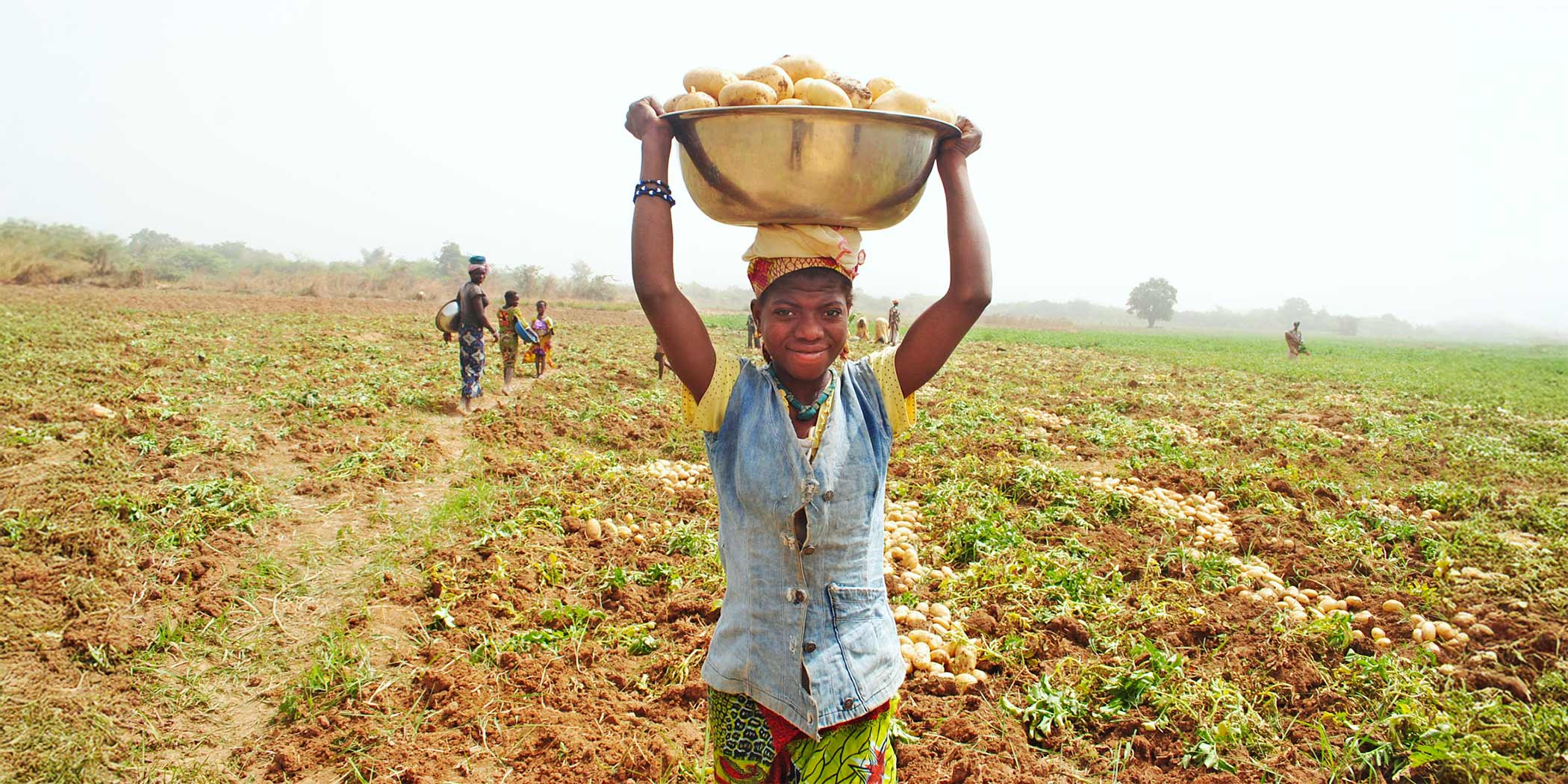
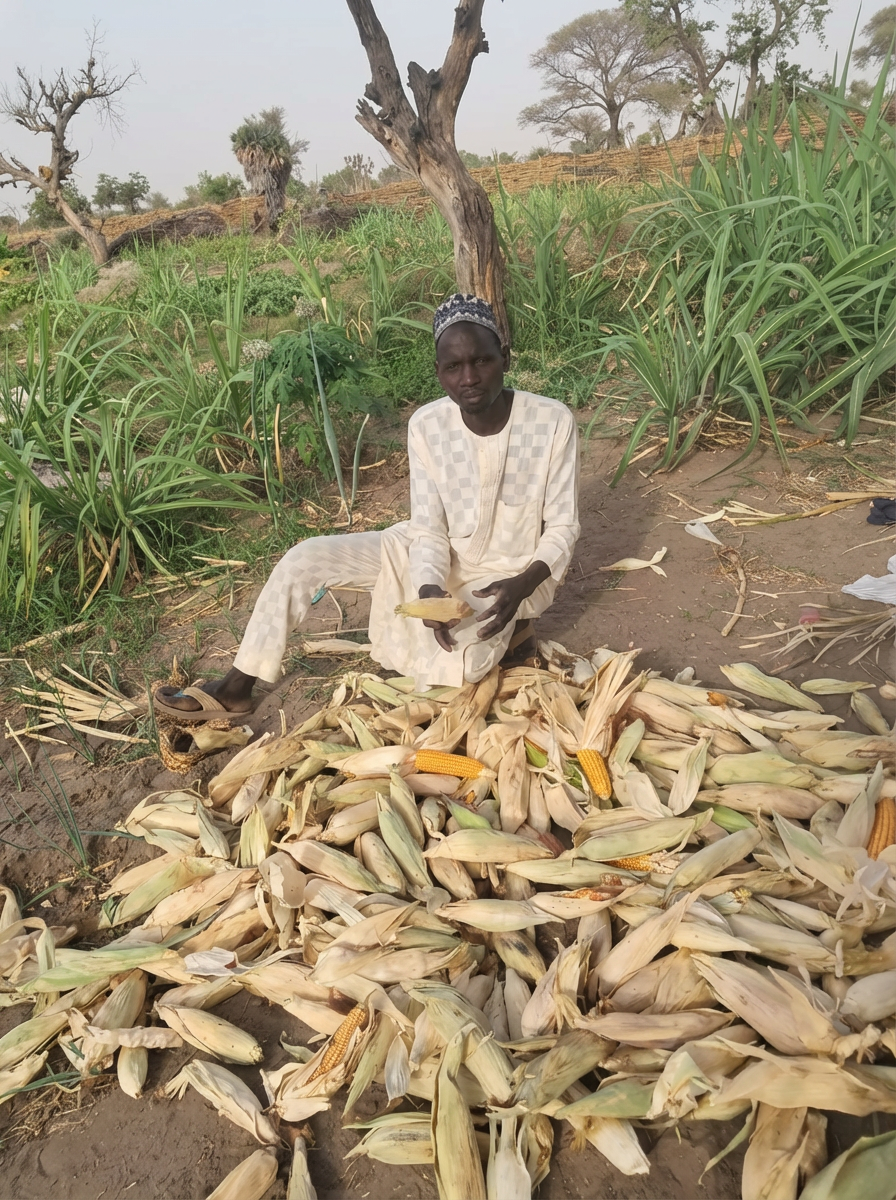
In Kolar Village, located in Niger’s Zinder Region, farmer Ibrahim Inoussa is changing how he nourishes his fields by using locally available ingredients instead of costly external inputs. He farms year-round, growing millet, sorghum, cowpea, and groundnuts in the rainy season, then shifts to irrigated and market crops such as onion, tomato, watermelon, sugarcane, and squash in the dry season.
Like many farmers who depend on the same land season after season, Ibrahim was focused on keeping his system running and finding practical, affordable ways to maintain soil fertility while protecting crop productivity. Crucial to this goal were field-ready skills that he could apply right away and materials he could access locally.
The partnership with the Soil Values program helped us understand that we can restore the fertility of our soils with ingredients available locally, without major expense…
Ibrahim Inoussa
Training That Transforms Practice
An opportunity arose for Ibrahim to gain both when his cooperative recommended him for a series of training sessions in 2024 and 2025 given by the Soil Values program in his village and led by an officer from the Directorate-General for Agriculture. As one of the 20 participants, known as “relay producers,” Ibrahim found the sessions meaningful. “The partnership with the Soil Values program was good for us because I benefited from several trainings,” he said.
Through these sessions, he and his fellow participants were introduced to new options for improving soil fertility and organizing production, including composting, strip cropping (cultivating in bands), knowledge related to certain forage crops, and the production and use of bokashi and bastol (complementary organic inputs created through fermentation that nourish the soil and stimulate plant growth, respectively).
The relay producers also saw these principles in practice. “We also benefited from the establishment of demonstration plots for irrigated crops,” Ibrahim noted. These plots created space for the producers to observe practices in real field conditions and build confidence before integrating them at their own farms.
Local Inputs Driving Cost Savings and Productivity Gains
One change Ibrahim implemented on his farm after the training has made an especially significant impact: “I make my own compost, which I use on my farm thanks to the knowledge gained during trainings with the program,” he said. In fact, before each rainy season, he produces around 23 bags, each weighing 100 kg, and without the need to purchase so much costly fertilizer, Ibrahim now has more funds to pay for farm labor.
Alongside composting, Ibrahim linked bokashi and bastol to a broader shift farmers can control locally. Bokashi and bastol are made from ingredients that are mostly available on their own farms or their immediate surroundings. Materials such as dry leaves, manure, wood ash, wood shavings, and molasses are easily obtainable, and after being trained on the processes, farmers can make and use these organic substances themselves, supporting both their productivity and the health of their soils.
“The partnership with the Soil Values program helped us understand that we can restore the fertility of our soils with ingredients available locally, without major expense, while also helping to fight certain crop pests,” he remarked.
Improved Yields and Strengthened Livelihoods
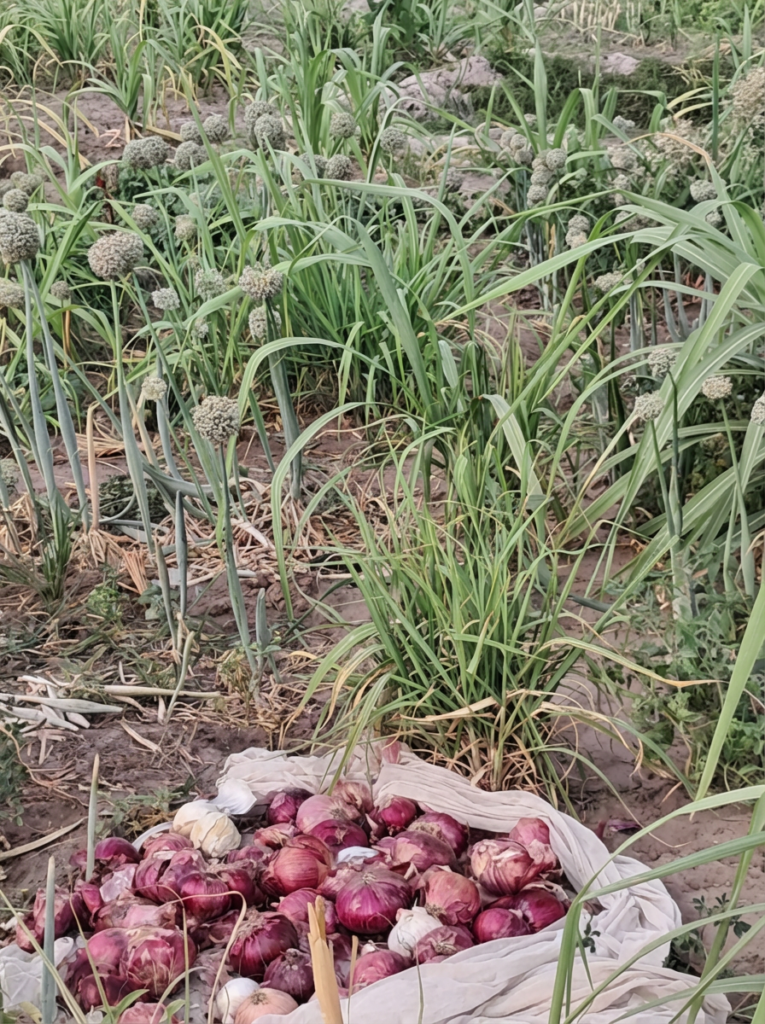
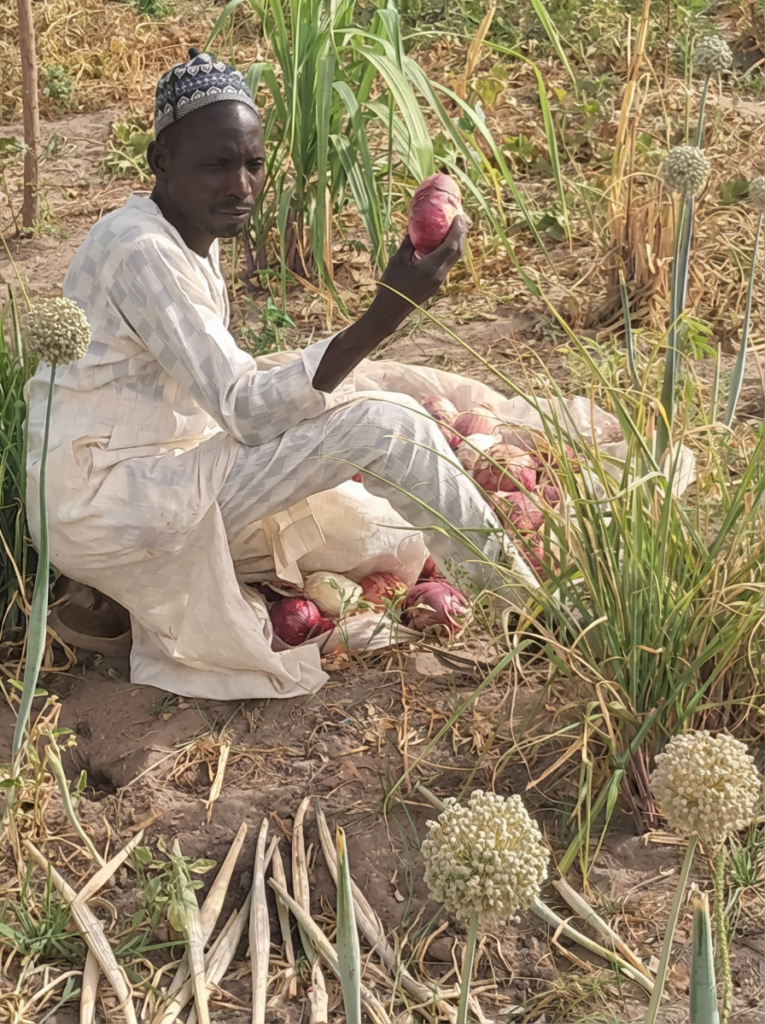
Ibrahim is seeing encouraging signs on his farm. “All this knowledge will help us increase the yields of our crops – something we have already observed on irrigated crops,” Ibrahim said. “In terms of yields, my family and I are now harvesting much more than before. For example, where we used to harvest 30 baskets of millet and sorghum, we’re now able to harvest more than 40 baskets.”
While he acknowledged that the millet and sorghum harvests also depend largely on rainfall patterns, Ibrahim pointed out that during the dry season, yields have consistently improved, especially for onions used for seed and bulb production.
As a relay producer, Ibrahim shared the knowledge and skills he gained from the Soil Values training at the village level. He explained, “For the 2025 irrigation season, we brought together 121 young men and women in the village of Kolar and also in two neighboring villages.” He added that the work strengthened local support systems too, citing “increased collaboration with agricultural agents through field visits and the adoption of the technologies learned.”
Ibrahim revealed his commitment to learning and improving his farming practices through the Soil Values training. Then in passing on his expertise afterward, he created a positive ripple effect. When farmers like Ibrahim can rebuild soil fertility with low-cost local inputs and then teach others, the benefits move beyond one plot and take root across communities.
Funded by the Dutch Directorate-General for International Cooperation (DGIS), the Soil Values program is being implemented over 10 years (2024-2033), led by the International Fertilizer Development Center (IFDC), in consortium with SNV and Wageningen University and Research (WUR), as well as knowledge partners such as AGRA, the Center for International Forestry Research and World Agroforestry (CIFOR-ICRAF), the International Institute of Tropical Agriculture (IITA), ISRIC – World Soil Information, and the International Water Management Institute (IWMI).