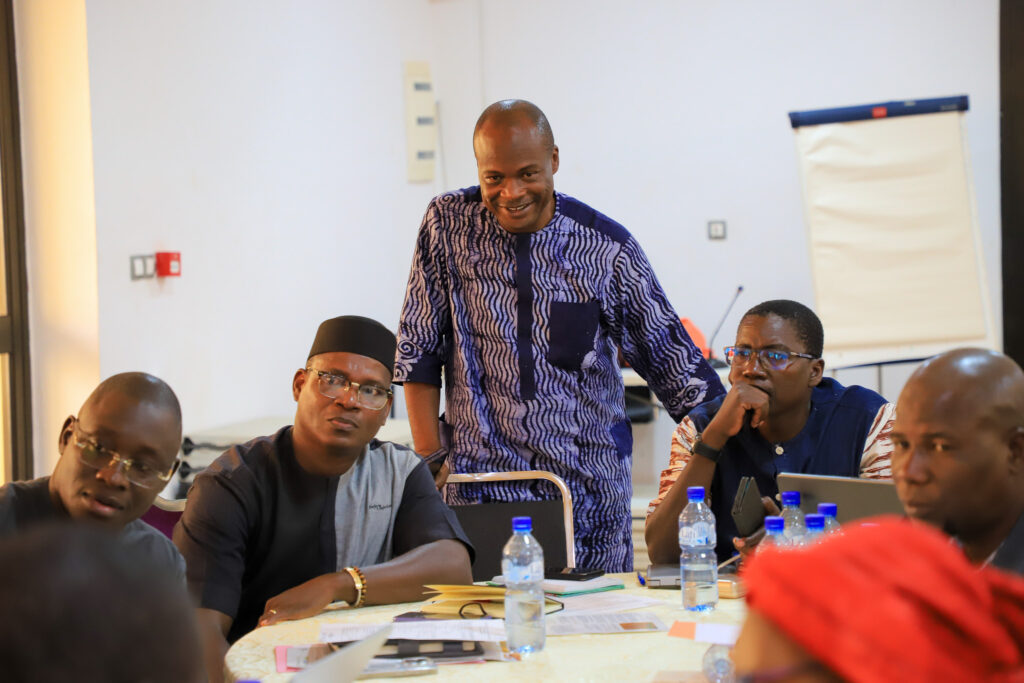
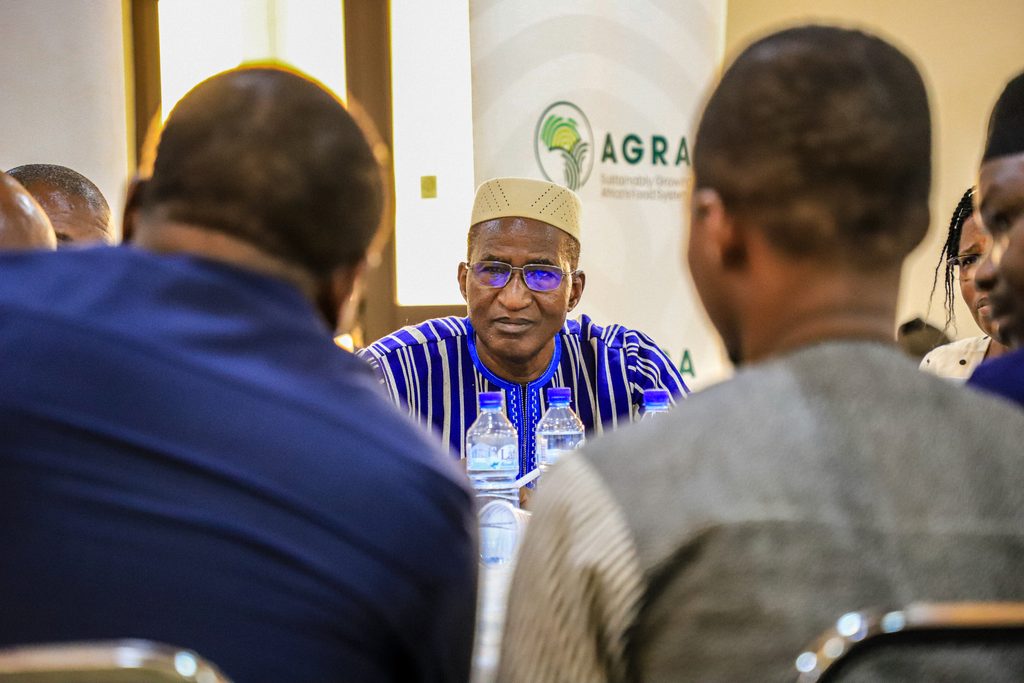
On May 6-7, 2026, the Soil Values program convened stakeholders from Burkina Faso’s fertilizer supply chain to develop a national roadmap aimed at improving farmers’ access to quality fertilizers. The workshop, held in Ougadougou, brought together representatives from government institutions, regional organizations, producer associations, fertilizer companies, and development partners to discuss solutions to the country’s fertilizer supply challenges.
The participants have been really engaged. They have been actively providing ideas and suggestions on how we can address this crisis and ensure farmers access inputs in a timely and effective manner.
Jeremiah Rogito, Soil Health Specialist at AGRA
In preparation for Burkina Faso’s upcoming agricultural season, stakeholders examined the pressing issues affecting fertilizer availability and explored practical solutions to improve access for farmers. Participants actively brainstormed ways to address the current supply challenges while ensuring that producers can get quality fertilizers in sufficient quantities.
“The participants have been really engaged. They have been actively providing ideas and suggestions on how we can address this crisis and ensure farmers access inputs in a timely and effective manner,” said Dr. Jeremiah Rogito, Soil Health Specialist at AGRA. He noted that the workshop generated recommendations that will undergo high-level review, with the goal of ensuring that farmers have access to appropriate fertilizers in the right quantities as the cropping season approaches.
Strengthening Collaboration Across the Fertilizer Value Chain
A central theme throughout the workshop was the need for stronger collaboration among actors involved in fertilizer production, importation, distribution, and use. Dr. Innocent Okuku, Chief Executive Officer of the Africa Fertilizer Industry Development Association (AFIDA), emphasized the importance of joint action among Soil Values consortium members, including AGRA and IFDC, as well as national stakeholders. “We have been discussing how to work together to ensure that farmers in Burkina Faso have access to the fertilizers they require, both in terms of quantity and quality,” he explained. A roundtable bringing together all relevant stakeholders was recommended to strengthen fertilizer supply for the 2026 agricultural season and to formalize commitments regarding volumes, quality standards, and delivery timelines.
This spirit of collaboration was echoed by producer organizations. According to Sam Assane, Secretary General of the Confédération Paysanne du Faso, the workshop provided an opportunity for stakeholders to jointly develop a roadmap to support agricultural production in 2026 and improve fertilizer availability for farmers across the country.
Identifying Solutions for the Upcoming Agricultural Season
Discussions also focused on practical measures that could help address anticipated fertilizer shortages in the short term. Soumaïla Konkobo, Communications and Marketing Manager at the Société d’Exploitation des Phosphates du Burkina (SEPB), explained that the workshop served as a vital platform for discussing solutions to close supply gaps ahead of the upcoming season. He highlighted the need to promote local fertilizer production while also addressing importation challenges to ensure sufficient supplies reach producers when needed.
Learning from Stakeholder Perspectives
The workshop also offered an opportunity for participants to better understand the realities faced by other actors within the fertilizer value chain.
Luiza Diaz Gomez Kalmogo, Agriculture Officer at the West African Economic and Monetary Union (UEMOA), noted that the dialogue provided valuable insights into how stakeholders interact, collaborate, and address challenges on the ground. Likewise, Adama Ouédraogo, President of the Association of Agricultural Input Wholesalers and Retailers of Burkina Faso (AGRODIA), described the discussions as an important starting point for addressing the urgent fertilizer needs associated with the approaching rainy season.
During the workshop, participants agreed on a series of priority actions aimed at strengthening fertilizer supply systems and improving farmers’ access to inputs for the 2026 agricultural season. These actions could include coordinating fertilizer procurement, sharing information on product availability and market needs, harmonizing quality requirements, and planning delivery schedules. Léon Zongo, Soil Values Country Coordinator in Burkina Faso, expressed hope that the recommendations would lead to continued dialogue and stronger cooperation among stakeholders. He emphasized the importance of working collectively to ensure that producers have adequate access to fertilizers, enabling them to continue their essential role in supporting agricultural production and food security in Burkina Faso.
By bringing together these representatives of Burkina Faso’s fertilizer supply chain, the Soil Values program is helping strengthen coordination across the fertilizer sector and supporting efforts to improve fertilizer availability, agricultural productivity, and soil health for farming communities throughout the country.
Funded by the Dutch Directorate-General for International Cooperation (DGIS), the Soil Values program is being implemented over 10 years (2024-2033), led by the International Fertilizer Development Center (IFDC), in consortium with SNV and Wageningen University and Research (WUR), as well as knowledge partners such as AGRA, the Center for International Forestry Research and World Agroforestry (CIFOR-ICRAF), the International Institute of Tropical Agriculture (IITA), ISRIC – World Soil Information, and the International Water Management Institute (IWMI).