Register Now
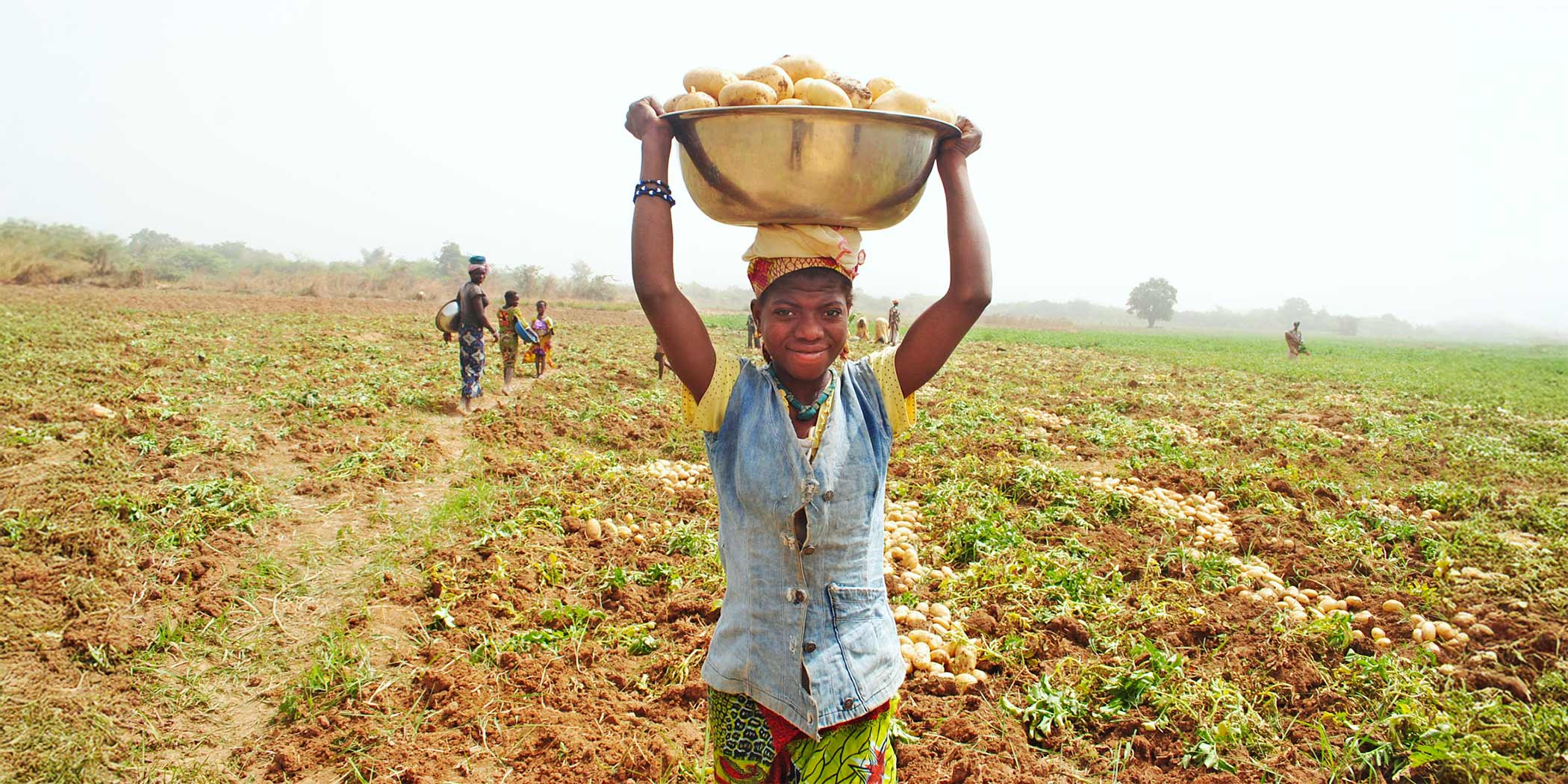
In West Africa, climate variability and extreme weather events are increasingly affecting agricultural productivity, food security, and rural livelihoods. Integrated solutions combining soil health management, climate information, sustainable agricultural practices, and access to essential resources are critical to better prepare farmers for climate-related risks.
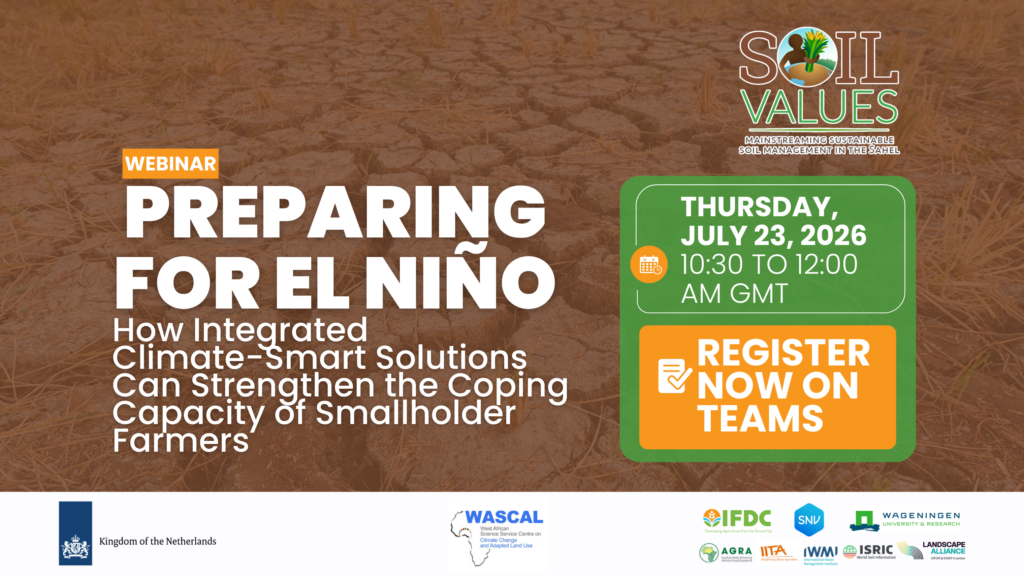
This is why the Soil Values program is organizing a webinar entitled “Preparing for El Niño: How Integrated Climate-Smart Solutions Can Strengthen the Coping Capacity of Smallholder Farmers.”
The session will highlight how seasonal forecasts, early warning systems, Integrated Soil Fertility Management (ISFM), sustainable land management, and other climate-smart approaches can support smallholder farmers in anticipating risks, adapting their practices, and strengthening the resilience of agricultural systems.
Date: Thursday, July 23
Time: 10:30‑12:00 a.m. GMT
Format: Online via Microsoft Teams
Language: Bilingual (French and English) with interpretation provided
Participants will gain insights from two distinguished guest experts:
- Dr. Seyni Salack, climate scientist, risk expert, and Interim Director of Research and Director of the Competence Centre of the West African Science Service Centre on Climate Change and Adapted Land Use (WASCAL), will discuss El Niño’s impacts on West African agriculture and the role of climate information in strengthening anticipatory action.
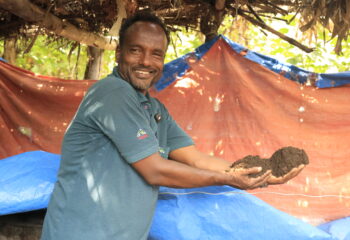
- Dr. Ermias Betemariam, Land Health Scientist at Landscape Alliance, will share perspectives on soil health, land restoration, and integrated solutions to improve the resilience of farming systems.
Whether you are a researcher, policymaker, development practitioner, extension professional, farmer organization representative, or partner working on sustainable agriculture, this webinar offers a valuable opportunity to exchange knowledge and explore practical solutions for more resilient agricultural systems.
Register Now
Funded by the Dutch Directorate-General for International Cooperation (DGIS), the Soil Values program is being implemented over 10 years (2024-2033), led by the International Fertilizer Development Center (IFDC), in consortium with SNV and Wageningen University and Research (WUR), as well as knowledge partners such as AGRA, the Center for International Forestry Research and World Agroforestry (CIFOR-ICRAF), the International Institute of Tropical Agriculture (IITA), ISRIC – World Soil Information, and the International Water Management Institute (IWMI).