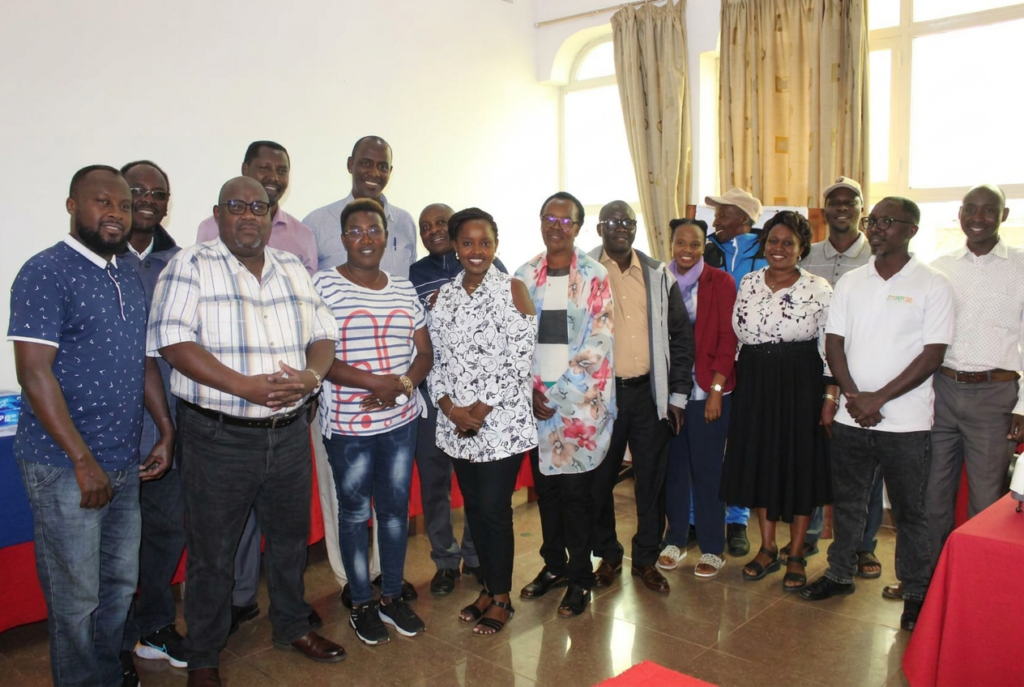
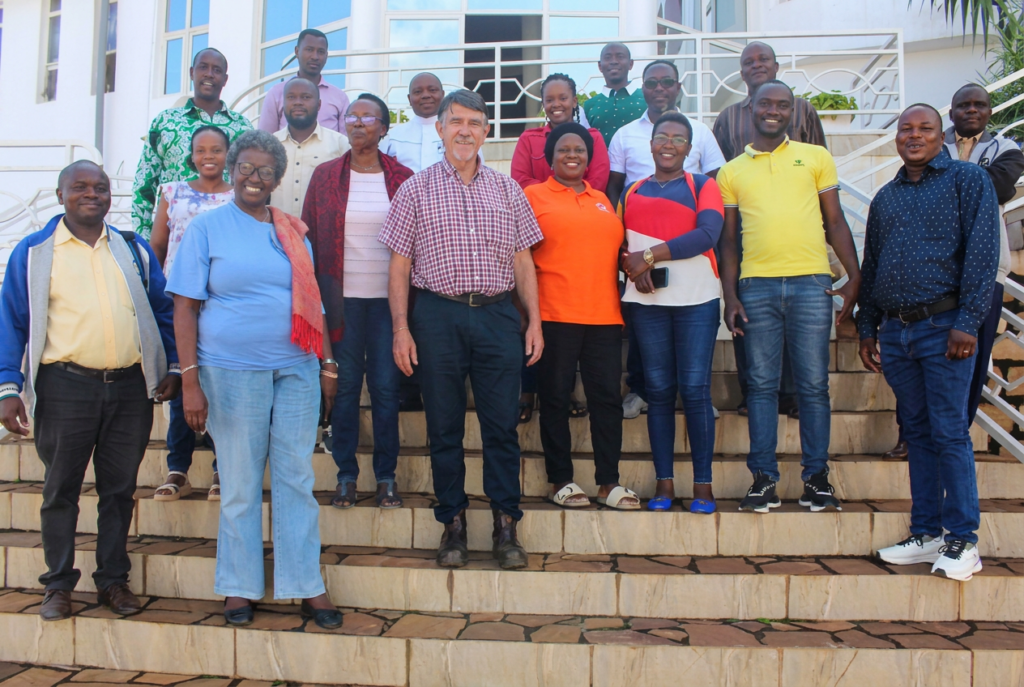
In April, under its Private Seed Sector Development – Phase 2 (PSSD2) project, IFDC organized the Seed Enterprise Management Training event in collaboration with the Seed Systems Group (SSG) in Gitega Province, Burundi, which brought together 25 seed entrepreneurs.
These participants are expected to now serve as trainers in their respective areas of operation, cascading the knowledge and skills they acquired to other seed entrepreneurs within their zones of intervention.
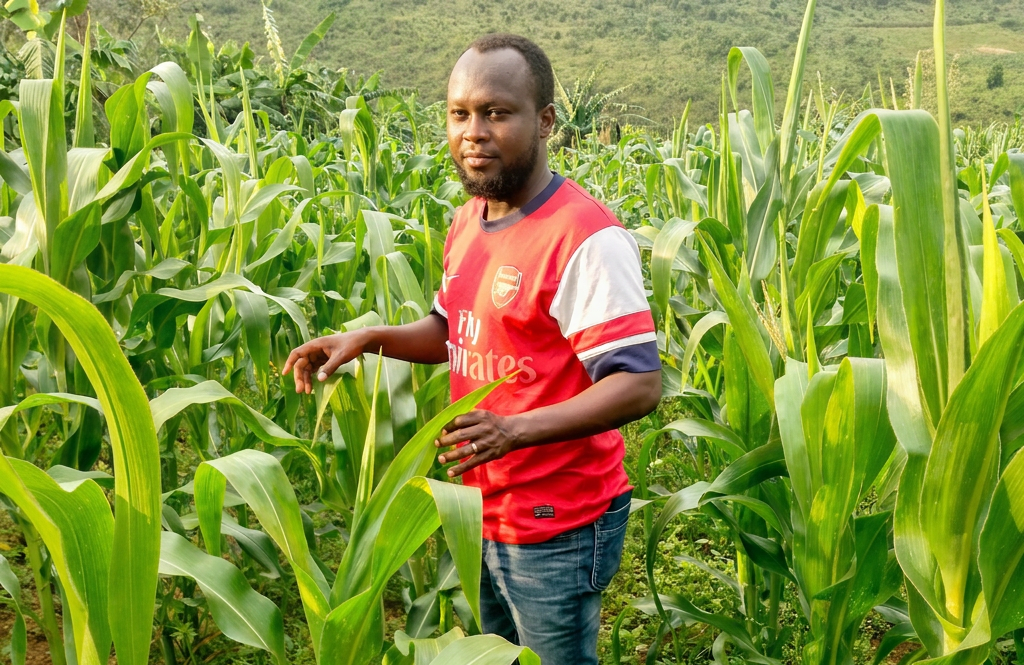
Participating seed entrepreneur Régis Dusabe, who holds a university degree in agronomy, is the founder and managing director of Duseco, a company specializing in seed multiplication since 2023 in Burundi’s Ruyigi Commune.
Through his business, he currently manages more than 10 hectares dedicated to the multiplication of composite maize and bean seed.
“These training courses have enabled me not only to increase my production but also to professionalize the management of my business.”
Régis Dusabe
Following his participation in the training, Régis described the significant impact that this technical support has had on the development of his business.
During the production season before the training, Régis had experienced a significant loss because his seed had failed to meet quality standards.
Eleven metric tons of maize seed that should have been certified and sold at around 5,000 Burundi francs (BIF), or approximately U.S. $1.67, per kilogram had to be sold instead as grain for consumption at 1,700 BIF, or approximately U.S. $0.56, per kilogram – a considerable financial loss.
Like many other seed entrepreneurs, Régis believed that quality control was primarily the responsibility of inspectors from the National Office for Seed Control and Certification (ONCCS).
However, PSSD2’s training enabled him to clearly understand his own responsibility in seed quality control.
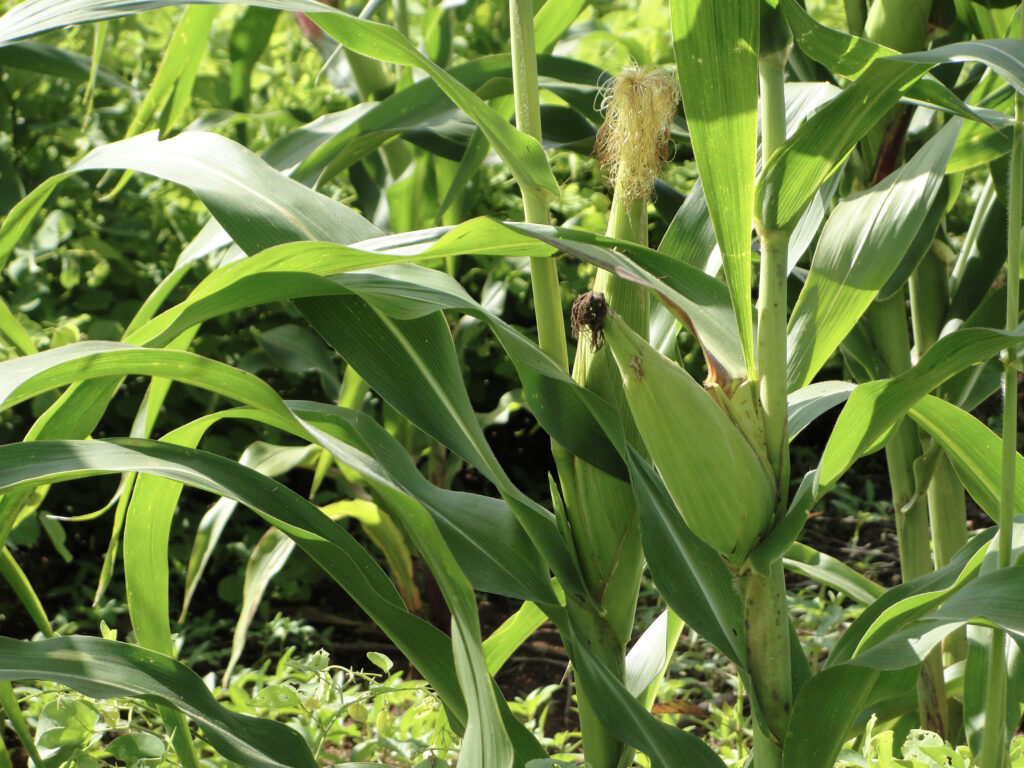
Régis then took action: “I strengthened my production practices by focusing on rigorous sorting from the very beginning, particularly selecting uniform maize ears, ensuring careful shelling, and applying proper drying techniques,” he explained.
By conducting his own germination test before submitting samples, he was fully confident when the ONCCS inspectors came to collect them. He added, “One week later, the laboratory results confirmed that confidence.”
The results Régis achieved during the following cropping season clearly demonstrate the benefits of this transformation. Despite challenges related to climate risks and the limited availability of subsidized agricultural inputs, Duseco produced 25.8 metric tons of certified seed from 11.2 hectares.
Beyond strengthening his technical skills, the training also helped Régis define the strategic vision of his company: “To make a sustainable contribution to improved food security and regional development.”
To achieve this ambition, Régis has established several strategic objectives: sustainably increasing agricultural productivity, promoting innovation and research, strengthening farmers’ capacities, preserving natural resources, ensuring customer satisfaction, and continuously improving the governance and overall performance of his business.
With an annual turnover of approximately 100 million BIF, or approximately U.S. $33,282.10, generated from seed production, Régis has also developed a business plan covering the coming agricultural seasons. The plan incorporates all production and operational costs while aiming to improve profitability and ensure sustainable business growth.
Régis’s plan will place special emphasis on expanding seed marketing through stronger promotional activities, such as establishing demonstration plots, introducing small seed packaging, strengthening relationships with farmers, and building customer loyalty, especially within his area of operation.
Recognizing the growing demand among farmers for hybrid seeds and building on the knowledge he gained during the hybrid maize seed production training session, Régis plans for Duseco to establish partnerships with local producers to acquire the parental lines required to launch hybrid maize seed production in Ruyigi Commune.
He also intends for the company to construct a seed storage warehouse that complies with technical standards to ensure proper storage conditions and preserve seed quality over the long term.
For Régis, IFDC’s support has helped create opportunities for lasting growth and resilience. “I have had the opportunity to participate in several highly valuable training and capacity-building sessions. These training courses have enabled me not only to increase my production but also to professionalize the management of my business,” he concluded.
Régis will now share what he has learned with fellow seed entrepreneurs, cascading the flow of knowledge to improve business for the entrepreneurs and support access to quality seed for farmers.
Régis described IFDC’s training as “high-quality technical and managerial guidance that enables seed enterprises to strengthen their capacities, improve their performance, and move toward sustainable self-reliance.”
Such training has enabled Duseco to now demonstrate the critical importance of strengthening both technical and entrepreneurial capacities in the professionalization of Burundi’s seed enterprises.
Régis’s story shows that high-quality technical and administrative support, combined with the commitment of entrepreneurs themselves, is a powerful driver for improving seed quality, enhancing business competitiveness, and making a lasting contribution to food security in Burundi.
The Private Seed Sector Development, Phase II (PSSD2) (2018-2026), funded by the Dutch Ministry of Foreign Affairs and implemented by the International Fertilizer Development Center (IFDC), aims to increase the production and incomes of 178,000 farmer households in Burundi. The project works with private and public sector partners to promote the development of a private sector-led seed industry that is able to provide farmers with sustainable access to high-quality seed and agricultural advisory services.