
The next fertilizer crisis is inevitable.
Whether it becomes a food crisis depends on what we invest in now.
Contact Us Today
Drawing on contributions from Corey Rosenbusch, President and CEO of The Fertilizer Institute (TFI), and Zachary Stewart, Vice President of Research and Development at the International Fertilizer Development Center (IFDC).
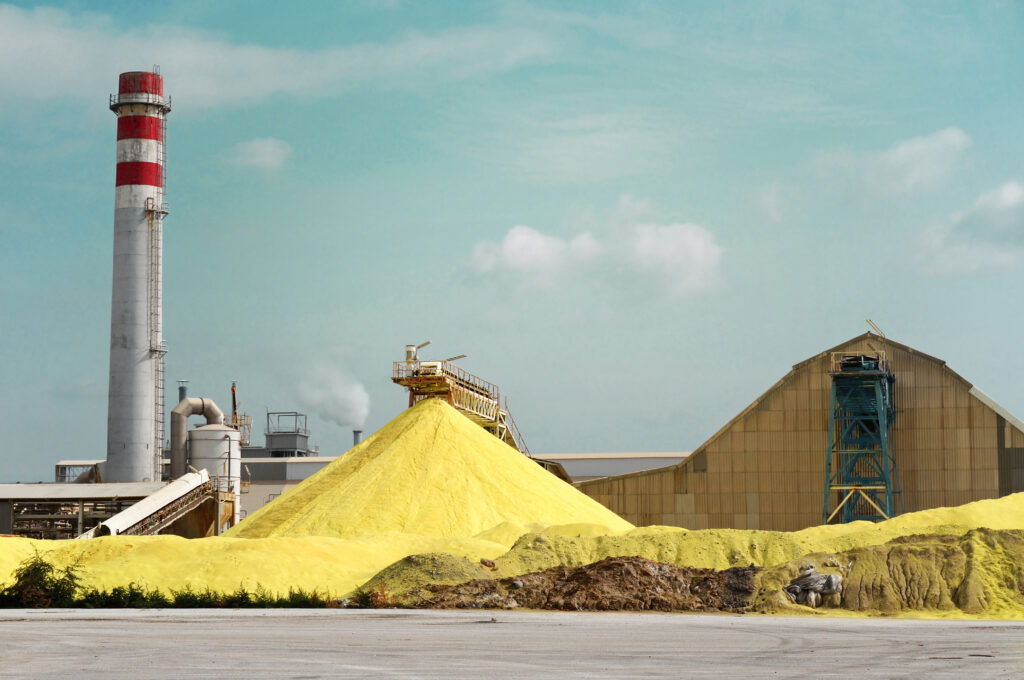
One critical component of the important conversations surrounding fertilizer this year has received too little attention: sulfur. Sulfur is both an essential plant nutrient and the raw material used to produce sulfuric acid, which manufacturers need to turn phosphate rock into fertilizers such as monoammonium phosphate (MAP) and diammonium phosphate (DAP). Without sulfur, phosphate fertilizer production cannot continue at its current scale.
There is no practical substitute for sulfur in conventional phosphate fertilizer manufacturing. Fertilizer manufacturers compete for sulfur with copper and nickel processors and other industrial users whose economics may allow them to pay more for the same limited supply. For phosphate producers, this competition raises production costs and can threaten their ability to maintain output. As disruptions to trade and shipping collide with strong demand from these other industries, tight global supplies have therefore become a serious agricultural concern.
Nor is there an easy geographic workaround. Producers in the United States, Africa, the Middle East, East Asia, South Asia, and elsewhere draw from the same global sulfur market. Wherever phosphate fertilizer is manufactured, any shortage of this essential input follows the product through the supply chain.
The unique importance of sulfur needs to be made clear in agricultural discussions. Fertilizer availability depends not only on finished products, but also on the energy, transport, and raw materials – e.g., sulfur – that make production possible. Keeping those inputs moving is essential to keeping fertilizer plants operating and farmers supplied.
The Fertilizer Institute (TFI) is working to explain these connections to growers, policymakers, and audiences beyond agriculture. In a recent video entitled “Why Sulfur Should Matter to You,” TFI Chief Economist Veronica Nigh explains sulfur’s significance and how its availability affects fertilizer production and agriculture.

But recognizing the problem is only the first step. The next question is whether the sector can deliver effective phosphorus nutrition while relying less heavily on sulfur-intensive processing.
Research from IFDC suggests that it can. Rather than treating reduced sulfur availability as an unavoidable, proportional reduction in phosphorus supply, the industry can improve how phosphate resources are processed, formulated, and targeted.
Reducing Dependence on Sulfur-Intensive Processing
One important way to strengthen the resilience of global phosphate fertilizer supply chains is to reduce the amount of sulfuric acid required to deliver an agronomically effective unit of phosphorus to farmers. IFDC’s phosphate activation and fertilizer efficiency research points to three complementary approaches that together can extend constrained supplies, make greater use of local resources, and match fertilizer products more precisely to agronomic needs:
- Co-granulate fully acidulated fertilizers with locally available phosphate rock. Conventional DAP and MAP require substantial acidulation. IFDC’s work indicates that these products can be co-granulated with medium-quality phosphate rock – sometimes with the DAP or MAP component well below 50% – while retaining productivity potential comparable to a full rate of conventional water-soluble fertilizer under suitable agronomic conditions. This approach stretches limited supplies of fully acidulated fertilizer and creates more value from local phosphate resources.
- Partially acidulate phosphate rock. Partial acidulation uses substantially less sulfuric acid than full acidulation while improving phosphorus availability compared with untreated rock phosphate. When matched to the right soils, crops, and production systems, these products can achieve phosphorus use efficiency and crop responses comparable to highly water-soluble phosphate fertilizers.
- Use triple superphosphate more strategically. Triple superphosphate (TSP) can require less sulfuric acid across the production pathway than ammonium phosphates such as DAP and MAP. In many crop-and-soil combinations, the additional nitrogen in DAP or MAP is not needed to obtain an equivalent phosphorus response. Decision-support approaches, including IFDC’s Space to Place (S2P) framework, can help target each product to the soils, crops, and environments where it will perform most efficiently.
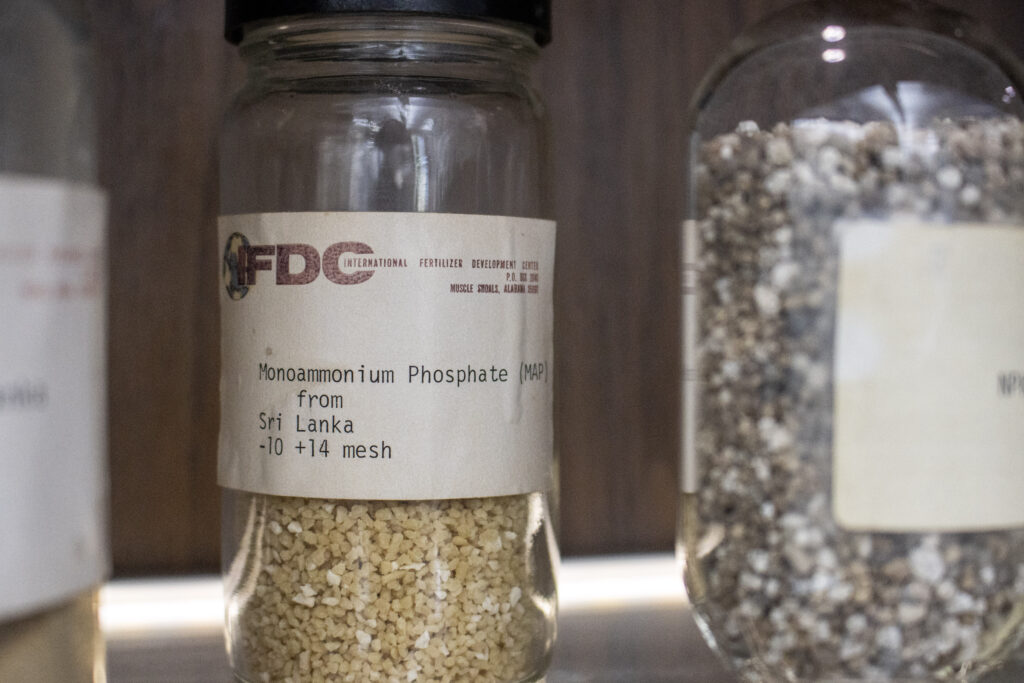
Taken together, these approaches shift the question from “How do we produce the same fertilizer when sulfur is constrained?” to “How do we sustain crop productivity with less dependence on sulfur-intensive phosphate processing?” The distinction matters for global fertilizer security; it combines improved fertilizer technologies, greater use of indigenous phosphate resources, and more precise targeting of products to the conditions where they work best.
From Vulnerability to Resilience
Sulfur constraints do not have to translate directly into proportional reductions in agronomically effective phosphorus supply. TFI highlights the urgency of protecting the raw-material and transport systems on which fertilizer production depends, and IFDC’s research complements that message by showing how phosphate activation, alternative formulations, and better product targeting can reduce pressure on scarce sulfur supplies. Addressing both sides of the challenge – securing essential inputs while using them more efficiently – offers a practical path toward a more resilient global fertilizer system.
Disclaimer
This article is based on information from publicly available sources and market intelligence. While every effort has been made to verify the accuracy of the information, the authors and publishers accept no liability for any loss, damage, or disruption caused by errors, omissions, or the use of this information.
Sources