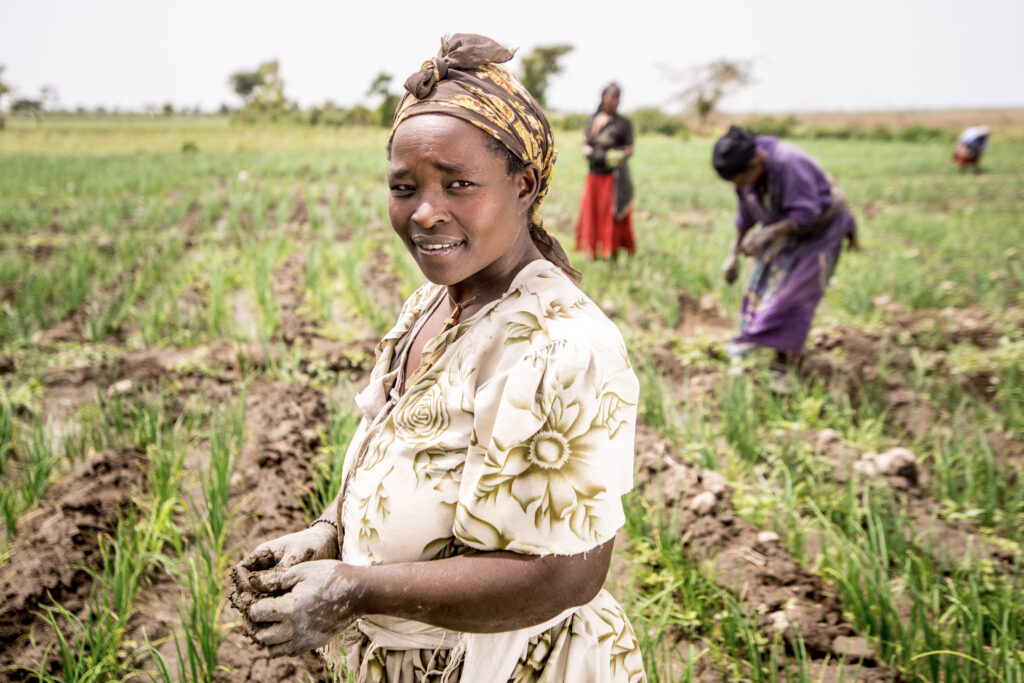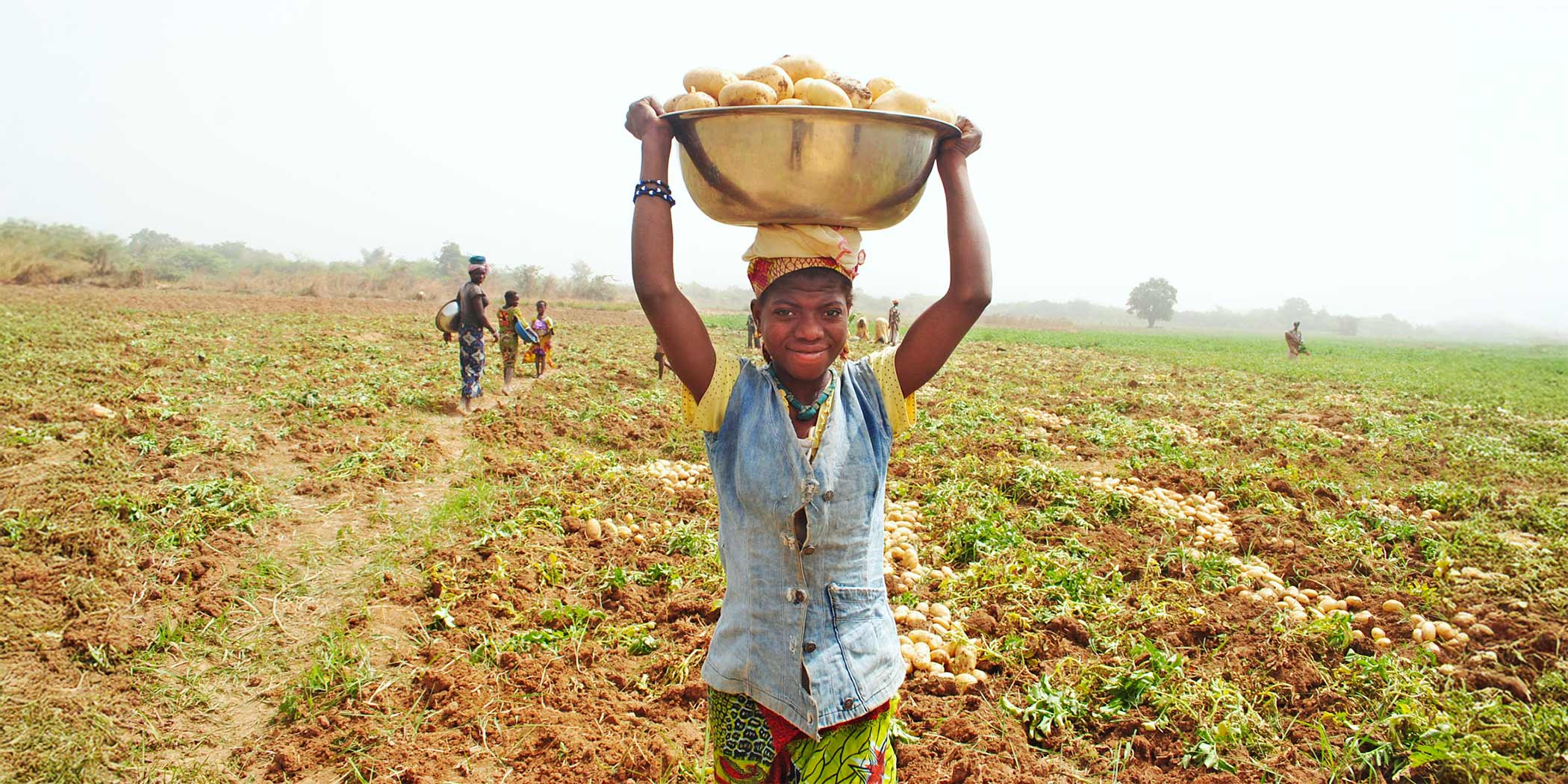
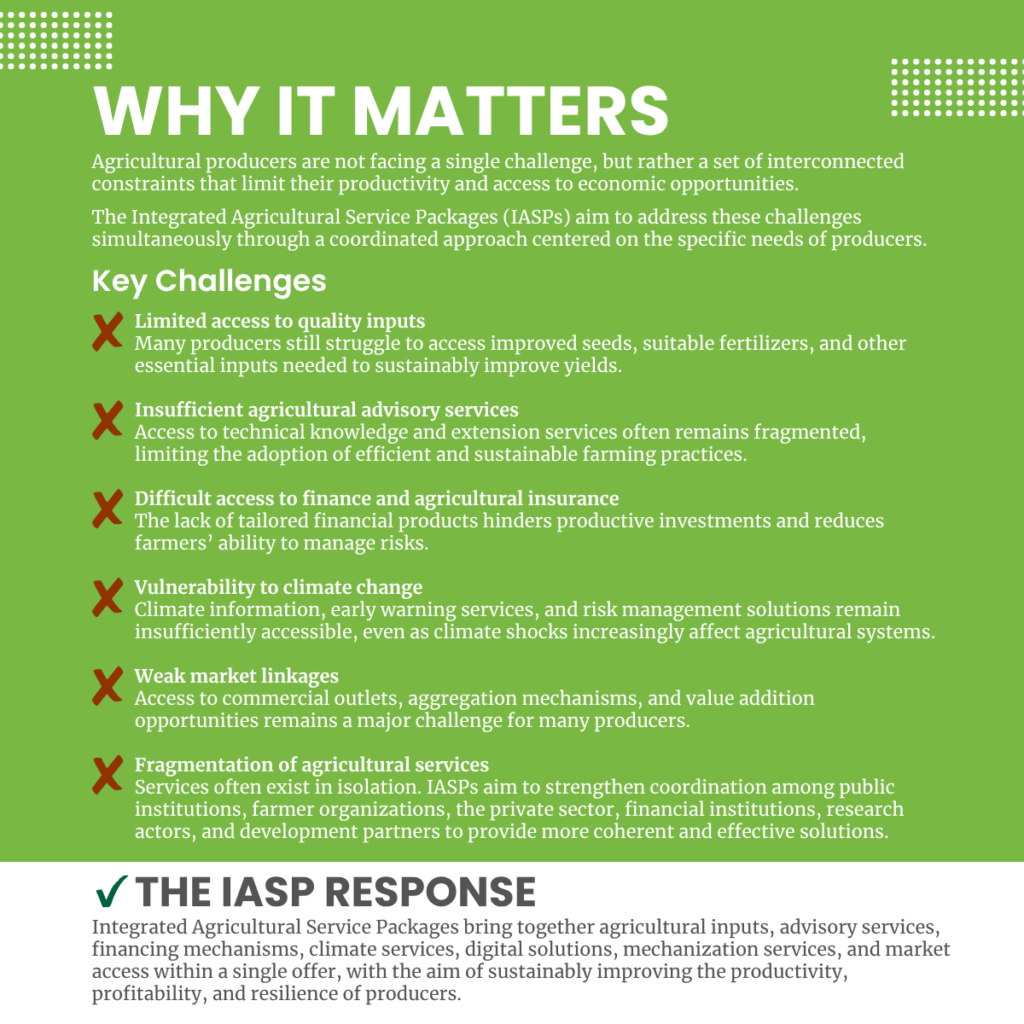
Agricultural development actors are seeking more integrated solutions to better meet farmers’ needs in response to the growing challenges they face, including soil degradation and fertility loss; limited access to quality inputs, advisory services, finance, and markets; and increasing climate variability.
In Côte d’Ivoire, this goal is taking shape through Integrated Agricultural Service Packages (IASPs), more simply known as Bundle Boxes – an innovative approach designed to bring together quality inputs with technical, financial, digital, climate, and market services within a single offer, co-created by Regional Hub partners, implemented by each respectively, and tailored to the specific needs of producers across various agricultural value chains.
“These results…are the starting point of the IASP process, requiring continued collaboration among public institutions, producer organizations, the private sector, financial institutions, research organizations, and technical and financial partners.”
Marina Diboma, IFDC Country Representative for Côte d’Ivoire,
This initiative is an activity of the Regional Hub for Fertilizer and Soil Health for West Africa and the Sahel, launched by the Economic Community of West African States (ECOWAS) with the aim of strengthening soil fertility, improving fertilizer use efficiency, and sustainably increasing agricultural productivity across the region.
Through its dedicated function – the integration of agricultural technologies and services – the Regional Hub supports countries in designing solutions adapted to crops, local contexts, soil characteristics, and market realities.
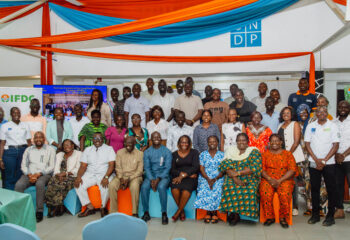
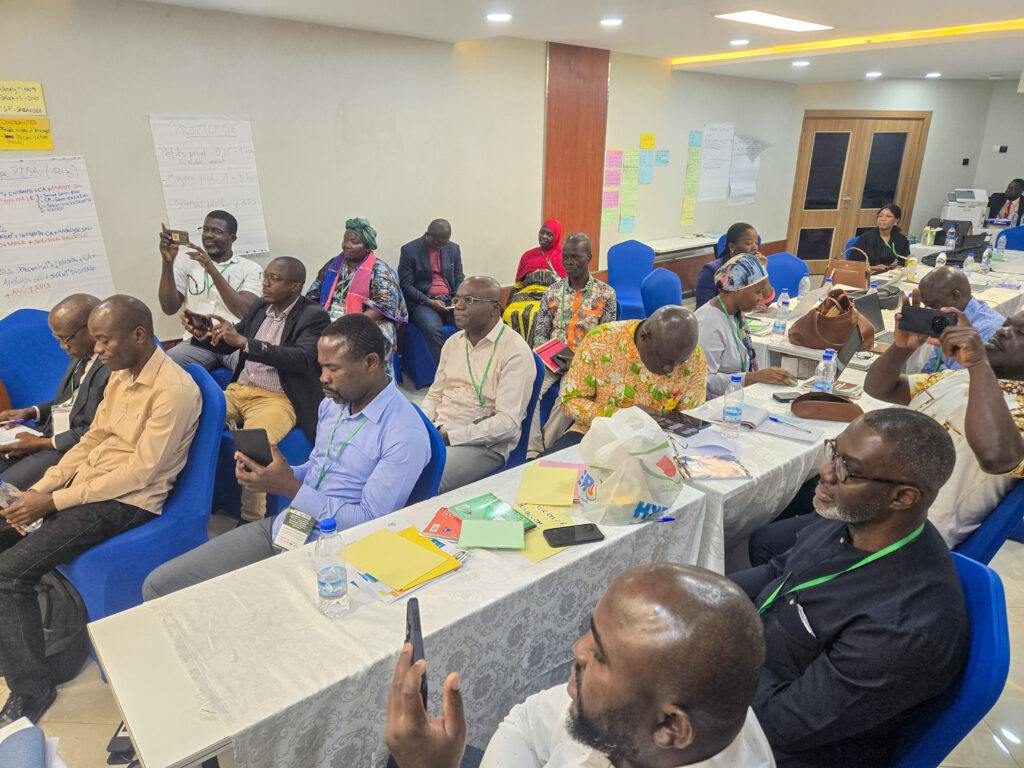
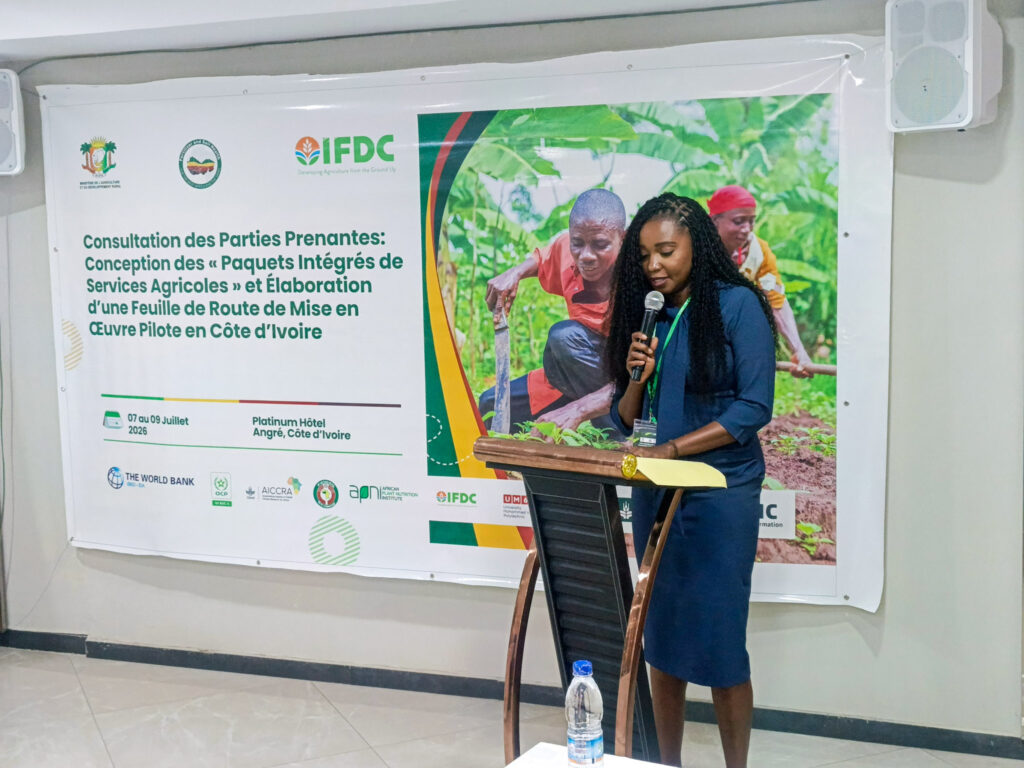
It is in this capacity that IFDC, a Regional Hub founding member, collaborated with Côte d’Ivoire’s Regional Hub National Technical Team to organize a national consultation workshop on July 7‑9 in Abidjan. The workshop focused on designing Bundle Boxes and developing a roadmap to pilot implementation in Côte d’Ivoire.
The workshop convened representatives of public institutions, producer organizations, the private sector, financial institutions, research centers, climate service providers, civil society organizations, and technical partners. This diversity of stakeholders helped ensure strong national ownership and an inclusive co-creation process.
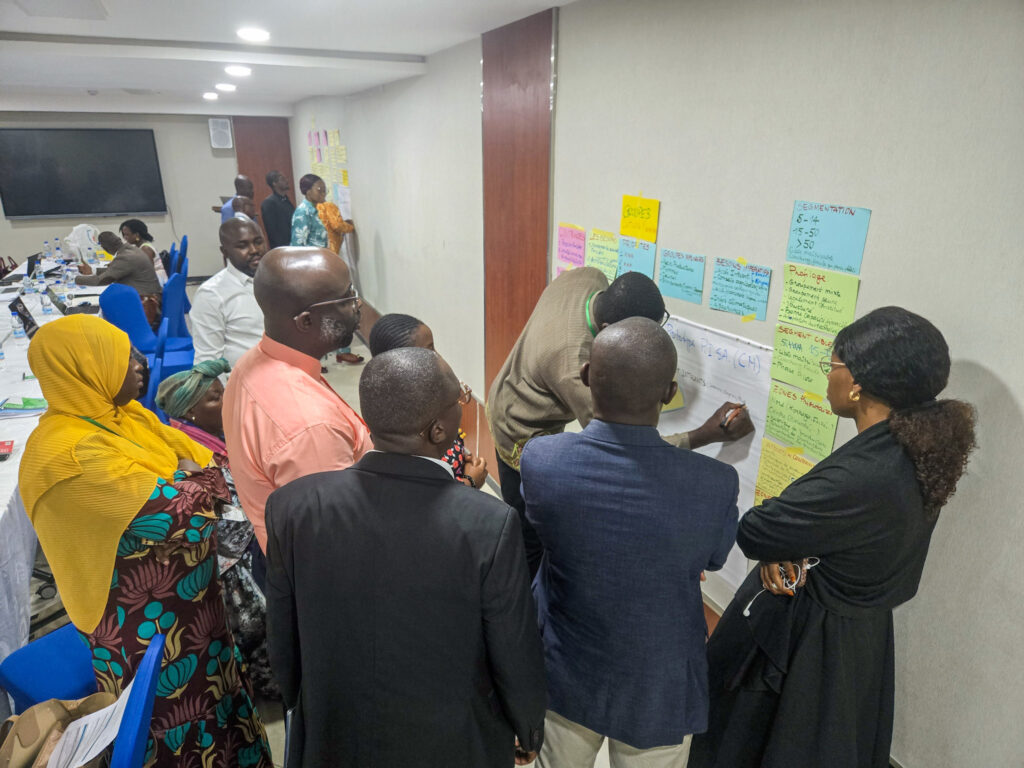
The workshop’s objectives included building a common understanding of the IASP concept, identifying farmers’ priority needs, defining priority value chains and target beneficiaries, and co-designing integrated service models adapted specifically to the context of Côte d’Ivoire.
Through participatory sessions that addressed constraint diagnosis, beneficiary segmentation, value chain mapping, user-centered design, business model development, and clarification of stakeholder roles, workshop participants were able to build a shared vision for the future pilot phase.
Workshop discussions drew on the findings of a diagnostic study conducted from April to June this year by Côte d’Ivoire’s National Agronomic Research Center (CNRA) in the Badama watershed, in the Poro and Tchologo regions of the country.
The study assessed production constraints, local agricultural practices, and opportunities to scale up integrated soil fertility management (ISFM), climate-smart agriculture, and integrated agricultural service delivery.
Findings of this study highlighted strong extension and input service provision in the area but significant gaps in access to finance, climate services, mechanization, and market linkages. These results informed the design of the integrated services to be offered.
In planning for the Bundle Box approach, workshop participants first identified five priority value chains: irrigated rice, maize, cassava, tomato, and eggplant.
Next, they defined a segmentation system consisting of three categories for irrigated rice producer cooperatives, according to their organizational size: Segment 1 (seven to 50 members), Segment 2 (51 to 100 members), and Segment 3 (more than 100 members).
Producers were then classified according to cultivated area as small-scale producers (0.25 to 1 hectare), medium-scale producers (1 to 3 hectares), and large-scale producers (more than 3 hectares).
Workshop participants then applied this same segmentation and classification approach to maize, cassava, tomato, and eggplant, with value chain-specific adaptations to reflect their respective production systems, service needs, and market contexts.
Then, three levels of service packages – essential kit, intermediate kit, and premium kit – were designed to address the specific needs of these different categories. The packages will combine quality agricultural inputs such as seeds, fertilizers, and crop protection products, as well as advisory services, financing options, climate services, mechanization, market access mechanisms, and more – all tailored to producers’ needs.
Finally, workshop participants developed business models for each package to assess their profitability and adoption potential among producers. In parallel, an institutional and partnership framework was defined to clarify the responsibilities of each actor involved in future implementation.
During the workshop’s closing ceremony, IFDC’s Country Representative for Côte D’Ivoire, Marina Diboma, remarked, “These results represent an important milestone, but above all, they are the starting point of the IASP process, requiring continued collaboration among public institutions, producer organizations, the private sector, financial institutions, research organizations, and technical and financial partners.”
The next steps will focus on finalizing the operational plan, validating governance mechanisms, and mobilizing resources. The pilot will be rolled out – when farmers will receive customized Bundle Boxes based on their value chain, operational size, segment, and classification.
IFDC, the Regional Hub, and their partners are also preparing an investors’ roundtable aimed at mobilizing public and private financing to support the implementation and scaling of Bundle Boxes in Côte d’Ivoire.
Through the Bundle Box initiative, IFDC reaffirms its commitment to supporting innovative solutions that promote improved soil health, more efficient use of agricultural inputs, and more productive, resilient, inclusive, and sustainable agriculture in West Africa and the Sahel.
About the Regional Hub for Fertilizer and Soil Health for West Africa and the Sahel:
The Regional Hub Fertilizer and Soil Health for West Africa and the Sahel is a collaborative initiative that promotes soil health and sustainable fertilizer use in the region. The Hub’s mission directly aligns with the needs outlined in the Fertilizers and Soil Health Roadmap for West Africa and the Sahel, developed by ECOWAS, World Bank, and IFDC. This strategic alignment underscores the Hub’s direct relevance to critical discussions on addressing Africa’s soil health challenges and enhancing agricultural productivity. The Hub’s headquarters is located on the IITA campus in Ibadan, Nigeria.