As climate variability and extreme weather events continue to affect agricultural systems across West Africa and the Sahel, the Soil Values program, in collaboration with the West African Science Service Centre on Climate Change and Adapted Land Use (WASCAL), is promoting integrated climate-smart solutions to strengthen the coping capacity of smallholder farmers.
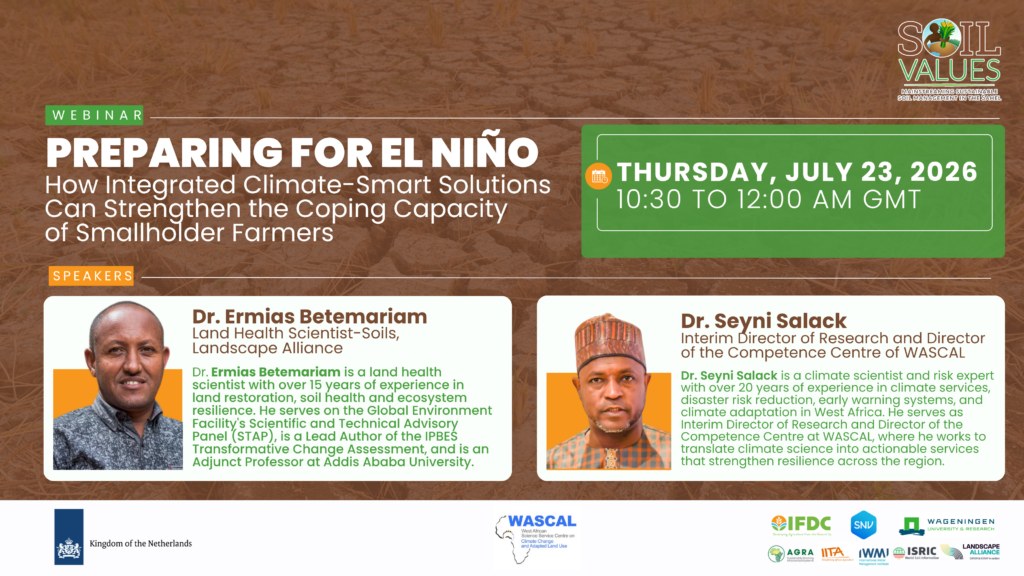
On July 23, Soil Values hosted a webinar entitled “Preparing for El Niño: How Integrated Climate-Smart Solutions Can Strengthen the Coping Capacity of Smallholder Farmers.” The session provided a platform for researchers, practitioners, and development actors to discuss how climate information, adapted technologies, and stronger partnerships can help communities anticipate and manage increasing climate risks.
With more than 110 participants in attendance, the discussion brought together experts from Soil Values and other organizations, including Soil Values Deputy Program Director – Technical Dr. Alimata Bandaogo, WASCAL’s Interim Director of Research and Competence Centre Director Dr. Seyni Salack, and Landscape Alliance’s Senior Soil Health Researcher and Science Policy Advisor Dr. Ermias Betemariam.
Speakers agreed that climate resilience requires more than isolated interventions; it depends on integrated approaches that combine scientific evidence, local knowledge, appropriate technologies, coordinated action among different stakeholders, and essential, sustained investment in the systems and capacities needed to strengthen resilience.
Building Climate Resilience through Partnerships and Local Knowledge
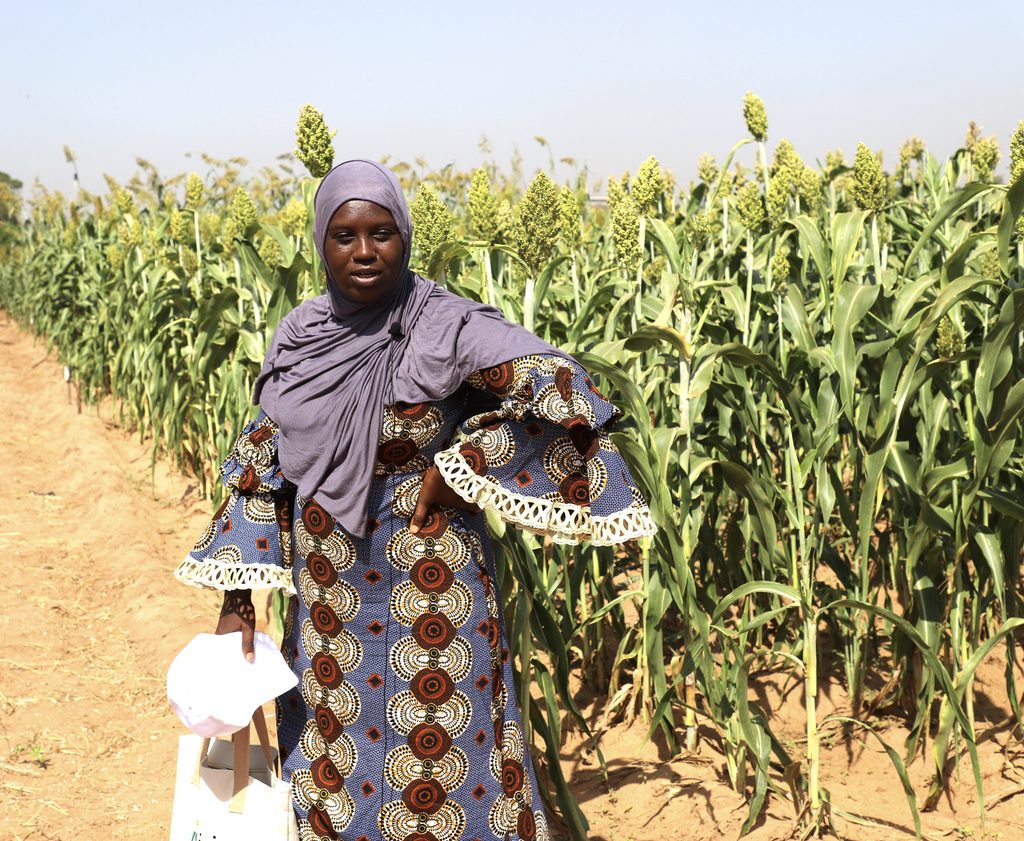
According to Dr. Bandaogo, strengthening farmers’ capacity to cope with climate shocks begins with strong partnerships at regional and national levels, combined with close collaboration with local implementation partners and farmer organizations. She explained that in its work across Burkina Faso, Mali, Northern Nigeria, and Niger, Soil Values relies on collaboration with multiple actors to better understand climate challenges and develop solutions adapted to local realities.
The program has also conducted baseline studies to identify the main climate risks affecting intervention areas and assess the agricultural technologies that can best respond to these challenges because understanding ecosystems and biophysical constraints is essential to design effective interventions.
However, these solutions must also be developed with communities to ensure they respond to farmers’ needs and apply existing local knowledge. “Community engagement is important to design and co-create agricultural and agro-technical interventions adapted to the climatic zones where we operate, while integrating local knowledge to define appropriate solutions,” Dr. Bandaogo explained.
From Research-Based Solutions to Farmers’ Capacity Building
Dr. Bandaogo also highlighted the importance of strengthening the capacity of local actors as a central element of climate adaptation. She described the cascade approach through which Soil Values supports extension services, lead farmers, and producers to be trained through peer-to-peer learning mechanisms. These efforts focus on promoting sustainable agricultural practices, such as integrated soil fertility management (ISFM), while improving farmers’ ability to make informed decisions in changing climatic conditions.
The program also builds on scientific research and technical knowledge developed with partners, including the identification of crop varieties adapted to specific climatic zones. Dr. Bandaogo explained how sharing these resources supports farmers with solutions that are better aligned with local production conditions. Soil Values is also developing support mechanisms to improve access to climate information and strengthen business models that facilitate the adoption of agricultural innovations.
Understanding El Niño and Its Implications for West African Agriculture
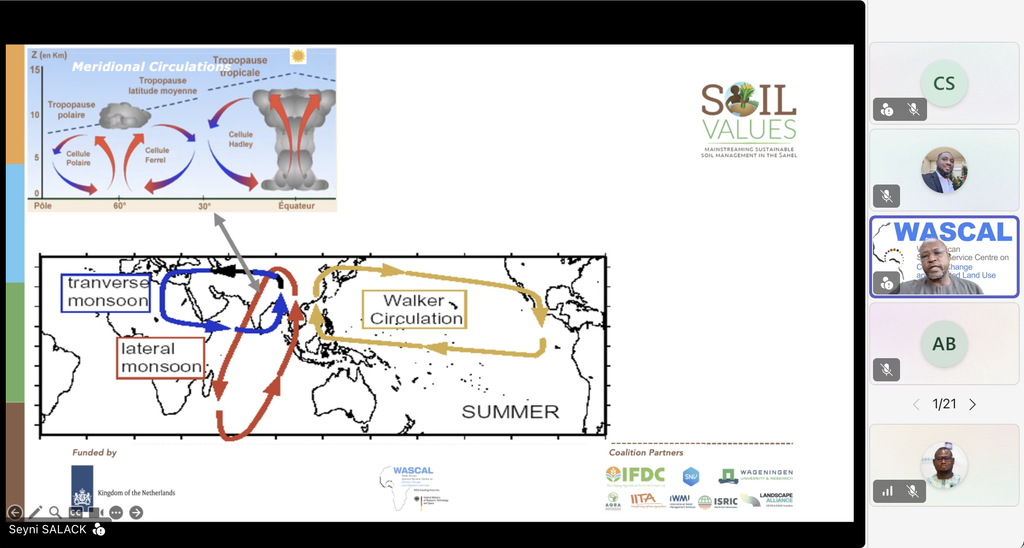
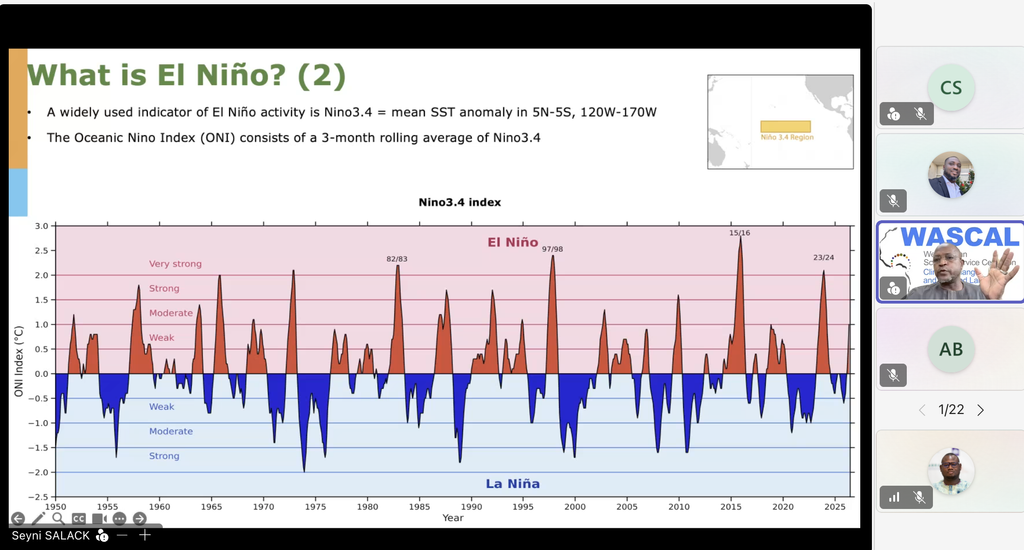
Partnerships and strategies for sharing knowledge and technologies can only go so far without acknowledging the role of weather patterns in agriculture. During the webinar, Dr. Salack provided insights into the climatic mechanisms that influence rainfall patterns across West Africa. “The winds that cross the Equator and come toward West Africa transport moisture. We cannot have rainfall in West Africa, particularly in the Sahel, if this moist air is not transported by the trade winds,” he explained. Agricultural systems in the region depend heavily on these atmospheric circulation processes.
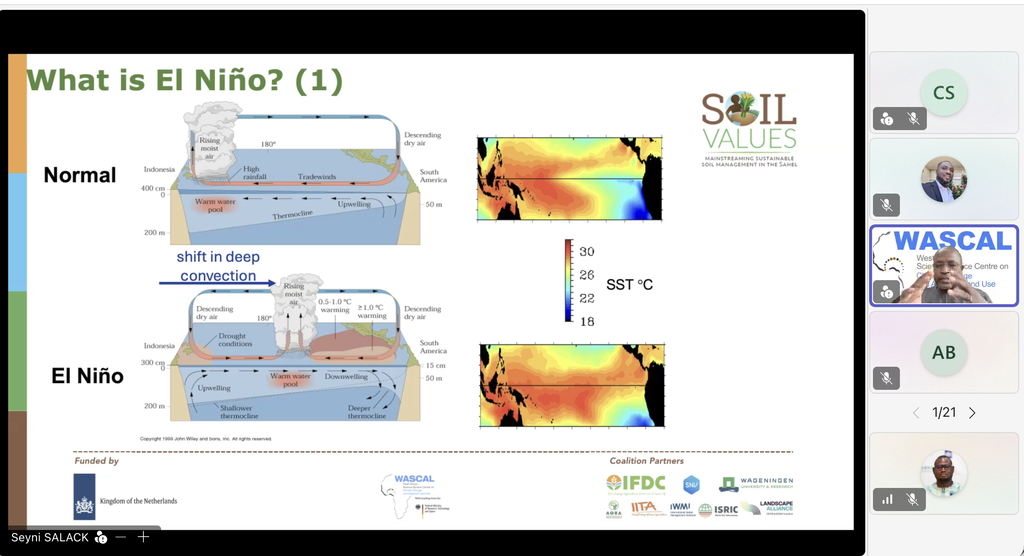
Changes in these processes – such as those that come with El Niño – can create situations where communities face multiple challenges at the same time. These may include drought periods, intense rainfall events, flooding, and strong winds. For farmers and pastoralists, these climate variations create additional uncertainty and pressures on already vulnerable production systems, underscoring the importance of strengthening preparedness mechanisms before extreme events occur.
Moving from Climate Response to Climate Preparedness
According to Dr. Salack, addressing climate shocks requires a systemic approach rather than responses focused only on immediate impacts. He emphasized the importance of developing contingency plans that include mechanisms to support communities before, during, and after climatic events. Preparedness measures can include access to climate information, availability of adapted crop varieties, food reserves, and agricultural risk management tools – most of which the Soil Values program is already working toward. The objective is to enable farmers to anticipate climate risks and reduce potential losses rather than responding only after damage has already occurred.
Insurance, Early Warning Systems, and the Role of Local Knowledge
The webinar explored specific ways for farmers to address climate events and strengthen their resilience. Dr. Salack discussed early warning systems and forecasts, noting that they strongly support anticipatory action before results of climate events become visible and concrete. Both speakers presented early warning and climate information as part of a broader package that combines weather information, extension, appropriate technologies, and guidance on what actions farmers should take.
Dr. Betemariam discussed the potential of index-based insurance approaches, which use climate indicators such as rainfall conditions to trigger early compensation when risks threaten agricultural production. Such mechanisms can help farmers take preventive action by, for example, securing livestock feed before losses occur or adjusting production decisions based on anticipated climate conditions.
Dr. Betemariam also noted, like Dr. Bandaogo, that effective adaptation requires combining scientific knowledge with the experiences of farming and pastoral communities. “We should not claim that all knowledge should come from science. There is tremendous local knowledge and traditional knowledge that needs to be combined with scientific approaches,” he declared.
Investing in Soils, Water Security, and Sustainable Resilience
The discussions concluded that long-term resilience depends on multiple strategies to empower farmers and pastoralists: improving advisory services and access to scientifically valid information, strengthening technologies such as early warning systems, expanding access to insurance, ensuring water security, incorporating local knowledge, and investing in sustainable natural resource management.
Participants determined that supportive policies, strong partnerships, innovation, and sustainable financing are essential conditions for enabling communities to adapt to climate change and El Niño-related events. For Dr. Betemariam, investments in soils and natural capital are particularly critical because they form the foundation of agricultural production, economies, and societies across Africa.
Both speakers emphasized that responsibility for the increased investments needed in these systems should be shared among governments, the private sector, and public-private partnerships. Investments are also necessary for bundled services that offer insurance and other support systems for preventing major losses due to climate shocks.
Through its collaboration with WASCAL, the Soil Values program is advancing an integrated approach that connects climate science, agricultural innovation, and community knowledge. The webinar demonstrated that preparing for El Niño and future climate shocks requires coordinated efforts among partners and stakeholders, locally grounded solutions, and long-term investments to strengthen food security and build resilient farming systems across West Africa and the Sahel.
Funded by the Dutch Directorate-General for International Cooperation (DGIS), the Soil Values program is being implemented over 10 years (2024-2033), led by the International Fertilizer Development Center (IFDC), in consortium with SNV and Wageningen University and Research (WUR), as well as knowledge partners such as AGRA, the Center for International Forestry Research and World Agroforestry (CIFOR-ICRAF), the International Institute of Tropical Agriculture (IITA), ISRIC – World Soil Information, and the International Water Management Institute (IWMI).