The next fertilizer crisis is inevitable.
Whether it becomes a food crisis depends on what we invest in now.
Contact Us Today
The global food system is entering a period of unusual vulnerability. Climate disruption is threatening harvests while wars are disrupting energy, fertilizer, and grain supplies. Together, these forces could reduce agricultural production, increase input costs, and push food prices higher, particularly in lower-income countries that depend heavily on imported food, fuel, and fertilizer.
A powerful El Niño is developing as the wider Middle East conflict and the Russia-Ukraine war continue to reshape global commodity markets. The warning signs are already visible, not only in food and energy markets, but also in fertilizer prices and trade flows.
El Niño Adds Pressure to Food Supplies
The World Food Programme (WFP) has warned that a strong El Niño could push nearly 49 million additional people into acute food insecurity by the end of 2027. El Niño can bring droughts, floods, heatwaves, and erratic rainfall, disrupting planting and reducing yields.
The concern is greater because farmers are already facing high energy and agricultural input costs. Reuters reports that the weather phenomenon could cause severe disruptions across Central America, Southern Africa, South America, and the Caribbean. Britain is also experiencing a poor cereal harvest following heat and drought.
There are, however, important buffers. Near-record global food inventories, technological advances, and the emergence of major agricultural exporters such as Brazil and Russia have strengthened the resilience of the global food system against a severe El Niño. The question is whether these buffers will be sufficient if climate disruption coincides with prolonged geopolitical and fertilizer market stress.
For emerging economies, poor harvests mean less food available domestically, greater dependence on imports, and pressure on already fragile currencies. Governments may have to increase food subsidies and import spending just as energy and fertilizer costs rise.
Fertilizer Markets Reflect Shifting Supply and Demand
The fertilizer market is already showing how uneven the global shock is. The latest Australian Fertilizer Corporation market update shows that, on a cost and freight (CFR) basis, international urea prices have weakened following India’s latest tender, with more than 1.3 million metric tons (mt) offered below $400/mt. Indicative urea prices are now around $390‑$420/mt CFR, while granular urea has also come under downward pressure.
Phosphate fertilizers remain comparatively expensive. Diammonium phosphate (DAP) prices were assessed at $930‑$935/mt CFR and monoammonium phosphate (MAP) at $850‑$860/mt CFR. Although prices have softened slightly, DAP prices in India remain about 40% above their level at the beginning of the year. Tight availability, Chinese export restrictions, logistical constraints, and high raw material costs continue to support phosphate prices.
Potash prices are broadly stable to soft, with muriate of potash (MOP) around $390-$403/mt CFR. Ammonia markets are diverging by region, with prices firming west of Suez as European gas prices rise but weakening east of Suez amid more abundant supply and weaker demand. The divergence highlights an important feature of the current fertilizer market: geopolitical and supply pressures are not affecting all nutrients or regions in the same way.
Physical fertilizer flows are also responding to changing market conditions. In June, the United States authorized the temporary suspension of certain anti-dumping and countervailing duties on phosphate fertilizer imports from Morocco, citing concerns over fertilizer availability and the need to secure adequate supplies for American agriculture.
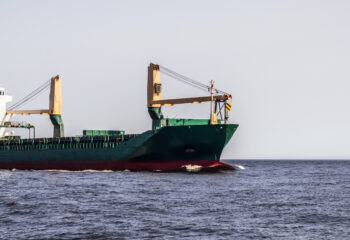
In August, OCP North America announced that a vessel carrying about 54,000 mt of triple superphosphate (TSP) from Morocco had arrived at the Port of New Orleans. The shipment will be distributed to U.S. farmers ahead of the fall application season, marking the return of Moroccan phosphate fertilizer to the U.S. market following the temporary countervailing duty relief.
The development illustrates how policy decisions, trade flows, and fertilizer availability are increasingly interconnected. It also shows why market monitoring needs to go beyond price movements – tracking actual shipments, supplier access, and changes in trade policy can provide early signals of whether fertilizer availability is tightening or improving.
The Strait of Hormuz nevertheless remains a major geopolitical risk. The latest market assessment notes that any renewed escalation could put upward pressure on European gas and ammonia prices, even while some Asian fertilizer markets continue to soften.
The Russia-Ukraine War Threatens Grain Security
The Russia-Ukraine war adds another major risk. Both countries are important players in global grain markets. Russia is the world’s largest wheat exporter, while Ukraine is a major exporter of wheat and maize.
The conflict in the Black Sea region has repeatedly disrupted exports, damaged ports, and increased shipping and insurance costs. Recent attacks have affected grain infrastructure on both sides, while Ukrainian grain shipments have fallen sharply, adding another layer of uncertainty for import-dependent countries.
When Black Sea grain becomes more difficult or expensive to export, import-dependent countries must find alternative suppliers. This situation increases competition for grain from North America, South America, Europe, and Australia, potentially pushing global prices higher.
The result is a food system with less room for error – a climate shock in one producing region could occur at the same time as a conflict-related disruption in another.
A Potential Food Inflation Cycle
The Food and Agriculture Organization of the United Nations (FAO) has warned that the world could be heading toward another wave of food inflation as geopolitical conflicts, energy market disruptions, and El Niño combine to raise costs and reduce crop yields. Higher oil prices, fertilizer shortages, fuel scarcity, and extreme weather could push food costs higher later in 2026 and into 2027.
The transmission from commodity markets to consumers may not be immediate. FAO Chief Economist Máximo Torero has warned that higher commodity prices can take roughly three to six months to feed through to food prices, meaning that relatively stable food prices today may not yet fully reflect the costs already building across agricultural supply chains.
This analysis does not necessarily indicate a simple shortage of food; the world can have enough food in aggregate while millions remain food insecure because they cannot afford it.
Food security depends on food availability, access, utilization, and stability, with affordability playing a critical role in whether households can actually access adequate food. Better and more frequent market and food security data are therefore essential for identifying where price shocks and conflicts are translating into hunger.
Countries Facing the Greatest Risk
The countries most exposed to food insecurity risk are those that depend simultaneously on imported fertilizer, fuel, and food.
Higher fertilizer prices can reduce farm production. Higher fuel costs make transportation more expensive. Higher grain prices increase import bills, while currency depreciation can make all these imports even more costly.
The effects then move through the chain. Farmers face higher input costs; transporters pay more for fuel; processors face higher energy and packaging costs; governments struggle with larger import bills and subsidies; and consumers ultimately pay more for staple foods.
Each shock may be manageable individually, but their combination is much harder to absorb.
Building Resilience
The current crisis shows that food security is not simply an agricultural issue. It also involves energy, geopolitics, shipping, and climate.
Governments need to diversify fertilizer supplies, strengthen domestic and regional food production, maintain strategic reserves, protect trade routes, and invest in climate-resilient agriculture. They also need timely fertilizer market and food market intelligence to anticipate price movements, identify emerging supply risks, and adjust policies before shocks reach farmers and consumers.
The risk facing the world in 2026 and 2027 is a prolonged period in which food becomes more expensive and potentially more difficult to produce, transport, and buy.
The consequences will fall hardest on economically strained households, which spend a larger share of their income on food and are more vulnerable to increases in food, energy, and transport costs. They may be forced to reduce food consumption or shift toward cheaper, less nutritious foods as prices rise.
The lesson is clear: food security depends on more than producing enough food; it depends on keeping the systems that produce, transport, and finance food functioning when the world is under stress.
With a strong El Niño developing, the wider Middle East conflict creating uncertainty around energy and fertilizer trade, and the Russia-Ukraine war continuing to affect Black Sea markets, governments have a narrowing window to strengthen those systems before today’s market pressures become tomorrow’s food security crisis.
Disclaimer
This article is based on information from publicly available sources and market intelligence. While every effort has been made to verify the accuracy of the information, the authors and publishers accept no liability for any loss, damage, or disruption caused by errors, omissions, or the use of this information.
Sources