For the past three years, farmers from the Bare Ne Padza Yatu Association in Rua Domingos, Mozambique, have been participating in activities supported by the Triple Resilience (3R) program. During this period, farmers have gained knowledge of agricultural practices that were previously unfamiliar to them while also developing stronger saving practices within their association and households.
For Tomé Armando André, leader of the association, the changes taking place among farmers in his community are increasingly visible not only in their fields, but also in the way families are saving, investing, and planning.
“When we see our production increase and are able to invest in our families, we realize that knowledge makes all the difference.”
Tomé Armando André
One of the changes Tomé highlighted is the introduction of composting, learning to transform locally available organic materials into nutrient-rich fertilizer that can improve soil health and support crop production. Before 3R-supported training, farmers in the association were not familiar with the practice. They also learned about intercropping, allowing farmers to grow different crops together on the same piece of land. For example, farmers can grow maize alongside banana plants and pigeon peas, making it possible to diversify production within the same farming area.
These practices have given farmers effective strategies to better use their land and manage their production. “We have learned new ways of farming, and today we are seeing the results,” Tomé said.
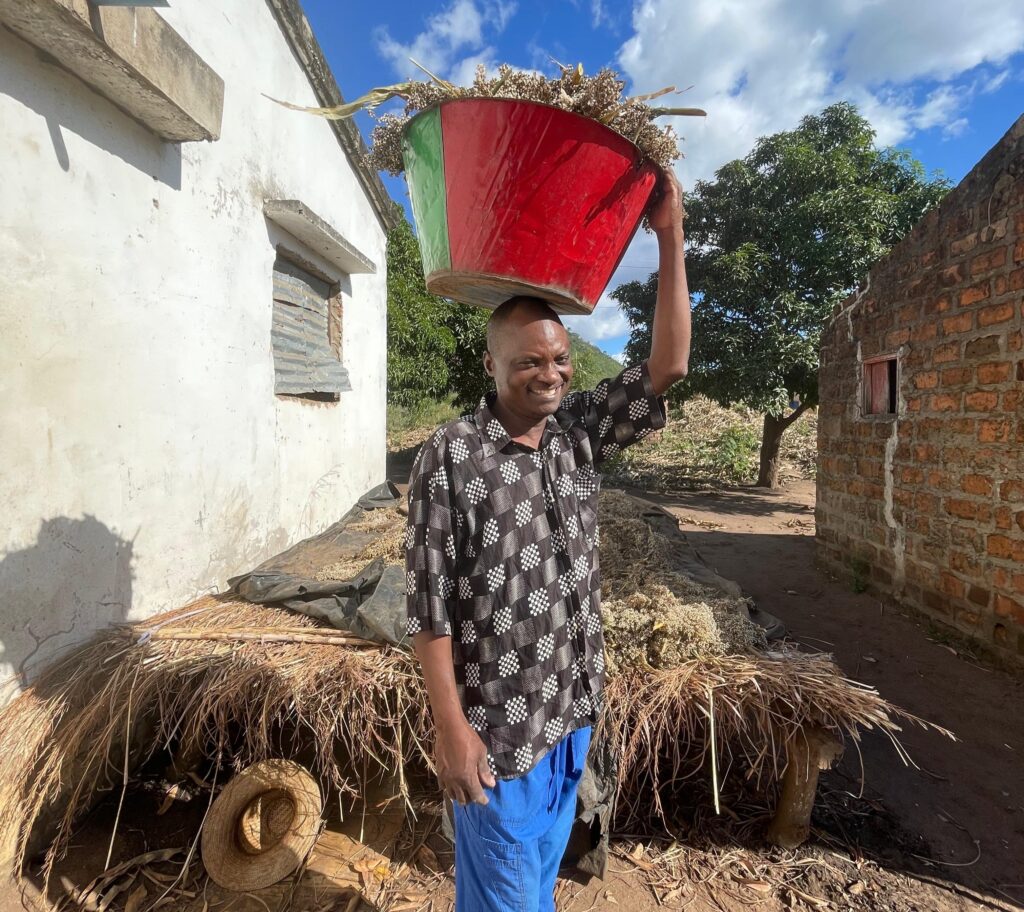
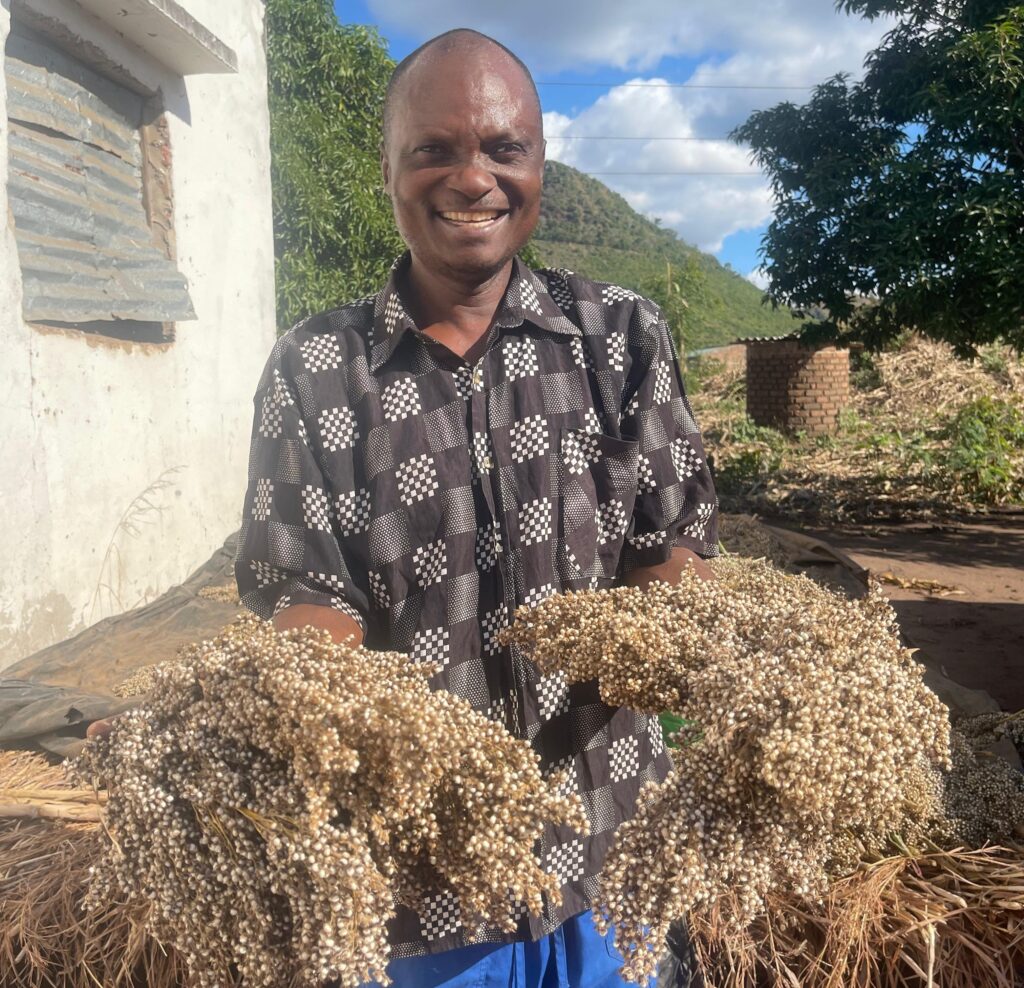
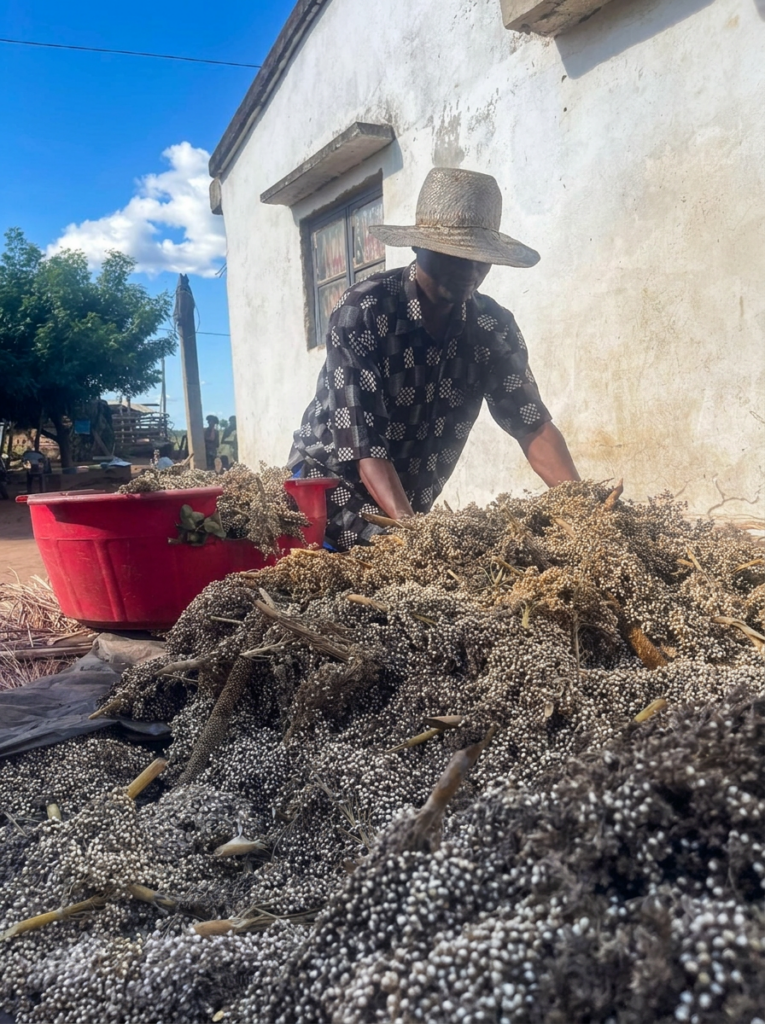
Agricultural production has also created new financial opportunities for Tomé after he accessed improved sorghum seed provided through the 3R program. In 2025, he harvested 12 bags of sorghum and sold each bag for around 1,200 meticals (approximately U.S. $18.63), generating approximately 14,400 meticals (approximately U.S. $223.39).
Tomé’s experience has encouraged him to continue sorghum production. As of 2026, he is in the harvesting period and is optimistic that his production will surpass the previous year’s results, bringing more income and allowing further investment. “When we see our production increase and are able to invest in our families, we realize that knowledge makes all the difference,” he remarked.
The benefits of the 3R program are also extending into the association’s finances. Alongside agricultural training and support for input access, 3R has helped strengthen the association’s community savings practice, giving members an opportunity to save collectively and use their resources to meet important household needs and make investments.
Within one year, the association’s collective savings increased from 75,000 meticals (approximately U.S. $1,163.51) in 2024 to 120,000 meticals (approximately U.S. $1,861.62) by 2025, demonstrating the growing role of saving as part of the group’s activities.
The value of this progress is best understood through what saving has enabled farmers to do personally. For example, Tomé noted, “3R taught us how to save. In my case, I was able to buy chairs for my house, continue with construction work, and support my children’s education.” Saving has therefore provided another way to convert the returns from farming into tangible improvements for his household.
Tomé’s experience reflects the broader objectives of the 3R program, which aims to strengthen social, climate, and economic resilience among vulnerable rural communities in Mozambique.
By supporting improved agricultural practices, access to productive inputs, livelihood diversification, and community savings mechanisms, the program is helping farmers strengthen both their production and their ability to invest in their farming and families.
As the 2026 harvest continues, Tomé remains hopeful that results will continue to improve. Looking back on the support he has received over the past three years, he recognized the role of 3R and its partners in creating these opportunities. He thanked them because, as he put it, “Without production, there is no life.”
In Rua Domingos, the story of the Bare Ne Padza Yatu Association and its farmers is ultimately a story of how knowledge can translate into practical change. Farmers who were once unfamiliar with composting and intercropping are applying new practices in their fields.
Through sorghum production, farmers are creating additional opportunities to generate income and invest in their households. The association significantly improved its savings between 2024 and 2025, further supporting its members in their own finances.
These meaningful changes – better-equipped farmers, a stronger savings culture, improved household investments – have brought farmers a stronger sense of confidence about what lies ahead. “Today, we feel better prepared for the future,” Tomé concluded.
The Triple Resilience (3R) program (2023-2027) aims to build and strengthen social, climate, and economic resilience in Mozambique by accelerating the shift from humanitarian aid to long-term sustainable development. 3R is funded by the Embassy of Sweden and is implemented by IFDC in partnership with Norwegian People’s Aid (NPA), Associação Kwaedza Simukai Manica (AKSM), LevasFlor Foundation, União Provincial Dos Camponeses De Manica (UCAMA), União Provincial de Camponeses de Sofala (UPCS), and the International Economic Cooperation Institute (ICEI).