Building resilient food systems in Africa requires protecting and improving the soils that sustain agricultural productivity, livelihoods, and climate resilience. Yet multiple challenges still prevent proven solutions from reaching farmers at scale.
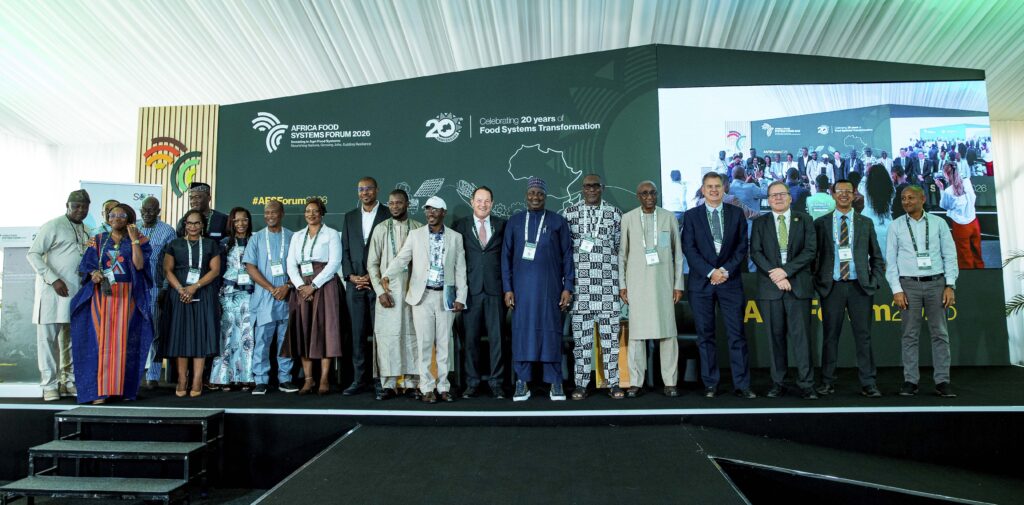
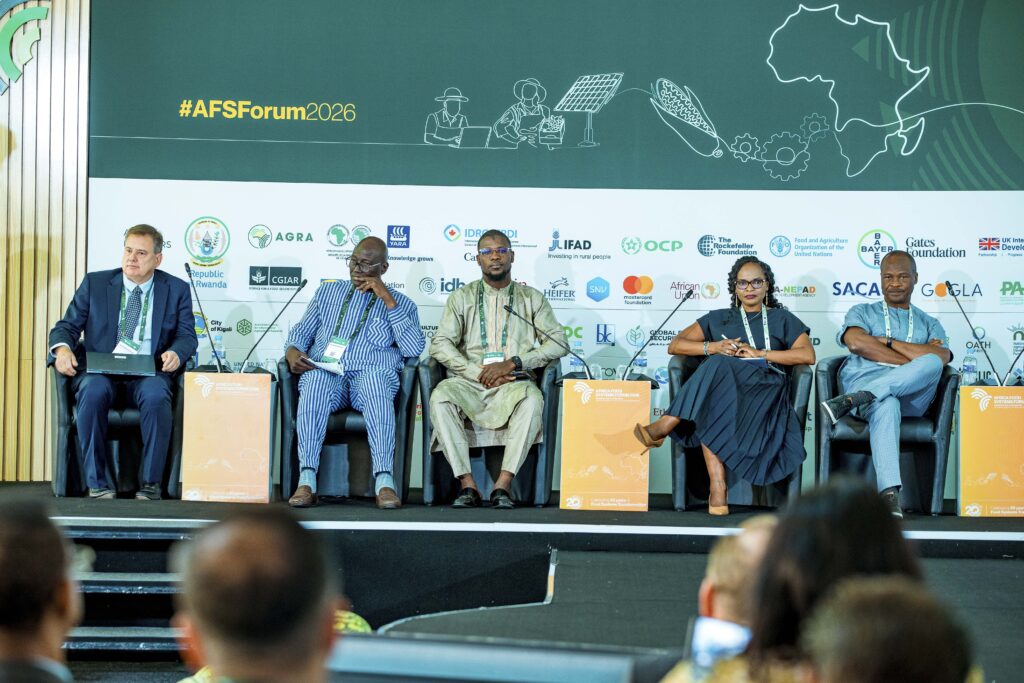
This is why on September 3 at the Africa Food Systems (AFS) Forum 2026 in Kigali, Rwanda, the Soil Values program held a side event entitled “Investing Below Ground: Growing Africa from the Soil Up,” bringing together the public and private sectors, farmers, and development stakeholders to address moving from soil knowledge and innovation to coordinated, farmer-centered action at scale.
During the side event, Soil Values examined what is needed to strengthen soil systems across West Africa, the Sahel, and beyond. Discussions focused on interconnected priorities: creating an enabling environment for resilient farmers and soil systems, enhancing partnerships and private sector involvement, and strengthening access to financing – all of which better enable farmers to adopt sustainable soil management practices and technologies.
“We need to really place farmers and their organizations at the heart of the processes.”
Ousseini Ouédraogo, Executive Secretary of the Network of Farmer Organizations and Agricultural Producers of West Africa (ROPPA)
From Soil Data to Improved Decisions for Farmers
One of the clearest priorities emerging from the discussion was the need to ensure that soil knowledge translates into practical decisions and benefits for farmers. While significant progress has been made in generating soil data through integrated soil fertility management (ISFM) training and in developing technical solutions, the real measure of success lies in whether farmers can use that information to improve productivity, strengthen resilience, and manage their soils more effectively.
A strong example of successful data use can be found in the areas of Nigeria where Soil Values operates. “When you go to any cluster of farming community, you will see farmers actively accessing whatever we have been able to generate as data or information coming from the Soil Values program,” said Dr. Aliyu Sabi Abdullahi, Minister of State for Agriculture and Food Security in Nigeria.
This success may be replicated in soil health initiatives across Africa on the principle that generating data is only the first step; sustainable impact depends on ensuring that knowledge is accessible, relevant, and translated into actionable recommendations that farmers can apply in their fields.
This farmer-level application is a vital element in the Soil Values approach. By connecting soil intelligence, locally adapted solutions, and field-level implementation, the program seeks to ensure that investments in soil health produce measurable improvements in agricultural productivity and resilience, supporting an enabling environment for farmers and soil health.
Partnerships as a Driver of Transformation
A recurring message throughout the discussions was that no single institution can address soil degradation alone. Building resilient soil systems requires coordinated action among farmers, producer organizations, governments, research institutions, development partners, and the private sector. Soil Values is well-positioned to support this need as partnerships are central to how the program operates.
Soil Values Program Director Dr. Alain Sy Traoré stated, “The trademark of… Soil Values’ purpose is partnership,” explaining that the approach begins with those closest to implementation and progressively connects them with wider institutions and decision-makers.
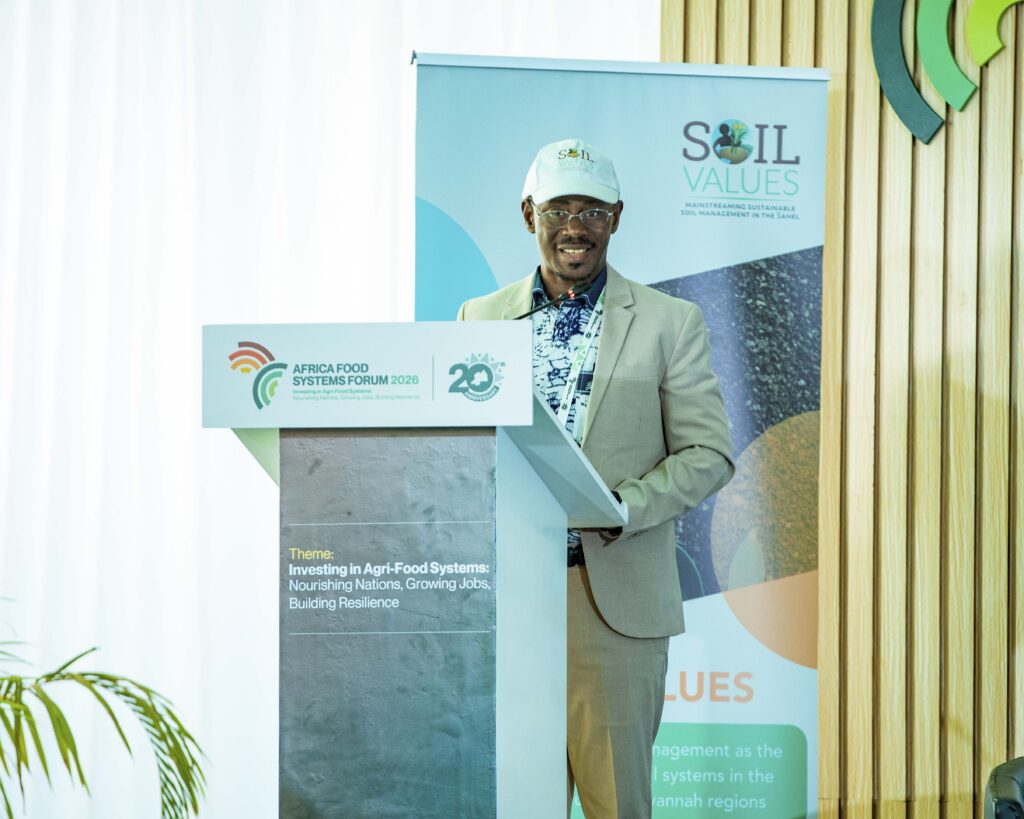
Specifically, the program starts from the farm, working outward with communities, cooperatives, other farmers and producers, and local decision-makers, before finally extending to national partnerships, research institutions, and global actors.
This multi-level partnership model is designed to ensure that local priorities inform national strategies while creating stronger links between research, policy, investment, and implementation.
Ousseini Ouédraogo, Executive Secretary of the Network of Farmer Organizations and Agricultural Producers of West Africa (ROPPA), highlighted Soil Values’ ability to support implementation and scaling through partnerships and reiterated that farmers should remain the prime focus of this strategy: “We need to really place farmers and their organizations at the heart of the processes.”
Discussions of the side event also underscored the importance of expanding private sector engagement, which Dr. Traoré noted as a key priority action. Mobilizing agribusinesses, input suppliers, financial institutions, and service providers will be essential for accelerating adoption and ensuring the long-term sustainability of soil health investments.
Financing the Transition from Innovation to Scale
Participants agreed that many of the technical solutions needed to improve soil health already exist. The challenge is ensuring that these solutions can be financed, delivered, and adopted at the scale required to achieve meaningful transformation. Marie Claire Kalihangabo, Coordinator of the Africa Fertilizer Financing Mechanism (AFFM) at the Arican Development Bank (AfDB), identified financing as one of the major bottlenecks standing between available solutions and widespread adoption.
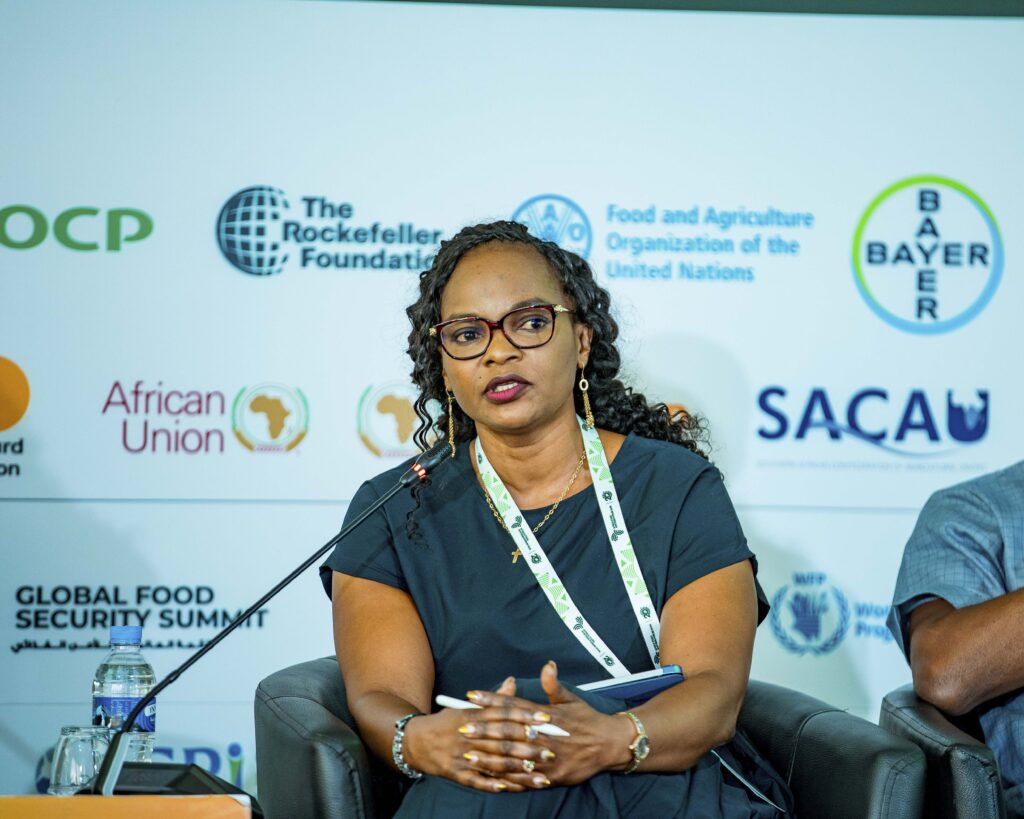
“You may have knowledge, you may have technology, but if you don’t have financing to implement those technologies and bring them to scale, bring them down to the farmer, it’s going to be problematic,” Kalihangabo explained.
Kalihangabo’s point reinforced a broader finding from the discussions: investing in soil health must extend beyond research and technology development to include the financial mechanisms, delivery systems, partnerships, and market conditions required for adoption.
Advancing a Regional Vision for Soil Health
Soil Values is applying this integrated approach across Burkina Faso, Mali, Niger, and Nigeria, where the 10-year program is working to combat land degradation and restore soil fertility. The program is generating lessons and partnership models that can help inform more expansive efforts to strengthen soil health across the region.
Building on partnerships and lessons from implementation, the approach has potential to expand across West Africa beyond Soil Values core implementing countries.
“That’s why I’m very pleased to see the delegation of Senegal, because the ambition is to grow the approach in West Africa, looking at Senegal, Côte d’Ivoire, Ghana, [and] Benin…” said Henk van Duijn, President and CEO of IFDC.
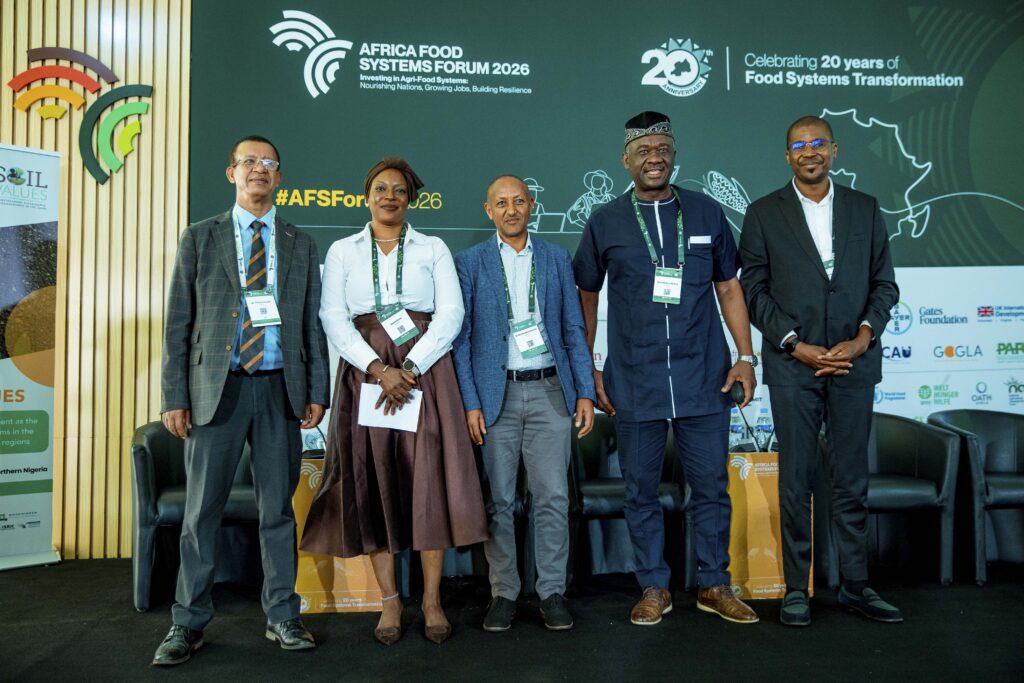
These regional soil health aspirations align with a global food systems agenda. Thijs Woudstra, Head of International Food and Nutrition Security at the Ministry of Foreign Affairs of the Netherlands, emphasized this point: “Soil is part and parcel of food systems transformation.”
For Soil Values, investing below ground therefore means improving soil fertility and strengthening the foundations on which productivity, food security, climate resilience, and farmer livelihoods depend.
The discussions in Kigali reinforced a clear vision for moving forward: put farmers at the center, connect local action to national and global partnerships, unlock financing, engage the private sector, and strengthen the delivery of soil health solutions at scale.
By advancing this partnership-driven approach, Soil Values is helping turn soil health as a technical priority into a broader foundation for resilient food systems across Africa.

Funded by the Dutch Directorate-General for International Cooperation (DGIS), the Soil Values program is being implemented over 10 years (2024-2033), led by the International Fertilizer Development Center (IFDC), in consortium with SNV and Wageningen University and Research (WUR), as well as knowledge partners such as AGRA, the Landscape Alliance (CIFOR-ICRAF), the International Institute of Tropical Agriculture (IITA), ISRIC – World Soil Information, and the International Water Management Institute (IWMI).