Read the Full Paper
Regenerative agriculture is increasingly recognized as an important pathway toward healthier soils, more resilient farming systems, and greater environmental sustainability. However, achieving meaningful transformation requires moving beyond a narrow focus on individual farm practices.
A new IFDC paper, Regenerative Agriculture Beyond the Farm: Why Food Systems Need a New Approach, presents a practical, science-based, and systems-oriented perspective that connects soil health with farmer prosperity, productivity, resilience, and sustainable food systems.
The paper argues that regenerative agriculture must begin long before inputs reach the farm. Advancing more sustainable fertilizer production, reducing emissions across supply chains, developing enhanced efficiency fertilizers, supporting circular nutrient systems, and improving logistics can all contribute to more sustainable agricultural systems.
At farm level, farmers need practical solutions that improve productivity while restoring and maintaining soil health. IFDC’s 8R framework—Right source, Right rate, Right time, Right place, Recycle, Rebuild, Record, and Resilient—provides a foundation for integrated nutrient management, supported by tools such as soil testing, precision agriculture, digital advisory services, and context-specific recommendations.
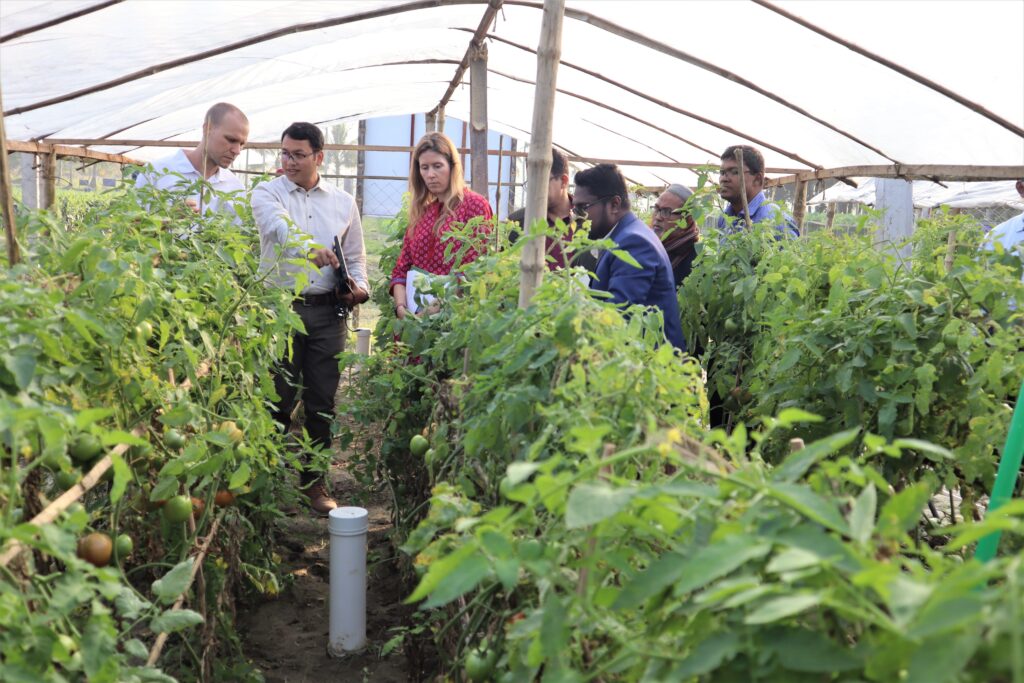
The paper also emphasizes that regenerative agriculture must continue beyond the farm. Farmers need access to functioning markets, finance, technology, advisory services, and supportive policies to adopt and sustain the use of improved practices over time. Strong public-private partnerships are also critical to connecting governments, research institutions, private sector actors, development partners, and farming communities around practical solutions that can be taken to scale.
The integrated model aligns directly with IFDC’s new Strategy 2026–2035 priorities, not only focusing on impact at farm level but also the wider systems that determine whether farmers can adopt and sustain regenerative practices.
Ultimately, the paper calls for a broader understanding of what regenerative agriculture can achieve. Rather than treating regeneration as a single set of practices or an isolated farm-level intervention, IFDC views it as a transformation that spans fertilizer innovation, farm management, markets, policy, technology, and partnerships.
By connecting these elements, regenerative agriculture can help address the interconnected challenges of feeding a growing population, restoring degraded natural resources, and building resilience to climate change while supporting farmers and strengthening food systems for the future.