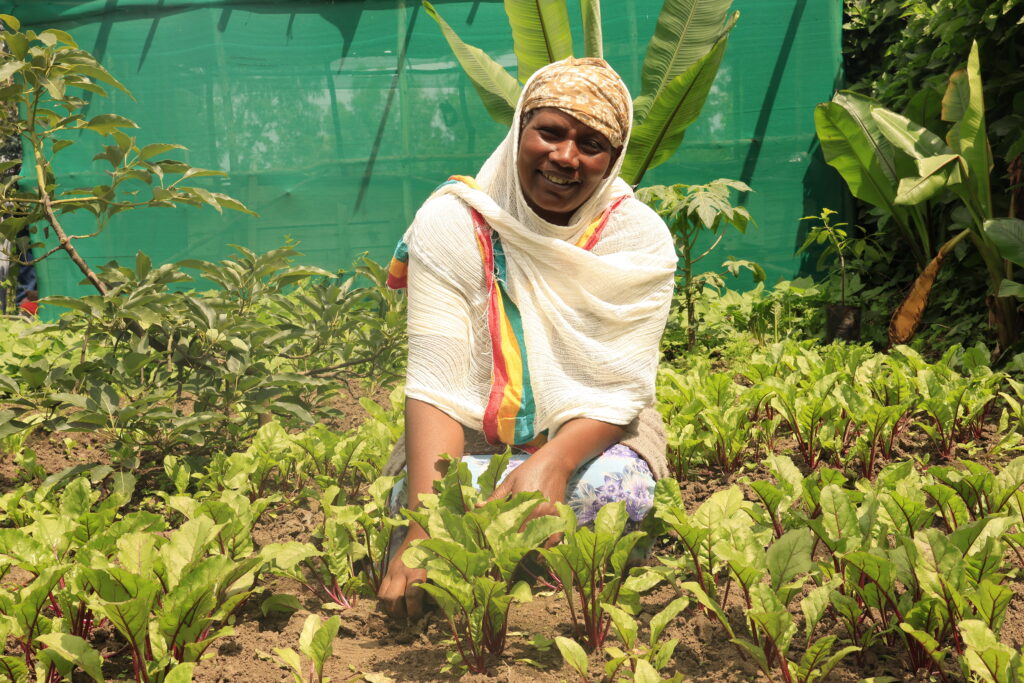
For years, Kokobe Eshetu, a 38-year-old mother of one from Ethiopia’s Tiyo District, struggled to make her farm productive. Severe soil acidity and declining soil fertility reduced crop performance and limited her income, while a lack of knowledge about soil management left her dependent on chemical fertilizers. These challenges affected both her farming activities and her family’s livelihood.
Things began to change when she joined the Transform Soil Fertility Management in Ethiopia (TRANSFORM) project and participated in training on Participatory Integrated Planning (PIP) and vermicompost production. Through the training, she developed a clear vision for improving her farm, increasing her income, and creating a better future for her family.
“I immediately applied what I learned on my farm and witnessed remarkable improvements in both crop performance and soil health.”
Kokobe Eshetu
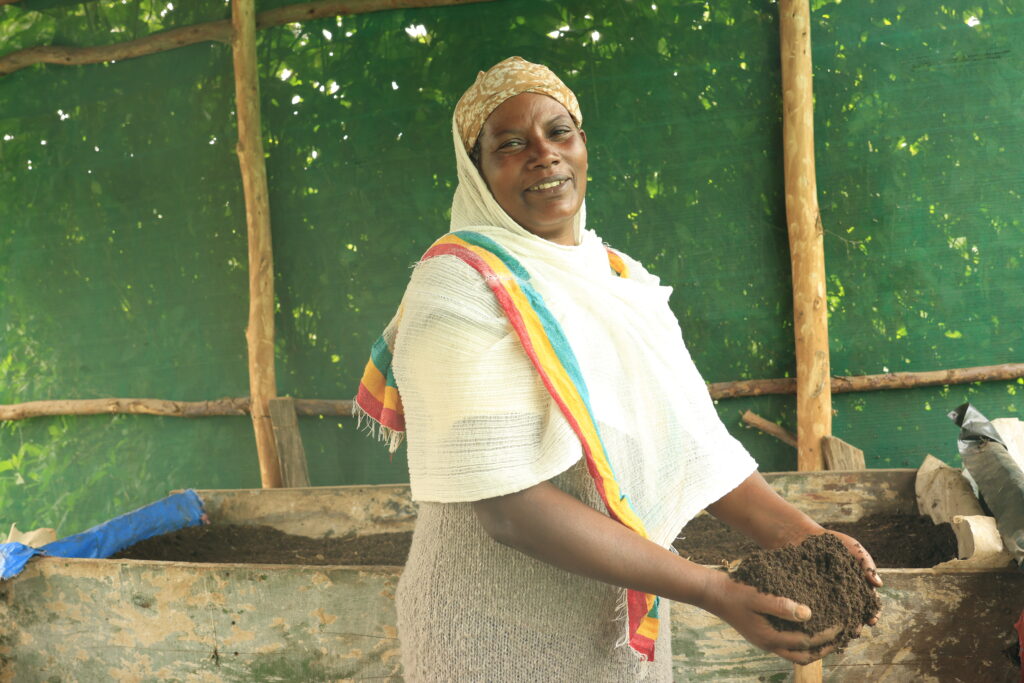
Motivated by the results, Kokobe ventured into vermicompost production as both a soil-health solution and an income-generating enterprise. She produced 5,600 kilograms of vermicompost, applying 800 kilograms on her own farm and selling the remaining 4,800 kilograms to other farmers in her community to earn 72,000 Ethiopian birr (ETB), or approximately U.S. $435.40.
The organic fertilizer significantly improved her vegetable productivity, strengthened household food security, and created an additional source of income.
Kokobe’s income, including both vermicompost and vegetable sales, has increased dramatically compared to the previous year. She saves for her daughter’s education and contributes to two village savings and loan association (VSLA) accounts, demonstrating the significant impact of improved soil fertility management and diversified livelihood activities.
Beyond improving her farm, the enterprise has increased Kokobe’s confidence and economic independence. What began as a response to soil fertility challenges has evolved into a business opportunity that contributes to her family’s well-being and demonstrates the potential of sustainable agricultural practices.
Encouraged by the growing demand for organic fertilizer and the positive results she has achieved, Kokobe plans to expand her vermicompost enterprise in the coming years. As a woman entrepreneur, she sees the business as a pathway to greater economic empowerment and hopes her experience will inspire other women farmers to embrace innovative and sustainable agricultural practices.
Kokobe remarked, “Most importantly, I want to become a role model for other women in my community by demonstrating that vermicompost and vegetable production can be successfully managed at the household level, providing a reliable source of additional income and livelihood opportunities.”
Today, Kokobe’s journey illustrates how TRANSFORM is helping women farmers overcome barriers, build resilient livelihoods, and turn their vision for a better future into reality.
The TRANSFORM project (2025-2028) is funded by the Embassy of the Kingdom of the Netherlands and the European Union and is implemented by a consortium comprising the International Fertilizer Development Center (IFDC), Wageningen University & Research/Wageningen Environmental Research, ISRIC – World Soil information, Environment and Coffee Forest Forum (ECFF), and SOS Sahel Ethiopia.

TRANSFORM is made possible by the support from the Dutch Ministry of Foreign Affairs.