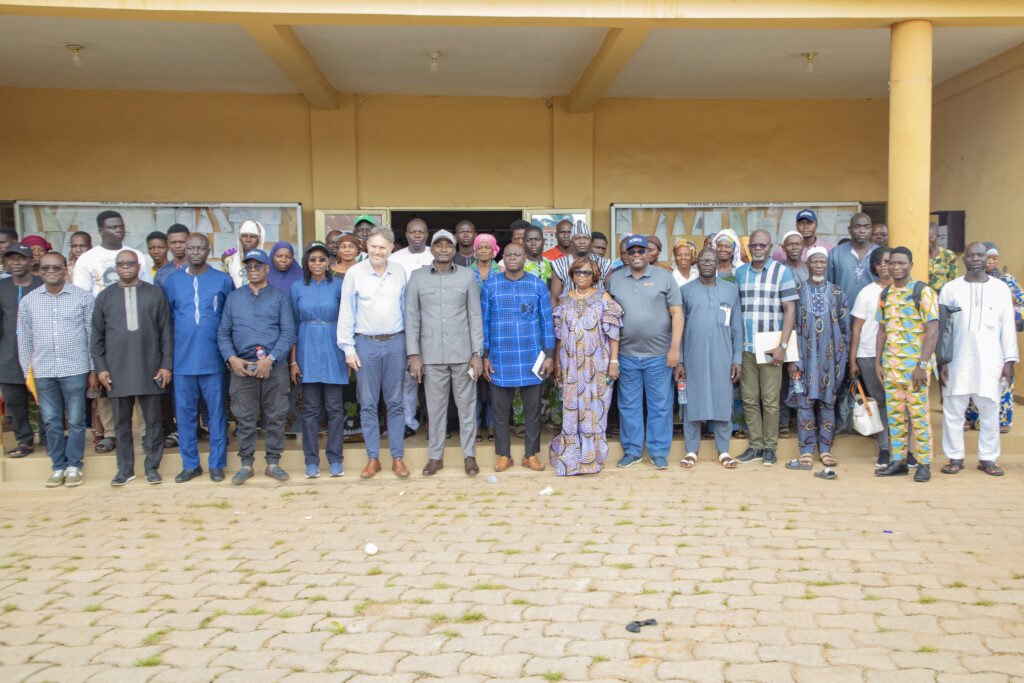
On September 25, his Excellency Joris Jurriëns, Ambassador of the Kingdom of the Netherlands to Benin, made a field visit to the department of Donga to meet with stakeholders and participants in the Communal Approach to the Agricultural Market in Benin – Phase 3 (ACMA3) program, implemented by the International Fertilizer Development Center (IFDC) and funded by the Embassy of the Kingdom of the Netherlands in Benin.
Accompanied by the Embassy’s Food Security and Nutrition Expert Clément Edah and the program’s technical management team, Jurriëns visited two municipalities during his stay to gain a concrete understanding of activity progress and the challenges faced by ACMA3 participants. “It’s important to understand your realities and your challenges… It’s so important to come and meet you,” Jurriëns told participants.
“I am very proud to be here and to witness the ACMA3 program’s success on the ground.”
his Excellency Joris Jurriëns, Ambassador of the Kingdom of the Netherlands to Benin
Bassila Commune: The Bodi Hydro-Agricultural Site
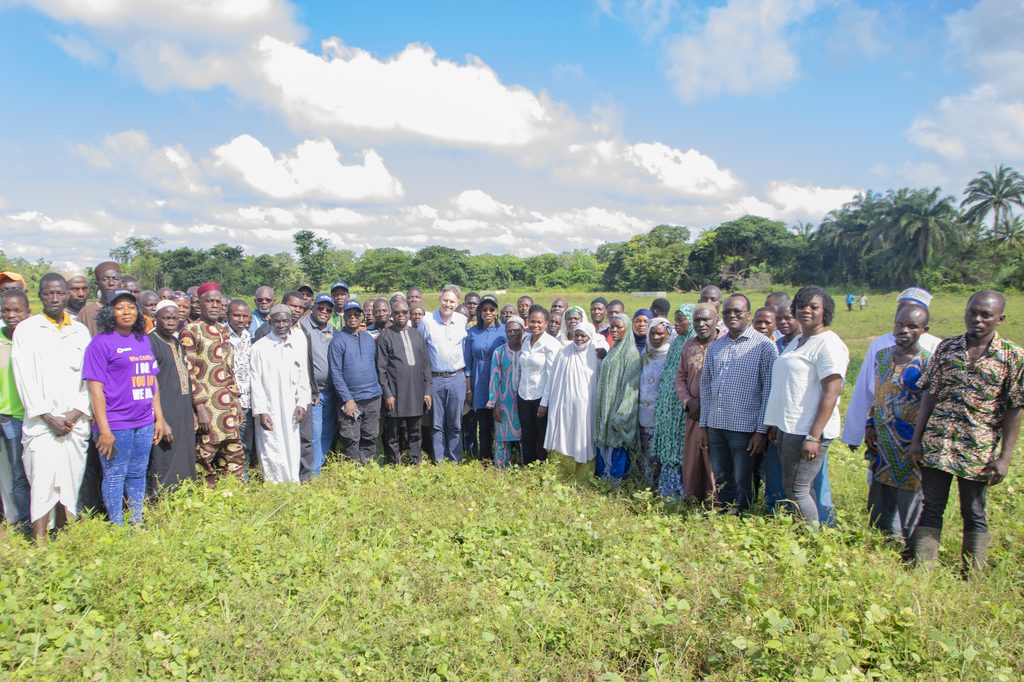
In the village of Bodi, Bassila Commune, the ambassador visited an ACMA3-supported hydro-agricultural project to assess its progress and the level of commitment from stakeholders. Currently under construction at the Suru de Bodi Cooperative, the project will consist of commercial infrastructure and equipment dedicated to vegetable production. ACMA3 Chief of Party Ousmane Ouedraogo and his team presented the status of the work at the site, which is divided into eight zones. Jurriëns saw that at the center of each zone is a square, above-ground tank with an average internal storage capacity of 16,000 liters. Plans are in place to eventually install a drip irrigation system for the crops, utilizing a network of valves.
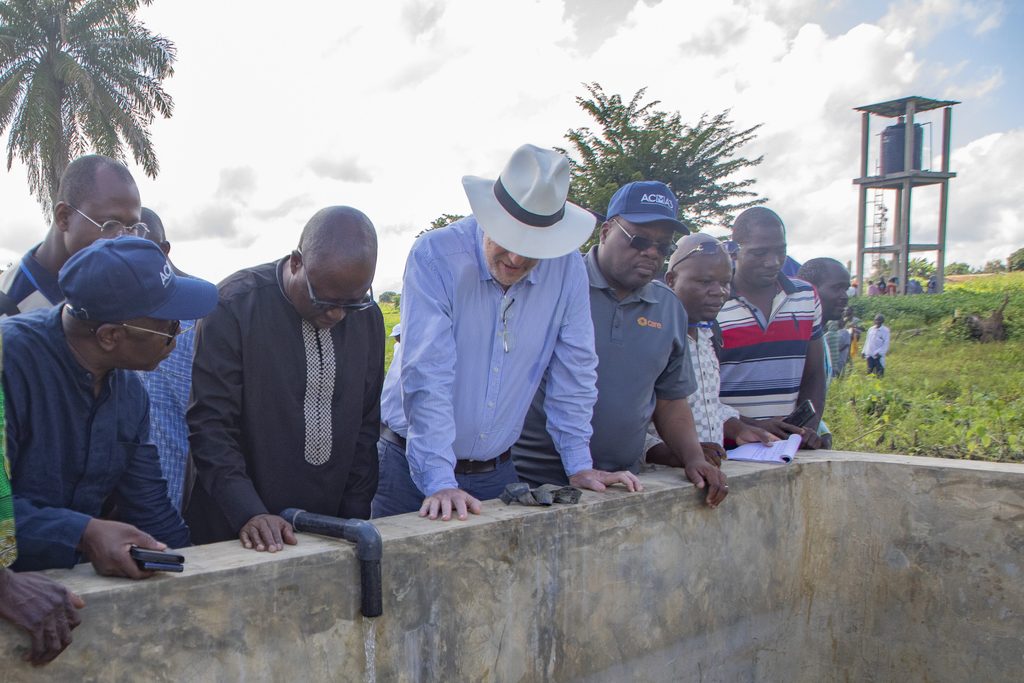
Additionally, a borehole with a minimum operating flow rate of 5,000 liters per hour has been drilled and equipped with a pump of the same capacity, and a concrete water tower has been erected at a high point on the site, topped by a 5,000-liter storage tank. The pump is powered by a dedicated elevated solar array.
Jurriëns took a particular interest in the mechanisms for producing and marketing vegetable products, commending the momentum already generated by the ACMA3 program’s implementation team. The Suru de Bodi Cooperative has also benefited from other forms of support provided by the program, such as capacity building in production techniques, governance, networking, coaching, and food and nutrition education.
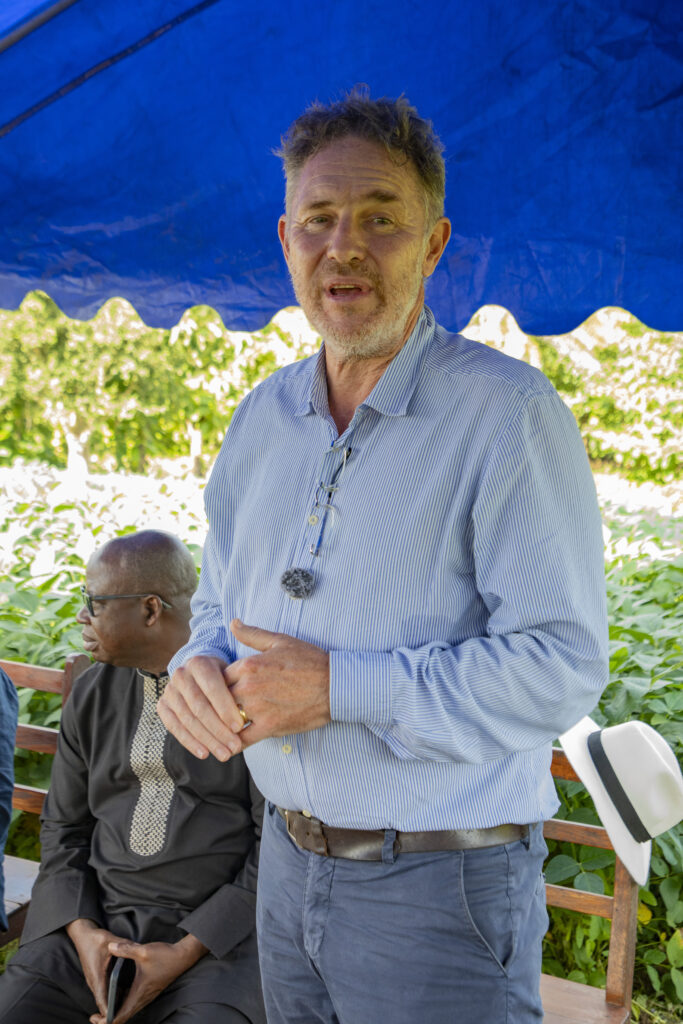
“Thanks to this hydro-agricultural infrastructure, you will be able to produce at any time, ensure food security throughout the year, and benefit from better prices,” Jurriëns noted, adding his appreciation for the strong presence of women in the cooperative.
The municipality’s mayor and President of the Donga Intermunicipal Consultative Body Zackari Tassou then applauded the support provided by the Kingdom of the Netherlands through the ACMA3 program.
SIBI Aménagement, an ACMA3 partner organization in the development of the Bodi hydro-agricultural site, was also present. The company reaffirmed its commitment to supporting ACMA3 and local stakeholders until the completion of the project – and even in the management of the infrastructure – to ensure sustainability.
Ouaké Commune: The Challenges of Agricultural Marketing
While Jurriëns observed progress toward challenges in vegetable production in Bassila Commune, his second stop, Ouaké Commune, highlighted challenges associated with marketing agricultural products.
Following a welcome address by Mayor Maharane Zacari, Esso-Sam Corn Producers’ Cooperative President Aziz Ouorou and Donga Departmental Producers’ Union President Ewana Adamou outlined the challenges they face in selling their crops. Support from the ACMA3 program has generated strong enthusiasm among producers, resulting in a notable increase in agricultural production.
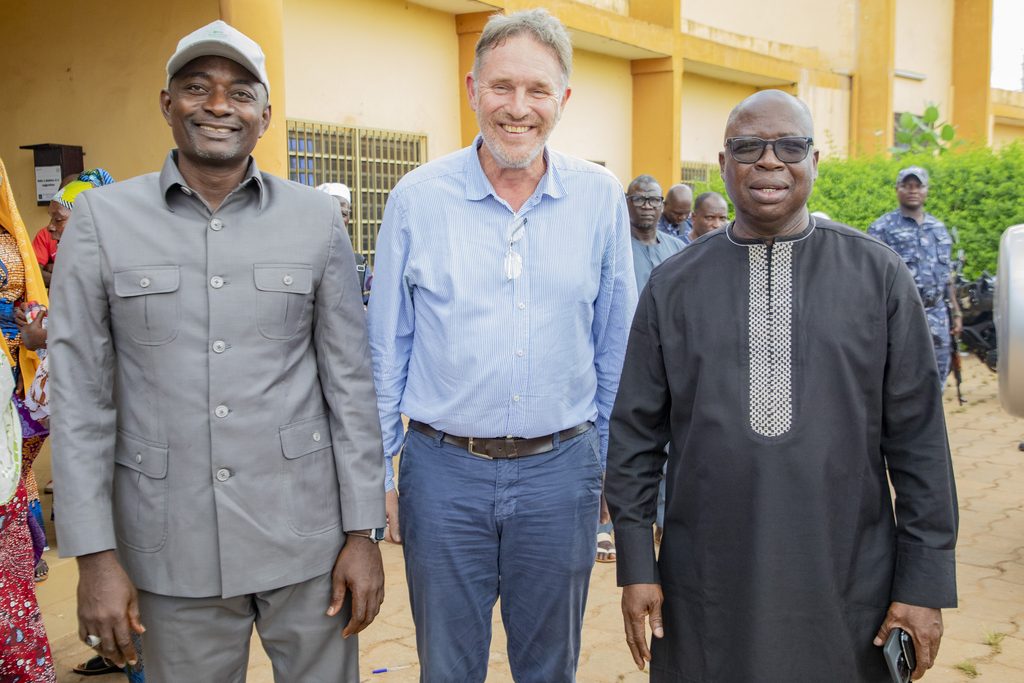
However, this momentum has been hampered by significant unsold inventory, leading to a concerning rise in unpaid debts to decentralized financial institutions. While ACMA3 is supporting collaboration with decentralized financial systems, capacity building in collective marketing systems, and training in governance and professionalization of agricultural professional organizations, along with other strategies, challenges persist.
Faced with this situation, Jurriëns expressed genuine concern and promised to advocate with the relevant authorities to help find sustainable solutions to these challenges.
A Partnership Growing Stronger on the Ground
Jurriëns’s visit illustrates the strength of the partnership between the Kingdom of the Netherlands and Benin, underpinned by long-standing cooperation in several priority areas, notably food security and water. For local authorities and participants of the ACMA3 program, this support serves as a real catalyst for change: opportunities for young people and women, addressing poverty, better-nourished families, and sustainable economic activity that curbs rural depopulation.
“I am very proud to be here and to witness the ACMA3 program’s success on the ground,” Jurriëns concluded.
The Communal Approach to the Agricultural Market in Benin (ACMA) program, financed by the Embassy of the Netherlands in Benin since 2013, is implemented by the International Fertilizer Development Center (IFDC) in a consortium with CARE International Benin and KIT.