After losing his trade business in Ethiopia, Awol Adem left Ethiopia for Dubai in 2018 in search of better economic opportunities. Contrary to his expectation, he was exposed to difficult working conditions, low pay, and what he described as a loss of dignity.
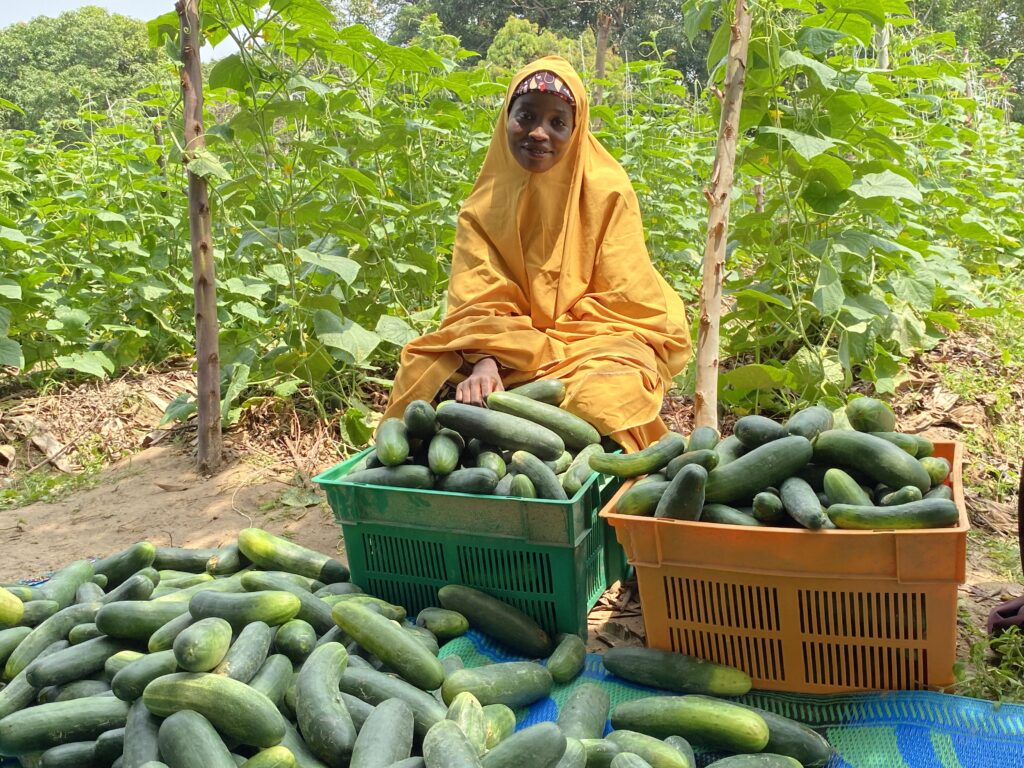
Awol recalled, “I experienced the difficult side of migration. When I returned to Ethiopia, I was determined to work in my own country and change my life.” His family had their doubts when he told them he planned on farming, but he persisted, investing in his farm and planting mango trees. Today, his farm serves as an example for other farmers, while a new income-generating opportunity – vermicompost production – is developing alongside it thanks to the Transform Soil Fertility Management in Ethiopia (TRANSFORM) project.
“TRANSFORM has inspired me to do more and expand the business.”
Awol Adem
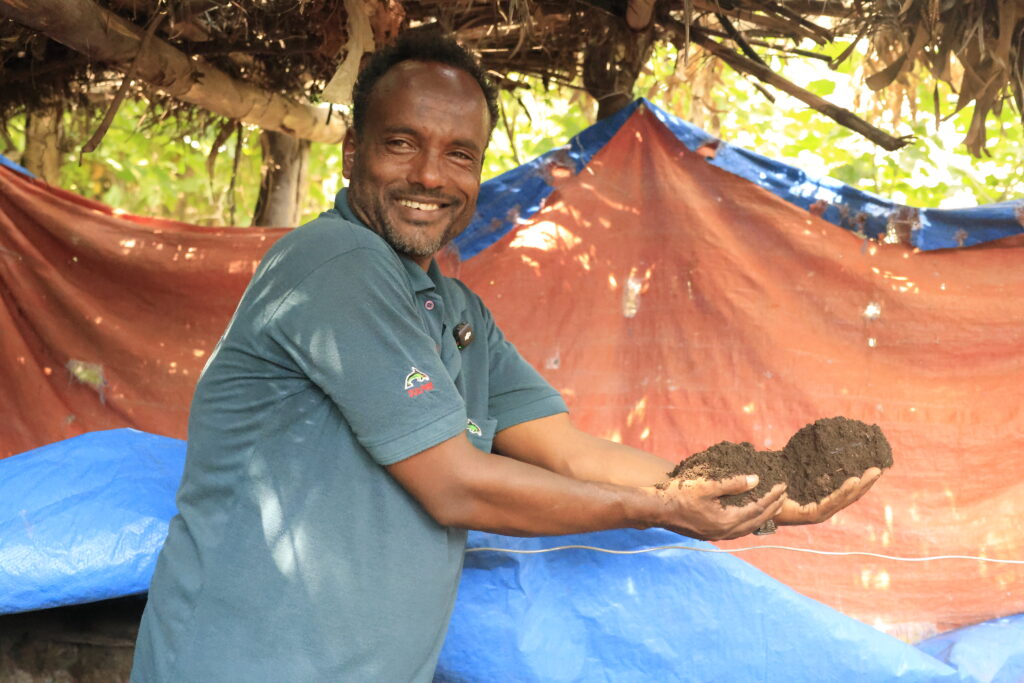
Vermicompost promotes soil health and fertility while supporting the local production of soil inputs. Through hands-on training, experience sharing, and ongoing technical support from TRANSFORM, Awol learned how to produce vermicompost and apply it effectively on his farm.
The results encouraged Awol to think beyond using compost solely as a farm input. He has produced 1,900 kilograms of vermicompost, selling 900 kilograms to neighboring farmers and applying the remaining 1,000 on his own farm. He has transformed a new skill into an emerging business opportunity. He even produced vermiwash, a fluid collected from the vermicompost site, and applied it to his crops as a natural pest management solution.
Awol reflected, “TRANSFORM has inspired me to do more and expand the business. I can see an opportunity to make a difference by producing and selling vermicompost while also using it on my farm.”
TRANSFORM’s soil input initiative aims to strengthen value chains for locally produced fertilizers and compost, creating income and entrepreneurship opportunities for village-level enterprises. Awol’s experience reflects success in this area.
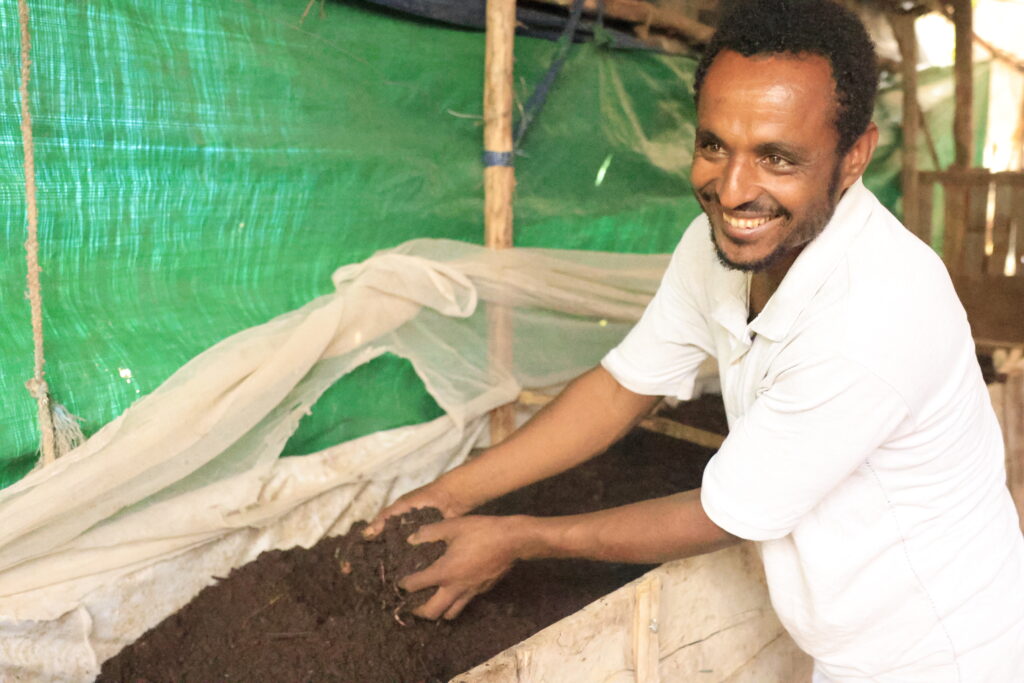
Another thriving TRANSFORM participant is Hussein Endris, who has developed an integrated farming system combining poultry production, livestock fattening, kitchen gardening, and vermicompost production. Poultry waste supports his fattening activities, the resulting manure is converted into vermicompost, and the compost is used on his farm and sold to neighboring farmers. Before joining TRANSFORM, Hussein managed these activities without a clear strategy. But TRANSFORM’s training and technical support helped him organize and expand them more effectively.
Hussein explained, “After I received training through TRANSFORM, I expanded my business. I increased both the quantity and quality of my production. The training helped me develop a clear vision for my farm activities and implement it effectively. Now I am selling my vermicompost production to the market.”
The impact is evident in both production and sales. Hussein has applied about 800 kilograms of vermicompost on his farm and has recently sold 2,500 kilograms to neighboring farmers: 1,500 kilograms at 30 Ethiopian Birr (ETB), approximately U.S. $ 0.18, per kilogram, and 1,000 kilograms at ETB 25, approximately U.S. $ 0.15, per kilogram, earning a total of ETB 70,000 (approximately U.S. $423.30).
He currently has 1,500 kilograms of vermicompost in stock and another 2,000 kilograms ready for harvest, demonstrating both the strong market demand and income-generating potential of vermicompost production.
“I never sold like this before,” Hussein said. He credits the TRANSFORM project with helping him move beyond subsistence-level production into a small-scale enterprise, supported by continuous technical guidance.
For Hussein, vermicompost has also provided resilience in the midst of shocks. A disease outbreak destroyed his poultry business, resulting in considerable losses. Income from vermicompost worm sales helped him rebuild the enterprise and start again.
Today, Hussein sees great opportunities and aims to expand the business into a medium-sized enterprise within the next five years. He remarked, “I found TRANSFORM’s initiative to be a valuable job-creation opportunity. My advice to youth is to avoid migration and make use of the opportunities available in our own country.”
These stories demonstrate how practical skills, sustained technical support, and access to market opportunities can create viable livelihood options for rural youth and returning migrants.
For Awol and Hussein, farming and soil input production have become pathways to entrepreneurship and sustainable income generation within their communities. Currently, both entrepreneurs have obtained business licenses and are actively engaged in the production and commercialization of vermicompost and related soil health products. They have also become valuable resource persons for TRANSFORM, sharing their experiences and providing training on vermicompost production to newly established youth-led enterprises, thereby supporting the growth of the next generation of agribusiness entrepreneurs.
Through TRANSFORM, farmers and youth groups are turning knowledge and locally available resources into sustainable livelihood opportunities. Awol effectively summed up this message: “It is possible to work and change your life in your own country.”
The TRANSFORM project (2025-2028) is funded by the Embassy of the Kingdom of the Netherlands and the European Union and is implemented by a consortium comprising the International Fertilizer Development Center (IFDC), Wageningen University & Research/Wageningen Environmental Research, ISRIC – World Soil information, Environment and Coffee Forest Forum (ECFF), and SOS Sahel Ethiopia.
TRANSFORM is made possible by the support from the Dutch Ministry of Foreign Affairs.