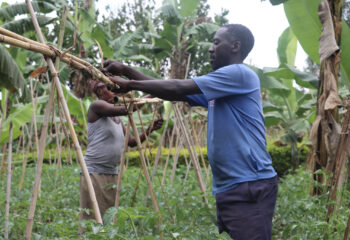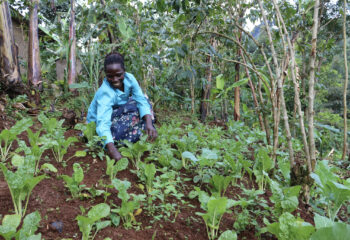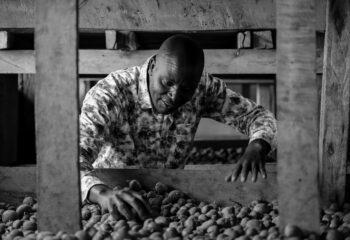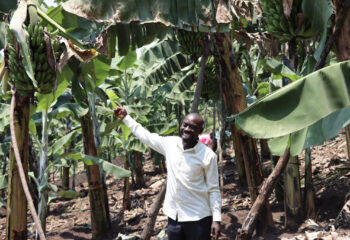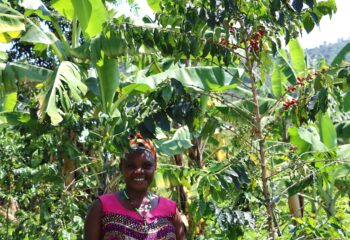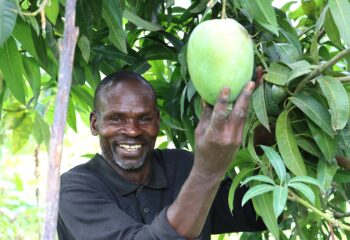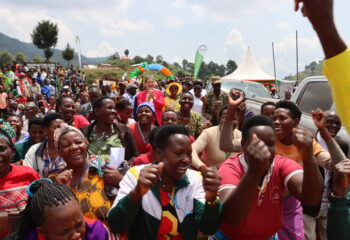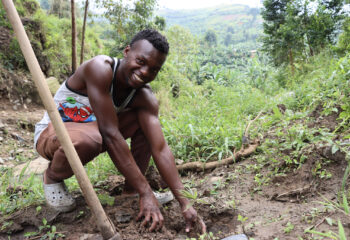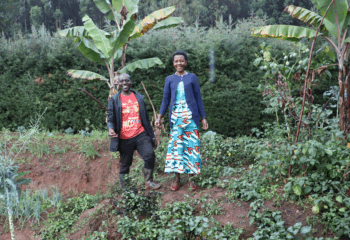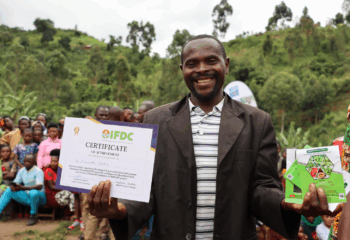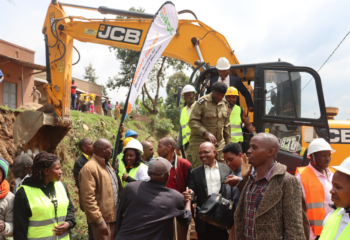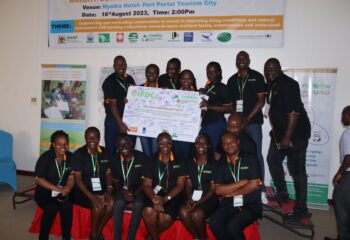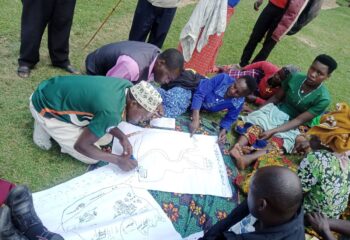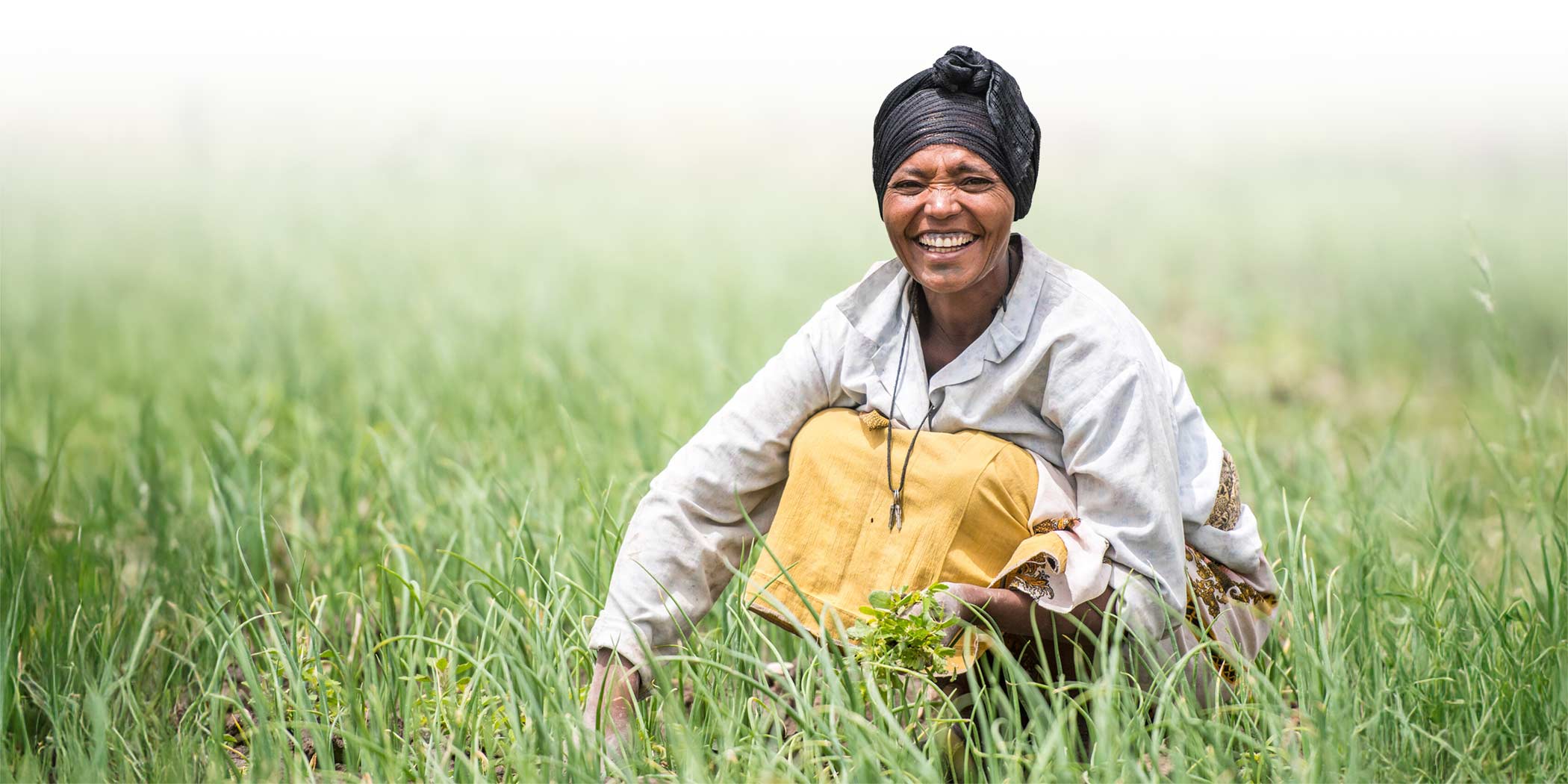
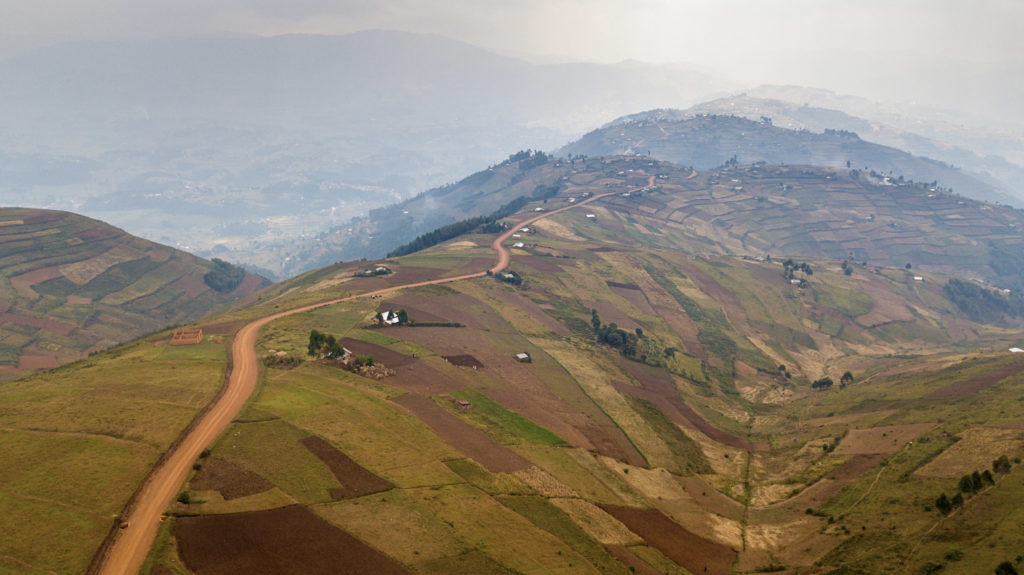
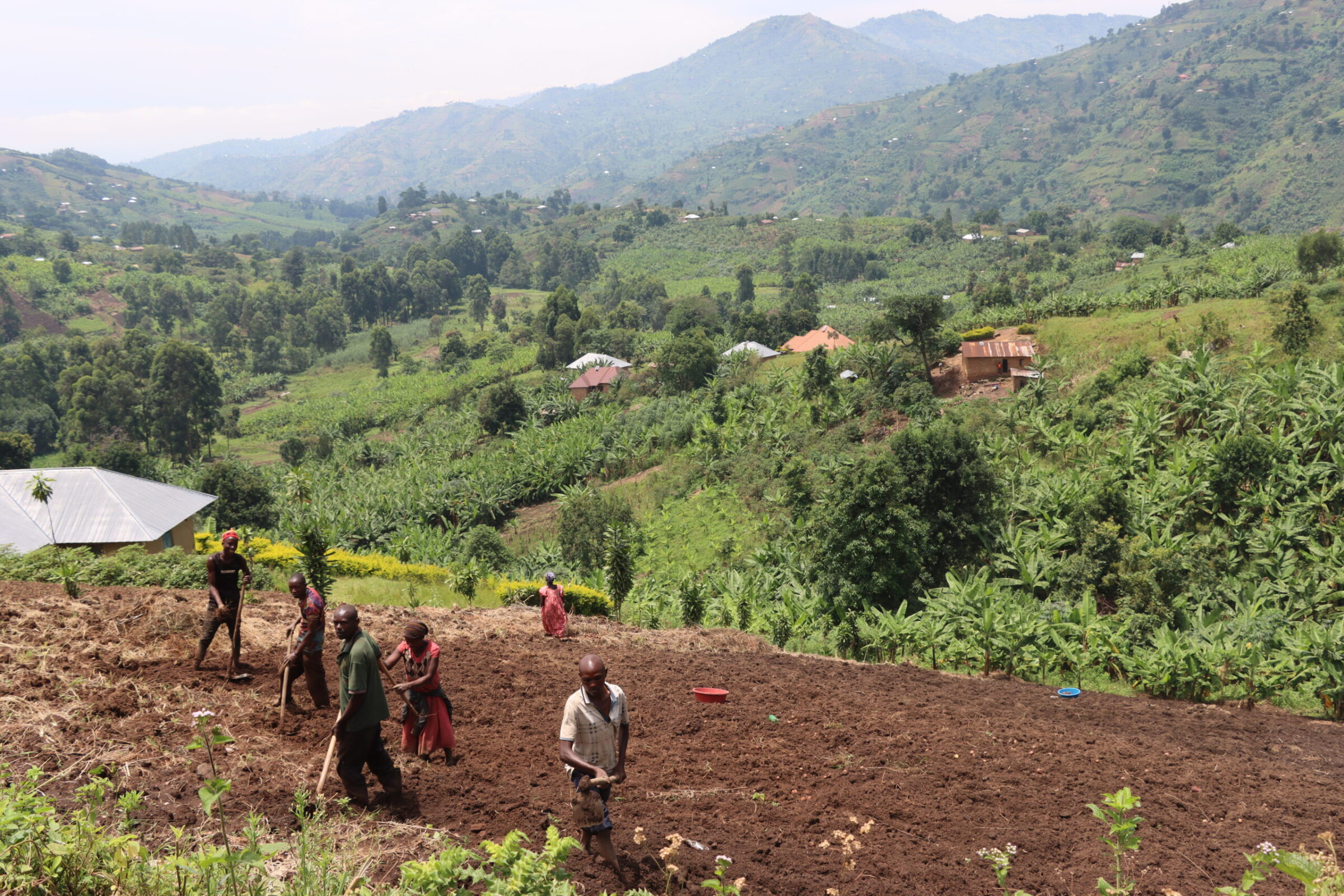
BRIGHT (2022-2026) is building resilience of 100,000 highland farm households in Uganda to economic and climate-related shocks by supporting households in inclusive farm-planning and decision-making, introducing appropriate climate-smart agriculture techniques and technologies to strengthen local farming systems, ensuring natural resource conservation and development of strategic value chains.
BRIGHT is building resilience of 100,000 highland farm households in Uganda to economic and climate-related shocks
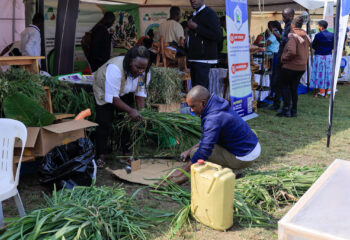
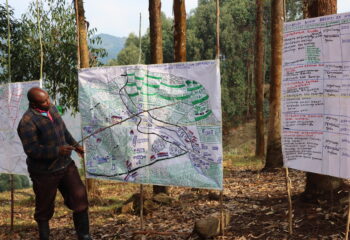
The project will draw on in-house expertise on integrated farm household planning, sustainable seeds systems development, climate-smart agriculture, market systems development, and natural resource conservation being successfully deployed in Burundi, Mozambique, and South Sudan. The multi-pronged approach, with inclusive household farm planning and decision-making at its centre, aims to tackle a number of the multitude of challenges smallholder farmer households are faced with to ensure long-term ecological and economic sustainability and growth.
Expected Outcomes
- Increased resilience and income of 100,000 smallholder farming households
- 100,000 acres of farmland converted to sustainable use
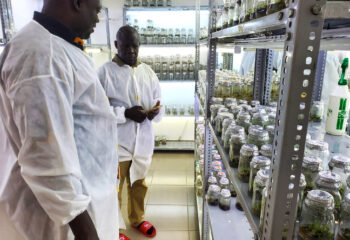
BRIGHT will build on the Resilient Efficient Agribusiness Chains (REACH) program, through which IFDC, together with the Embassy of the Kingdom of the Netherlands in Uganda and other partners, contributed to the development of seed potato systems in Uganda. BRIGHT will also draw on regional expertise including on Integrated Farm Planning and natural resource management as developed in the Supporting Agricultural Production in Burundi (PAPAB), which ran from 2015-2019, and the Projet d’Appui pour une Gestion Responsable et Intégrée des Sols (PAGRIS), 2020-2024, projects in Burundi.
BRIGHT is implemented in cooperation with Agriterra, the Uganda Ministry of Agriculture, Animal Industry and Fisheries (MAAIF), the National Agricultural Research Organization (NARO), district local governments, and private sector partners.

Newsletters
Newsletter – Issue 1
Newsletter – Issue 2
Project Results
2024
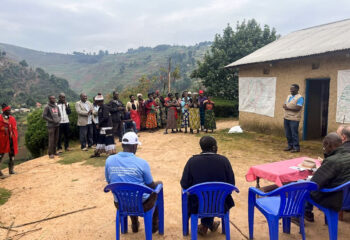
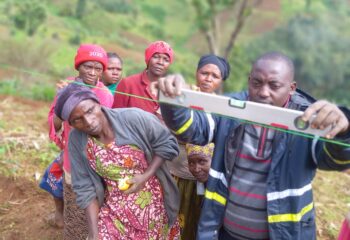
- Empowered 232 communities and over 53,800 households to adopt sustainable farming practices through participatory planning, infrastructure rehabilitation, and improved governance.
- Trained nearly 35,000 households through 7,352 farmer innovators and nutrition champions, promoting joint decision-making and resilience.
- Increased food security from 60% to 79% and increased the adoption of climate-smart and soil and water conservation practices.
2025
- Empowered 89,483 households through the Participatory Integrated Planning (PIP) approach, with 79.3% implementing household plans that address multiple challenges.
- 84,316 households participated in food and nutrition initiatives, with 85% now achieving an acceptable Household Dietary Diversity Score, compared to 60% at baseline.
- Trained 86,012 households on soil and water conservation, 71,517 on climate smart practices, and 70,293 on integrated soil fertility management (ISFM), with 33,950 hectares now under sustainable practices, Increasing incomes by at least 35% for 32,687 households.
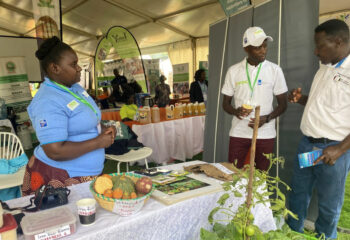
- Improved market access by training 80,650 households and 38 private sector partners.
- Strengthened 540 village savings and loan associations (VSLAs) and financial partnerships.
- 233 communities are implementing village vision plans, and 15 micro-watersheds have been restored and are being managed sustainably.