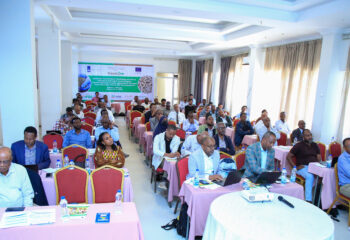

The Soil Values program recently held its strategic planning meeting for the 2026 work plan in Lomé, Togo. This meeting, held September 29 to October 7, brought together experts, decision-makers, technical institutions, and development partners around a common goal: to define an ambitious strategy to restore soil health in the Sahel and build resilient agricultural systems.
At the heart of the discussions were the growing challenges of land degradation, declining agricultural productivity, and the effects of climate shifts. The main objective of this intensive session was twofold: to develop the 2026 work plan and to reflect on the long-term strategic direction of the program as it transitions to operational maturity.
“Soil Values aims to develop concrete, sustainable, and inclusive solutions tailored to local realities, with a measurable impact on soil fertility and the resilience of farming communities.”
Alain Sy Traoré, Incoming Soil Values Program Director
Discussions focused on three key areas:
- Scaling Up Solutions: Participants explored how Soil Values can effectively bundle essential services (inputs, advice, and financing) for farmers, building on the concept of the Ecosystem Governance and Innovation System (EGIS), which ensures participatory local governance.
- Digital Agenda: Leaders emphasized the strategic use of technology to expand the program’s reach and improve its effectiveness.
- Institutionalizing Change: Ensuring the sustainability of the program’s impacts will require finding ways to integrate its approaches into national and regional policies in close collaboration with the Economic Community of West African States (ECOWAS) and the African Union.
Participants also discussed key Soil Values priorities for 2026, which include:
- sustainable soil fertility,
- integrated and sustainable land management,
- coexistence between agriculture and livestock farming,
- and prevention of conflicts related to access to natural resources.
The fertilizer sector received particular attention as a major lever for agricultural productivity. “For a program such as Soil Values, which focuses on sustainable soil fertility, the fertilizer sector is a strategic pillar. We have brought together our partners and the private sector to further this reflection,” observed Alimata Bandaogo, Soil Values Technical Deputy Director.

The Soil Values program is based on a strong regional cooperation approach. It works closely with several initiatives such as the Food Systems Resilience Program (FSRP), the Regional Program for Food Security (PRSA), the Agri-Food Program for Integrated Resilience and Economic Development in the Sahel (Pro-ARIDES), the Livestock Productivity and Resilience Support Project (L-PRES), Agro-Climatic Resilience in Semi-Arid Landscapes (ACReSAL), and the West and Central African Council for Agricultural Research and Development (CORAF), as well as with the private sector.
These synergies allow for the pooling of expertise and the anchoring of solutions in local realities. For example, CORAF Executive Director Moumini Savadogo explained, “CORAF plays a key role in updating seed and plant regulations in West Africa.”
Additionally, LPRES Technical Operations Manager Adeoye Wasiu remarked, “It is essential to integrate the pastoral dimension into our strategic thinking.” These and other leaders reflected on the importance of integrating each aspect of agricultural solutions into a cohesive plan.
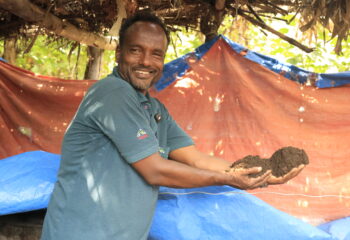
The discussions also highlighted several innovations from the field. The Pro-ARIDES program, implemented in Burkina Faso, Mali, and Niger, presented technologies such as biodigesters and compost production from organic waste.

“These techniques enhance fertility while making use of local resources that are often overlooked,” stated Sontonénoma Delma, Monitoring and Evaluation Advisor for Pro-ARIDES in Burkina Faso.
These conversations helped to strengthen the program’s strategic coherence and enrich collective thinking for the program’s success. “The diversity of knowledge gathered here allows us to chart a course beyond 2026,” noted Eva Huet, a researcher at Wageningen University.
Additionally, outgoing Soil Values Program Director Eric Smaling noted,”We need all our partners to make this transition a success.”
On the sidelines of the strategic planning meeting, a delegation from the Soil Values program was received by Togo’s Minister of Environment and Forest Resources, Katari Foli-Bazi, who expressed Togo’s unreserved support: “You can count on Togo. With determination, anything is possible.” This institutional commitment consolidates the regional momentum driven by Soil Values and its partners.
After the strategic planning meeting, a complementary workshop devoted to the free movement of agricultural inputs between coastal and Sahelian countries was held October 8 and 9. Discussions revealed persistent obstacles related to standards, infrastructure, and logistics.

“The problems encountered on the entry corridors were examined in depth to identify sustainable solutions,” said Abdoulaye Dia Omar, former president of the Nigerien Association of Fertilizer Importers and Distributors (ANIDE). Fatoumata Doucoure, Chief Financial Officer from DPA Industries in Mali, stressed the need to harmonize standards to facilitate regional trade.
Alain Sy Traoré was also introduced and appointed to his new role as Soil Values Program Director at these meetings. Reiterating the program’s purpose, Traoré declared, “Soil Values aims to develop concrete, sustainable, and inclusive solutions tailored to local realities, with a measurable impact on soil fertility and the resilience of farming communities.”
With this integral objective as Traoré described, Soil Values partners strengthened the program’s monitoring, evaluation, and learning (MEL) framework, consolidated their theory of change, and adopted a 2026 strategic plan that will guide implementation and resource mobilization for the next decade.
More than just a planning workshop, this series of meetings was a laboratory for collective reflection and a driving force for future action. The Soil Values program has thus affirmed its role as a catalyst for sustainable agriculture, healthy soils, and resilient communities across the Sahel.
Funded by the Dutch Directorate-General for International Cooperation (DGIS), the Soil Values program is being implemented over 10 years (2024-2033), led by the International Fertilizer Development Center (IFDC), in consortium with SNV and Wageningen University and Research (WUR), as well as knowledge partners such as AGRA, the Center for International Forestry Research and World Agroforestry (CIFOR-ICRAF), the International Institute of Tropical Agriculture (IITA), ISRIC – World Soil Information, and the International Water Management Institute (IWMI).