With fertilizer supply disruptions and rising input costs continuing to pressure farming systems, strengthening locally adaptable soil fertility solutions is more urgent than ever.
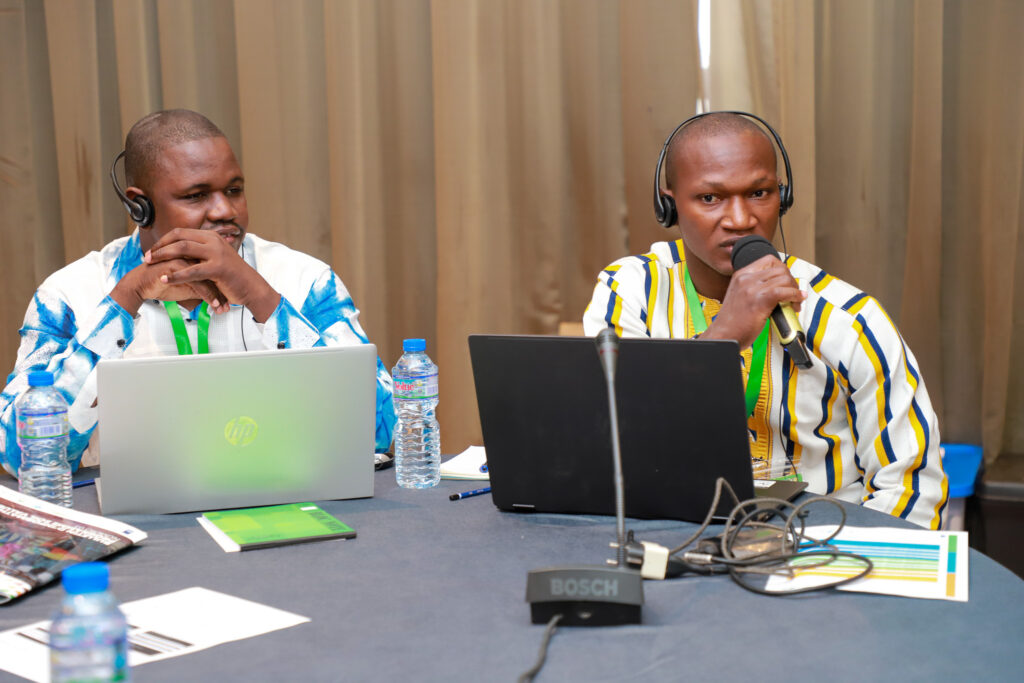
In response, the Soil Values program organized a three-day Training of Trainers on organo-mineral fertilizers on March 30‑April 1 in Lomé, Togo, to build strong regional pools of trainers and technical specialists ready to support production, quality assurance, and adoption at scale across the Sahel region.
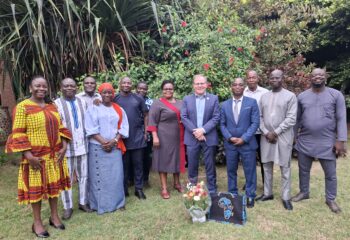
The Training of Trainers gathered 39 experts drawn from Soil Values field teams, implementing partners, government technical services, and major regional initiatives, including the Agri-Food Program for Integrated Resilience and Economic Development in the Sahel (Pro-ARIDES) program funded by the Dutch Government and several World Bank-supported projects, such as the Livestock Productivity and Resilience Support Project (L-PRES), Agro-Climatic Resilience in Semi-Arid Landscapes (ACReSAL), and the Food System Resilience Program (FSRP).
This mix of public, private, and development actors reflects a shared interest in practical solutions that can improve soil health while supporting productivity and resilience across the Sahel.
“We leave feeling strengthened and convinced that this knowledge will be very useful in the field.”
Ahmadou Oumarou
Designed as an interactive and participatory course, the Training of Trainers sessions helped participants deepen their knowledge of organo-mineral fertilizers, from definition and regulatory framework to formulation, production techniques, and quality control. Discussions also addressed environmental and climate challenges, as well as public policies governing the use of these fertilizers.
Organo-mineral fertilizers combine locally available organic resources such as manure, compost (including bokashi), and crop residues with mineral fertilizers. They are increasingly recognized as a pathway to improve nutrient use efficiency, strengthen soil organic matter, and enhance the resilience of farming systems to climate variability.
For Dr. Alimata Bandaogo, Soil Values Deputy Program Director, Technical, the training marked an important milestone in building regional capability: “At the end of the training, we were able to strengthen the capacity of our stakeholders regarding the various materials needed to produce these fertilizers, their characteristics, as well as the analytical methods and regulations governing their production.”
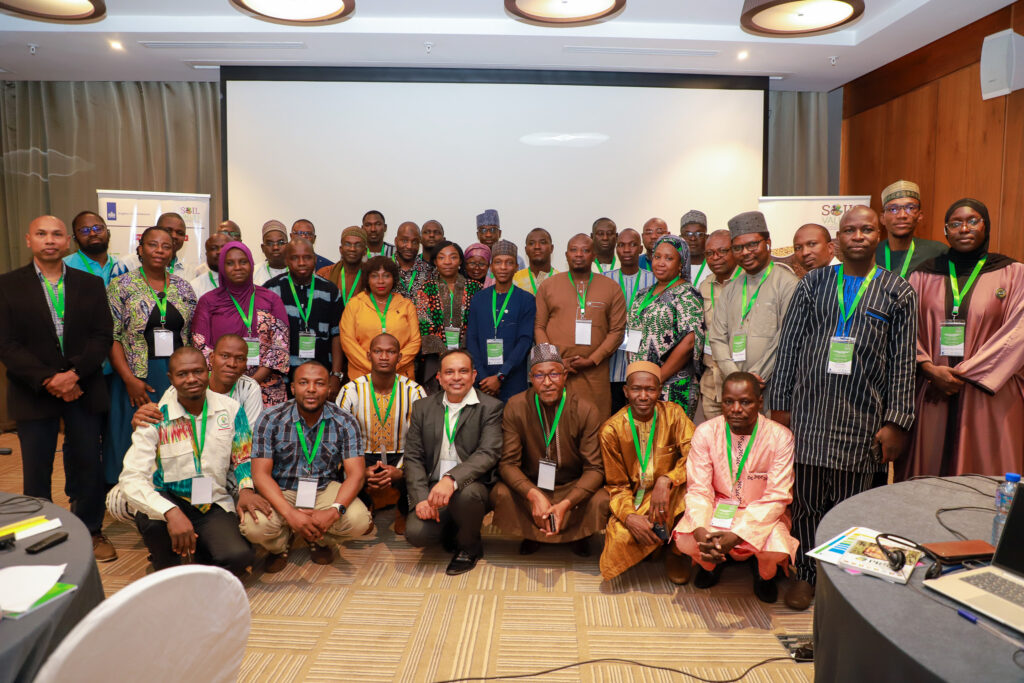
Participants echoed the value of the exchange. Ahmadou Oumarou, Soil Values focal point in Tahoua, Niger, praised the level of expertise at the sessions: “Both the trainers and the participants were of a very high caliber. We leave feeling strengthened and convinced that this knowledge will be very useful in the field.”
Beyond technical information, the training also highlighted the economic opportunities linked to the development of organo-mineral fertilizers. Aly Traoré, representative of HortiPlus in Burkina Faso, stressed the importance of a structured approach: “We learned that three key steps are necessary: exploring the types of organic fertilizers, improving them, and then scaling them up.”
In an international context marked by crises affecting fertilizer supplies, particularly in Europe and the Middle East, this training initiative is even more relevant because it also addressed environmental and political issues. Rokia Coulibaly Daou, Soil Values focal point in Ségou, Mali, underscored the importance of coordinated advocacy: “We must play an active role in influencing policies so that they better integrate organo-mineral fertilizers.”
Because the core objective of the Training of Trainers was to ensure that technical information and practical skills move quickly from regional learning to national action through a cascade approach, trainers were equipped to adapt organo-mineral fertilizer options to local farming systems and resource levels.
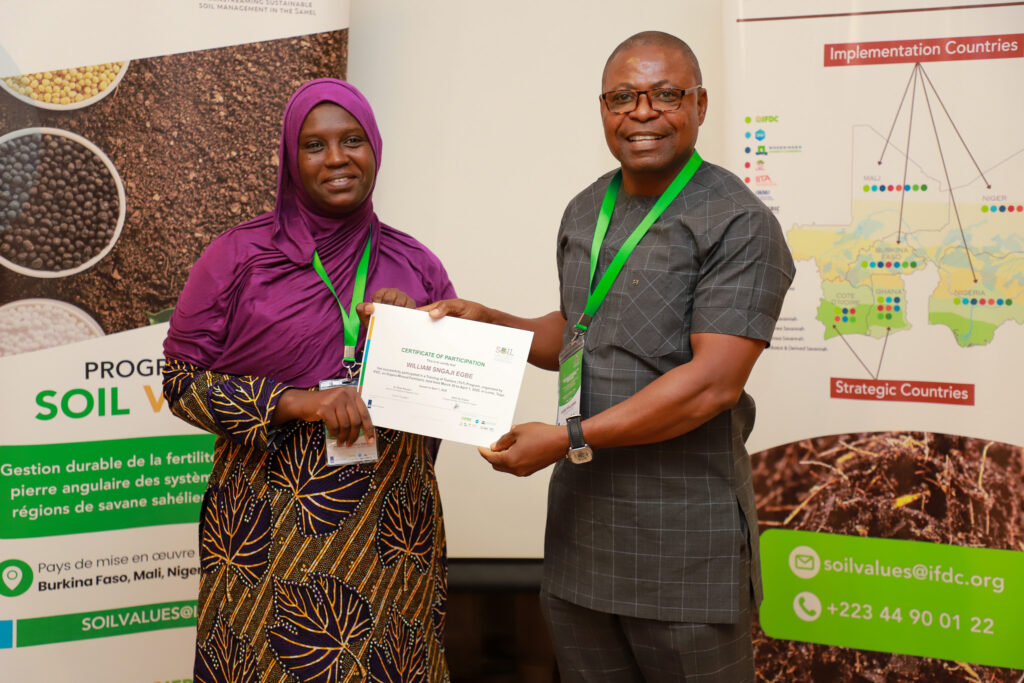
After a detailed walk-through of the organo-mineral fertilizer manufacturing process, the session concluded with a certificate ceremony to recognize participants’ commitment to apply and share their learning and skills in their respective countries.
In the coming months, Training of Trainers participants will organize and conduct national knowledge sharing sessions with agricultural actors, according to defined templates and in consultation with Soil Values, to accelerate the adoption of organo-mineral fertilizers and contributing to a sustainable transformation of agricultural systems in West Africa.
Through this initiative, the Soil Values program is reaffirming its key role in promoting innovative and sustainable solutions to improve soil fertility, strengthen the resilience of agricultural systems, and support economic development in the region.
Funded by the Dutch Directorate-General for International Cooperation (DGIS), the Soil Values program is being implemented over 10 years (2024-2033), led by the International Fertilizer Development Center (IFDC), in consortium with SNV and Wageningen University and Research (WUR), as well as knowledge partners such as AGRA, the Center for International Forestry Research and World Agroforestry (CIFOR-ICRAF), the International Institute of Tropical Agriculture (IITA), ISRIC – World Soil Information, and the International Water Management Institute (IWMI).