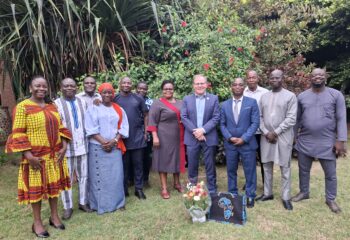
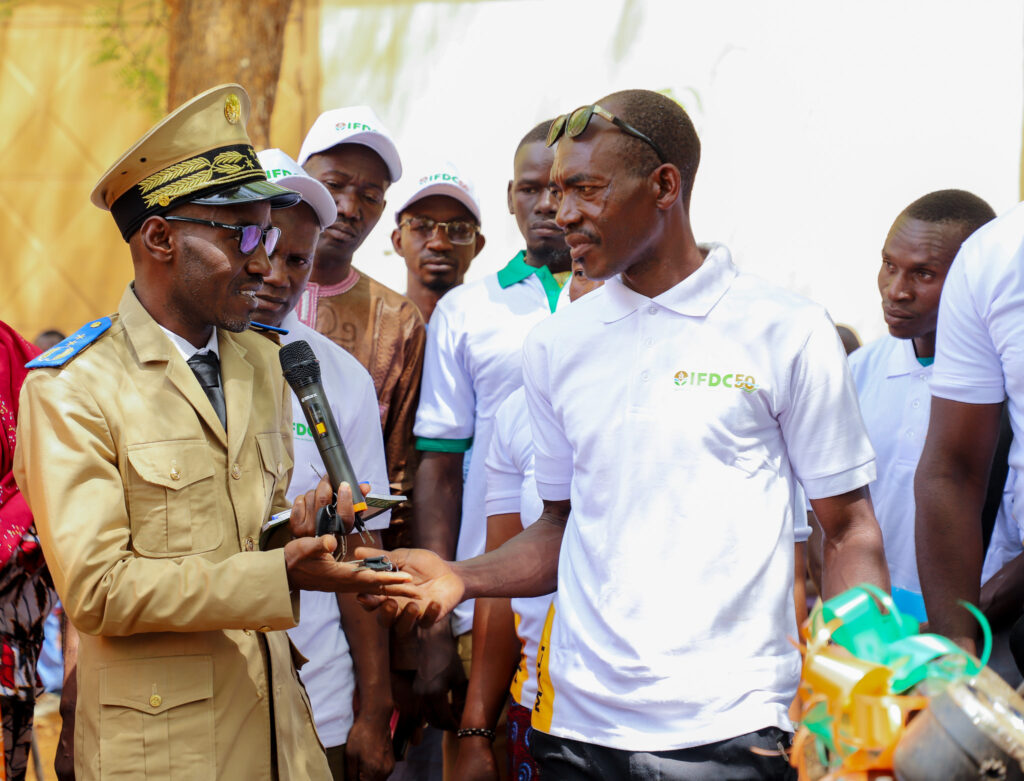
On April 8 in Sikasso, Mali, the Soil Values program officially handed over technical equipment to 80 young people from the San, Ségou, and Sikasso watersheds to establish production units for seedlings and organic amendments.
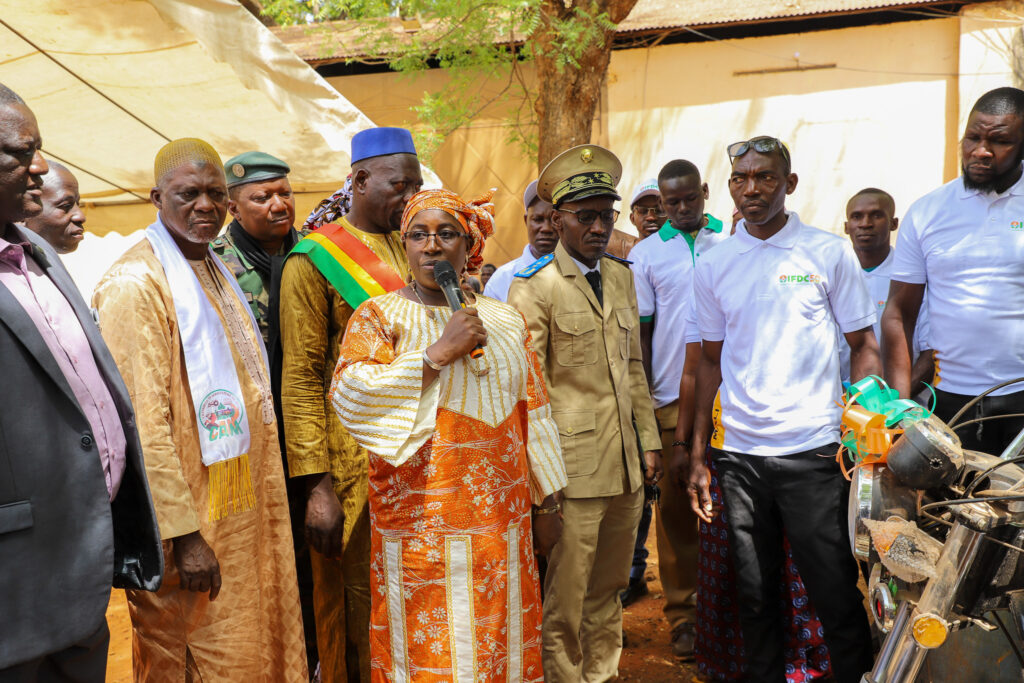
Representing Governor of Sikasso Region Kanté Marie Claire Dembélé, Governor’s Advisor on Economic and Financial Affairs Ibrahim Mahamane presided over the handover ceremony. Local authorities attended, including Fourth Deputy Mayor of Sikasso Adama Diallo, who represented Mayor Kalfa Sanogo, and Alkassoum Barka, the Regional Director of Agriculture for Sikasso, who also represented his counterparts from San and Ségou.
This initiative is part of an inclusive process led by Soil Values in collaboration with its partners, including the Food System Resilience Program (FSRP), the Agri-Food Program for Integrated Resilience and Economic Development in the Sahel (Pro-ARIDES), and the regional directorates of agriculture in San, Ségou, and Sikasso. The program aims to establish six units dedicated to seedling production and two to the production of organic amendments, for a total of eight units. Each unit will bring together ten young people committed to developing local agricultural services.
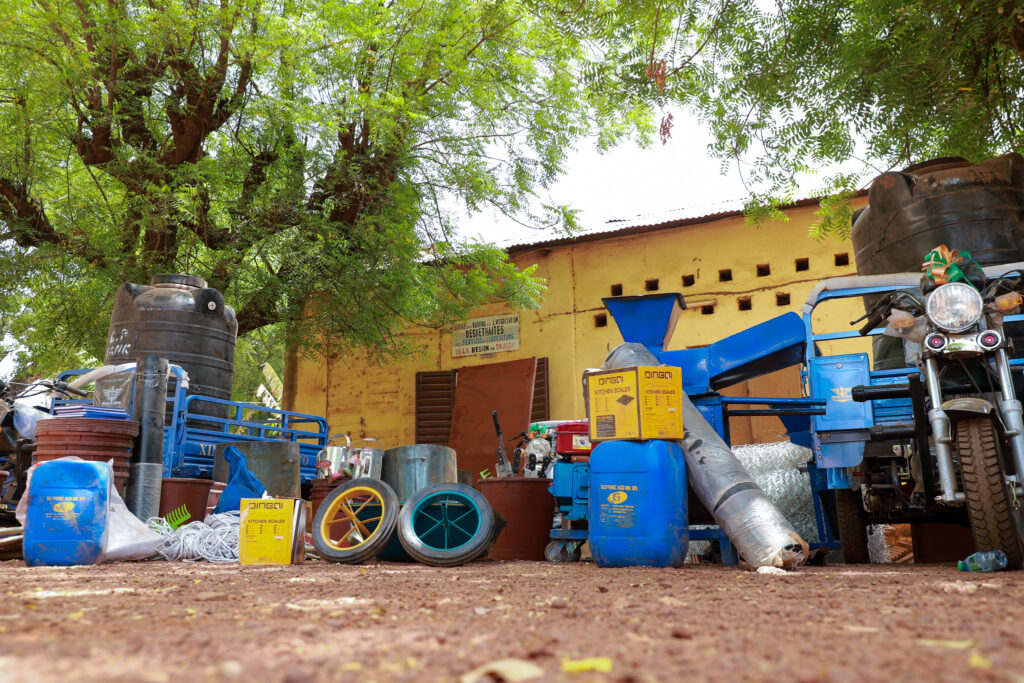
The equipment these youths received included three-wheelers, zaïners, wheelbarrows, water tanks, biochar kilns, compost bins, and various production tools. Soil Values also provided fencing to secure sites and help ensure optimal working conditions.
“With this equipment, we will be able to significantly increase our bokashi production and meet growing demand.”
Rokiatou Ongoiba
According to Soil Values Mali Country Coordinator Niamoye Traoré, these investments will sustainably improve producers’ access to organic inputs and quality seedlings. “These units will strengthen soil fertility while facilitating the supply of seedlings in our intervention areas,” Traoré said. She also emphasized that this material support complements a broader program that includes training and technical guidance.
Local authorities described the initiative as a practical response to current agricultural challenges. Diallo assured listeners, “This action is perfectly aligned with national programs such as the FSRP and Pro-ARIDES, which aim to strengthen food and nutritional security.”
Mahamane praised the initiative, noting that it offers a concrete and innovative response to today’s challenges. He added that by focusing on soil fertility and supporting young people, the program helps address rural unemployment while strengthening agriculture’s resilience to the effects of climate change.
Recipients also expressed their commitment to making the most of this equipment. “These kits will not be stored away. We will use them fully and set up a management committee to ensure their proper use,” assured Souleymane Coulibaly, a participating farmer from Ségou.
Rokiatou Ongoiba, another participating farmer from Sikasso, is also optimistic: “With this equipment, we will be able to significantly increase our bokashi production and meet growing demand.”
To support participants and maximize impact, Soil Values also organized hands-on training focused on effective use of the equipment, agricultural entrepreneurship, and market development. This combination of equipment and capacity building is designed to support the growth of youth-led agribusiness services, while also contributing to improved soil fertility.
The program’s local partner organizations, together with relevant technical services, will continue to support these youths in using and managing the equipment. Local non-governmental organizations will also provide guidance and monitor implementation.
Through this integrated approach, the Soil Values program is supporting more resilient agriculture capable of responding to climate change and reducing rural unemployment.
Funded by the Dutch Directorate-General for International Cooperation (DGIS), the Soil Values program is being implemented over 10 years (2024-2033), led by the International Fertilizer Development Center (IFDC), in consortium with SNV and Wageningen University and Research (WUR), as well as knowledge partners such as AGRA, the Center for International Forestry Research and World Agroforestry (CIFOR-ICRAF), the International Institute of Tropical Agriculture (IITA), ISRIC – World Soil Information, and the International Water Management Institute (IWMI).