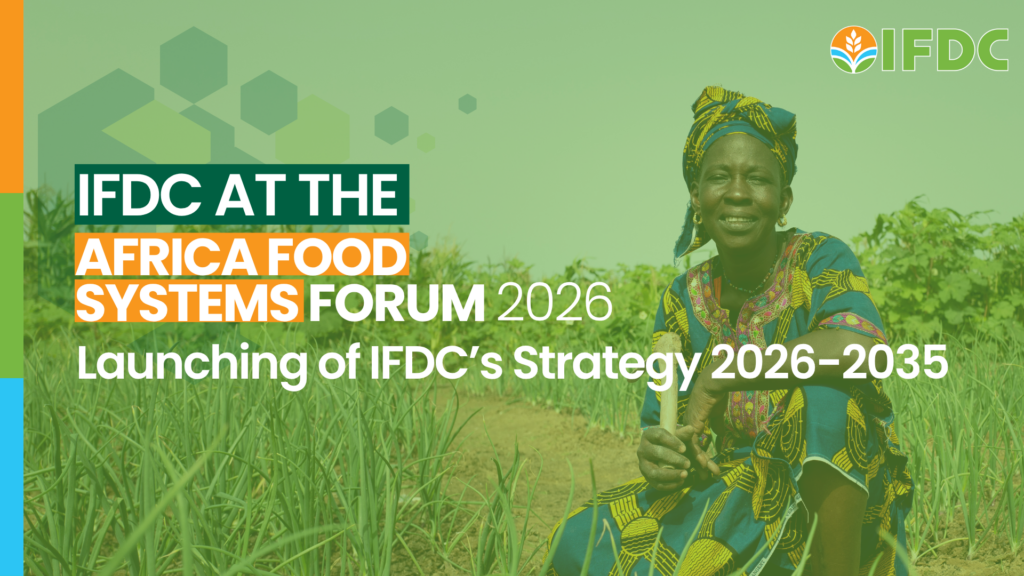
The International Fertilizer Development Center (IFDC) will officially launch its 2026–2035 institutional strategy during the Africa Food Systems (AFS) Forum 2026 in Kigali, Rwanda. The event will mark an important milestone in IFDC’s long-standing commitment to advancing resilient, inclusive, and sustainable food systems across Africa and beyond.
The new strategy reflects IFDC’s ambition to accelerate food systems transformation by placing farmers at the center, investing in soil health, and strengthening partnerships to deliver lasting impact at scale.
With the theme “Fuel the Farmer • Feed the Soil • Foster the Future,” the strategy will define IFDC’s framework for the next decade. It will focus on strengthening farmers’ resilience, improving soil health, accelerating innovation, and fostering partnerships capable of delivering lasting impact at scale.
The launch event is expected to bring together government representatives, development institutions, regional organizations, technical and financial partners, private sector actors, and agricultural development leaders. It will highlight IFDC’s renewed ambition to support agricultural transformation through science, innovation, and collaboration.
A Strategy Anchored in Three Priorities
IFDC’s Strategy 2026–2035 will be structured around three strategic priorities:
- Fertilizer Innovation – Accelerate the development, validation, and deployment of next-generation fertilizer and soil health innovations that improve productivity, profitability, and environmental sustainability.
- Farmer Impact at Scale – Implement an approach that connects innovative fertilizer solutions with comprehensive farmer support systems.
- Sustainable Systems Transformation – Establish an integrated systems transformation approach to strengthen market systems, improve regulatory frameworks, and enhance knowledge of ecosystems.
Building on More Than 50 Years of Impact
The new strategy builds on IFDC’s more than five decades of experience in improving food security, strengthening market systems, and promoting sustainable agriculture.
In 2025 alone, IFDC implemented activities in 33 countries, trained 730,787 farmers (43% women), and supported 228,938 farmers in adopting improved agricultural practices. The organization also contributed to the cultivation of 114,553 hectares under good agricultural practices, supported 79,736 hectares with climate adaptation technologies, and established 31,283 demonstration plots to accelerate innovation uptake.
These results highlight IFDC’s capacity to turn research, innovation, and partnerships into practical and measurable benefits for farmers, rural communities, and food systems.
A Timely Conversation on the Future of Food Systems
The launch will take place at a critical time, as African countries intensify efforts to strengthen food security, restore soil health, create jobs for youth, and build agricultural systems that are more resilient to climate shocks.
The event will feature a high-level panel discussion with Henk van Duijn, International Maize and Wheat Improvement Center (CIMMYT) Director General and CEO Bram Govaerts, and Coordinator for the Africa Fertilizer Financing Mechanism (AFFM) at the African Development Bank Marie Claire Kalihangabo, entitled “The Next Fertilizer Shock Is Inevitable, but the Next Food Crisis Is Not,” to examine what makes fertilizer shocks so damaging and what it will take to prevent them from becoming full-blown food crises.
The discussion is expected to reinforce the strategic priorities at the heart of IFDC’s new Strategy 2026–2035 and highlight the importance of initiatives already underway with IFDC’s partners, including the Soil Values and Transform Soil Fertility Management in Ethiopia (TRANSFORM) programs, which contribute to promoting more productive, resilient, and sustainable agricultural systems through improved soil health management.