

2025
Annual Report
2025
Annual Report
Contents
A Letter from IFDC’s Leadership | Our Results in 2025 |
Innovations and Research | Scaling Soil Health and Impact | Enabling Fertilizer and Soil Health |
Publications & Presentations | Financials | Strategy 2026-2035 | Publication Credits
Download the Annual Report
A Letter from IFDC’s Leadership
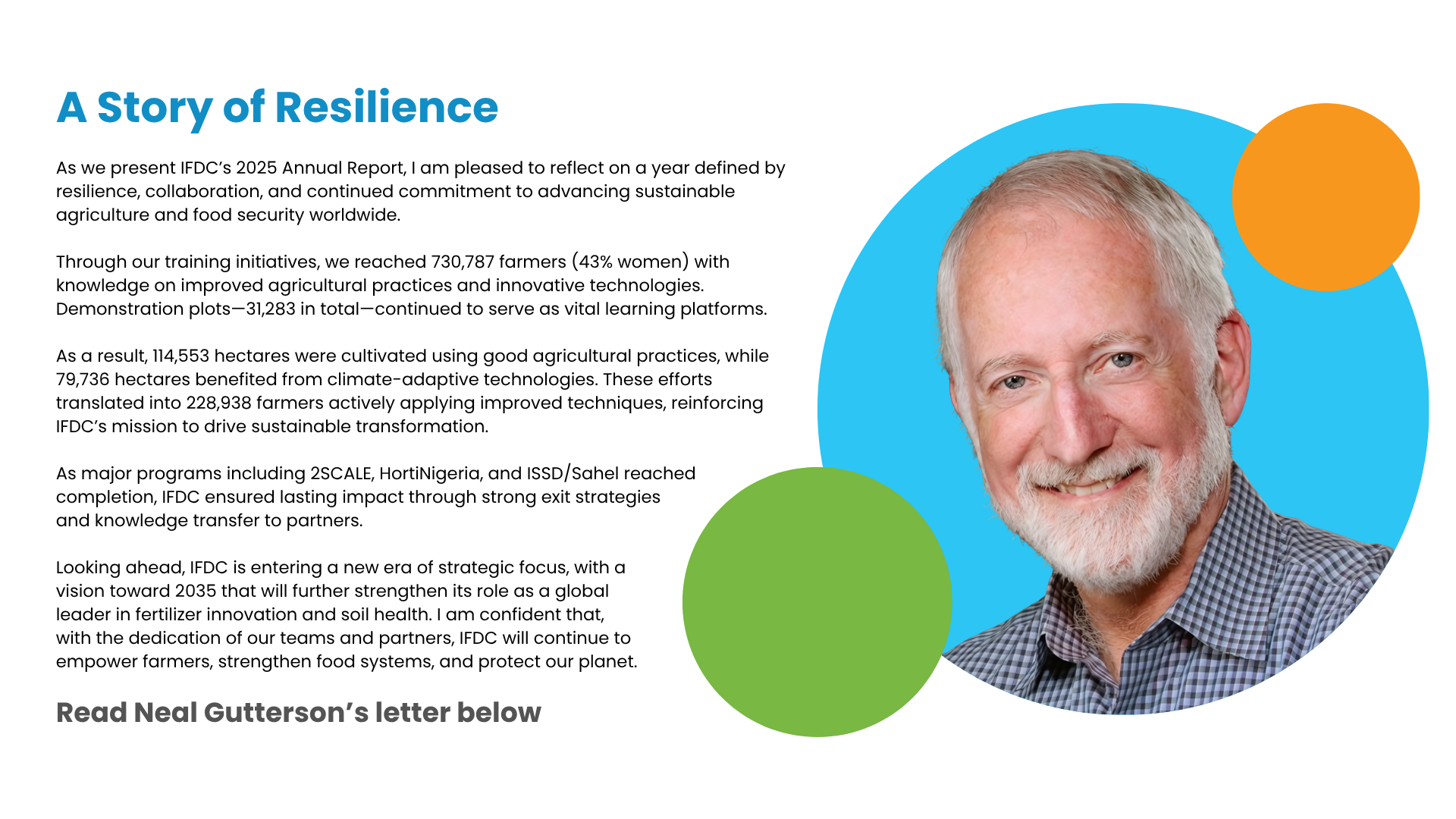
A Letter from the Chair of the Board
As Chair of the Board of the International Fertilizer Development Center (IFDC), I am honored to present the 2025 Annual Report. This year signified the organization’s enduring strength, adaptability, and purpose.
In the year’s first quarter, IFDC faced a period of significant change that affected both our organization and the communities we serve. Like many others working in international development, the organization encountered major shifts in the donor landscape with the termination of all programs funded by the U.S. Agency for International Development (USAID) and global changes in Official Development Assistance (ODA) funding. Yet, in the face of this challenge, IFDC’s work to enhance soil health, productivity, and farmer livelihoods has remained steady, guided by our commitment to innovation and lasting impact.
Across all regions, our teams have sustained key program outcomes while building new alliances that will strengthen the organization’s relevance and reach in the years to come. Partnerships with institutions and government entities such as the Common Market for Eastern and Southern Africa (COMESA), AKADEMIYA2063, the International Maize and Wheat Improvement Center (CIMMYT), the World Bank, and various Dutch embassies reinforced the value of united, evidence-based efforts to restore soils, revitalize markets, and build resilient agricultural systems.
Internally, IFDC has continued to adapt to current realities and prepare for the future. The organization took decisive steps in aligning its structure with its strategic vision, unifying the Global Programs and Research divisions to enhance organizational collaboration and efficiency.
Enhancing our global footprint, IFDC is establishing and strengthening a Global Network of Fertilizer Innovation Centers (GNFIC) in the United States, Brazil, and India, aimed at transforming the landscape of fertilizer development and adoption. These centers will serve as vibrant hubs of collaboration, linking cutting-edge research with practical implementation to generate scalable solutions that meet the diverse needs of farmers and partners across different agroecological contexts.
By fostering dynamic exchanges of ideas, data, and best practices, this global network will accelerate the development of scientifically sound, climate-smart, site-specific fertilizer innovations that are inclusive and highly adaptable. Individually, each center will work within regional agricultural realities; collectively, they will create knowledge-sharing pathways that strengthen IFDC’s capacity to translate research into action.
This year also highlighted IFDC’s role as both a technical partner and a trusted knowledge collaborator. With the support of the Netherlands and European Union, the organization launched the Transform Soil Fertility Management in Ethiopia (TRANSFORM) program, which is set to reach over 100,000 smallholder farmers with new approaches for soil health and fertilizer innovation. With TRANSFORM, we are setting a foundation for sustainable and inclusive agricultural transformation in the country.
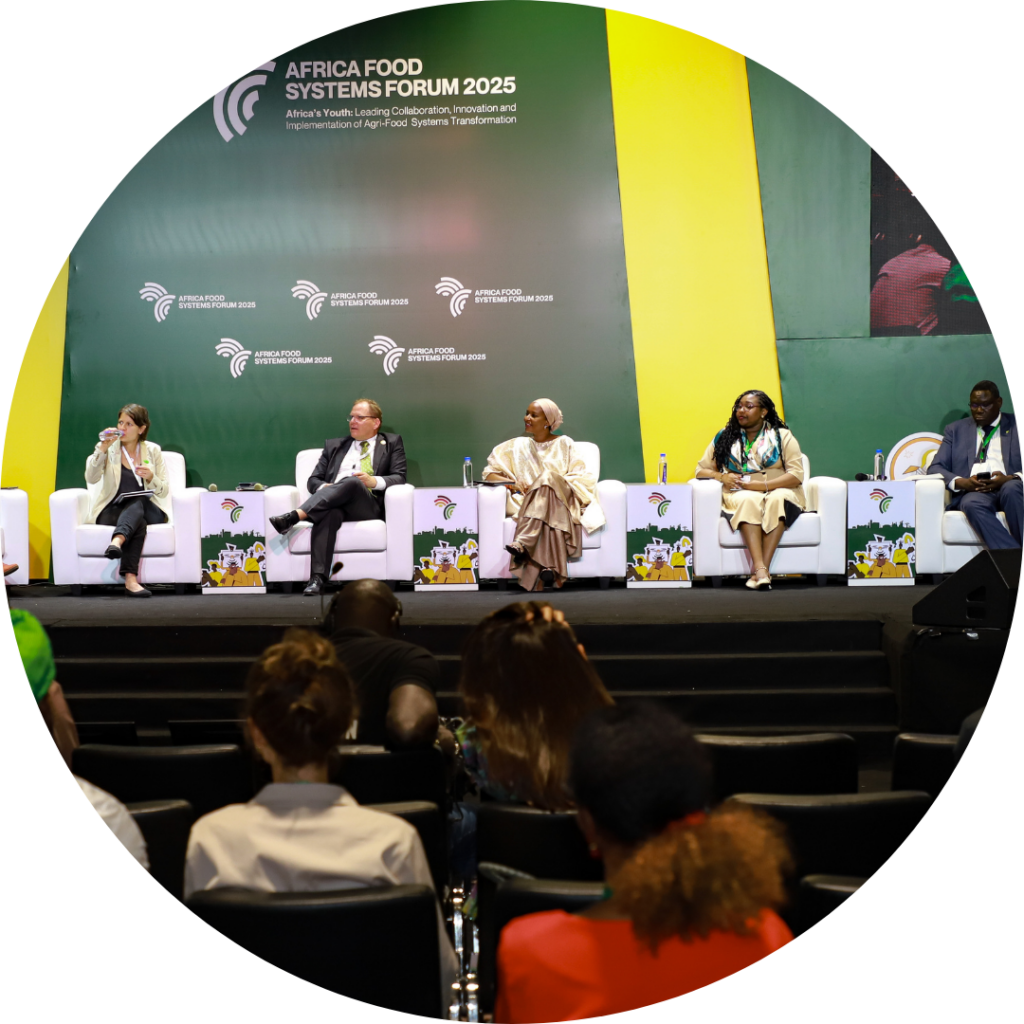
Our active presence at events and summits in 2025, such as the Africa Food Systems (AFS) Forum Annual Summit, led our global team and senior leadership to strengthen our partnerships and share our expertise in fertilizer and soil health.
At the AFS Summit, IFDC hosted and co-organized several side events spotlighting soil restoration, youth-led agribusiness, and public-private partnerships for resilient food systems. These included an event convened by Soil Values entitled “From the Ground Up: Scaling Soil Health Solutions for Planet and People” and two sessions by the Toward Sustainable Clusters in Agribusiness through Learning in Entrepreneurship (2SCALE) program on youth finance and agribusiness partnerships. We also participated in collaborations with Welthungerhilfe and the African Union Development Agency-NEPAD (AUDA-NEPAD) to mobilize action for soil health and fertilizer policy.
During a special session with AUDA-NEPAD, “Advancing the Momentum of the Africa Fertilizer and Soil Health Action Plan,” IFDC and other partners officially launched the Africa Fertilizer Industry Development Association (AFIDA) to drive continental fertilizer innovation and accessibility.
This year also saw several major programs, such as 2SCALE, HortiNigeria, and the Integrated Seed Sector Development in the Sahel (ISSD/Sahel) project, transition to their final stages and complete their work. We ensured continued impact through strong exit strategies and knowledge transfer within the organization and to our partners. These measures safeguard the sustainability of our interventions and position our on-the-ground partners to confidently champion and advance the solutions developed during these programs.
As we look ahead, IFDC is entering a new era of strategic focus. The organization’s next long-term strategy will chart a bold course toward 2035, expanding our role as a trusted global partner in fertilizer innovation and soil fertility and soil health solutions.
I am confident that with the dedication of our staff, the leadership of our management team, and the support of our partners and donors, IFDC will continue to deliver on its promise: to empower farmers to grow more nutritious food, boost productivity, address food insecurity, enhance resilience of food systems, and protect the environment for lasting agricultural transformation.
Sincerely,
Neal Gutterson
Chair of the Board of the International Fertilizer Development Center (IFDC)
IFDC Results
IFDC’s results reflect the collective effort of partners, staff, and farming communities working toward building resilient and sustainable agricultural systems that ensure food security and economic opportunity for all. The following results provide a snapshot of the measurable change IFDC is driving in smallholder farming systems, demonstrating the power of collaboration and innovation in building a more food-secure future.
Our Vision
A world where farmers thrive on healthy soils, empowered by fertilizer innovation and sustainable practices, producing abundant and nutritious food for all on less land while restoring our soils and safeguarding our planet for future generations.
Our Mission
Innovating soil and fertilizer solutions to nourish people and protect the planet.
We advance fertilizer innovation, soil fertility, and soil health solutions with our partners in research and development, empowering farmers to grow more nutritious food, boost productivity, address food insecurity, enhance resilience of food systems, and protect the environment for lasting agricultural transformation
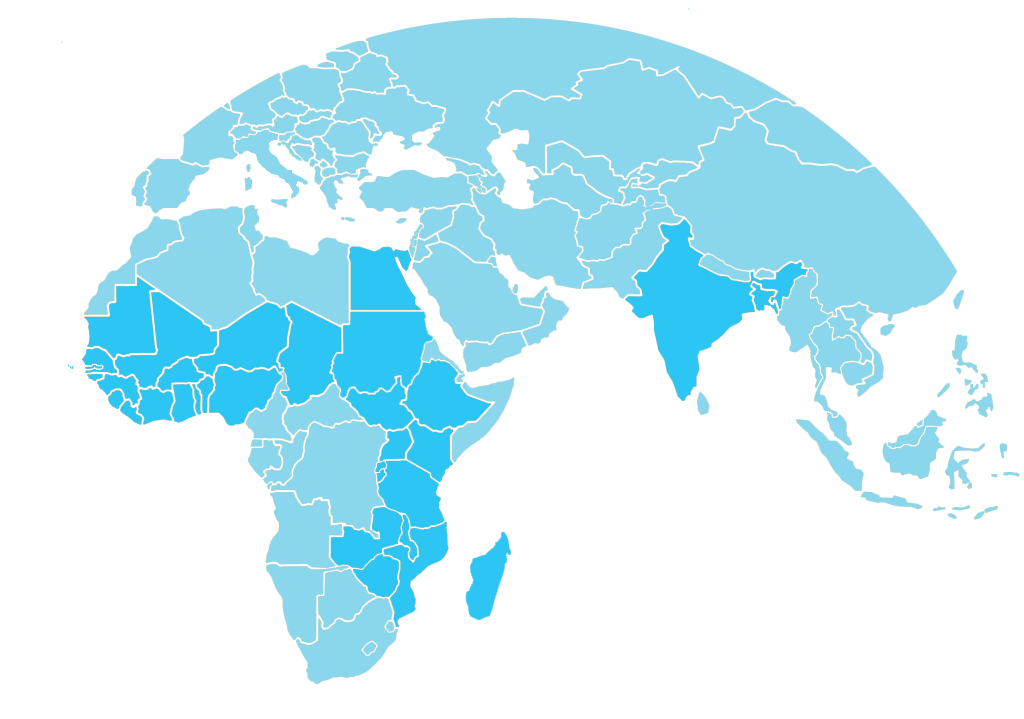
Our Reach in 2025
Key Indicators
Measuring Impact 2020-2025
| Indicators | 2020 | 2021 | 2022 | 2023 | 2024 | 2025 | ||||||
|---|---|---|---|---|---|---|---|---|---|---|---|---|
| Total | Projects | Total | Projects | Total | Projects | Total | Projects | Total | Projects | Total | Projects | |
| Hectares under improved technologies | 193,768 | 17 | 419,652 | 13 | 641,595 | 11 | 821,907 | 20 | 509,515 | 15 | 114,553 | 9 |
| Farmer participants who applied technologies | 416,522 | 18 | 527,003 | 11 | 945,930 | 11 | 650,917 | 20 | 432,986 | 16 | 228,938 | 10 |
| Farmers trained (% women) | 267,023 (46%) | 18 | 408,557 (53.4%) | 14 | 258,566 (47%) | 14 (13) | 464,097 (38%) | 22 (22) | 374,402 (54%) | 16 | 730,787 (43%) | 12 |
| Demonstration plots established | 14,501 | 20 | 9,383 | 14 | 5,661 | 11 | 7,564 | 17 | 9,566 | 15 | 31,283 | 11 |
| Public-private partnerships formed | 838 | 24 | 245 | 14 | 331 | 12 | 424 | 21 | 400 | 15 | 312 | 10 |
| Outreach activities | 5,133 | 25 | 4,054 | 15 | 5,083 | 16 | 4,887 | 20 | 4,860 | 12 | 8,677 | 10 |
| Climate-adaptive technologies (hectares)* | 302,482 | 3 | 428,122 | 8 | 549,407 | 13 | 173,887 | 13 | 79,736 | 8 | ||
| Private agri-enterprises that have benefited or improved as a result of interventions* | 8,376 | 6 | 7,152 | 7 | 4,956 | 12 | 1,676 | 11 | 223 | 7 | ||
| New jobs created as a result of agribusiness interventions* | 14,242 | 3 | 22,316 | 2 | 7,141 | 1 | 21,070 | 9 | 9,639 | 9 | ||
| *Tracking for these indicators began in 2021 |
Impact Evaluation Task Force: 2025 Report
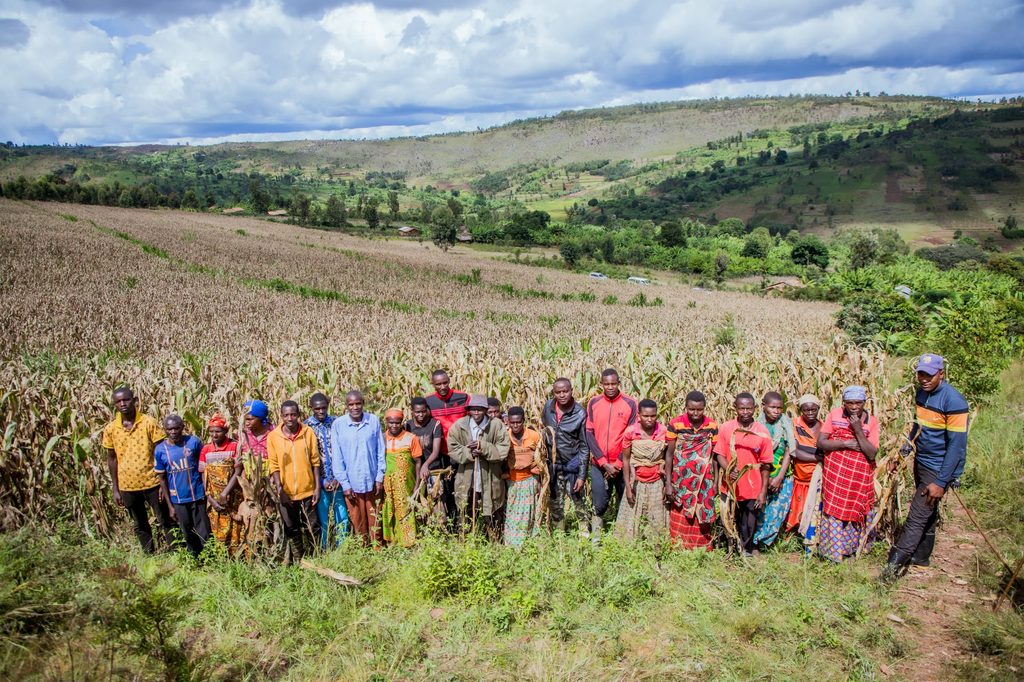
IFDC’s Impact Evaluation Task Force presents this report showcasing the organization’s commitment to rigorous impact evaluation and evidence-based programming throughout 2025.
The year marked a pivotal milestone with the successful integration of Food and Nutrition Security (FNS) indicators within our Monitoring, Evaluation, and Learning (MEL) Results Framework, positioning IFDC at the forefront of demonstrating evidence-based pathways between soil health interventions and household nutrition outcomes. Through comprehensive evaluations spanning eight major programs across Africa, IFDC has generated critical insights that validate the effectiveness of integrated approaches combining improved inputs, technical knowledge, market linkages, and supportive institutional frameworks, directly informing future programming strategies and policy engagement at national and international levels.
Evaluations Conducted in 2025
IFDC successfully conducted comprehensive evaluations representing a diverse portfolio of agricultural development initiatives. These evaluations comprised baseline studies, mid-term reviews, and impact assessments across countries and agricultural systems in sub-Saharan Africa. These evaluations were designed to generate actionable evidence for adaptive programming, validate intervention effectiveness, and contribute to broader knowledge for sustainable agricultural development.
| Project/Program | Country(ies) | Evaluations Conducted |
|---|---|---|
| Accelerating Agriculture and Agribusiness in South Sudan for Enhanced Economic Development (A3-SEED) | South Sudan | • Internal End-of-Project Impact Assessment • External End-of-Project Impact Assessment |
| Communal Approach to the Agricultural Market in Benin, Phase 3 (ACMA3) | Benin | • Mid-Term Review |
| HortiNigeria | Nigeria | • Internal Impact Assessment |
| Integrated Seed Sector Development in the Sahel (ISSD/Sahel) | Mali, Niger | • Project Evaluation |
| Private Seed Sector Development, Phase 2 (PSSD2) | Burundi | • Baseline Assessment • Seed Value Chain Analysis |
| Soil Values | Burkina Faso, Mali, Niger, Nigeria | • Baseline Assessment • Smallholder Farmer Profiling |
| Transform Soil Fertility Management in Ethiopia (TRANSFORM) | Ethiopia | • Baseline Assessment • Climate Change Adaptation Analysis • Program Component Studies • Conflict Sensitivity Analysis |
| Triple Resilience (3R) | Mozambique | • Conflict Analysis |
Integration of Indicators within IFDC’s MEL Framework
The incorporation of FNS indicators within IFDC’s MEL framework represents strategic alignment positioning soil health as a foundational driver of sustainable food systems transformation. This integration supports IFDC’s contribution to Sustainable Development Goal (SDG) 2: Zero Hunger and SDG 15: Life on Land, advancing the global target of converting 8 million hectares to sustainable farmland use. Within IFDC’s results hierarchy, FNS indicators serve as critical intermediate outcome measures bridging soil health improvements (outputs) with broader development impacts (outcomes). This positioning enables IFDC to:
- Establish evidence-based impact pathways linking soil fertility interventions to household welfare outcomes, moving beyond traditional productivity metrics.
- Generate policy-relevant evidence for integrated soil-nutrition strategies informing national agricultural investment frameworks.
- Demonstrate additionality by quantifying how soil health investments generate nutrition co-benefits beyond direct productivity gains.
IFDC has adopted three complementary indicators that provide comprehensive coverage of household food security dimensions:
- Household Dietary Diversity Score (HDDS), which measures access to diverse food groups.
- Household Food Insecurity Access Scale (HFIAS), which assesses food access constraints.
- Food Consumption Score (FCS), which evaluates dietary diversity and nutritional importance.
IFDC’s MEL approach employs rigorous analytical methods to establish clear attribution pathways between soil fertility interventions and nutrition outcomes, ensuring observed improvements can be credibly attributed to soil health interventions.
Key Evaluation Findings and Insights
Three major impact evaluations were conducted in 2025, demonstrating the effectiveness of IFDC’s integrated approaches to agricultural development.
The evaluations span different agricultural systems and intervention modalities – from horticultural value chain development in Nigeria to seed sector strengthening in West Africa.
Collectively, these findings validate IFDC’s programmatic approaches while revealing critical insights about technology adoption patterns, market dynamics, and the importance of complementary support systems.
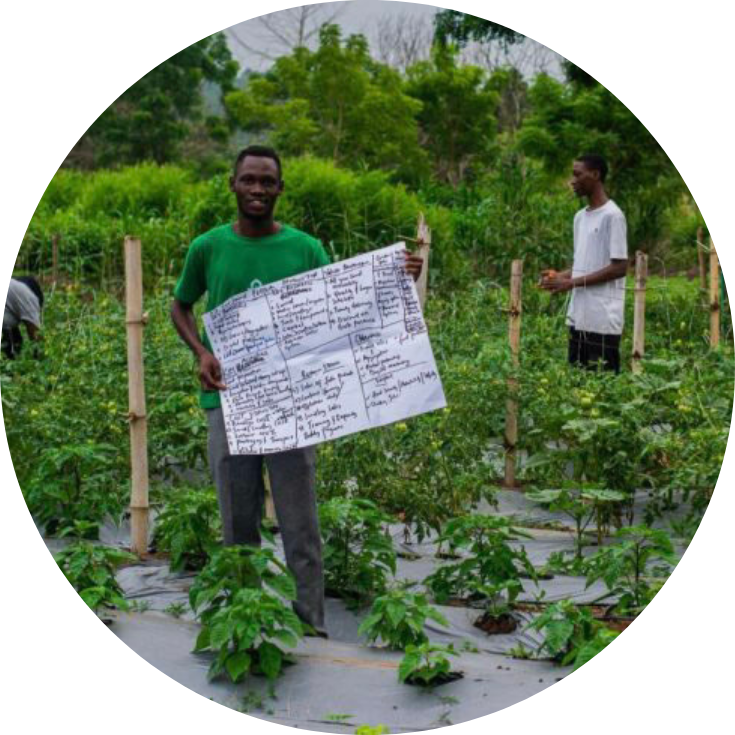
HortiNigeria: Integrated Value Chain Development Program Impacts
The HortiNigeria impact assessment demonstrated the effectiveness of integrated value chain approaches in driving technology adoption, productivity improvements, and market participation across Nigeria’s horticulture sector.
The evaluation revealed strategic insights about the differential adoption of innovations based on their cost-benefit profiles and the critical role of support systems in facilitating agricultural transformation.
- Technology Adoption Patterns: High uptake rates were observed for practical, low-cost innovations: plastic crates (77.9%), improved seeds (63.6%), hybrid seeds (55.1%), and nursery trays (52.3%). Capital-intensive technologies showed predictably lower adoption rates: greenhouses (20.9%) and solar pumping systems (9.6%). These results highlight the importance of affordability and immediate returns.
- Productivity and Income Generation: Average yields demonstrated strong crop-specific potential: tomato (15,387 kg/ha), pepper (8,829 kg/ha), onion (5,657 kg/ha), and okra (3,956 kg/ha). Corresponding annual income levels reflected market value: tomato (29 million Nigerian naira [₦], or U.S. $21,428.90), pepper (₦ 21.6 million, or U.S. $15,960.80), okra (₦6.7 million, or U.S. $4,950.81), and onion (₦5.2 million, or U.S. $3,842.42).
- Market Integration Success: A total of 73.7% of farmers reported improved market access, citing better prices (61.7%) and hub support (61.7%) as primary factors. However, persistent constraints included transport costs (48.8%), price volatility (24.0%), and inadequate storage facilities (20.4%).
- Financial Inclusion Challenges: Only 13.7% of farmers accessed credit, primarily through cooperatives (54.8%) and banks (33.3%). Barriers included prohibitive interest rates (39.5%) and complex application processes (25.7%), indicating the need for innovative financial products.
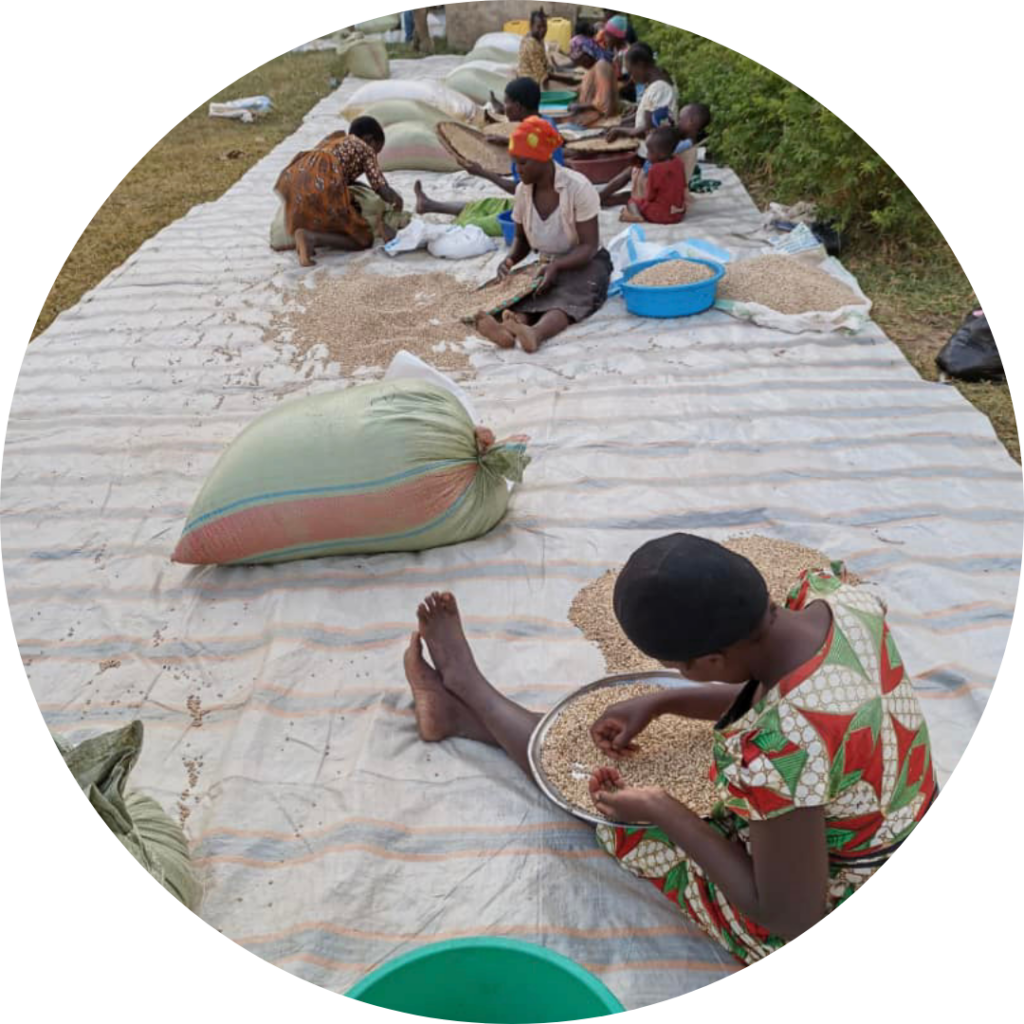
ISSD/Sahel: Seed Systems Strengthening Impacts
The ISSD/Sahel evaluation revealed nuanced outcomes in seed sector development in Mali and Niger, demonstrating progress in institutional strengthening while highlighting the complexity of translating improved seed access into consistent productivity gains across different agroecological contexts.
- Cooperative Strengthening Achievements: Notable improvements in governance, financial management, and seed distribution systems were documented across both countries. Cooperatives in Mali demonstrated greater commercialization resilience, while those in Niger faced challenges in maintaining consistent market demand.
- Seed Access and Adoption Dynamics: Increased access to improved seeds was achieved, particularly where local demand aligned with cooperative distribution capacity. Farmers in Mali demonstrated better access to preferred certified seed varieties, while those in Niger exhibited more uneven adoption patterns influenced by geographic and market constraints.
- Yield Impact Variability: In Mali, clear yield gains were seen in focus crops where improved seed access was complemented by appropriate agronomic practices and favorable conditions. In Niger, limited yield improvements were seen, with some crops showing declines, demonstrating that seed access alone is insufficient without complementary support systems.
- Critical Success Factors:
- Seed access must be coupled with comprehensive agronomic support and extension services.
- Cooperative governance improvements require sustained financial sustainability mechanisms.
- Yield outcomes are heavily dependent on local agroecological conditions and supporting infrastructure.
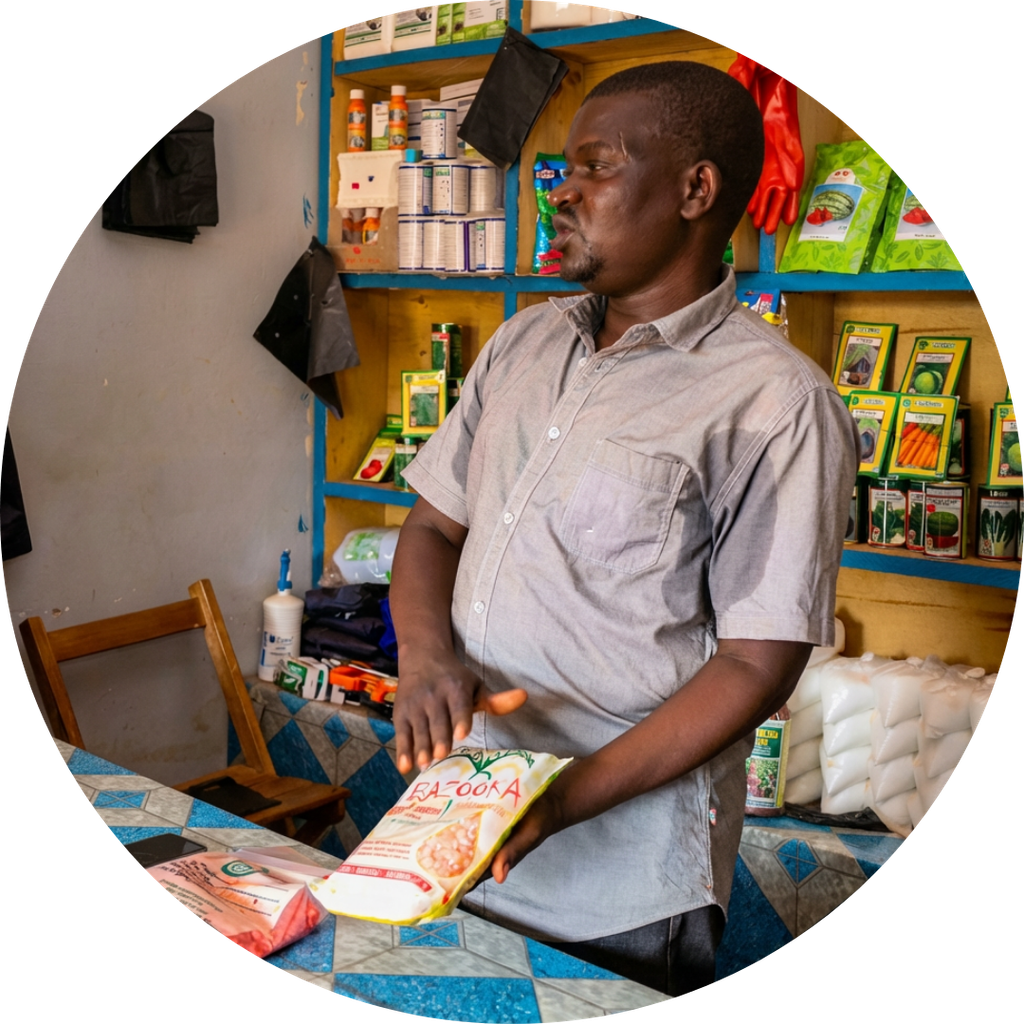
A3-SEED: Strengthening Seed Systems Beyond Humanitarian Aid
Despite 15 years of humanitarian seed distribution, low-quality and poorly adapted aid seeds had failed to boost productivity in South Sudan. A3-SEED sought to transform this system by supporting nine domestic seed companies under the Seed Trade Association of South Sudan (STASS). The project focused on agricultural productivity, commercialization, food security, and nutrition diversity.
- Insights from Project Assessments:
- Baseline (2021): Seed aid substituted local varieties without raising yields, eroding genetic diversity and entrenching dependency.
- Mid-Term (2023): Private seed companies demonstrated clear productivity gains, but demand remained weak.
- Endline (2025): The project achieved durable household-level impact, with maize yields nearly doubling among early adopters of domestic seed, but failed to shift county-level averages.
- Strategic Lessons:
- Seed Aid Inefficiency: Continued reliance on imported aid seeds is ineffective and distorts local markets.
- Private Sector Effectiveness: Domestic seed companies can deliver sustainable productivity gains when farmers adopt improved varieties.
- Systemic Barriers: Lack of certification, weak demand, and procurement practices prevent scaling.
- Policy Leverage: Localizing seed aid procurement and establishing certification systems are critical to unlock sectoral transformation.
- Humanitarian Development Nexus: Aligning aid with domestic production could strengthen resilience, peace, and market systems.
A3-SEED demonstrated that private seed companies can sustainably raise yields, and impact was strong at household level. However, food security, nutrition diversity, and commercialization remained stagnant due to limited adoption, weak farmer purchasing power, and continued reliance on imported seed aid. The project’s sustainability is proven, but scalability requires systemic reforms: national seed certification, localized procurement, and stronger market infrastructure.
Conclusion

The 2025 evaluation portfolio represents a transformative milestone for IFDC’s commitment to evidence-based programming and impact measurement. The successful integration of FNS indicators positions IFDC as a global leader in demonstrating pathways between soil health interventions and nutrition outcomes, while our evaluation findings consistently validate the effectiveness of integrated approaches combining technical innovations, institutional strengthening, market linkages, and supportive policy environments.
Moving forward, IFDC will prioritize cost-effective technology scaling, innovative financing mechanisms, market systems development, and institutional sustainability to maximize impact. Through continued innovation in evaluation methodology and adaptive programming informed by rigorous evidence, IFDC will continue leading the transformation of global food systems through sustainable soil health improvements and integrated agricultural development approaches.


Innovations and Research
Department
Innovations and Research Department
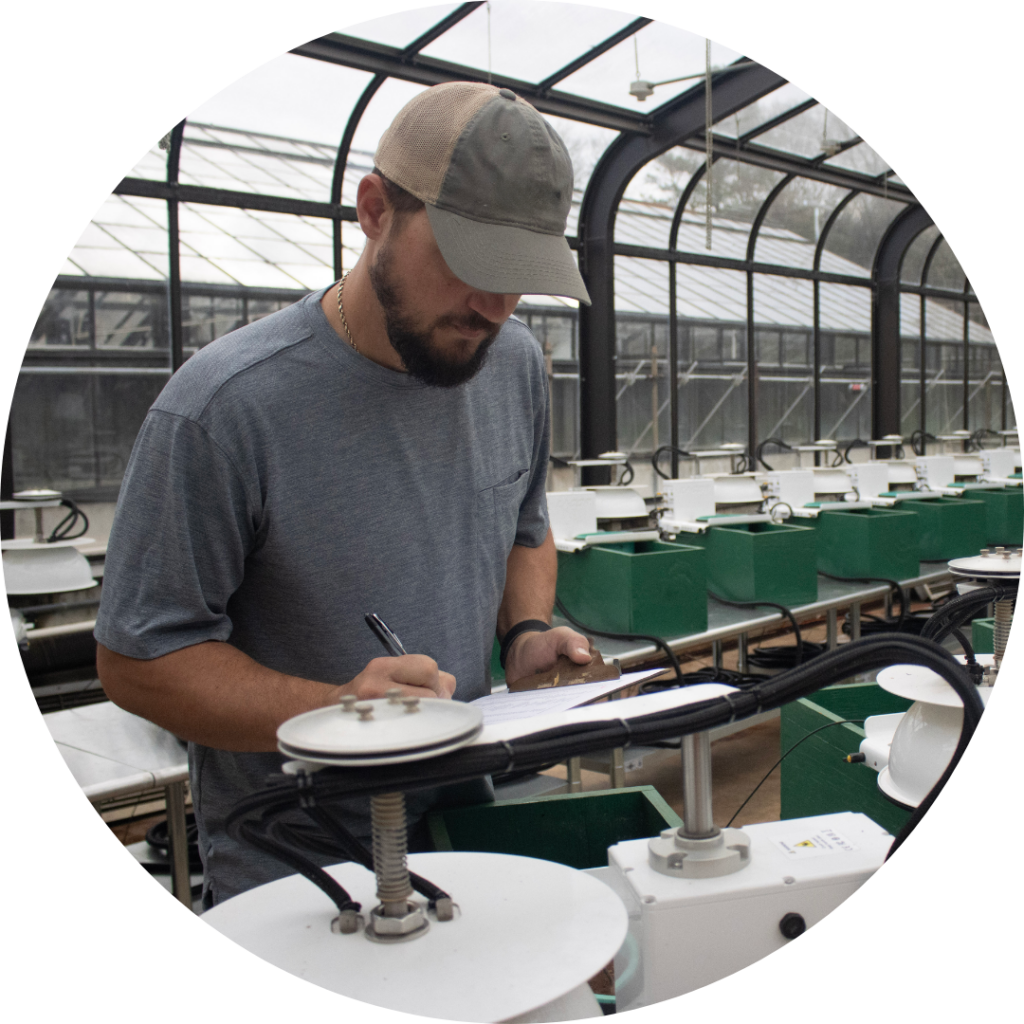
In 2025, IFDC’s Innovations and Research Department, an 11-member team of scientists, research associates, chemists, and technicians, contributed to seven peer-reviewed publications, delivered 10 presentations at international conferences, and organized two symposiums. Additionally, the department submitted 13 research reports to various funding agencies.
The department secured funding for eight new projects totaling U.S. $2.2 million, and over the course of the year, its members executed 23 research projects spanning diverse innovations in fertilizer development. These included enhanced efficiency nitrogen fertilizers (EENFs), exploration of urea usage for hydroponics, development of ammoniated superphosphate fertilizers, micronutrient and slow-release nitrogen fertilizers, multi-nutrient slow-release fertilizers such as alternative potassium fertilizers, and characterization of novel boron and zinc fertilizers.
“Comprehensive Evaluation of Enhanced Efficiency Fertilizers for Nitrogen Use Efficiency (NUE),” the department’s key research project initiated in 2025, is a three-year initiative designed to improve NUE.
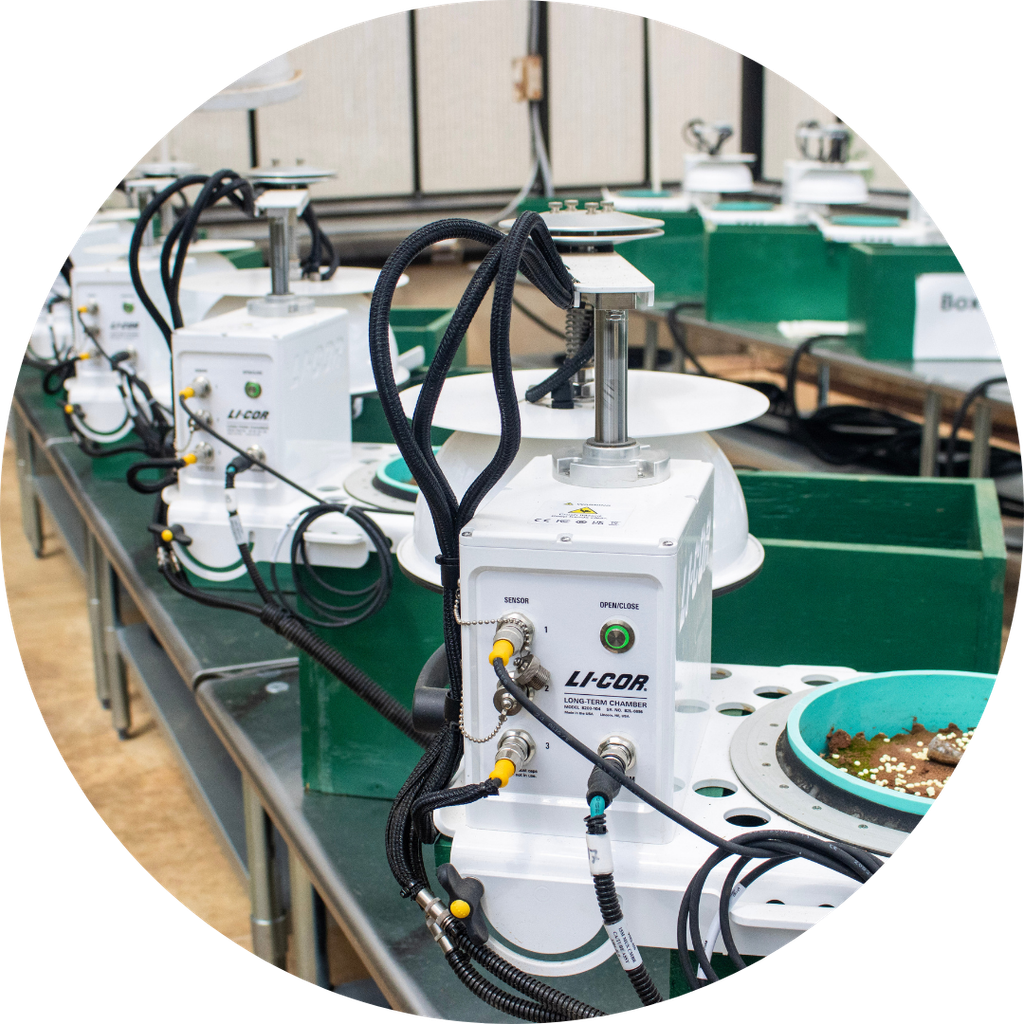
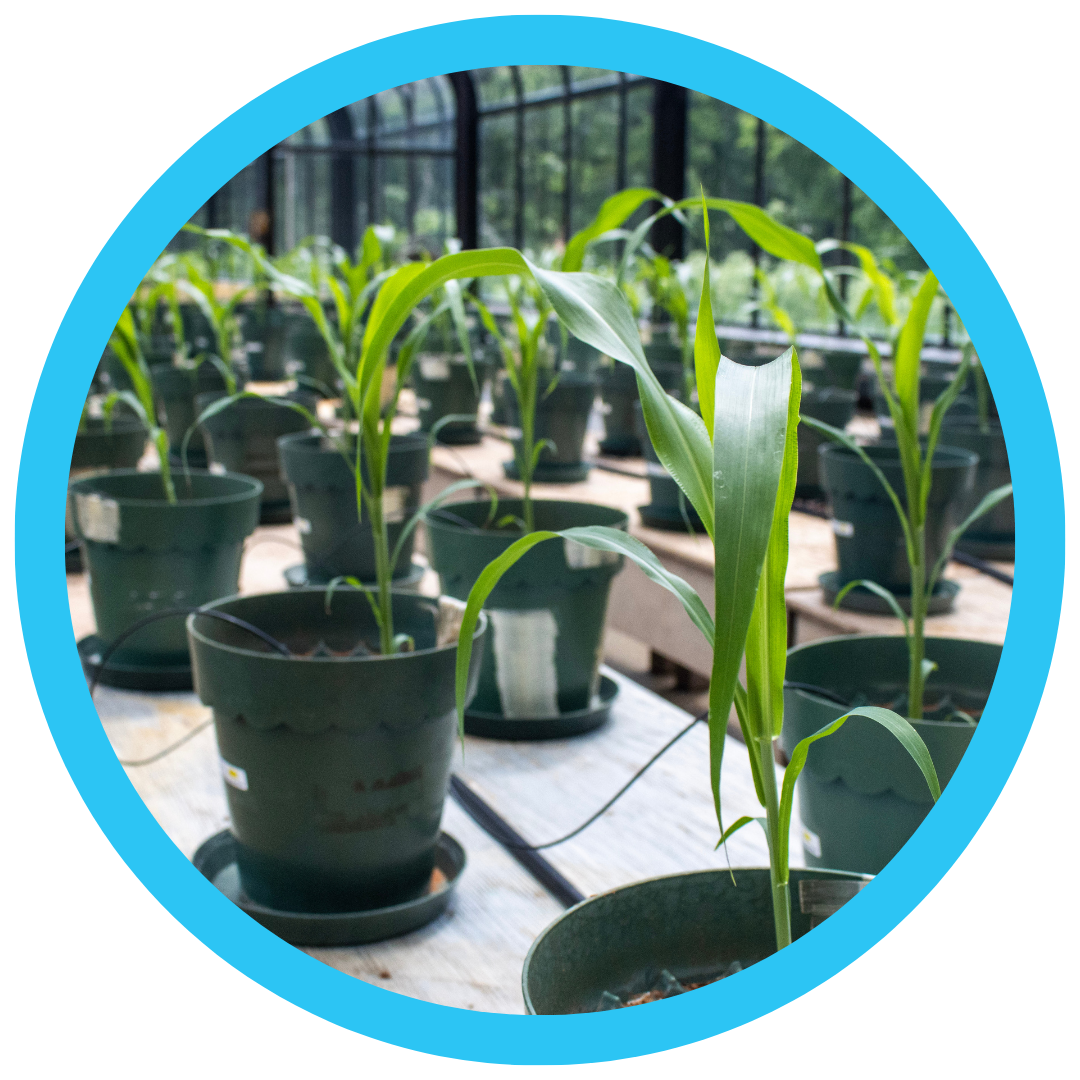
Addressing the challenge of high environmental losses, such as ammonia volatilization and N2O emissions, the project systematically screens 25 EENF technologies across categories including enzyme inhibitors, controlled-release fertilizers, and nano-fertilizers. Laboratory and greenhouse phases then serve as a screening platform to identify the most effective formulations.
Laboratory incubation studies will evaluate the EENF technologies to monitor nitrogen release and transformation into inorganic forms across contrasting acidic and alkaline soil types. Ammonia volatilization will be quantified using standardized pots flushed with air, and nitrate leaching losses will be quantified using soil columns, with measurement of N2O emissions via automated static chambers.
Concurrently, greenhouse pot studies will utilize fast-growing grasses, such as ryegrass, to generate detailed data on nitrogen availability trends through multiple biomass harvests over a single season. Selected technologies will be evaluated in field trials.
Pilot Plant
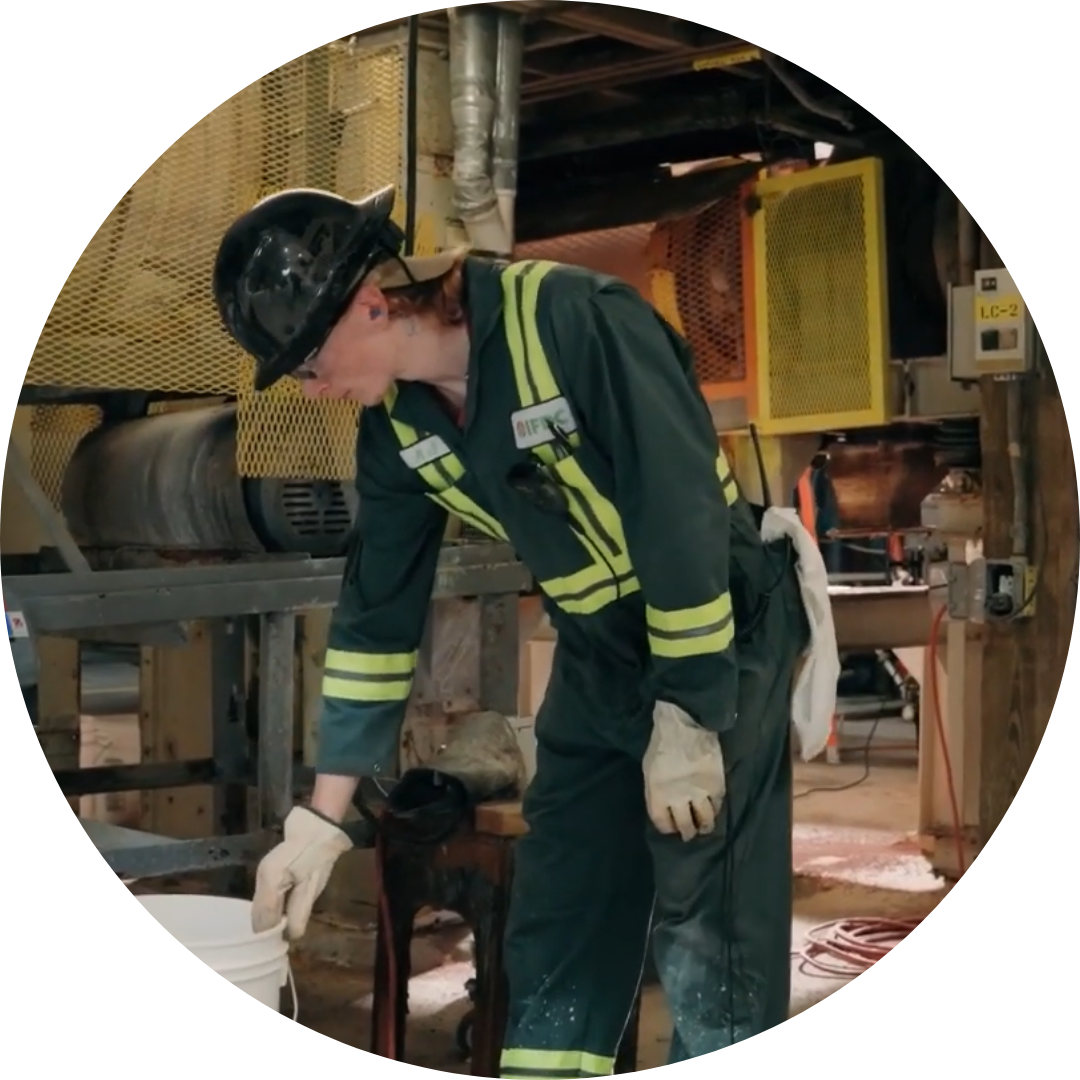
In 2025, the Engineering and Pilot Plant Department completed 15 projects for 11 industry partners. These projects included pilot plant activities, product testing, and an engineering study:
- Pilot plant activities
- Granulation of nitrogen-based fertilizers of various formulations.
- Granulation of controlled-release phosphate-based fertilizers of various formulations.
- Granulation of various phosphate-based fertilizer formulations with incorporation of added-value components.
- Incorporation of soil amendment additives into nitrogen- and phosphate-based fertilizers.
- Production of various organo-mineral fertilizer formulations.
- Granulation of multiple nitrogen, phosphorus, and potassium (NPK) formulations.
- Product characterization/evaluation
- Various product characterizations and physical properties testing for multiple customers to evaluate handling and storage characteristics, dustiness, and the effects of additives.
- Engineering
- Feasibility study for a commercial facility producing a special liquid fertilizer.
Research Projects
Swipe or use keyboard arrows to navigate. Click project for more info.


Budget: U.S. $43,666
Implementing Partners: Ministry of Agriculture, Republic of The Gambia
Donors: World Agroforestry (ICRAF), Islamic Development Bank (IsDB)
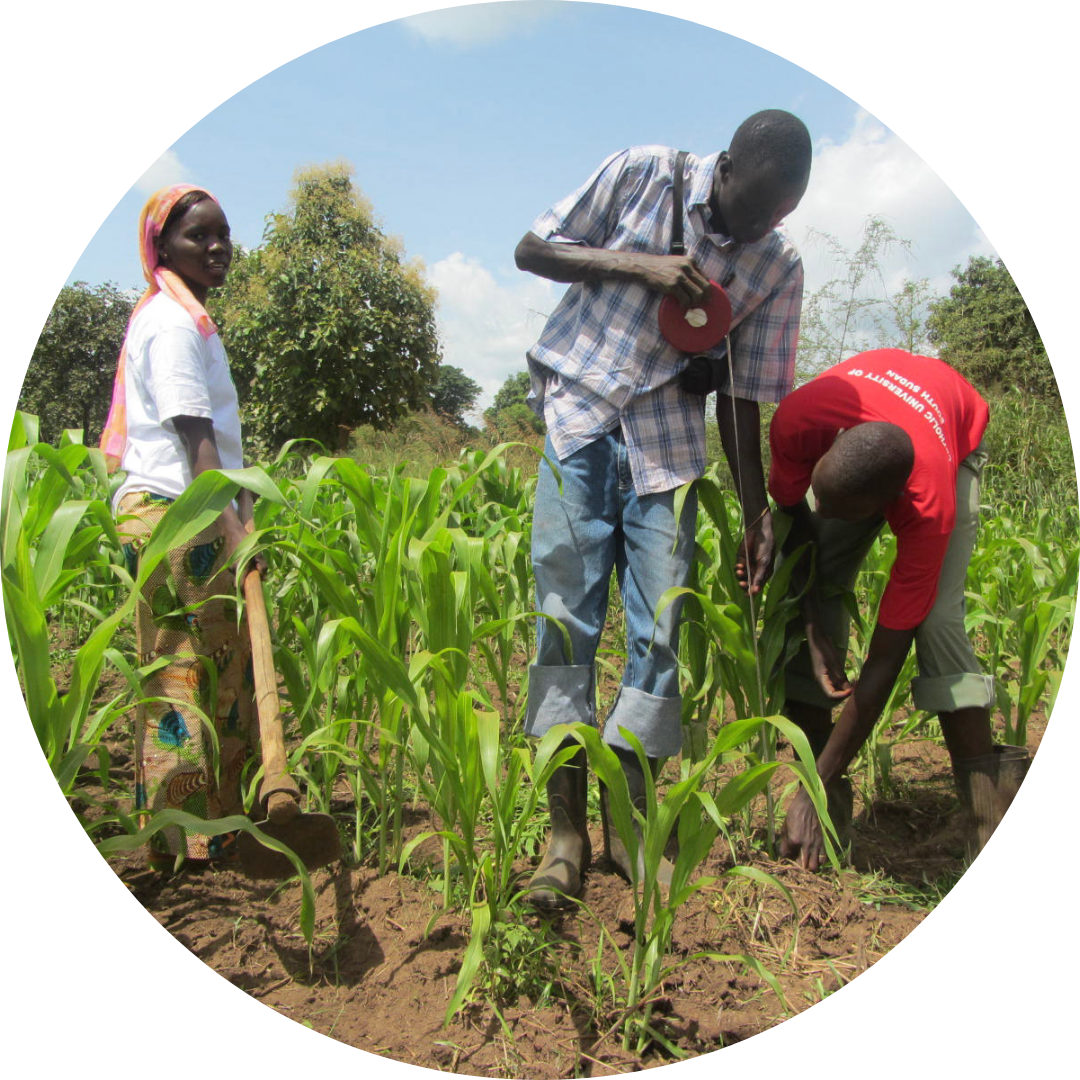
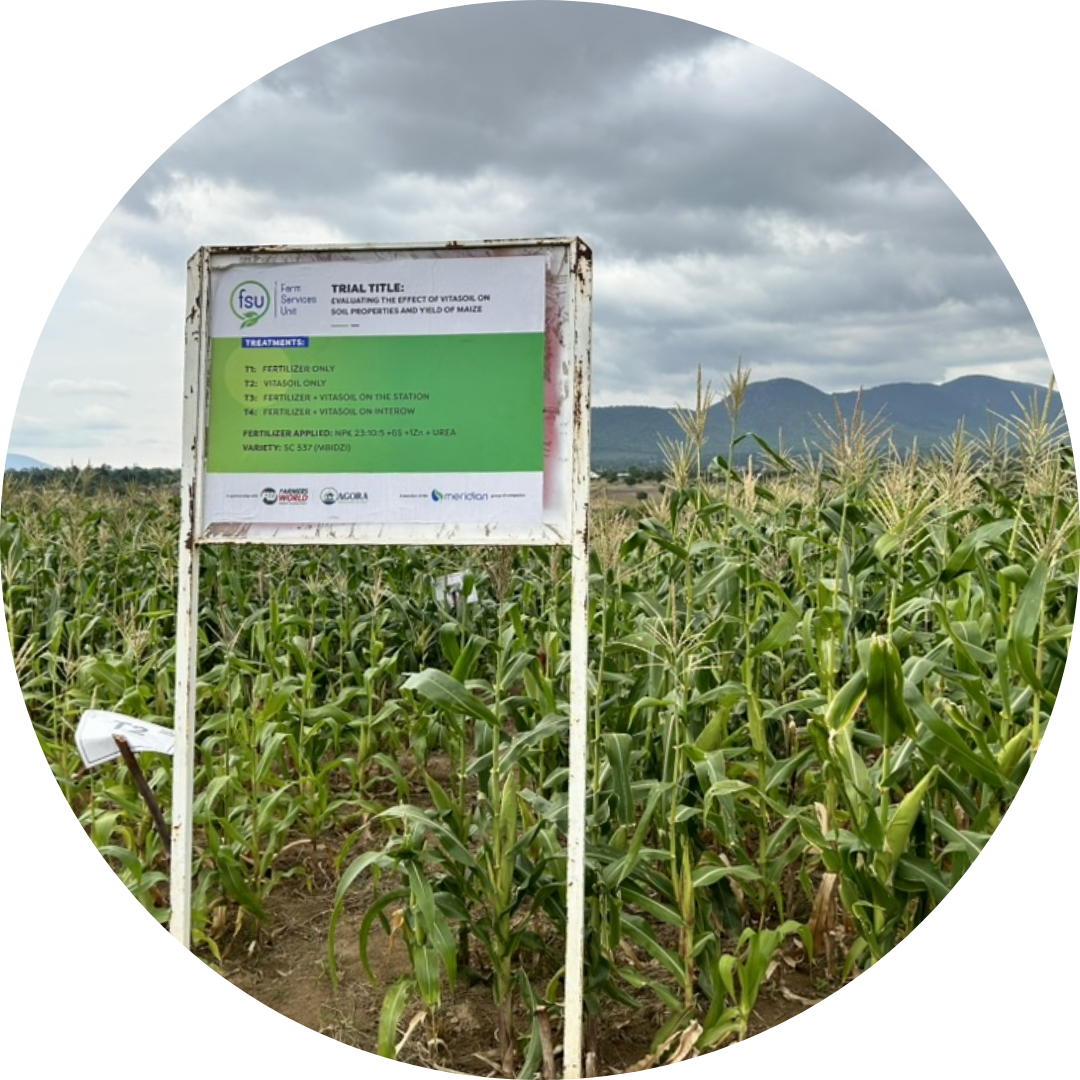
The Regional Soil Fertility Mapping Project in the Gambia supports national efforts to improve soil fertility management through evidence-based trials on crop response to fertilizer. In 2025, a tailored training manual and technical handouts were compiled to support trial activities. Training on trial design, implementation, and statistical analysis was conducted, strengthening the technical skills of national partners. Ongoing online and remote backstopping has been provided to support trial design, execution, data collection, and statistical analysis.
Research Story Underuse of Fertilizer in Africa Is an Environmental Catastrophe
Read the Story
While reducing fertilizer use is often proposed as a solution to agricultural greenhouse gas emissions, many parts of sub-Saharan Africa face critical challenges, such as low crop yields, decreasing soil fertility, and food insecurity, due to the underuse of fertilizer.
Lowering fertilizer use in sub-Saharan Africa would slightly reduce emissions, but it would also drive land expansion, including deforestation, to maintain or boost crop yields, ultimately increasing net emissions. This relationship between low-input systems and land expansion has been well documented in previous analyses of African cereal systems.
In reality, efficient fertilizer application can rebuild soil health, boost crop productivity, nourish more people, and help curb environmental impacts.
The judicious use of fertilizer, concentrated on soil health and plant nutrition, will allow sub-Saharan Africa to feed the sub-continent without expanding into natural ecosystems. This focus on soil health is the bridge between productivity and sustainability.
Identifying the Problem
Fertilizer use in sub-Saharan Africa averages well below agronomic needs, leading to yields that are far below the potential. Modeling studies show that, without improvements in soil fertility and fertilizer use, feeding a growing population of around 10 billion people by 2050 would require up to 60% more cropland, indicating a need to expand from about 136 million to 220 million hectares or more.
Many farmers have already expanded their farmland because of soil degradation. While land expansion itself is an issue, the source of this new farmland is even more troubling. Much of it would come from forests and savannas, leading to the release of massive carbon stocks and acceleration of biodiversity loss.
Understanding the Solution
Efficient fertilizer use is key to limiting deforestation and greenhouse gas emissions. Applied judiciously to responsive soils, fertilizer can increase yields by four to five times compared to current conditions. Yield response meta-analyses often find yield improvements from 50% to 300% for depleted soils.
Meeting future food demand with adequate nutrients would require only one-quarter of the land currently projected, sparing over 150 million hectares. Improving nutrient recovery efficiency can achieve similar land-sparing benefits while requiring lower volumes of fertilizer. Global evidence shows that targeted, efficient nutrient management can match the impact of higher application rates while reducing waste and protecting ecosystems.
The Climate Payoff
Avoiding cropland expansion could prevent hundreds of millions of tons of carbon dioxide-equivalent emissions per year. Guidance from the Intergovernmental Panel on Climate Change (IPCC) shows that nitrous oxide emissions from applied nitrogen are small relative to carbon dioxide from deforestation. Well-managed fertilizer use is therefore a climate strategy, not a climate problem.
The Principle of Judicious Fertilizer Use
Smart fertilizer use is rooted in proven approaches, including:
- Integrated Soil Fertility Management (ISFM) – practices related to cropping, fertilizers, organic resources, and other amendments to increase production and input use efficiency.
- The 8R Framework for Enhanced Soil Health, Plant Nutrition, Sustainable Agriculture, and Health – an expansion of the 4Rs of Nutrient Stewardship (Right Source, Right Rate, Right Time, Right Place) that also includes Recycle (closing nutrient loops), Rebuild (soil capital), Record (data, a knowledge-driven approach), and Resilient (climate and market systems).
- Directing nutrients to high-potential, responsive soils – a targeted approach that ensures limited fertilizer resources are used where they will generate the highest returns and restore productivity.
- Combining mineral fertilizers with organic matter and good agronomy – a balanced soil fertility solution that improves nutrient availability, soil health, and long-term resilience.
- Strengthening markets, credit, extension, and input quality systems so farmers can use nutrients efficiently, not excessively – a systems-level solution that equips farmers with reliable inputs, knowledge, and financial access to apply fertilizers effectively while reducing waste and environmental pressure.
These principles help ensure that fertilizers restore soils while protecting the environment.
Soil Health and Sustainability
Decades of nutrient depletion have undermined soil health and productivity across sub-Saharan Africa. Proper fertilizer use and smart nutrient management, on the other hand, boost soil fertility and yields, preserve forests and biodiversity, and reduce greenhouse gas emissions.
Efficient fertilizer use is also central to achieving planetary goals, including Sustainable Development Goal (SDG) 2: Zero Hunger, SDG 13: Climate Action, and SDG 15: Life on Land.
It is time to move beyond the misconception that using less fertilizer is a net benefit for the environment and embrace targeted, responsible use to restore soils and safeguard the climate. Fertilizer use is not a compromise between people and the environment; it is the bridge that unites them.

Research Story Evaluating Phosphate Rock for Direct Application: Opportunities for Resource-Limited Regions
Read the Story
IFDC has spent over five decades advancing phosphate rock (PR) research. PR is the raw material used to produce the majority of acidulated phosphate (P) fertilizers used throughout the world, but it can also be used for direct application with little processing. However, unlike the essentially uniform acidulated fertilizer products made with PR, the PR itself can vary greatly in composition depending on certain factors.
This short Q&A article explores questions surrounding the proper use of direct application of phosphate rock (DAPR) and reviews modified PR technologies that hold significant agronomic potential, particularly in resource-limited countries and regions.
What is the concept of DAPR, and why does PR vary so widely in reactivity and agronomic effectiveness?
DAPR generally involves grinding the PR until at least 80% passes through a 100-mesh sieve and then applying it directly to the soil following specific instructions for maximum effect. Production of this P source requires only physical processing without any chemical treatment of the rock.
The primary mineral in PR is called apatite. Due to natural differences in the chemical and mineralogical composition of its crystals, apatite minerals may feature a vast range of reactivity, solubility, and agronomic effectiveness. Thus, some are excellent P fertilizers when applied directly, while others are not.
How do we know whether a direct application of PR will be highly effective agronomically?
Agronomic studies have shown that PR effectiveness is determined by factors such as the type of apatite in the PR, soil pH, the crop being grown, specific soil conditions, soil management, and more. Estimating the agronomic effectiveness of PR can therefore be complex. The freely accessible Phosphate Rock Decision Support System (PRDSS) model was developed to assist with these calculations.
The PRDSS evaluates the quality of PR for direct application using laboratory solubility methods that help determine how effectively the PR will provide phosphate to crops.
Can low-reactivity PR be used for direct application instead of acidulated P fertilizers?
PR with low reactivity should not be utilized without some type of treatment. The most common approach is acidulation, which converts PR into highly water-soluble compounds readily available to plants. While acidulation is by far the most widely used method for producing P fertilizers, it is also expensive.
Modified PR fertilizers, such as partially acidulated phosphate rock (PAPR) and compacted fertilizers, offer alternative approaches, especially useful for resource-limited countries. In partial acidulation, smaller amounts of acid are used as compared to those in complete acidulation, and compacted fertilizers are produced by blending PR with an acidulated P fertilizer.
The right PR fertilizer choice is case specific, and preliminary research is necessary to determine whether a modified PR fertilizer is feasible and, if so, which type would be most effective.
Is there potential for a more intense use of DAPR or its modified fertilizer products?
Adoption of these alternative fertilizers remains low for multiple reasons. For example, fertilizer companies do not invest as needed in basic research to produce feasible modified PR fertilizers, and farmers are not generally educated on how to use DAPR and modified PR fertilizers appropriately. That said, renewed interest in studying these fertilizers’ potential, especially for resource-poor smallholder farmers in Africa, has lately emerged again.
Which research centers lead in the production and agronomic use of these types of P fertilizers?
While many organizations around the globe have studied these products for decades, IFDC stands out as the most influential institution in advancing knowledge on how to produce and use these types of fertilizers wisely. IFDC researchers have conducted numerous studies, published papers, delivered lectures, and profoundly shaped global understanding and use of these P sources.
PR remains a vital yet complex resource in global food production in some regions, with its effectiveness depending heavily on source characteristics, soil conditions, and crop needs. While acidulated fertilizers dominate the market, modified PR technologies and decision support tools such as the PRDSS may open new pathways for sustainable, cost-effective solutions, especially in regions where access to high-grade fertilizers is limited.


Scaling Soil Health and Impact
Department
Scaling Soil Health and Impact Projects
Swipe or use keyboard arrows to navigate. Click project for more info.


Budget: €13 million
Implementing Partners: Agriterra, Ministry of Agriculture, Animal Industry and Fisheries (MAAIF), National Agricultural Research Organization (NARO), local government offices, and community-based organizations within the Kigezi, Mount Elgon, and Rwenzori regions
Donors: Embassy of the Kingdom of the Netherlands in Uganda
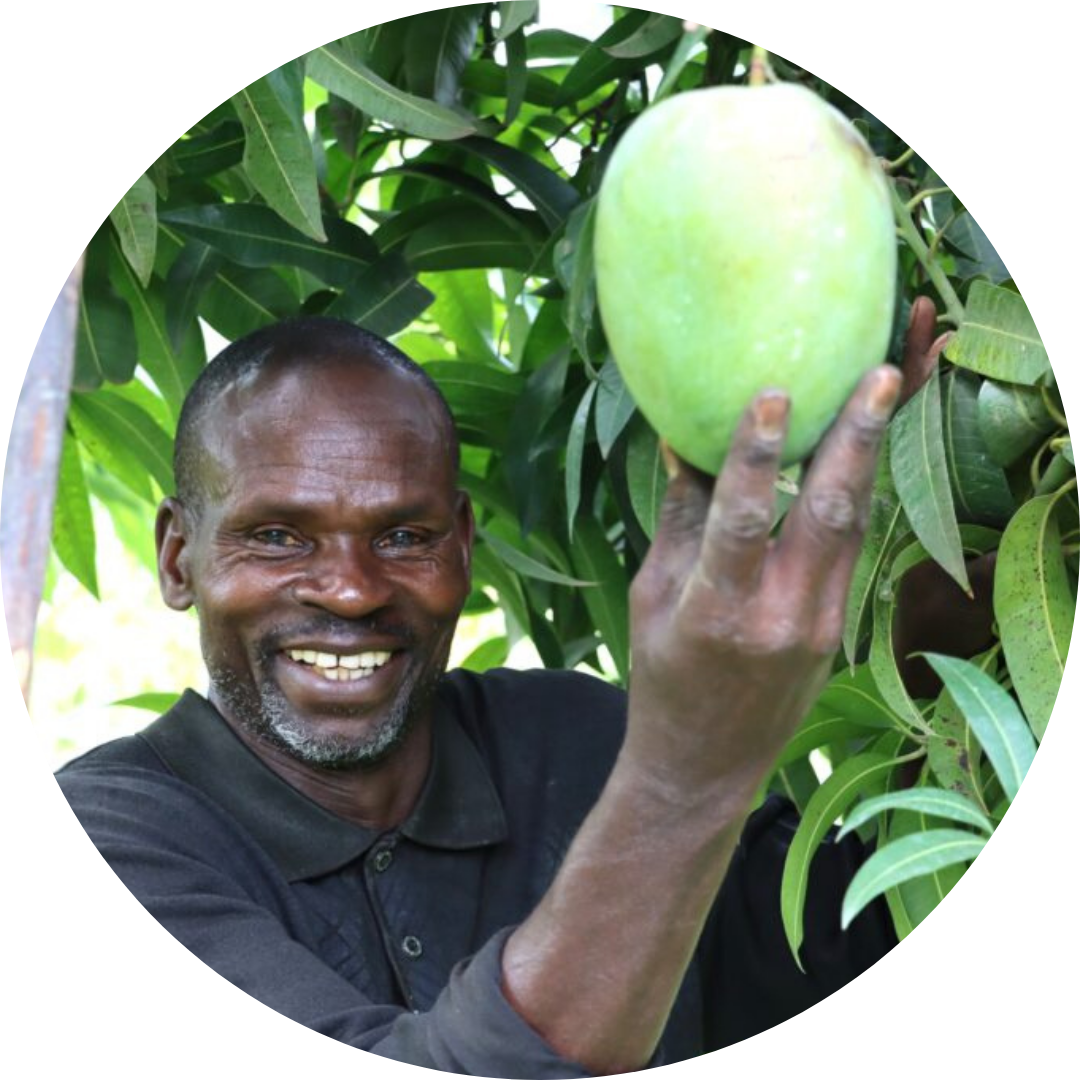
BRIGHT operates across 233 communities in Uganda, working with 6,660 farmer innovators and 1,349 community nutrition champions. To date, BRIGHT has empowered 89,483 households through the Participatory Integrated Planning (PIP) approach, with 79.3% implementing household plans that address multiple challenges. In total, 84,316 households participated in food and nutrition initiatives, with 85% now achieving an acceptable Household Dietary Diversity Score, compared to 60% at baseline. The project trained 86,012 households on soil and water conservation, 71,517 on climate-smart practices, and 70,293 on integrated soil fertility management (ISFM), with 33,950 hectares now under sustainable practices, increasing incomes by at least 35% for 32,687 households. BRIGHT has improved market access by training 80,650 households and 38 private sector partners, rehabilitating 77.4 kilometers of rural roads, and supporting farmer organizations. Financial inclusion has strengthened 540 village savings and loan associations (VSLAs) and financial partnerships. Additionally, 233 communities are implementing village vision plans, and 15 micro-watersheds have been restored and are being managed sustainably.
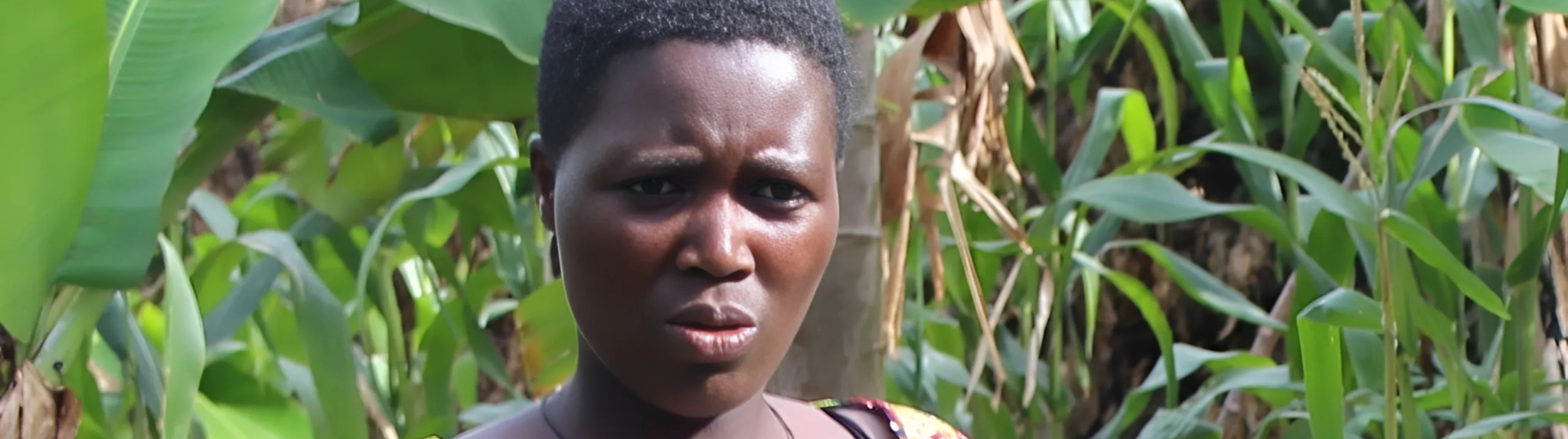
Success Story Overcoming Challenges and Fostering Community Leadership: Jacqueline Nabeza’s Inspiring Story
Read the Story
Jacqueline Nabeza, a mother of three from Gahororo Hill in Burundi, had long faced challenges to ensuring her family’s livelihood. Before receiving training from the Soil Fertility Stewardship Project (PAGRIS), her traditional agricultural practices had enabled her to harvest only 100 kg of beans per season – not enough to feed her family and generate a stable income.
Like many other farmers in the region, she had depended on selling in the market, where prices fluctuated, making her situation even more precarious.
When Jacqueline was selected to take part in PAGRIS training courses in 2020, she saw an opportunity to change her situation. However, not everyone shared her enthusiasm. Her husband, deeply rooted in traditional farming methods, rejected the idea of experimenting with new techniques.
But with determination, she applied the project’s lessons on a small plot – and proved their effectiveness.
Jacqueline’s first harvests were a revelation. Thanks to the techniques she learned, such as using contour lines, organic fertilizers, and crop rotation, her production soared. She harvested 80 kg of beans on the small experimental plot alone – compared to previous harvests of 100 kg from her entire farm – then harvested 500 kg in total in 2025. This success has not only ensured her family’s food security but also enabled her to sell surpluses on the market, generating additional income.
“When I harvested 80 kg from a small plot, my husband understood that I wasn’t wasting my time. Today, he’s my biggest supporter,” she commented with pride.
The change in Jacqueline’s life didn’t stop with her family. Her success has inspired other women of Gahororo Hill. By sharing her knowledge, Jacqueline has helped at least five other women adopt these practices and improve their harvests.
Jacqueline’s growing leadership has earned her local recognition, and she is now in demand to assist with self-help groups and training courses for farmers.
Given the impact of her experience, Jacqueline has no intention of stopping here: her ambitions include diversifying her crops and helping even more women adopt these modern farming methods.
However, to maximize her impact, she stresses the need for better access to quality seeds and ongoing training.
Jacqueline’s story wonderfully illustrates the impact of the PAGRIS project on rural communities. She proves that with determination, sound knowledge, and the right support, farmers can transform their lives, improve food security for their families, and participate in the development of their communities.
Today, Jacqueline’s success represents the power of innovation and resilience in agriculture.
Success Story Advancing Soil Health, Technology, and
Social Inclusion Across the Sahel
Read the Story
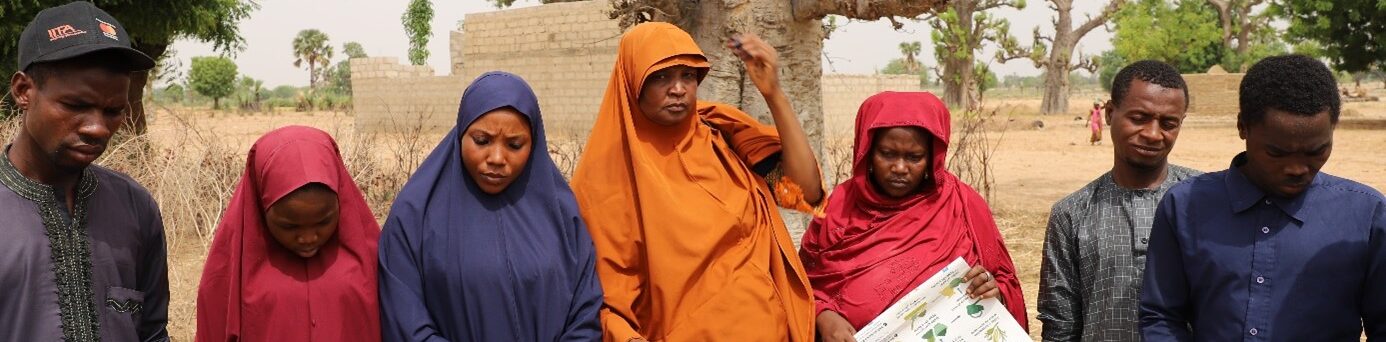
The Soil Values program has rolled out a series of innovative initiatives across the Sahel to promote integrated soil fertility management (ISFM), build the capacity of rural stakeholders, disseminate appropriate, useful technologies to smallholder farmers, and advance social inclusion.
The program has deployed a cascade training approach in Burkina Faso, Mali, Niger, and Nigeria to strengthen soil health. These and other actions are helping to build a more resilient, sustainable, and inclusive agriculture sector in the face of climatic, economic, and social challenges.
Cascade training is a core component of the Soil Values program, allowing for the rapid dissemination of knowledge on ISFM. The program organized cascade training sessions to strengthen the technical knowledge of extension agents, agricultural district leaders, and farmer leaders on soil fertility, mineral and organic fertilizers, compost, bokashi, biochar, assisted natural regeneration, zaï, and other agroecological practices adapted to local conditions.
In Mali, this approach targeted the Sikasso and Bani watersheds, where agents and farmer leaders were trained. These participants, or relay farmers, in turn became vectors of knowledge for their communities, passing on essential knowledge about agroecological practices they had learned.
This cascade training initiative has been welcomed by local authorities, such as Alkassoum Barka, Regional Director of Agriculture in Sikasso, who recognized the program’s considerable impact. In Burkina Faso and Nigeria, similar training courses have enabled farmers to learn how to produce their own organic fertilizers and use technologies such as fertilizer deep placement (FDP) to optimize yields.
Farmers’ testimonials illustrate the impact of these training courses. In Burkina Faso, relay farmer Bintou Ouattara remarked, “Producing our own organic fertilizer is a considerable advantage, allowing us to maintain more sustainable and productive farms.”
In Nigeria, Soil Values training courses have introduced FDP technology, which improves soil fertility and rice and tomato yields while reducing losses. In Mali, the construction of 15 biodigesters is paving the way for circular agriculture in Sikasso, encouraging the production of biogas for households and organic fertilizer for fields.
In addition, the Soil Values program is developing bundled services combining technical support, financing, inputs, markets, and digital tools to improve productivity and strengthen resilience.
Recognizing that soil degradation is a complex issue, the program takes a landscape-level approach. Led by the Center for International Forestry Research and World Agroforestry (CIFOR-ICRAF), the program works on sustainable watershed management, integrating local knowledge and agroforestry practices.
Participatory workshops in Mali have involved communities in mapping and identifying solutions tailored to their contexts while addressing challenges such as soil erosion and water scarcity.
With support from CIFOR-ICRAF, Soil Values is addressing sustainable watershed management for food security and ecological resilience. Participatory workshops and local studies are used to identify appropriate agroforestry solutions, such as agro-silvopastoral systems and windbreaks. Eight priority watersheds have been selected from among the four countries to test these approaches.
The Soil Values program is establishing itself as a catalytic platform, combining local knowledge with scientific innovation to make the Sahel a pioneer in sustainable agriculture.


Enabling Fertilizer and Soil Health
Department
Enabling Fertilizer and Soil Health Projects
Swipe or use keyboard arrows to navigate. Click project for more info.


Budget: U.S. $10 million
Implementing Partner: KIT Institute
Donor: Embassy of the Kingdom of the Netherlands in Juba
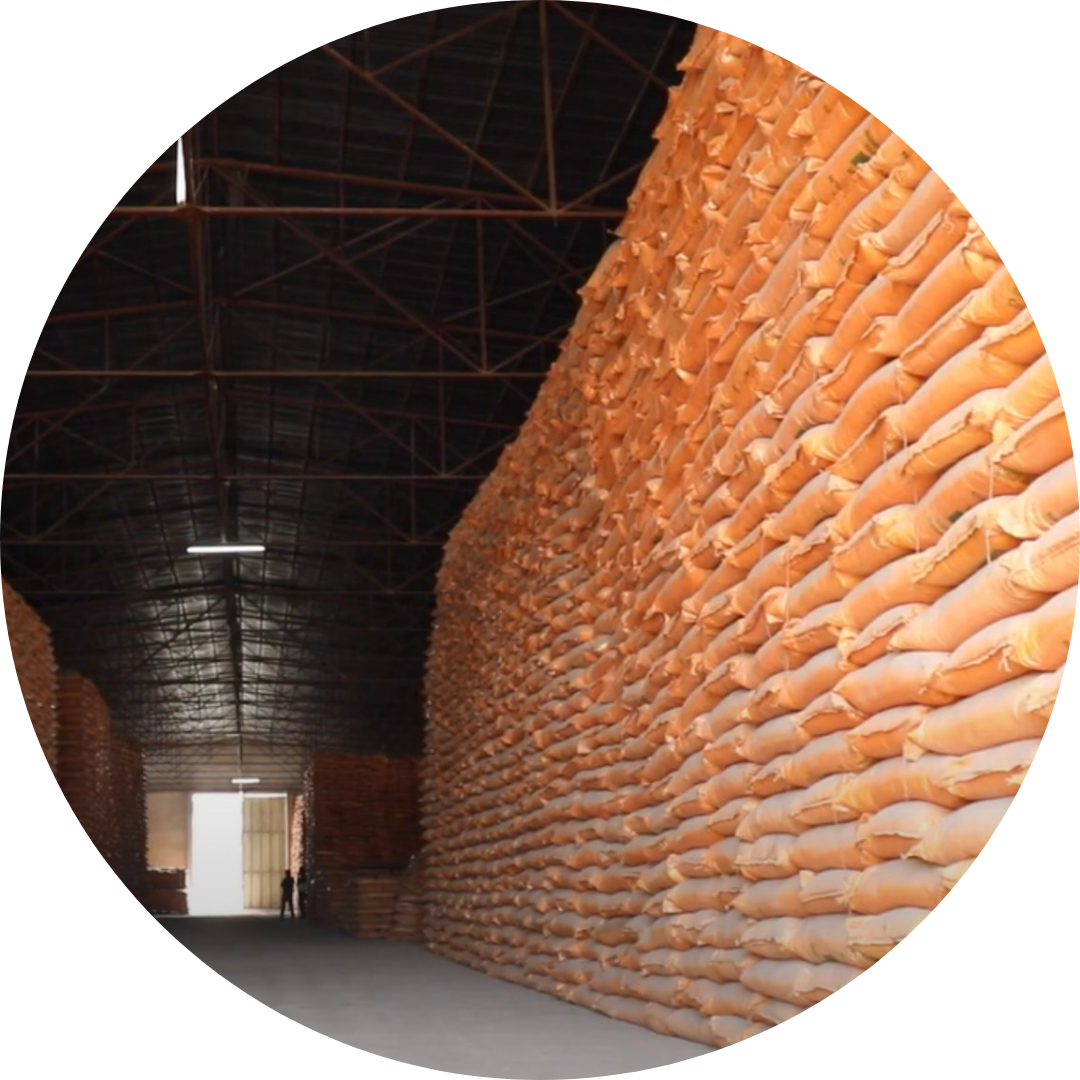
A3-SEED supported the commercialization of the seed sector in South Sudan to transition from humanitarian relief to a commercial, sustainable, and adaptive agriculture sector. In 2025, the project trained 1,687 farmers, including 154 women and 384 youth. In total, 615 farmers adopted improved agricultural practices across 38,299 hectares – a significant increase from the 19,452 hectares in 2024. To promote the adoption of quality seed varieties, A3-SEED established 24 new demonstration plots. Four targeted activities strengthened outreach and dissemination, while adaptive farming techniques implemented across 38,299 hectares reinforced climate resilience. The project also contributed to the creation of two new jobs.
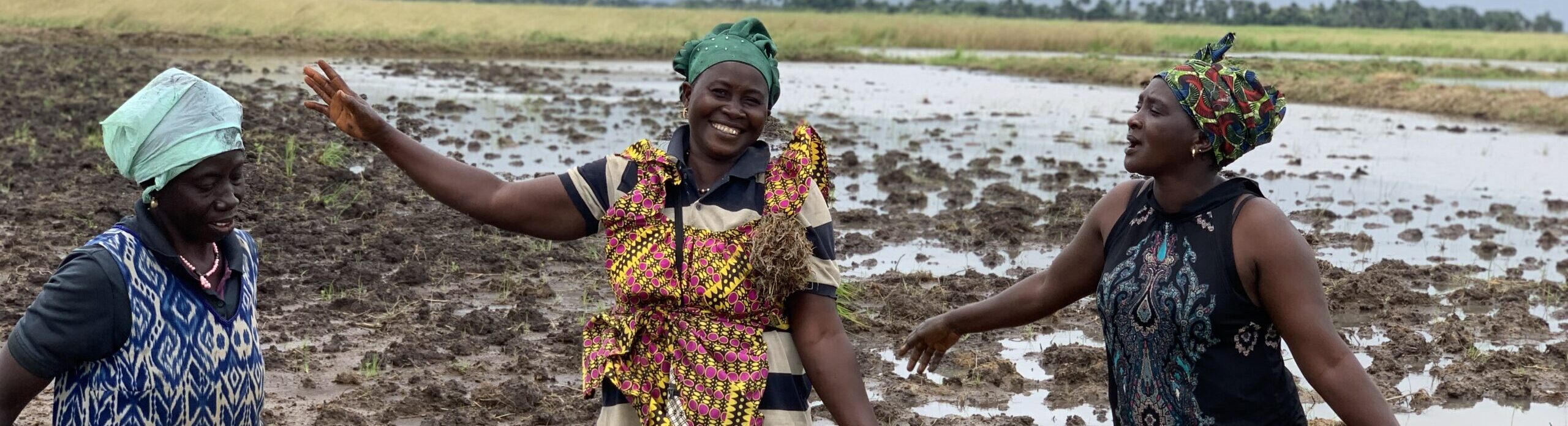
Success Story Building a Sustainable Rice Sector: Empowering Producers Through Training
Read the Story
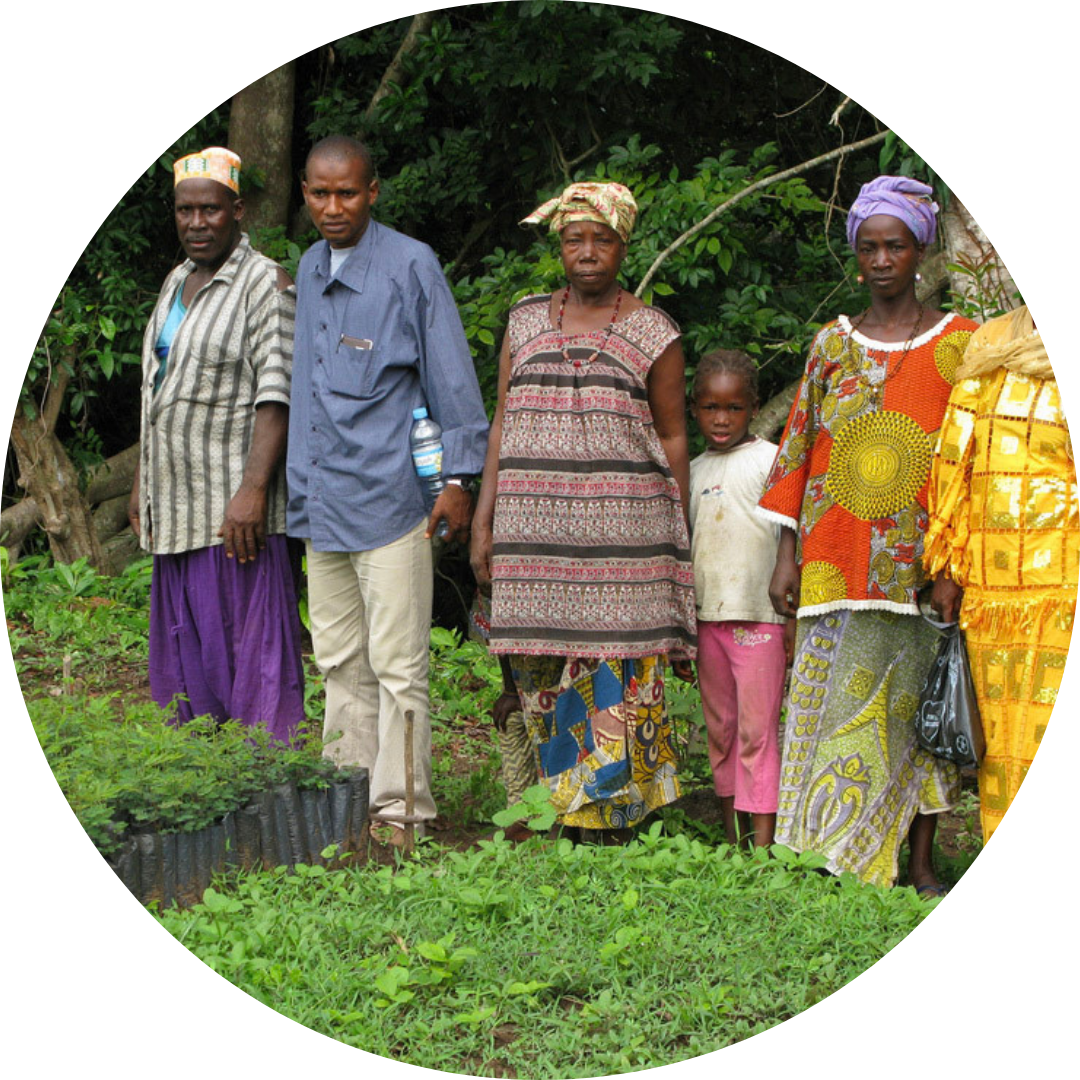
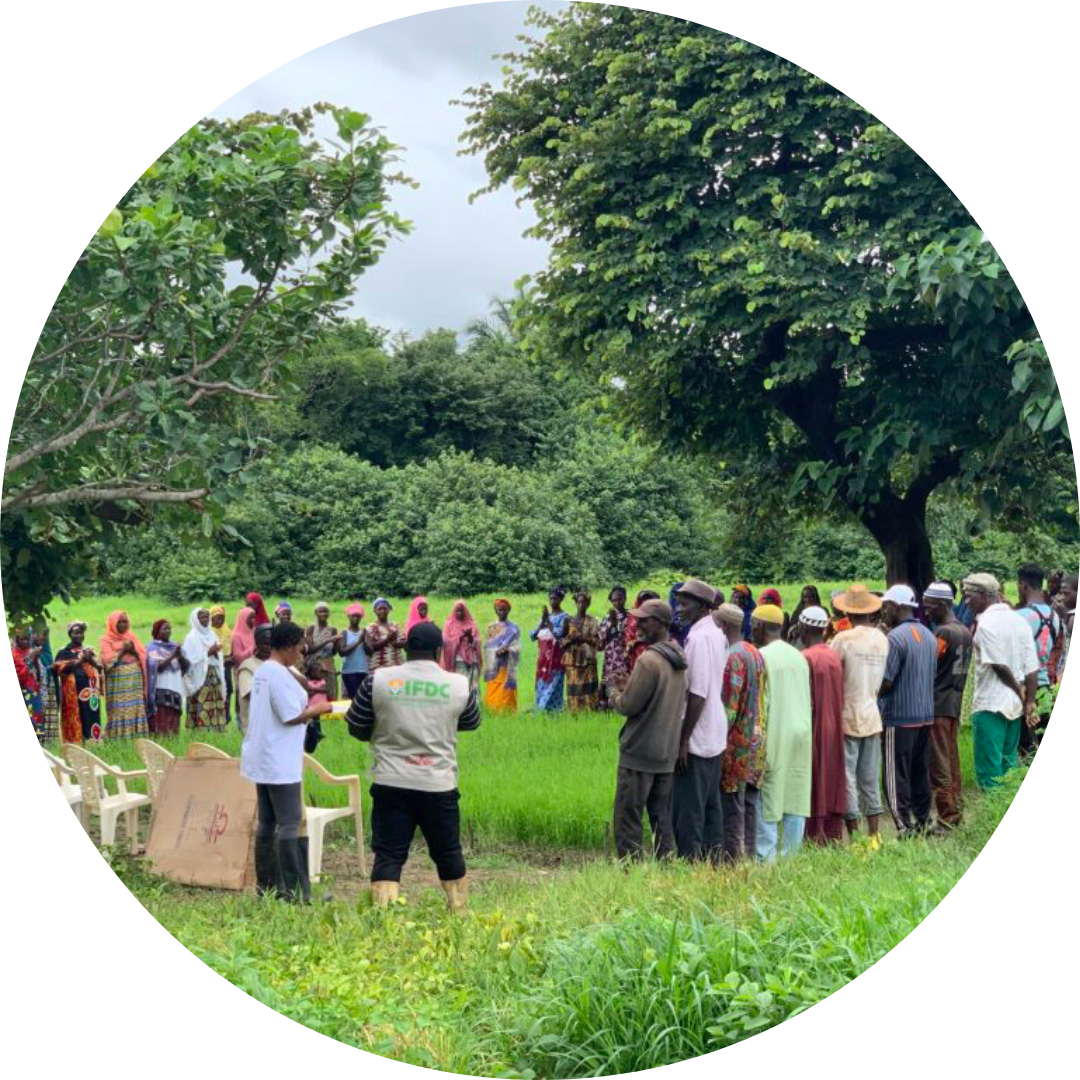
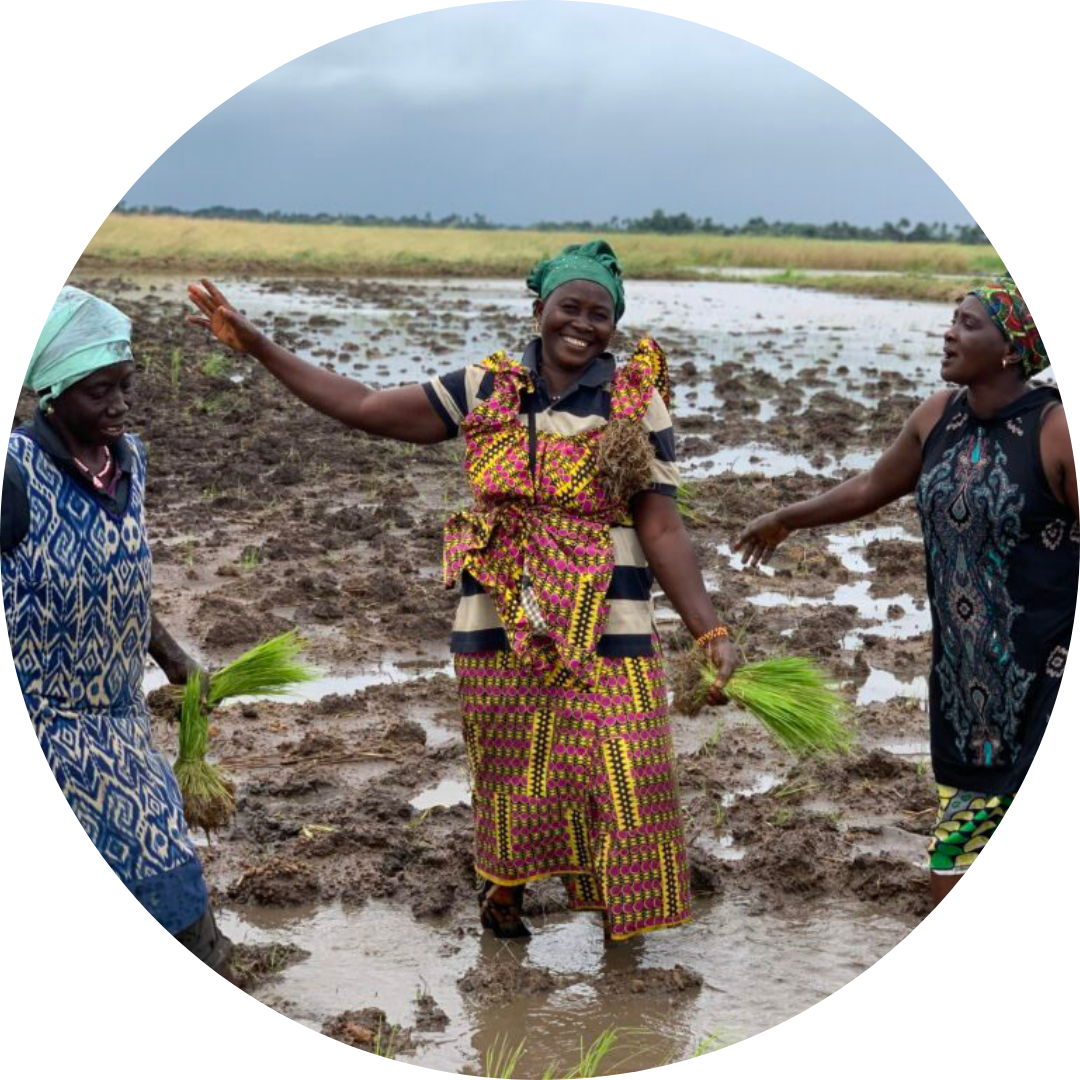
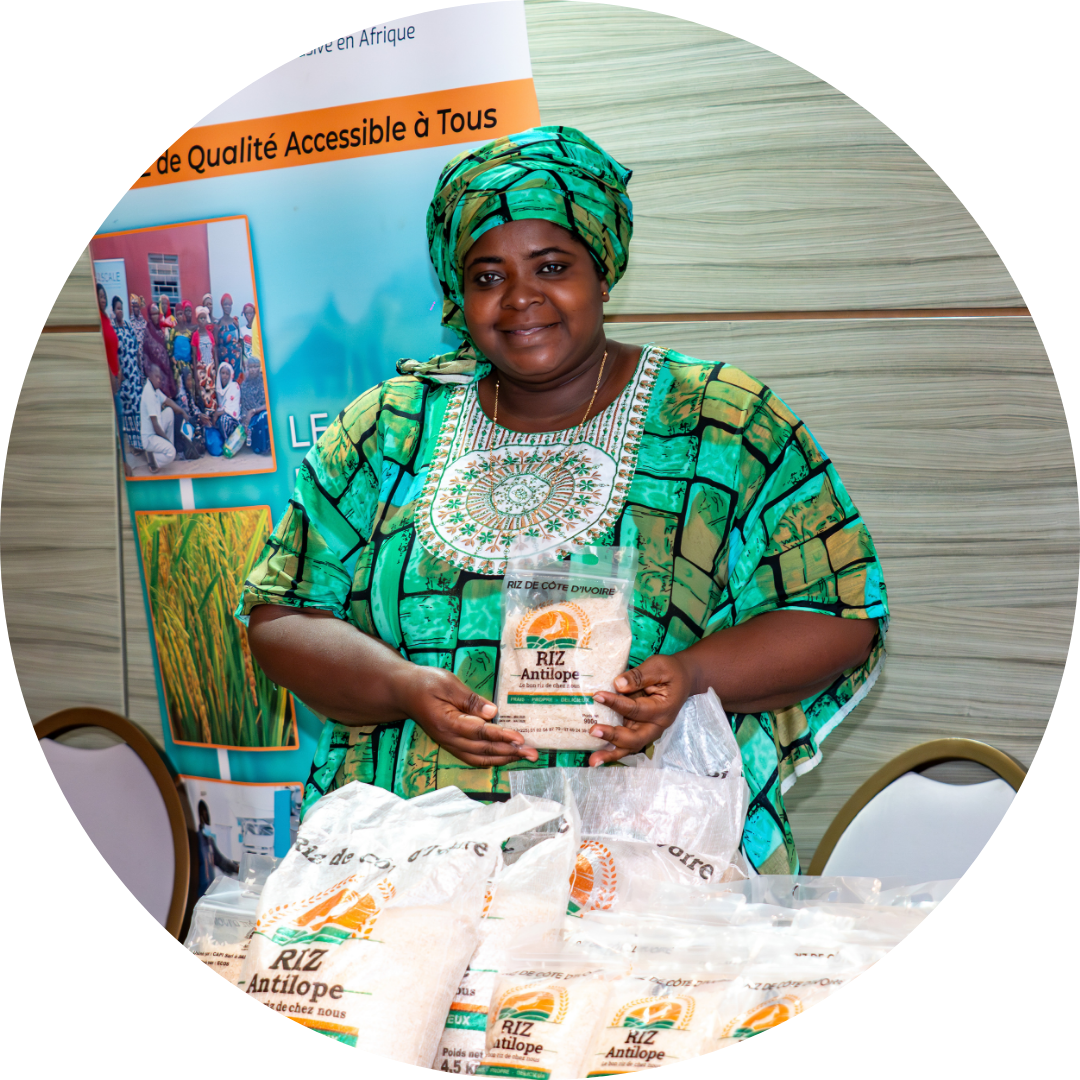
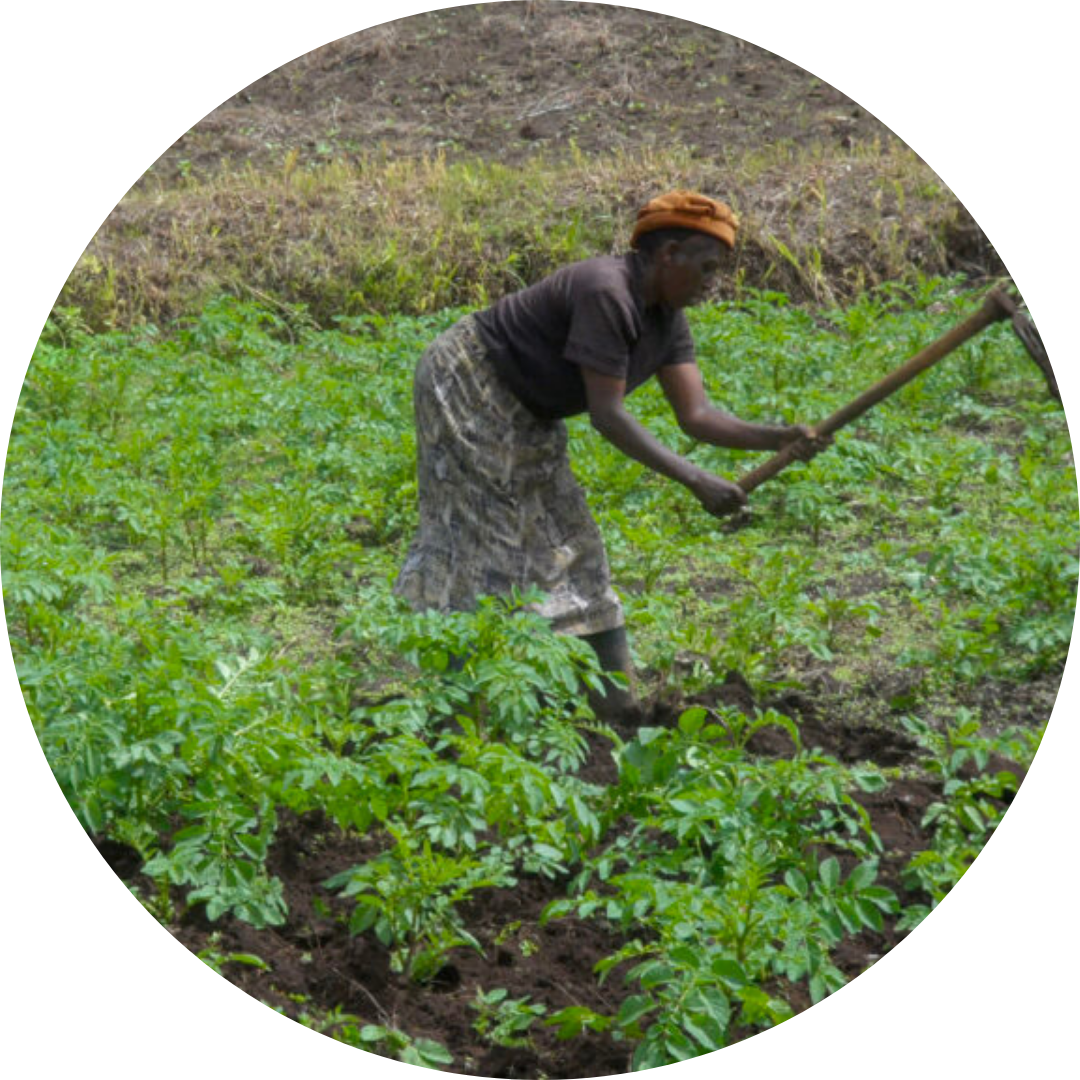
As part of IFDC’s broader efforts to strengthen food security and boost production in Guinea, two complementary projects – PDCVR-G and PDRI/GKM – have equipped farmers with tools like urea deep placement (UDP) to increase yields, lower input costs, and enhance agricultural resilience.
PDCVR-G launched specialized training programs for rice growers. These capacity building sessions provided farmers with the knowledge and tools needed to increase productivity, improve quality, and enhance the overall value of the rice sector.
Over 1,200 rice growers in the seven prefectures of Boffa, Boké, Coyah, Dinguiraye, Dubréka, Kouroussa, and Siguiri benefited from the training, which was carried out through the establishment of 45 farmer field schools, a participatory model that enables producers to master innovative agricultural techniques directly in the field.
Additionally, the PDRI/GKM project trained more than 900 farmers through intensive training sessions in 30 farmer field schools, where growers learned how to master the techniques. Today, these farmers are applying this new knowledge in their own fields and sharing it with their communities.
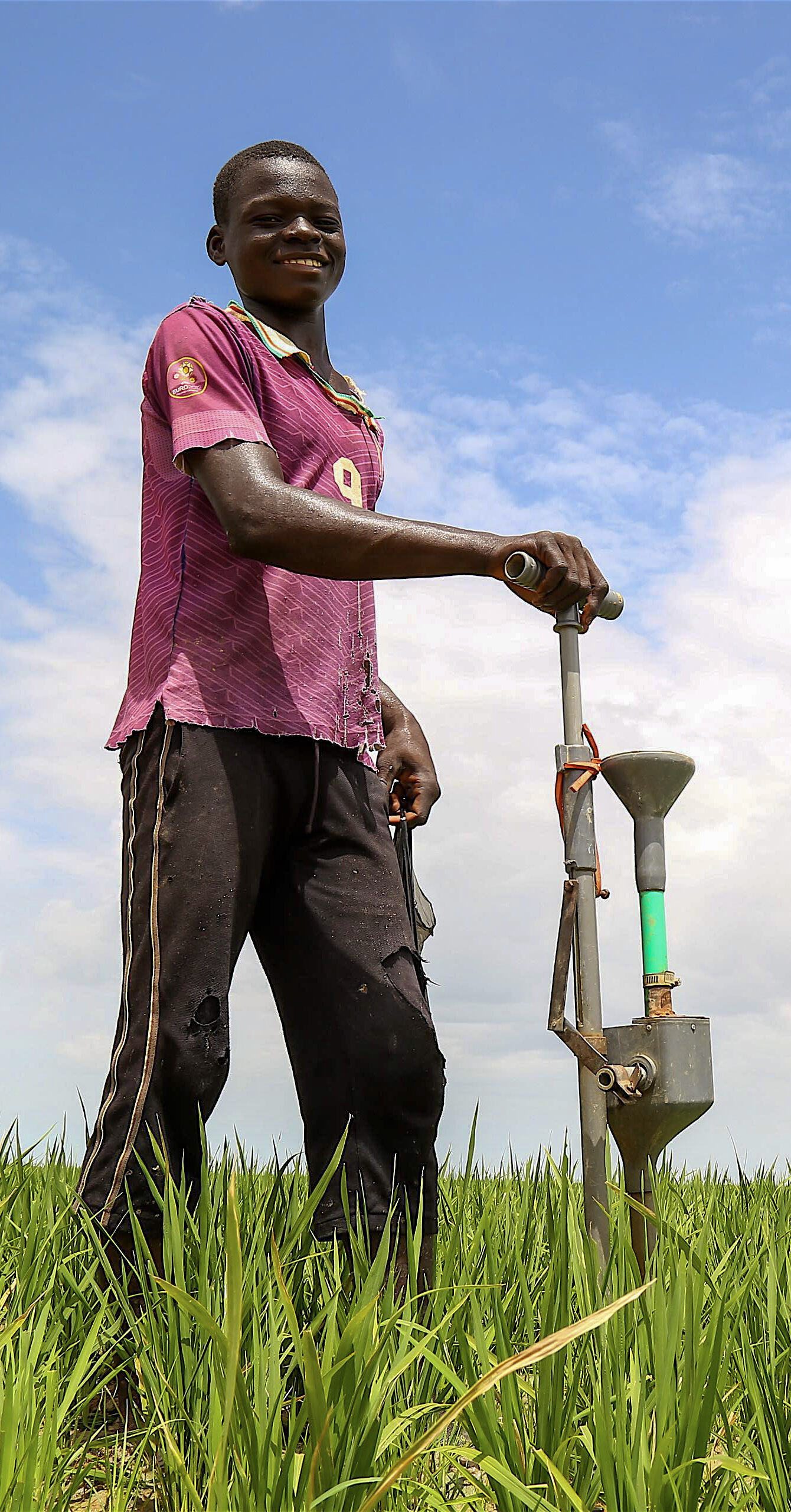
The trainings focused on the UDP technique, which offers promising prospects for increasing rice yields. UDP involves burying small urea briquettes in the soil between four rice plants at the most optimal depth. These briquettes are obtained by mechanically compressing urea, thus enabling slower, more efficient diffusion of nitrogen into the soil, leading to reduced fertilizer losses, improved crop uptake, and lower environmental impact.
For Djan Bailo Diallo, a participating farmer, the training represents a real shift: “I’ve always grown rice like my parents did, but with this new method from IFDC, I hope to harvest more and feed my family better. It’s a new beginning for us.”
By enhancing local production, these initiatives have contributed to greater self-sufficiency and strengthened national food security.
Improvement in rice cultivation, processing, and marketing techniques is expected to create new economic opportunities for farmers, agribusinesses, and local communities. These interventions will not only improve yields and product quality but also add value along the entire rice value chain, driving job creation, boosting rural incomes, and contributing to overall economic growth in Guinea.
As the projects expanded their reach, they worked to scale these innovations across more regions to foster a stronger, more resilient rice sector and reduce Guinea’s dependence on imports of this staple food.
By empowering farmers and strengthening the rice value chain, both initiatives not only enhanced national food security but also contributed to broader development goals. Aligned with global efforts to achieve the Sustainable Development Goals (SDGs) – particularly those focused on ending poverty and hunger – this represents a strategic step toward building resilient agricultural systems and inclusive economic growth for Guinea’s future.
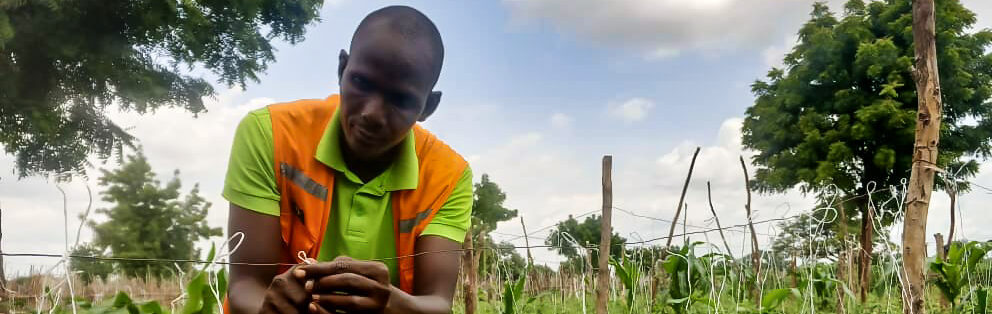
Success Story Farming Forward: The Journey of Umar Hussain Leading a Community Transformation
Read the Story
Umar Hussain, a 42-year-old farmer and technician from Dawakin Kudu Local Government Area in Kano State, Nigeria, embodies resilience and determination for farming. Despite a lack of formal education, Umar’s thirst for knowledge led him to earn solar and electrical certifications, skills he has creatively applied to his farming practices.
Umar’s journey into farming began at the age of 18, when he worked alongside his father cultivating cereal crops. Over the years, his curiosity about productivity-enhancing agricultural methods grew, leading him to explore a HortiNigeria demonstration plot showcasing improved tomato farming practices in 2021. Interested in gaining more knowledge, Umar immersed himself in HortiNigeria’s training sessions, mastering techniques such as creating raised beds, precision spacing during transplanting, and trellising.
In recognition of his dedication and potential, HortiNigeria selected Umar as a lead farmer in 2022. He was entrusted with managing a tomato demonstration plot and tasked with educating others in his community. Since then, Umar has trained many farmers, including women and youth, equipping them with practical skills to improve their productivity and income.
Umar’s farm quickly became a hub of learning, regularly drawing visitors, including farmers from neighboring villages such as Angwan Maniki and Rimin Gawro. His expertise gained broader recognition in 2023 when the Embassy of the Kingdom of the Netherlands visited his farm to see the impact of the HortiNigeria program.
Building on his success, Umar introduced a drip irrigation system on his farm, an upgrade from the manual watering method he had previously employed. This technology increased his farm’s efficiency, allowing him to expand his output. His first tomato harvest of more than 200 crates yielded a profit of over 500,000 naira (U.S. $327).
In 2024, Umar was chosen to be a Community Field Trainer with HortiNigeria to provide extension advisory to farmers. He has provided advisory services to more than 100 farmers in his community, helping them learn techniques such as integrated pest management, mulching, and trellising. Maniru Badamai, a farmer Umar mentored, stated, “Umar’s guidance helped me increase my yield and income. His dedication inspires us all.”
Umar’s achievements have had a profound impact on his family. His increased income allowed him to enroll his children in a good school in his community. “Seeing my children access opportunities I never had motivates me to keep pushing forward,” Umar shared.
With his profits, Umar also purchased a vehicle, improving his ability to manage his farm and conduct community outreach. His role as both a farmer and a Community Field Trainer reflects his vision for the future: a thriving sector where knowledge-sharing on improved agricultural practices drives sustainable growth.
From a small-scale cereal farmer to an agent of change, Umar has become a catalyst for transformation, inspiring his community to embrace innovation and achieve their full potential.
Publications and Presentations
The following technical publications and presentations are a representation of the work our highly skilled researchers and field experts accomplished in 2025. These, and much of our other research, can be accessed at the IFDC Hub.
Names in bold represent IFDC team member contributions in 2025.
Publications
Acharya, B., S. Dodla, B. Tubana, T. Gentimis, F. Rontani, R. Adhikari, D. Duron, G. Bortolon, and T. Setiyono. 2025. “Characterizing Optimum N Rate in Waterlogged Maize (Zea mays L.) with Unmanned Aerial Vehicle (UAV) Remote Sensing,” Agronomy, 15(2):434. https://doi.org/10.3390/agronomy15020434
Adzawla, W., O. Camara, P.S. Bindraban, E. Martey, A. Gouzaye, E. Eshun, and E.W.R. Zida. 2025. “Fertilizer Price Hikes, Farmers’ Willingness to Pay and Crop Switching Decision in Ghana,” Nutrient Cycling in Agroecosystems, 131:673692. https://doi.org/10.1007/s10705gtt-025-10434-4
Agegnehu, G., Z. Bazie, G. Desta, K. Tadesse, G. Legesse, H. Birhanu, H. Getnet, A. Addis, T. Yibabie, B. Alemayehu, F. Bulo, M. Demiss, T. Amede, A. Tigabie, J. Wendt, L. Nagarajan, U. Singh, and Z.P. Stewart. 2025. “Response of Maize to Different Nutrient Sources under Different Landscape Positions in Cereal Mixed Farming Systems of Tropical Agroecosystems,” Agrosystems, Geosciences & Environment, 8(3):e70164. https://doi.org/10.1002/agg2.70164
Agegnehu, G., G. Desta, T. Amare, B. Agumas, G. Legesse, T. Amede, E. Alemu, Z. Bazie, A. Abera, F. Bulo, M. Demiss, T. Degefu, G. Chala, D. Abera, M. Hundessa, A. Abebe, T. Desalegn, T. Feyisa, J. Wendt, L. Nagarajan, U. Singh, and Z. Stewart. 2025. “Targeting Nutrient Sources and Forms to Identify Yield-Limiting Nutrients for Wheat under Contrasting Rainfall Regimes and Landscape Positions in Mixed-Farming Systems,” Journal of Plant Nutrition, 48(15):26482672. https://doi.org/10.1080/01904167.2025.2490037
Amaya-Martín, S.M., H.S. Ballina-Gómez, E. Ruíz-Sánchez, G.J. Azcorra-Perera, R.R. Ruiz-Santiago, and J.F. Pierre. 2025. “Interactive Effect of Copper and Herbivory on the Whole-Plant Growth of Leucaena leucocephala,” International Journal of Plant Biology, 16(3):76. https://doi.org/10.3390/ijpb16030076
Asamoah, E., G.B.M. Heuvelink, P.S. Bindraban, and V. Logah. 2025. “Modeling Maize Yield and Agronomic Efficiency Using Machine Learning Models: A Comparative Analysis,” Agronomy Journal, 117(6):e70206. https://doi.org/10.1002/agj2.70206
Clark, C. M., S. Dodla, U. Singh, J.A. Delgado, B.G. Hopkins, D.C. Olk, K. Pavuluri, A. Roy, R. Venterea, M. Wilson, and J. Fugice. 2025. “Environmental Sustainability of Future Fertilizers: Tradeoffs between Ammonia Volatilization and Nitrate Leaching for 11 Enhanced Efficiency Fertilizers,” Journal of Plant Nutrition, 49(6):1000-1018. https://doi.org/10.1080/01904167.2025.2595092
Cooper, T., A. Phillips, J. Daniells, Z. Stewart, M. Matovu, R. Harding, J.L. Dale, and J.-Y. Paul. 2025. “Towards Iron Biofortification of Banana (Musa spp.): A Comparative Study of Fruit Mineral Micronutrient Concentrations and Phylogenetic Insights into Iron Homeostasis,” Food and Energy Security, 14(3):e70104. https://doi.org/10.1002/fes3.70104
Demiss, M., U. Singh, J. Fugice, Z.P. Stewart, and L. Nagarajan. 2025. “Teff Yield and Nutrient Uptake Partitioning During Prolonged Waterlogging: A Preliminary Greenhouse Study,” Plant-Environment Interactions, 6(2):e70043. https://doi.org/10.1002/pei3.70043
Dodla, S., K. Martin, U. Singh, W. Bible, J. O’Brien, R. Garcia, Z. Tsanglao, J. Andrews, and K. Pavuluri. 2025. “Effects of Urea Micronized Sulfur Combined with Urease and Nitrification Inhibitors on Nitrogen Transformation, Losses, and Crop Response,” Nutrient Cycling in Agroecosystems, 131(2):329-346. https://doi.org/10.1007/s10705-025-10424-6
Donkor, B., P.S. Bindraban, K.B.D. Simperegui, B. Kwesie, A.K.K. Kouame, and W. Adzawla. 2025. “Performance of LINTUL‑2 in Simulating Water‑Limited Yields of Maize Using Different Sets of Weather Data in Ghana,” Nutrient Cycling in Agroecosystems, 131:729745. https://doi.org/10.1007/s10705-025-10422-8
Ezui, K.S., L. Nagarajan, N. Bombana, J.F. Pierre, W. Pavan, F. Bulo, K. Sipope, M. Demiss, P.N.M. Haamukwanza, B. Kabwela, B.P. Mulenga, W. Leonardo, Y. Gaihre, P. Wilkens, Z. Stewart, and U. Singh. 2025. “Optimizing Nutrient Requirement in Space and Time for Increased Crop Yield and Income,” Nutrient Cycling in Agroecosystems, 131:635650. https://doi.org/10.1007/s10705-025-10428-2
Gaihre, Y.K., S.M.M. Islam, and U. Singh. 2025. “Managing Rice Soils for Mitigating Greenhouse Gases Emissions,” IN Agriculture Towards Net Zero Emissions, pp. 305-326, S. Kumar and R.S. Meena (Eds.), Academic Press. https://doi.org/10.1016/B978-0-443-13985-7.00021-X
Gaihre, Y.K., D. Panday, L. Nagarajan, D. Choudhary, and J. Timsina. 2025. “Transforming Agriculture Sector through Sustainable Improvement of the Soil Fertility and Fertilizer Sub-Sector in Nepal,” IN Agriculture Sector Transformation in Nepal, pp. 321-340, D. Panday, P. Khanal, B.R. Uprety, and J. Timsina (Eds.), Springer. https://doi.org/10.1007/978-3-031-91717-2_17
Gomez, F., A. Carcedo, A. Diatta, P. Djighaly, L. Nagarajan, U. Singh, Z. Stewart, S. Zingore, K. Majumdar, P.V. Vara Prasad, and I. Ciampitti. 2025. “Towards Site-Specific Nutrient Management Strategies: An Open Database in Senegal,” Science of the Total Environment, 969:178926. https://doi.org/10.1016/j.scitotenv.2025.178926
Islam, S.M.M., Y.K. Gaihre, M.N. Islam, T.P. Suvo, B.O. Sander, M.A. Habib, A. Islam, S. Nayak, U. Singh, T. Hasegawa, and M.R. Islam. 2025. “Reducing Greenhouse Gas Emissions and Improving Rice Yield: The Influence of Cultivars, Soil Salinity, and Nitrogen Management,” Science of the Total Environment, 997:180192. https://doi.org/10.1016/j.scitotenv.2025.180192
Kassim, Y.B., F. Pinto, D.S. MacCarthy, P. Bindraban, N. Chirinda, T. Stomph, and P.C. Struik. 2025. “Can Drone Images Predict within-Field Variability in Soil Fertility? A Case Study in the Northern Region of Ghana,” Frontiers in Soil Science, 5:1548645. https://doi.org/10.3389/fsoil.2025.1548645
Kouame, A.K.K., P.S. Bindraban, L. Jallal, B. Kwesie, A.N.A.F. Anokye, A. El Allali, and W. Adzawla. 2025. “Effect of Sulfur- and Zinc-Containing Fertilizers on Soybean Yield and Analysis of Spatial and Seasonal Yield Variability in Ghana, West Africa,” European Journal of Agronomy, 164:127461. https://doi.org/10.1016/j.eja.2024.127461
Kouame, A.K.K., G.B.M. Heuvelink, and P. Bindraban. 2025. “Unraveling Drivers of Maize (Zea mays L.) Yield Variability in Ghana: A Machine Learning Approach,” Computers and Electronics in Agriculture, 237(B):110647. https://doi.org/10.1016/j.compag.2025.110647
Kumar, R., M.S. Chahar, Y. Saharawat, R. Borgohian, D.S. Rana, and V. Kumar. 2025. “Effect of NPK Briquette with Deep Placement on Rice in Assam Ecology,” Indian Journal of Fertilisers, 21(10):996-1001.
Marivoet, W., J.M. Ulimwengu, L.M. Sall, and C.S. Fall. 2025. “Understanding Spatial Heterogeneity of Hidden Hunger in Senegal,” Cogent Food & Agriculture, 11(1):2533375. https://doi.org/10.1080/23311932.2025.2533375
Meng, Y., J.J. Wang, S.K. Dodla, L.A. Gaston, Z. Wei, J. Li, G. Scaglia, and J.H. Park. 2025. “Winter Cover Crop Integration on Soil Nitrogen Loss from a Subtropical Warm‐Season Pasture Field and Its Potential Mitigation,” Agrosystems, Geosciences & Environment, 8(3):e70170. https://doi.org/10.1002/agg2.70170
Ngoma, H., M. Chiduwa, M. Subakanya, B.P. Mulenga, P. Setimela, U. Schulthess, R. Chikowo, B. Mhlanga, J.V. Silva, J. Chamberlin, Z.P. Stewart, I. Pangapanga-Phiri, L. Nagarajan, J. Odhong, P. Marenya, and S. Snapp. 2025. “The Dawn of a Legume Revolution in Southern Africa: Trends, Drivers, and Implications,” Food Security, 17:1493-1515. https://doi.org/10.1007/s12571-025-01583-z
Obour, A.K., A. Faye, T.M. Akplo, Z.P. Stewart, D. Min, P.V. Vara Prasad, and Y. Assefa. 2025. “Economic Value of Dual-Purpose Cowpea as Affected by Variety, Fertilizer, and Environment,” Agrosystems, Geosciences & Environment, 8(1):e70045. https://doi.org/10.1002/agg2.70045
Ogilvie, A., C.S. Fall, A. Bodian, D. Martin, L. Bruckmann, D. Dia, I. Leye, P.M. Ndiaye, D.D. Soro, J.H. Danumah, J.-C. Bader, and J.-C. Poussin. 2025. “Surface Water and Flood-Based Agricultural Systems: Mapping and Modelling Long-Term Variability in the Senegal River Floodplain,” Agricultural Water Management, 308:109254. https://doi.org/10.1016/j.agwat.2024.109254
Pierre, J.F., G.K. Ezui, L. Nagarajan, U. Singh, K. Pavuluri, Y. Gaihre, R.R. Ruiz-Santiago, M. Demiss, B. Mulenga, W. Apollon, Z.P. Stewart, and J. Timsina. 2025. “Global-Scale Meta-Analysis Reveals Enhanced Cereal Yields through Sulfur and Zinc Fertilization,” Nutrient Cycling in Agroecosystems, 131:593-612. https://doi.org/10.1007/s10705-025-10416-6
Pierre, J.F., C.A.M. Laboski, L. Latournerie-Moreno, R. Garruña, K.L. Jacobsen, and E. Ruiz-Sánchez. 2025. “Nitrogen Losses Mitigated with Maize-Legume Intercropping in the Yucatan Peninsula,” Agrosystems, Geosciences & Environment, 8(1):e70066. https://doi.org/10.1002/agg2.70069
Prudhomme, R., V.D. Ahoun, C.S. Fall, M. Piraux, and B. Dorin. 2025. Analyse prospective de l’agriculture sénégalaise en 2050: Agro-industrie versus agroécologie? CIRAD, ISRA-BAME, FAO, Rome. https://doi.org/10.4060/cd5033fr
Ricome, A., L. Cockx, J. Barreiro Hurle, C.S. Fall, and P. Tillie. 2025. Le programme de subvention des intrants agricoles au Sénégal: Une analyse des impacts sur les ménages agricoles. Publications Office of the European Union, Luxembourg. https://data.europa.eu/doi/10.2760/3014137
Ruiz-Sánchez, E., A.L. Ruiz-Jiménez, L. Latournerie-Moreno, and J.F. Pierre. 2025. “Insecticidas químicos y biorracionales utilizados por pequeños productores de hortalizas de Yucatán,” Avances En Investigación Agropecuaria, 29:130-143. https://doi.org/10.53897/RevAIA.25.29.48
Ruiz-Sánchez, E., R.R. Ruiz-Santiago, H.S. Ballina-Gómez, J.F. Pierre, A.L. Piedra, A.D. Chan-Arjona, R. Balam-Narváez, and L. Robles-Bautista. 2025. “Leaf Damage by Diabrotica spp. and Morphological Traits of Leaves in Landrace Accessions of Two Fabaceae Species,” International Journal of Tropical Insect Science, 45:1805-1814. https://doi.org/10.1007/s42690-025-01558-9
Setsoafia, E.D., M. Harro, M. El Gharous, P. Bindraban, C. Freeman, and P.C. Struik. 2025. “Applying Mulch and Manure in Smallholder Cropping Systems: Challenges, Realities, Limitations, and Opportunities,” Frontiers in Sustainable Food Systems, 9:1677182. https://doi.org/10.3389/fsufs.2025.1677182
Sharma, R., K.R. Pande, K. Upadhyay, and Y.K. Gaihre. 2025. “Improving Nitrogen Use Efficiency and Yields of Potato through Integrated Use of Nitrogen Fertilizer and Organic Manures under Irrigated Condition in Nepal,” SAARC Journal of Agriculture, 23:237-253. https://doi.org/10.3329/sja.v23i1.82207
Sileshi, G.W., Z.P. Stewart, J. Odhong, B. Mhlanga, T. Amede, E. Aynekulu, C. Thierfelder, P. Marenya, K.M. Dittmer, K.T. Aliyu, R. Chikowo, M. Chiduwa, H. Ngoma, and S. Snapp. 2025. “A Review of Organic Inputs to Inform Soil Health Advice for African Smallholder Farmers: Localization Matters,” npj Sustainable Agriculture, 3:20. https://doi.org/10.1038/s44264-025-00063-3
Simperegui, K.B.D., A.K.K. Kouame, B. Kwesie, P.S. Bindraban, W. Adzawla, E. Asamoah, and M. El Gharous. 2025. “Digital Mapping of Ghana’s Soil Properties and Nutrients: Performance of Spline and Weighted Average Approaches,” Geoderma, 459:117365. https://doi.org/10.1016/j.geoderma.2025.117365
Snapp, S., J. Chamberlin, L. Winowiecki, T. Amede, E. Aynekulu, S. Gameda, J.E. Herrick, R. Lal, P. Marenya, L. Nagarajan, Z. Stewart, and T. Vågen. 2025. “Realizing Soil Health for Food Security in Africa,” Nature Sustainability, 8:3-5. https://doi.org/10.1038/s41893-024-01482-9
Tetteh, S., S. Amoabeng-Nimako, C. Leeuwis, C. Freeman, H. Maat, P. Macnaghten, R. Doukkali., P. Bindraban, P. Ingenbleek, S. Dittoh, and A. Gouzaye. 2025. “Nourishing the Nexus: System Analysis of the Enablers and Barriers in the Ghanaian Soil Health System,” Nutrient Cycling in Agroecosystems, 131:651-672. https://doi.org/10.1007/s10705-025-10439-z
Tetteh, S., C. Leeuwis, C. Freeman, P. Macnaghten, H. Maat, P. Bindraban, and R. Doukkali. 2025. “Understanding Interdependencies that Shape the Use of Soil Fertility Management Practices in Northern Ghana: A Relational Perspective on Adoption,” Nutrient Cycling in Agroecosystems, 131:713-727. https://doi.org/10.1007/s10705-025-10435-3
Tetteh, S., C. Leeuwis, P. Macnaghten, C. Freeman, H. Maat, P. Bindraban, and R. Doukkali. 2025. “Under Farmers’ Eyes: Understanding Differential Access to Subsidized Fertilizers in Ghana,” Nutrient Cycling in Agroecosystems, 131:693-711. https://doi.org/10.1007/s10705-025-10440-6
Thornton, P., A.M. Loboguerrero, S. Alho, B. Campbell, D. Dinesh, U. Helberg, J. Hellin, B. Partridge, F. Rasche, Z. Stewart, and L. Zeppenfeldt. 2025. “Towards a Green Plant Nutrition Transition in East and Southern Africa,” PLOS Climate, 4(11):e0000747. https://doi.org/10.1371/journal.pclm.0000747
Tian, Y., J.J. Wang, S. Liu, Z. Wei, S.K. Dodla, B. Zhou, C.C. Mitchell, and Z. Zhang. 2025. “Soil Organic Carbon and Aggregate Characteristics in a Subtropical Cotton Production Field as Influenced by Century-Long Crop Rotation and Fertility Management,” Pedosphere, 35(2):373-386. https://doi.org/10.1016/j.pedsph.2024.01.006
Vendemiatti, E., R.O. Moreira, G.L. dos Reis, I.O. Hernandez-De Lira, E. Peña-Yewtukhiw, F.W.R. Hippler, L.O. Torres-Dorante, K. Pavuluri, A. Valentine, V.L. Nascimento, and V.A. Benedito. 2025. “Global Transcriptional Modulation and Nutritional Status of Soybean Plants Following Foliar Application of Zinc Borate as a Suspension Concentrate Fertilizer,” Scientific Reports, 15(1):3309. https://doi.org/10.1038/s41598-025-87771-5
Wei, Z., S. Yao, J.J. Wang, S.M. Pensky, Y. Meng, S. Dodla, and J.-H. Park. 2025. “Evaluation of Nitrogen Behavior according to Combination of Nitrogen Stabilizers in Subtropical Cornfield,” Environmental Earth Sciences, 84(13):366. https://doi.org/10.1007/s12665-025-12369-z
Reports
Bible, W., S. Dodla, and K. Pavuluri. 2025. “Evaluation of Arsenic Leaching from Arsenic Sulfide.”
Bible, W., S. Dodla, and K. Pavuluri. 2025. “Evaluation of Urea- and Ammonium Nitrate-Based Novel Polyhalite Formulations for Their Leaching Behaviour.”
Bible, W., S. Dodla, and K. Pavuluri. 2025. “Evaluation of Zinc Leaching from Zinc Borate-Treated Oriented Strand Boards.”
Dodla, S., and K. Pavuluri. 2025. “Assessment of Nitrogen Loss through Ammonia Volatilization from Different Organo-Mineral Fertilizers in Various Soil Types.”
Dodla, S., and K. Pavuluri. 2025. “Assessment of Urea-Poly and Ammonium Nitrate-Poly on Improving Crop Yields Compared to Standard N-Fertilizers.”
Dodla, S., and K. Pavuluri. 2025. “Evaluating Efficacy of Polyhalite and Gypsum for Sodium Salts Leaching from Sodic Soils.”
Dodla, S., and K. Pavuluri. 2025. “Evaluation of Urea and Ammonium Nitrate-Based Novel Polyhalite Formulations for Their N2O Emissions.”
Dodla, S., M. Bevis, and K. Pavuluri. 2025. “Strategy for Tailoring Moroccan Rock Phosphate for Direct Use.”
Dodla, S., W. Horn, and K. Pavuluri. 2025. “Agronomic Evaluation of Ammoniated Superphosphates: A Historical and Contemporary Review.”
Dodla, S., W. Horn, and K. Pavuluri. 2025. “Evaluation of N2O Emissions from Thiogro Fertilizers Compared to Urea with and Without Urease and Nitrification Inhibitors.”
Dodla, S., T. Lewis, and K. Pavuluri. 2025. “Evaluating Urea-Polyhalite Fertilizers with Urease Inhibitors for Mitigating Ammonia Volatilization in Contrasting Soils.”
Dodla, S., G. Teixeira, and K. Pavuluri. 2025. “Greenhouse Evaluation of Newly Developed Monoammonium Phosphate-Based Zinc Fertilizers on Wheat and Sorghum.”
Oguniyi, A.H.A., A. Tong-Kurubil, M.O. Onaolapo, and F. Clovis. 2025. “HortiNigeria Program Internal Endline Evaluation in Oyo and Ogun Sates, Nigeria.”
Pavuluri, K. and S. Dodla. 2025. “Assessment of Micronutrient-Compounded Urea Fertilizers for Nitrogen Losses, and Plant Micronutrient Availability and Nitrogen Use Efficiency.”
Pierre, J.F., S. Dodla, and K. Pavuluri. 2025. “Carbon-Enriched Biochar-Urea Formulations Improve Radish Productivity and Nitrogen Retention but Increase Ammonia Volatilization.”
Presentations
Ali, S. 2025. “Memorandum on Fertilizer Market Intelligence: Institutionalizing the Nigeria Fertilizer Statistics Overview,” 47th National Council on Agriculture and Food Security (NCAFS), Kaduna, Nigeria, November 3-7.
Dodla, S., T.D. Lewis, K. Mann, and K. Pavuluri. 2025. “Evaluation of Urea-Polyhalite and Ammonium Nitrate-Polyhalite Fertilizers for Mitigating Ammonia Volatilization in Contrasting Soils,” CANVAS 2025, Salt Lake City, Utah, November 9-12.
Fall, C.S. 2025. “Partnerships and Coalitions for Food Systems Transformation – CoCreating and Coordinating Interventions,” 12th Annual ANAPRI Stakeholders Conference, Kigali, Rwanda, November 6.
Fall, C.S. 2025. “Content and Follow-Up of the Declaration on Soil Health and Fertilizers,” Third Edition of the ROPPA Mamadou Cissokho Farmers’ University, Thiès, Senegal, December 17.
Gaihre, Y.K. 2025. “Organic Waste Management within the ISFM Framework—Nepal’s Scenario from an International Perspective,” Institute of Agriculture and Animal Science (IAAS) Workshop: Innovation in Recycling Organic Wastes for Low-Cost and Labor Efficient Soil Improvement, Kathmandu, Nepal, June 21.
Haider, M.A., J.J. Wang, K. Guardado, A. Ahmed, B. Tubana, R. Parvej, S. Dodla, C. Jeong, and L. Gaston. 2025. “Biochar Regulates Soil Health through Aggregate-Associated Carbon and Enzymatic Responses in Field Conditions,” CANVAS 2025, Salt Lake City, Utah, November 9-12.
Idris, M.S., and L. Nagarajan. 2025. “Lessons from Implementing Seed Sector Development Initiatives in Conflict Zones,” SeedNL Annual Event, Ede, the Netherlands, June 24.
Luis, P., K. Pavuluri, U. Singh, and Z. Stewart. 2025. “Agronomic Use of Phosphate Rock and Modified Products for Crop Production: Review and Future Opportunities,” Convening on Phosphorus to Accelerate Crop Production in Sub-Saharan Africa, Casablanca, Morocco, November 20-21.
Nagarajan, L. 2025. “Fertilizer, Soil Health, and Economic Shocks: Policy Lessons Learned from Recent Events,” Virtual Seminar: Fertilizer, Soil Health, and Economic Shocks: Policy Lessons Learned from Recent Events, June 11.
Nagarajan, L., and Z. Stewart. 2025. “Space to Place (S2P): Increasing Soil Health and Fertilizer Use Efficiency for Productivity and Profitability,” SoilFER Project Meeting #4, Rome, Italy, January 20.
Pavuluri, K. 2025. “Next Generation Fertilizers,” The Fertilizer Show, Tampa, Florida, April 8-10.
Pavuluri, K., C.M. Clark, J.F. Pierre, B.G. Hopkins, U. Singh, J.A. Delgado, D.C. Olk, and S. Dodla. 2025. “Evaluation of Enhanced Efficiency Phosphorus Fertilizers in Acidic and Alkaline Soils for Improved Wheat Yield and Nutrient Uptake,” CANVAS 2025, Salt Lake City, Utah, November 9-12.
Pavuluri, K., S. Dodla, P. Luis, U. Singh, and Z. Stewart. 2025. “Phosphorus to Accelerate Crop Production in Sub-Saharan Africa,” Convening on Phosphorus to Accelerate Crop Production in Sub-Saharan Africa, Casablanca, Morocco, November 20-21.
Santiago, G.N., K. Majumdar, S. Zingore, G. Sulewski, Z. Stewart, F. Garcia, E. Ciarlo, E. Lavorenti, L. Prochnow, M.A. Bourns, and I. Ciampitti. 2025. “A Global Initiative for an Image Database of Leaf Nutrient Deficiency for Major Field Crops,” CANVAS 2025, Salt Lake City, Utah, November 9-12.
Wang, J.J., Y. Meng, S. Dodla, and L. Gaston. 2025. “Nitrification Inhibitors Can Reduce Soil Nitrous Oxide Emission Due to Residue Decomposition of Winter Legume Cover Crops,” CANVAS 2025, Salt Lake City, Utah, November 9-12.
2025 Financials
The external audited financials are not yet available. A detailed breakdown of financial performance will be available in the digital version of this report as soon the external auditor signs off, following approval by the Board of Directors. The financials reflect IFDC’s continued commitment to transparency, accountability, and impact-driven resource management.

Strategy Contents
A Letter from IFDC’s President & CEO | The World We Live In | Our Theory of Change |
Soil Health for a Thriving Future | Our 2026-2035 Strategic Goals | A Vision for the Next Decade
A Letter from Our President and CEO
The world has drastically changed since IFDC released its Strategy 2020-2030. After significant progress from 2005 to 2017, the prevalence of undernourishment has rebounded to 2007 levels and has flatlined to levels well above those prior to the COVID-19 pandemic. Increased global undernourishment will only be exacerbated by decreased global Official Development Assistance (ODA). Smallholder farmers, constrained by the lack of necessary agricultural resources and training but needing to produce more food, continue mining nutrients from degraded soils and converting more land to sustain yields, as crop response to low fertilizer application increasingly plummets.
Climate change continues to threaten the productivity and resiliency of farmers around the world, while inefficient farming practices only make matters worse. Further, violence and unrest in many of the regions where we serve combine with food insecurity to form a destructive cycle.
All the while, the global population continues to march toward the 10 billion mark by 2050. In response, nations have rallied around the call to address one of the underlying factors of global food and nutrition insecurity: poor soil health. Soils are rapidly degrading in many parts of the world, with over one-third moderately to severely degraded.
IFDC stands prepared to lead the charge to develop and scale solutions such as next-generation integrated soil fertility management (ISFM) and strengthen the delivery of soil health interventions.
We aim to accomplish this through an overarching approach that emphasizes systems thinking, sustainability, and farmer-centric solutions operating under the One Health approach.
Our Global Network of Fertilizer Innovation Centers (GNFIC), in partnership with industry and academia, aims to innovate fertilizer and soil health solutions that are science based, inclusive, and scalable, all tailored to smallholder needs.
Further partnerships enable the GNFIC to deploy and scale these solutions within smallholder contexts – all while strengthening global and regional capacity to further develop context-specific fertilizer solutions.
To get these solutions into the hands of farmers, IFDC will link GNFIC solutions with comprehensive farmer support systems, leveraging our established programs and extension partnerships.
Innovative upscaling practices ensure widespread adoption, and when combined with market linkage facilitation, these context-specific, sustainable products and practices will enable smallholder farmers to increase yields, incomes, and overall quality of life. To address barriers of effective scaling of innovations and sustainable practices, IFDC will leverage its GNFIC alongside established methodologies to strengthen market systems, improve regulatory frameworks, and enhance knowledge ecosystems.
Coordinated interventions on multiple levels, from local value chains to international policy frameworks, outpace traditional development approaches that focus on single methodologies and contexts, sustaining and scaling innovations through comprehensive institutional changes. We realize that to be effective is to be a good partner; therefore, we are deepening our emphasis on complementary partnerships.
From innovation to scaling, each step of the way, we will match our technical expertise in fertilizers and soil health with local, national, regional, and global partners who can help deliver holistic transformation in global food systems. Most importantly, we partner with the communities we serve, valuing local knowledge and perspectives combined with our global research initiatives.
This participatory approach magnifies the reach of our work and ensures that the positive changes we pursue are both enduring and deeply felt by those we serve. IFDC’s greatest resource is its people, collaborating as One IFDC from offices around the world. Our workforce comprises a wide variety of cultures, backgrounds, and expertise. We commit to empowering our teams to reach their full potential by providing an enabling and unifying organizational structure.
A truly unified global team forms the backbone of an IFDC that sets out to achieve the goals put forth in this document. And it is only together that this is possible. IFDC dedicates itself to our shared values: Collaborate, Innovate, Include, and Act with Integrity.

As stewards of public funds, we endeavor to remain accountable, ethical, and transparent in all of our work. We are thankful to all who have contributed to this new strategy for 2026-2035: our staff, our leadership, our Board of Directors, and many of our global partners. Your insights have sharpened our focus to achieve great things over the next 10 years.
Warm regards,
Henk van Duijn
The World We Live In
The global agriculture sector faces pressure from food insecurity, climate change, soil degradation, and conflict, with more than 673 million people lacking sufficient food and over 2 billion suffering micronutrient deficiencies. Declining soil fertility forces farmers to use more fertilizer for the same yields, while nutrient mining and rapid population growth – projected to reach 9.7 billion by 2050 – strain production, especially in sub‑Saharan Africa and Asia.
Urbanization is depopulating rural areas, climate change is accelerating soil loss, agricultural funding is decreasing, and farming contributes roughly one-quarter of global greenhouse gas emissions. Although regenerative practices and sustainable soil management can restore productivity and resilience, adoption remains limited by economic and institutional barriers.
With over one‑third of the world’s soils moderately to severely degraded, restoring soil health is critical for ensuring food security, climate resilience, and long-term economic stability.
Soil health, central to global food security and sustainable development, requires science-based, context-specific solutions.
IFDC advances these solutions through fertilizer innovation, large-scale farmer impact, and sustainable systems transformation, driven by its Global Network of Fertilizer Innovation Centers (GNFIC), which develops climate-smart, site-specific fertilizers.
By strengthening markets, supporting farmers, and promoting enabling policies, IFDC accelerates adoption of effective practices that restore soils, improve food security, and build resilient, sustainable food systems worldwide.
Our Theory of Change
If we develop and scale climate-smart fertilizer innovations AND empower farmers with sustainable practices AND transform market systems to be more inclusive, THEN soil health will be restored, farmer livelihoods will improve, and food systems will become more resilient.
IFDC’s updated Theory of Change shifts toward an integrated, research-driven approach that directly connects scientific innovation to farmer impact. Unlike the broader 2020-2030 framework, the new Theory of Change uses a Product Life Cycle model to move technologies efficiently from development to widespread adoption, supported by stronger partnerships and inclusive pathways for women, youth, and marginalized groups.
It also embeds fertilizer innovation and climate-smart practices into national and regional policies to drive system-level change. The Theory of Change focuses on three pathways – advancing climate-smart fertilizer innovations, equipping farmers with sustainable practices, and enabling supportive policies and markets – to restore soil health, strengthen agricultural development, and deliver lasting impact beyond individual programs.

Soil Health for a Thriving Future
Soil health represents the critical nexus where food security, climate, conflict prevention, and sustainable agricultural innovation intersect.
As a fundamental enabler of agricultural productivity, soil health directly impacts food security while serving as a critical climate adaptation and mitigation component.
IFDC is advancing a soil health-centric strategy that applies circular and regenerative principles to restore land and reduce external dependence.
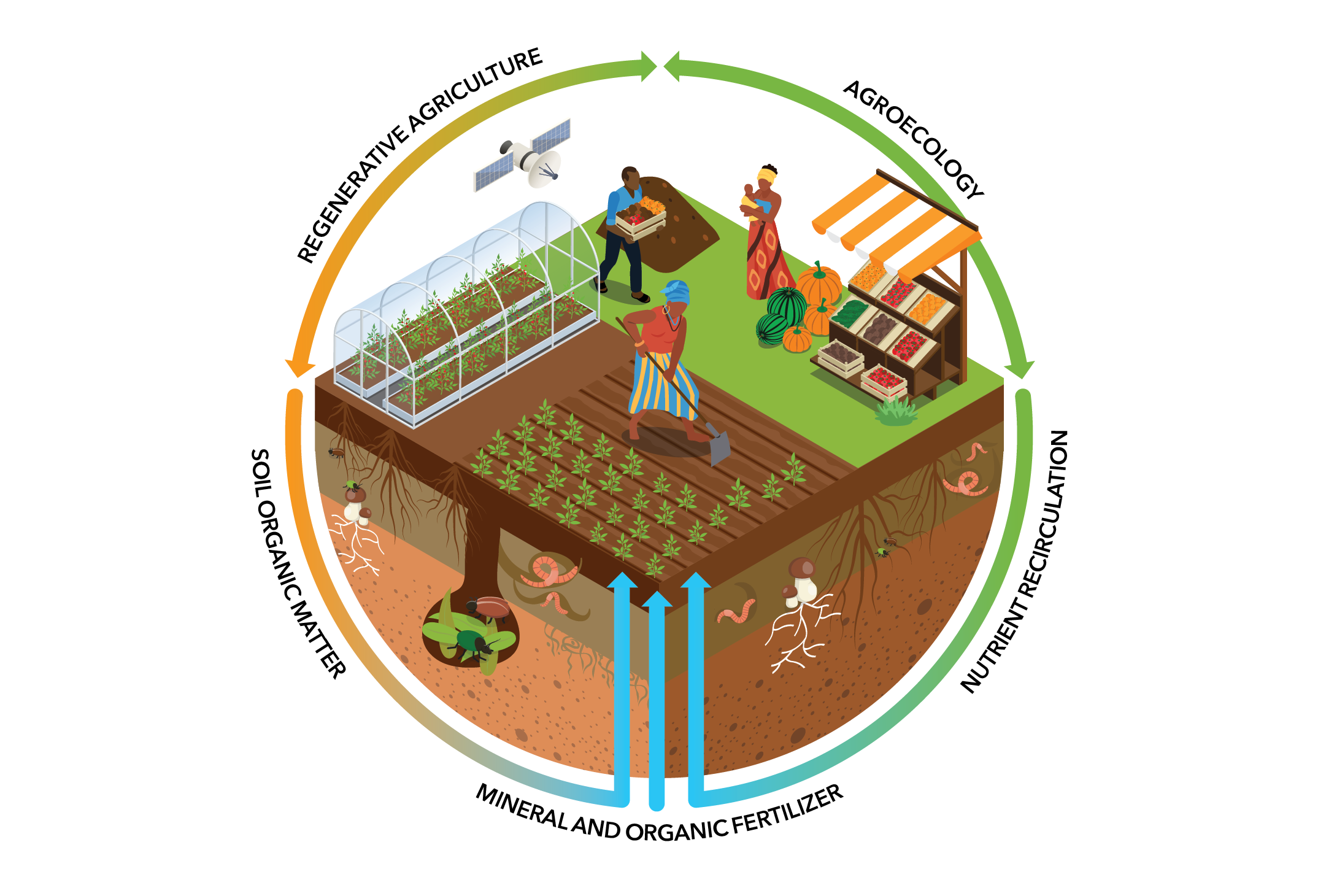

Building on the 4Rs of Nutrient Stewardship (Right Source, Right Rate, Right Time, and Right Place), our 8R approach integrates the circular and regenerative principles through four additional components:
- Recycle: Convert agricultural and urban waste into high-value organo-mineral fertilizers.
- Rebuild: Restore soil organic carbon and microbial activity to revitalize the foundation of farming.
- Record: Deliver measurable, verifiable, and evidence-based advisory services farmers can trust.
- Resilient: Reduce nutrient losses through climate-smart scheduling and practices resilient to global shocks.
Our Vision
A world where farmers thrive on healthy soils, empowered by fertilizer innovation and sustainable practices, producing abundant and nutritious food for all on less land while restoring our soils and safeguarding our planet for future generations.
Our Mission
Innovating soil and fertilizer solutions to nourish people and protect the planet.
We advance fertilizer innovation, soil fertility, and soil health solutions with our partners in research and development, empowering farmers to grow more nutritious food, boost productivity, address food insecurity, enhance resilience of food systems, and protect the environment for lasting agricultural transformation.
Our Values
- Collaborate: We operate as One IFDC, working across programs and countries to deliver meaningful, lasting impact.
- Innovate: We learn continuously and design responsible, adaptive solutions that drive measurable results.
- Include: We champion equity and ensure that women, youth, and marginalized groups have meaningful voice and opportunity.
- Act with Integrity: We steward resources ethically and transparently, holding ourselves accountable to communities, partners, staff, and donors.


Fertilizers are vital to global food security, but today’s challenges require climate-smart, farmer-centered innovation. Progress is slowed by outdated production methods, limited tailored formulations, long development cycles, weak markets, and gaps in understanding fertilizer-soil-environment interactions.
Conventional practices also drive soil degradation, water pollution, and greenhouse gas emissions, while fragmented partnerships, low investment, policy hurdles, and limited financing further restrict advancement.
IFDC will strengthen and expand the GNFIC, a consortium connecting science, policy, markets, and farmers to deliver sustainable, context-specific solutions.

The GNFIC will serve as a hub for applied research, innovation, and knowledge exchange, linking laboratory science with field-level realities by working with start-ups, researchers, and technology providers to speed commercialization.
Through its Product Life Cycle approach, IFDC aims to accelerate the development, validation, and deployment of next-generation fertilizers and soil health innovations that improve productivity, profitability, and environmental sustainability.
Through the reimagining of how fertilizers are designed, produced, and delivered, IFDC is shaping a future where fertilizer innovation drives resilient food systems and environmental sustainability.
Building the foundations for climate-smart approaches through strong global and regional partnerships will empower farmers with the right solutions and enable soils to be regenerated while strengthening equitable access to next-generation fertilizers.
Key Results
Result 1: Global and Regional Capacity for Context-Specific Fertilizer Solutions Is Strengthened
Establish the GNFIC to build regional capacity for developing, testing, and scaling context-specific fertilizer solutions.
Result 2: Climate-Smart Fertilizers for Smallholder Farmers Are Co-Developed and Scaled
Collaborate with partners to design innovations tailored to specific regions, soils, crops, and climates, improving nutrient use efficiency, productivity, and environmental sustainability.
Result 3: Smallholder Farmers Access and Adopt Next-Generation Fertilizers
Work with the GNFIC’s extension partners and within our global programs to make innovations affordable, accessible, and scalable for smallholder farmers, especially women and youth.


A Vision for the Next Decade
Over the next decade, IFDC will lead the transformation of soil fertility systems to build resilient, productive, and sustainable agrifood systems that address food and nutrition insecurity.

Guided by research, markets, and policy engagement, our goal is to empower millions of smallholder farmers to regenerate soils, increase yields, reduce farmland expansion, cut greenhouse gas emissions, and achieve lasting food and nutrition security.
Through innovation, collaboration, and care for the land, we can grow a future that feeds people, protects the planet, and supports generations to come.
Join us in creating solutions that empower farmers and nourish the planet. Partner with IFDC today and contribute to a global network driving agricultural transformation from the ground up.
View and download the complete IFDC Strategy 2026-2035
Publication Credits