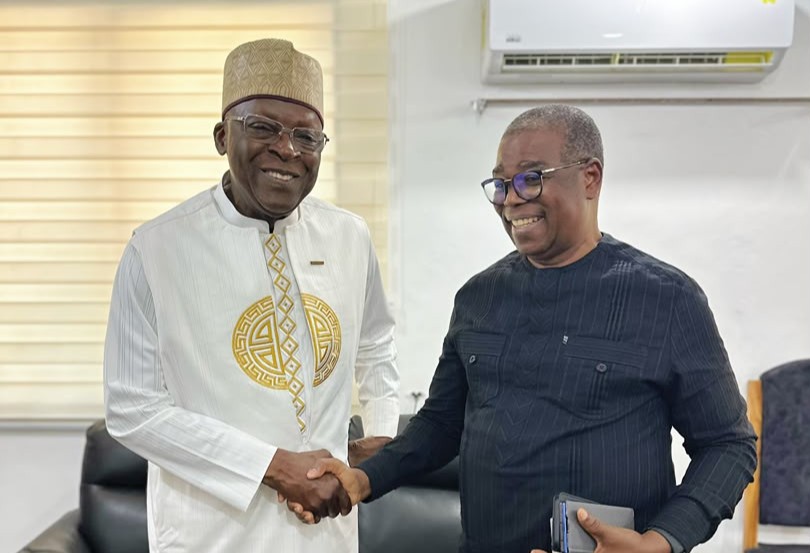
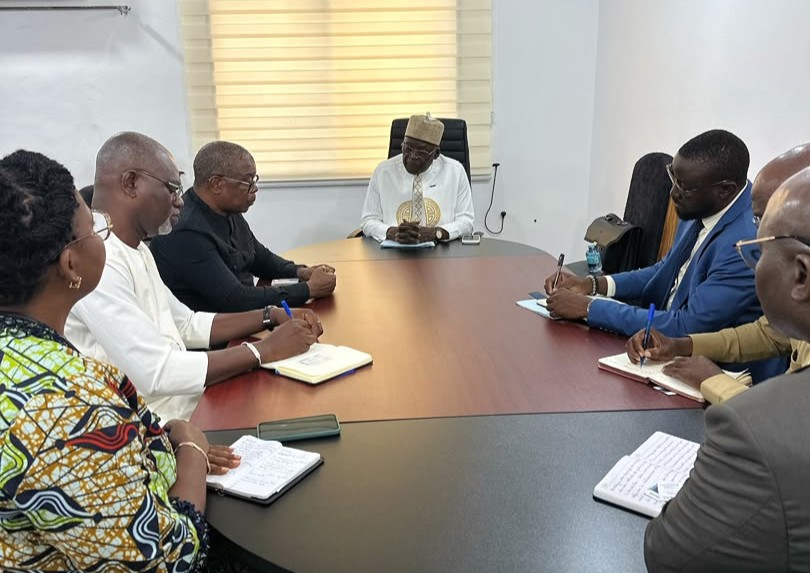
A delegation from the Communal Approach to the Agricultural Market in Benin (ACMA3) program, led by Program Director Ousmane Ouédraogo, met with the President of the Benin Economic and Social Council, Abdoulaye Bio Tchané, on September 10 in Cotonou to present program achievements that are benefiting agricultural producers in Borgou, Collines, and Donga.
From digital innovations to agricultural financing mechanisms, ACMA3 interventions have improved agricultural productivity, enhanced market access, and strengthened the capacity of local stakeholders. The discussions focused on ensuring sustainability to preserve the achievements and amplify their impact beyond program implementation.
The ACMA3 delegation began the meeting by congratulating President Tchané on his appointment and wishing him success in fulfilling his new responsibilities. The discussions then turned to the major achievements of the ACMA3 program and the prospects for maintaining the innovations developed by the program to benefit the agriculture sector in Benin.
“Systemic change is a shared effort. It relies on knowledge sharing, complementary actions, and the commitment of all stakeholders,” he said.”
Abdoulaye Bio Tchané, President of the Benin Economic and Social Council
Following a brief overview of the evolution of ACMA through its three phases, the delegation reiterated that the program’s fundamental objective is to contribute to a dynamic and inclusive local economy by sustainably improving the incomes of producers, processors, and agricultural entrepreneurs through increased productivity, better market access, and tailored services.
Operating in the departments of Borgou, Collines, and Donga, ACMA3 supports seven priority sectors: maize, soybean, cassava, vegetables, peanut, poultry, and small ruminants.
During the meeting, the delegation highlighted several significant accomplishments ACMA3 has made through its facilitation approach. The group discussed the innovations developed through the program, including Information and Communications Technology for Agriculture (ICT4Ag) solutions – the Market Information System (MIS) and the Technical Information and Training System (SIFT) – as well as the Ignitia tool for providing farm-level rainfall forecasts via text messaging.
The MIS and SIFT have both been handed over to the Ministry of Agriculture, Livestock, and Fisheries (MAEP) to be made available as public service solutions and are now known as the Harmonized Agricultural Market Information System (SIM-AH) and E-Conseil Agricole. These tools improve access to information, inputs, market opportunities, and financial services.
Discussions then transitioned to the challenges related to preserving ACMA3’s achievements, as the program is nearing closeout. The delegation specifically emphasized the need to consolidate agricultural financing mechanisms, ensure the sustainability of the SIM-AH and other digital solutions developed by the program, strengthen stakeholder consultation frameworks, and continue efforts to share knowledge and build on best practices.
Ouédraogo requested the Economic and Social Council’s support in efforts aimed at promoting national ownership and the sustainability of these achievements.
President Tchané commended the program’s contribution to Benin’s agricultural development and enhanced farm profits. He reiterated that sustainable growth in agricultural incomes depends primarily on improving yields, innovation, and the dissemination of best practices among farmers.

President Tchané went on to discuss the importance of knowledge sharing and coordinated interventions among public, private, and technical actors. “Systemic change is a shared effort. It relies on knowledge sharing, complementary actions, and the commitment of all stakeholders,” he said.
President Tchané further emphasized the need to continue efforts in soil health, agricultural innovation, and production system resilience to ensure sustainable impacts that benefit farmers and rural communities.
As the meeting concluded, participants shared their commitment to strengthening synergies to meet the challenge of transforming Benin’s agriculture sector and safeguarding the gains achieved through the ACMA3 program for the benefit of future generations.
The Communal Approach to the Agricultural Market in Benin (ACMA) program, financed by the Embassy of the Netherlands in Benin since 2013, is implemented by the International Fertilizer Development Center (IFDC) in a consortium with CARE International Benin and KIT.