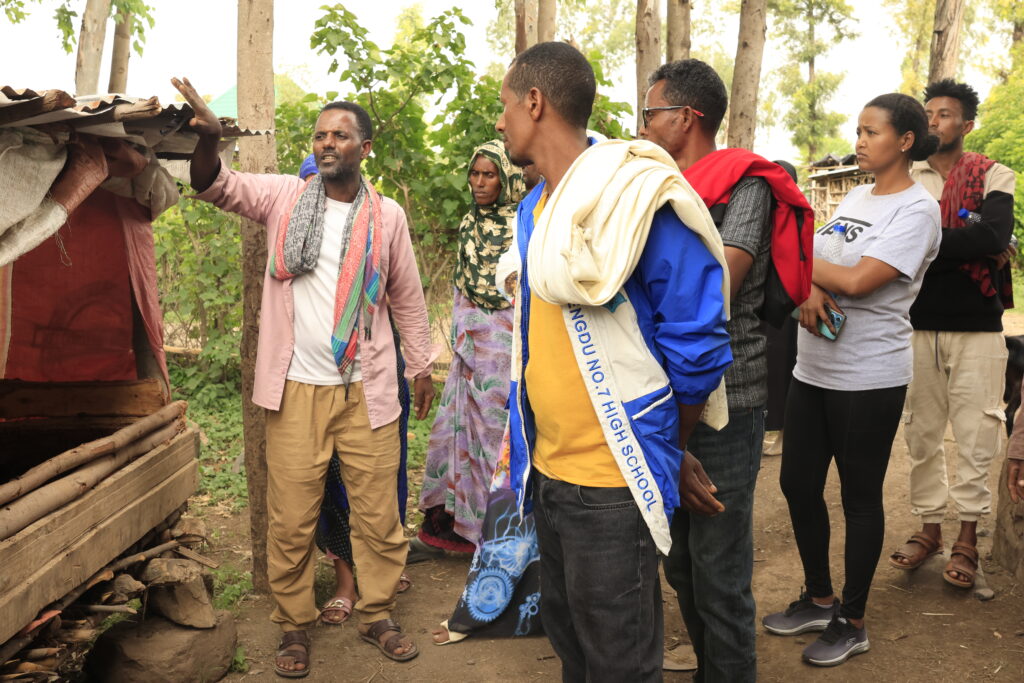
On September 3-4 in Kombolcha, Ethiopia, the Transform Soil Fertility Management in Ethiopia (TRANSFORM) program conducted hands-on training for members of the Andinet Horse-Cart Association as well as newly established women-led groups from Arabo Kebele in Kalu Woreda. The training promoted innovative ways to turn locally available organic resources into economic and environmental benefits.
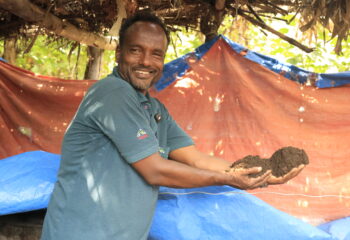
For members of the Andinet Horse-Cart Association, horse manure has long been viewed as an unavoidable byproduct of their work, often discarded as waste.
“No one had taught us that [horse manure] could be converted into vermicompost and become a source of income. Now we understand that the value of this resource.”
Yemataw Adane, a member of the Andinet Horse-Cart association
Now, they see it as a valuable resource that can generate income, create green jobs, and improve soil health. Through the TRANSFORM program, members of the association have learned to convert horse manure into high-quality vermicompost, creating a new business opportunity from a readily available local resource.
Ten of the association’s 20 members participated in the training and will share their knowledge with the remaining members, strengthening the association’s capacity to produce and market organic fertilizer.
For Yemataw Adane, a member of the association, the training showed the potential of a resource they once disposed of: “We have plenty of horse manure, which we used to discard as waste along the riverside because we did not know its value. No one had taught us that it could be converted into vermicompost and become a source of income. Now we understand that the value of this resource.”
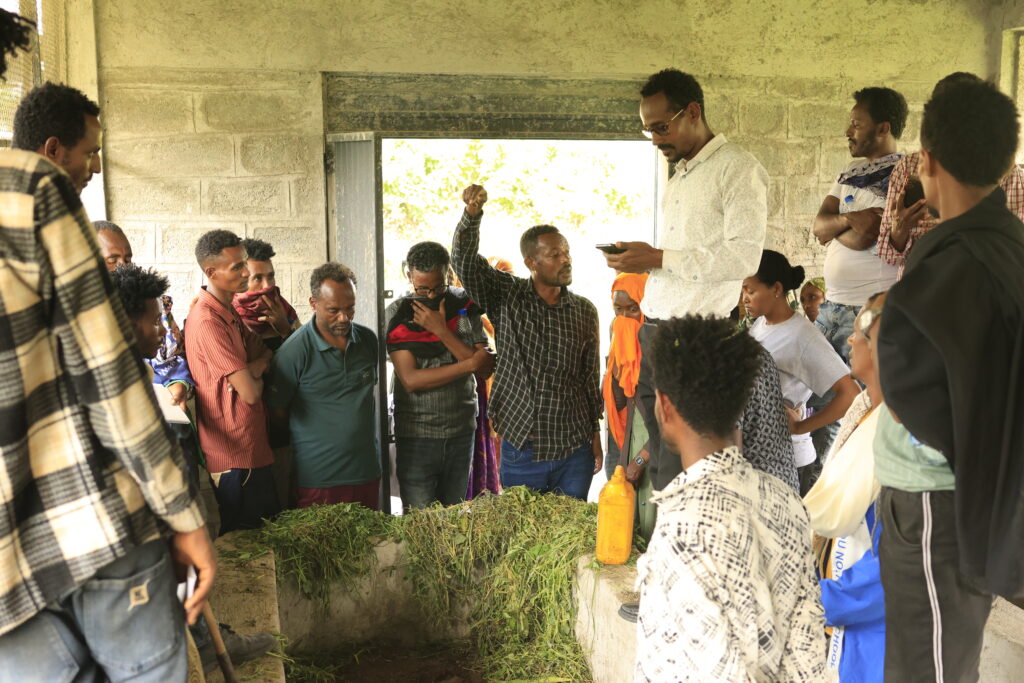
Yemataw and his colleagues are now ready to produce vermicompost and supply this natural fertilizer to farmers in the surrounding communities.
The youth and women participants in the training explored how rural agricultural waste including crop residues, livestock, and household organic waste can be transformed into valuable agricultural inputs and viable green enterprises.
The practical training covered:
- Vermicomposting and organic fertilizer production
- Waste collection and handling
- Quality management and production planning
- Enterprise governance and compliance
- Enterprise action planning
- Gender equality and inclusive leadership
Participants also learned from TRANSFORM-supported entrepreneurs, who shared practical lessons on overcoming working capital constraints, limited market access, and operational challenges.
Support extends beyond training. The Kalu Woreda Labor and Skills Office, together with the Trade and Investment Office, Revenue Office, and agricultural extension workers, is supporting trained groups to formalize their businesses, register as enterprises, strengthen operations, and access markets.
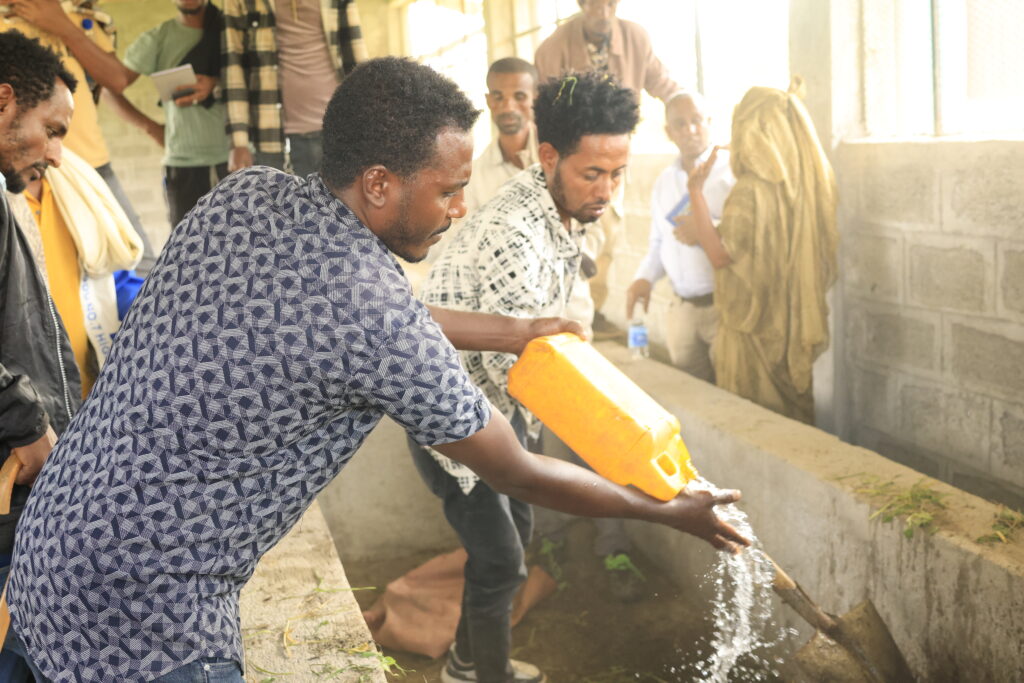
As Hussein Endris TRANSFORM-supported entrepreneur in Arabo, Kalu Woreda observed: “Success in green enterprise relies on turning obstacles into learning opportunities. By leveraging locally available horse manure and maintaining strict quality standards, youth can build profitable, resilient businesses that serve both the community and the environment.”
This is the circular economy in action: transforming waste into valuable agricultural inputs while creating opportunities for youth and women, generating green jobs, improving soil health, and supporting more productive agriculture.
Through TRANSFORM, locally available resources are becoming the foundation for new enterprises and sustainable livelihoods.
The TRANSFORM project (2025-2028) is funded by the Embassy of the Kingdom of the Netherlands and the European Union and is implemented by a consortium comprising the International Fertilizer Development Center (IFDC), Wageningen University & Research/Wageningen Environmental Research, ISRIC – World Soil information, Environment and Coffee Forest Forum (ECFF), and SOS Sahel Ethiopia.

TRANSFORM is made possible by the support from the Dutch Ministry of Foreign Affairs.